
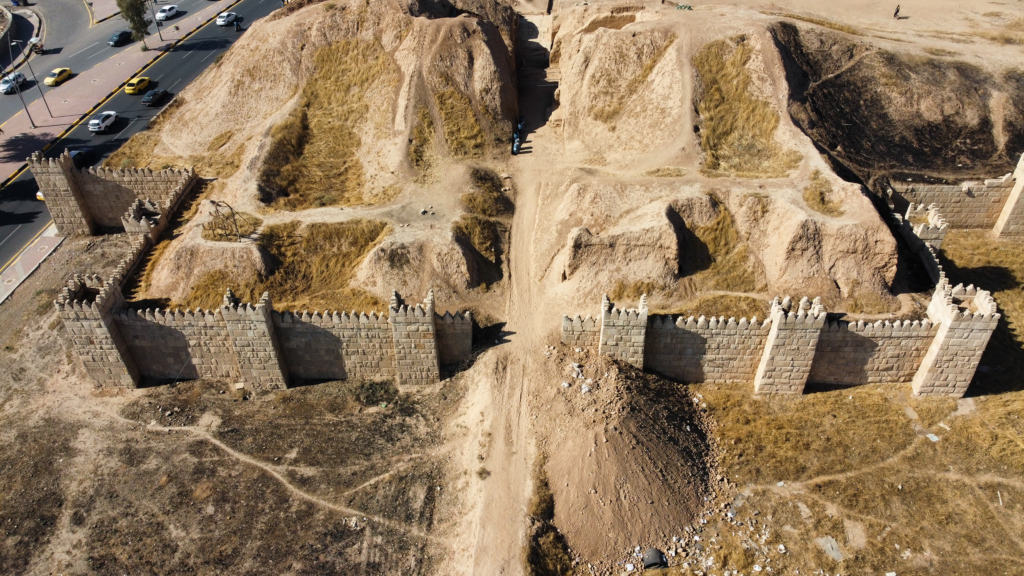
The Shamash Gate at Nineveh has revealed evidence of two violent chapters in the history of Mosul, separated by more than 2,600 years: the destruction of the Neo-Assyrian capital in 612 B.C.E. and the battle to liberate the city from ISIS in 2017.
A scientific study published in Iraq reports the results of three seasons of archaeological work at the monumental eastern gate, one of the major entrances into ancient Nineveh. The project, carried out as part of the Iraqi-Italian Nineveh Expedition, documented extensive ISIS damage, stabilized a dangerous tunnel network, and uncovered traces of the city’s final Assyrian destruction.
What makes the discovery striking is not only the depth of the archaeology. It is the way the same monument preserved two moments of collapse: one from the fall of one of the ancient world’s most powerful cities, and another from the recent war that devastated modern Mosul.
A gate built for empire
The Shamash Gate was one of eighteen gates that controlled access to Nineveh, the great Assyrian capital on the eastern bank of the Tigris. According to the study, its construction belongs to the massive urban expansion carried out under King Sennacherib, who ruled from 705 to 681 B.C.E.
The gate stood on the eastern approach to the city, along the road connecting Erbil and Nineveh. Inside the walls, it led toward the mound of Nabi Yunis and the royal palace area associated with Esarhaddon.
This was not a symbolic doorway. It was a working artery of empire. Cart-wheel grooves preserved on the stone pavement show that heavy traffic once passed through the gate. The wear, subsidence, and later resurfacing of the entrance suggest a monument that had to be maintained because it remained central to the life of the city.
The researchers identified at least two pavement phases inside the gateway. The earlier surface consisted of large stone slabs, probably connected with Sennacherib’s original construction. A later resurfacing, possibly from the reign of Ashurbanipal, used layers of mudbrick, fine pebbles, clay, and broken baked brick to level and improve the passage.
Then came fire.
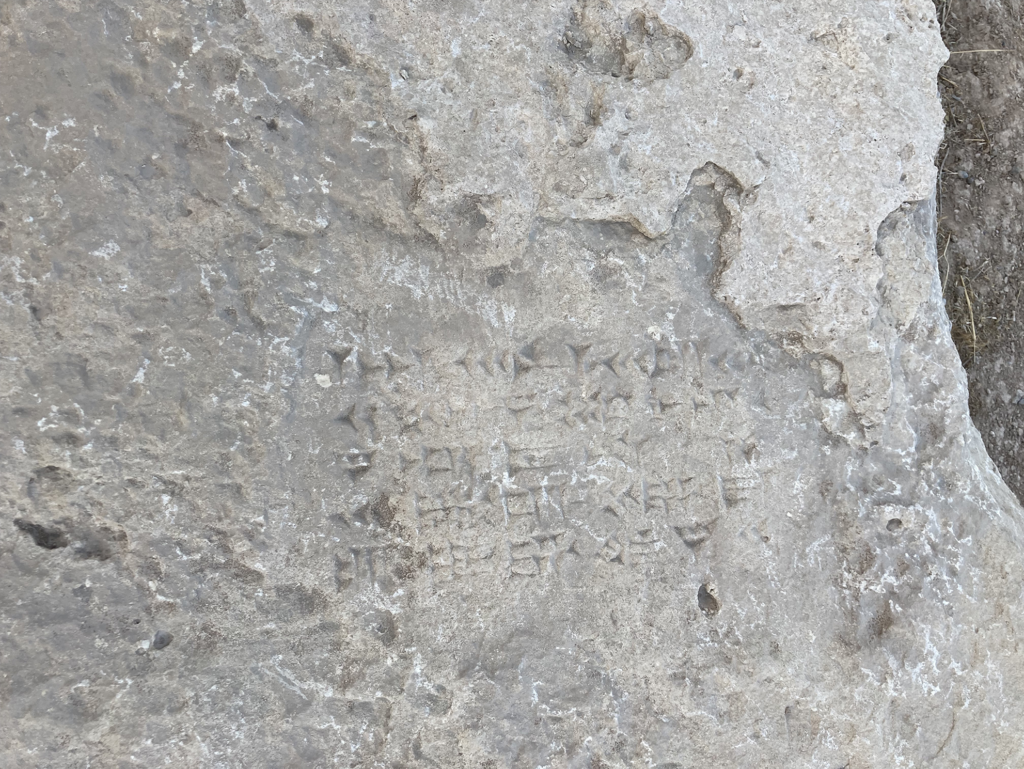
Photograph of orthostat with inscription on the back. Credit: Timothy Harrison et al.,2026
Evidence of Nineveh’s final destruction
Excavations in the central passageway revealed destruction deposits dating to the late seventh century B.C.E., the period of Nineveh’s fall to a coalition that included the Medes and Babylonians in 612 B.C.E.
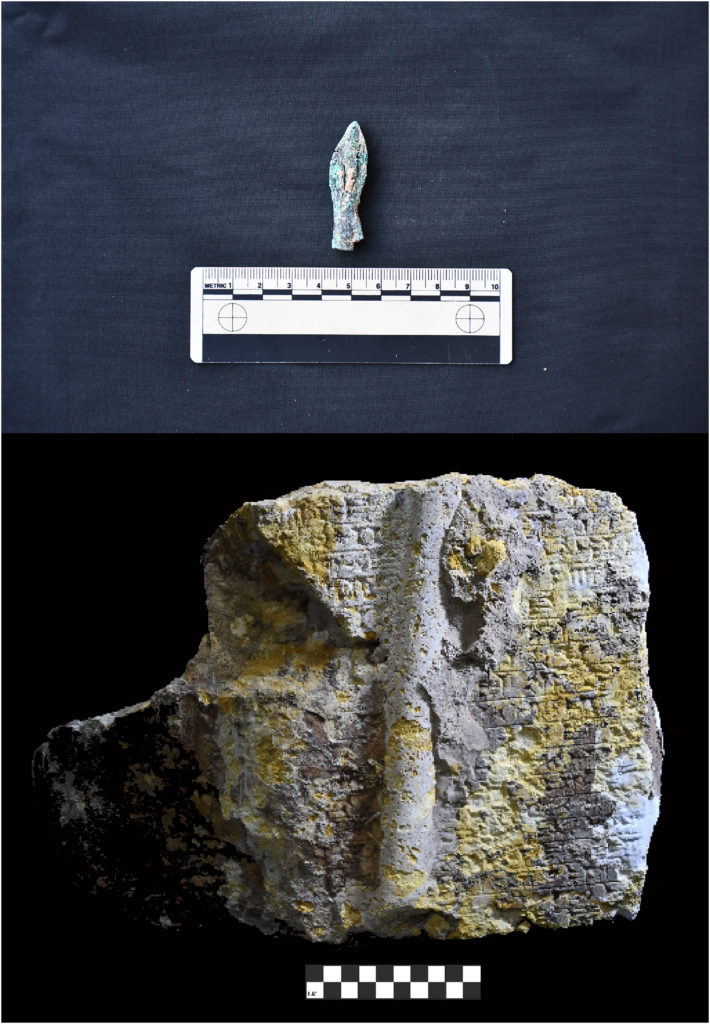
The deposits contained bronze and iron arrowheads, ceramics, a decorated bone button, human remains, and numerous fragments of a large royal stela. Pockets of ash and charcoal were also recorded in the area, pointing to a conflagration during the gate’s destruction.
The human remains are among the most sobering finds. In one area, researchers identified bones belonging to at least four individuals: a child around 2.5 to 3 years old, an adolescent male, an adult female, and another adult of undetermined sex. Another partially articulated adult skeleton was found just inside the gate, lying face down on a clay surface.
These discoveries give rare archaeological texture to an event known from ancient history: the violent end of Nineveh, once the heart of the Neo-Assyrian Empire.
A shattered stela of Ashurbanipal
One of the most important finds is a fragmented stela connected to King Ashurbanipal, the last great ruler of the Neo-Assyrian Empire. Archaeologists have recovered 196 fragments so far.
The monument was carved from a soft stone, likely a chalky limestone, and had two inscribed faces. One side appears to have shown a standing royal figure, probably Ashurbanipal himself. The preserved cuneiform text duplicates known royal inscriptions, including passages about the Assyrian campaign in Egypt, the defeat of Taharqa, and the fate of rebellious vassal kings.
The original monument was at least 2 meters high, 80 to 100 centimeters wide, and about 26 centimeters thick. Its shattered condition, with many small chips and flakes, suggests intentional and violent destruction. Traces of heat and burned organic material may indicate that fire played a role in damaging or breaking the stone.
For Assyriologists, the stela is valuable because it anchors royal ideology, imperial memory, and the archaeological destruction of the gate in the same context.
ISIS tunnels nearly destroyed the monument again
The second catastrophe came in the twenty-first century.
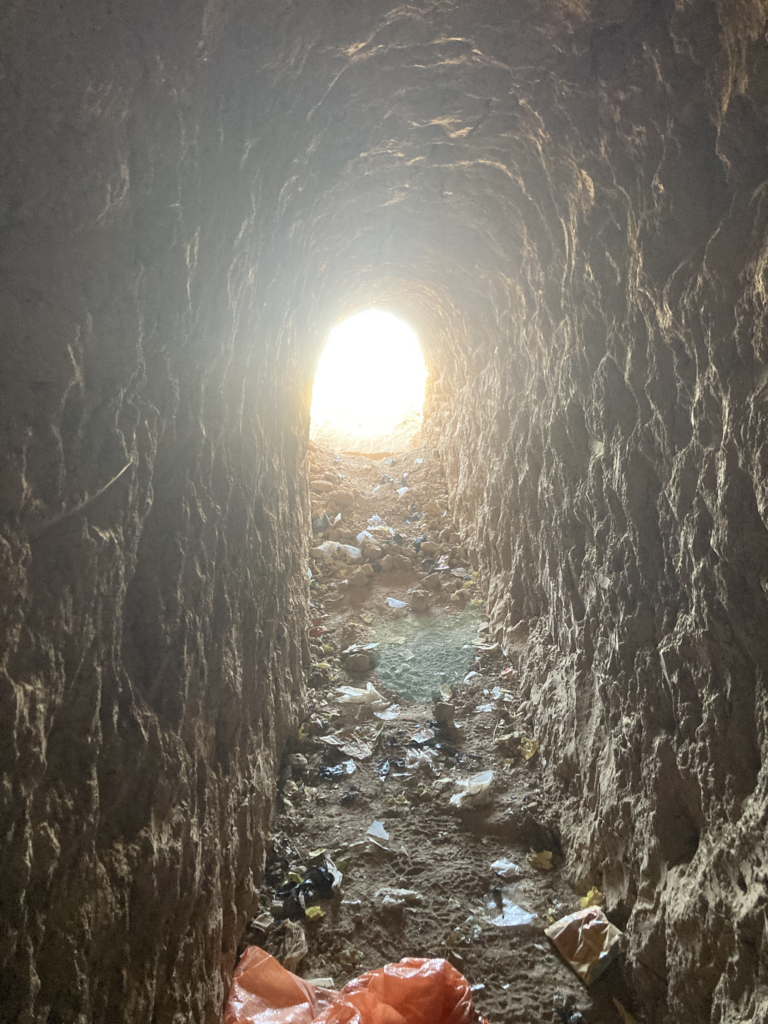
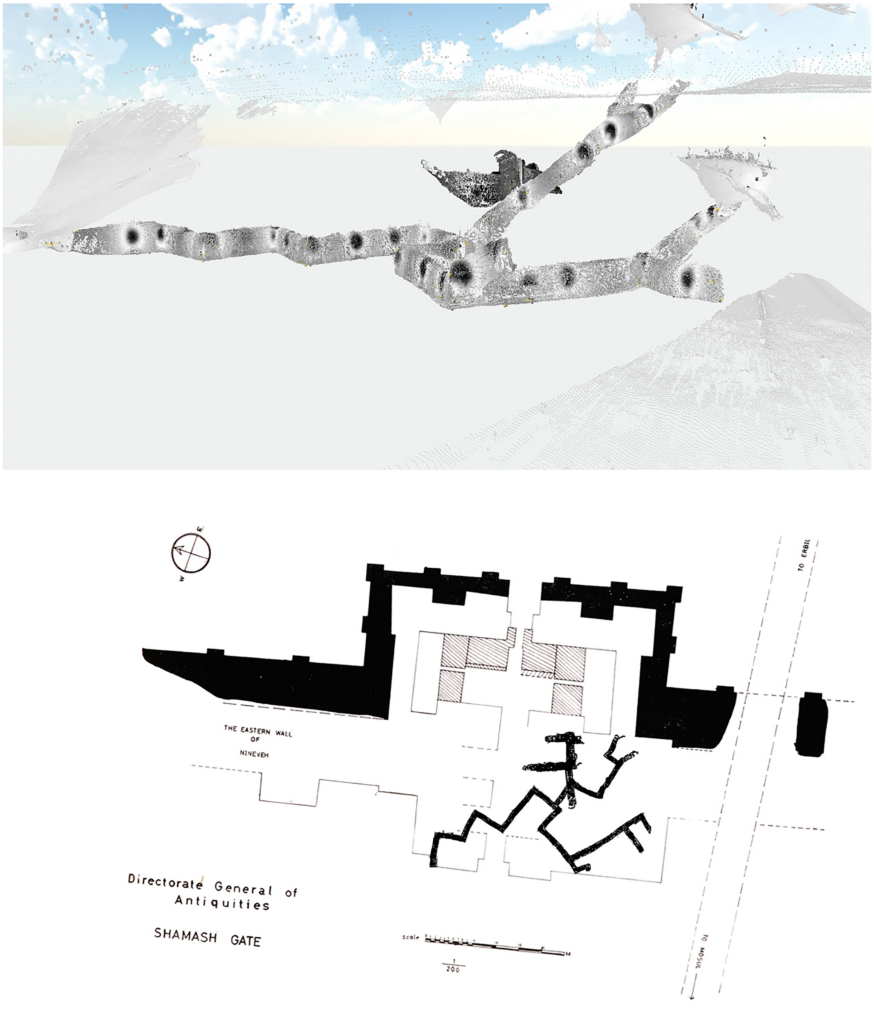
During ISIS control of Mosul between 2014 and 2017, the Shamash Gate was turned into a defensive position. The group dug approximately 210 meters of tunnels inside and beneath the gate, likely to move fighters and ammunition. In some places, the tunnels cut through ancient stone and brick structures. In others, they damaged orthostats and the stone pavement of the central gateway.
A 2021 survey using 3D laser scanning showed that the tunnel network posed a serious risk to the stability of the gate. Some tunnels ran beneath the foundations, while others rose through ramps and steps toward the upper parts of the structure.
The threat was urgent. After consultations, the United Nations Development Program helped stabilize the tunnels in 2022. They were backfilled with sandbags containing the soil originally excavated by ISIS.
The gate also bore traces of the battle for Mosul, including shrapnel, shell damage, craters, burning, and the remains of exploded grenades.
A monument of survival
The Shamash Gate now stands as something more complex than an Assyrian ruin. It is a monument where ancient imperial collapse and modern urban trauma meet in the same archaeological record.
The study shows that the core of the gate remains intact, despite decades of erosion, earlier reconstruction problems, ISIS tunneling, and wartime damage. Researchers argue that the site now needs a carefully planned program of excavation, conservation, and restoration.
That work matters for archaeology, but also for Mosul. The Shamash Gate is part of the city’s cultural memory, a surviving landmark of Nineveh and a symbol of recovery after war.
Few sites make history feel so compressed. At this gate, arrowheads from 612 B.C.E. and ISIS tunnels from 2017 sit within the same wounded monument. The result is a rare archaeological record of destruction, resilience, and the long life of a city that has survived more than one end of the world.
Harrison T, AbuJayyab K, Batiuk S, et al. THE SHAMASH GATE, NINEVEH: A WINDOW INTO TWO EPISODES OF INSTABILITY. Iraq. 2025;87:163-183. doi:10.1017/irq.2026.10042
Cover Image Credit: Aerial Photo of the Shamash Gate from the east. Timothy Harrison et al.,2026
