21 February 2026 The Future is the Product of the Past

2000-years-old Hercules Rock Relief is being Vandalized

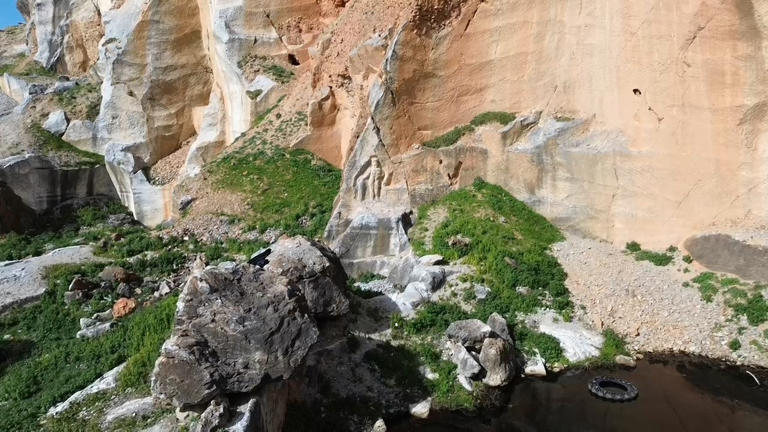
The 2000-year-old Hercules Rock Relief, located in Deliktaş, approximately 2.5 kilometers northeast of the Iznik district center of Bursa, is being vandalized. The historical artifact is in danger of being destroyed.

The Heracles relief located at the Deliktaş site in İznik is a significant archaeological find dating back to the Roman period. This relief depicts the legendary hero Heracles (Hercules in Roman mythology) in one of his iconic feats, often interpreted as his struggle against the Nemean Lion, which was one of his Twelve Labors.

The relief is carved into the rock face and showcases Heracles in a dynamic pose, emphasizing his strength and heroic attributes. This site is of historical and cultural importance, shedding light on the ancient city of İznik (Nicaea) and its ties to classical mythology.

The relief of Hercules, which is thought to have been made by stone workers working in the region during the Roman period, was irreversibly damaged by unidentified person or persons.
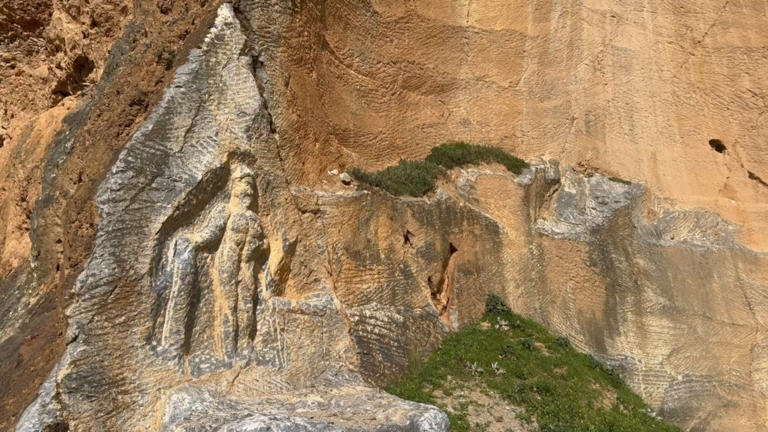
Photo: İHA

 Allegedly, the scepter in the right hand of the statue, which is believed to represent power, disappeared. In the past years, the face of the same relief was targeted and its beard was chipped and destroyed.


📣 Our WhatsApp channel is now LIVE! Stay up-to-date with the latest news and updates, just click here to follow us on WhatsApp and never miss a thing!!


It was believed that statues and reliefs protected people from evil in those times.

It is thought that the relief was vandalized in search of treasure. Citizens want the authorities to take security measures in the region to prevent further damage to the relief of Hercules.
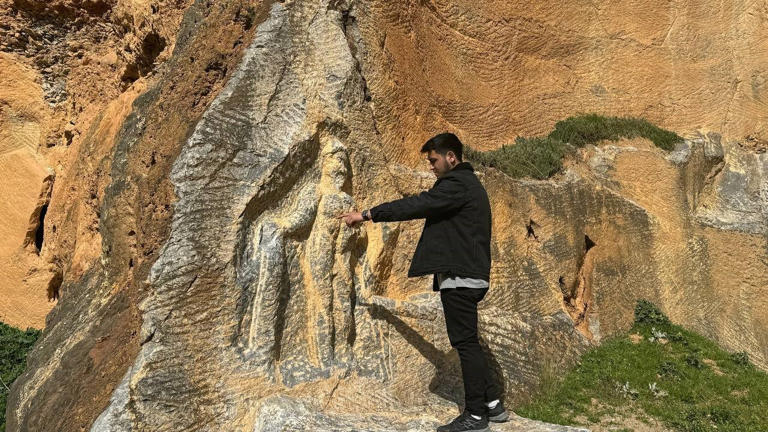
Photo: İHA

According to the special report of İHA News agency; The old quarry site, where the Hercules relief is located, turned into a swamp with the olive mill wastewater sludge poured before.

Hercules, known in Greek mythology as Heracles, is a legendary hero and demigod in ancient Greek religion and mythology. He is the son of Zeus, the king of the gods, and Alcmene, a mortal woman. Hercules is famous for his incredible strength and numerous adventures, including the completion of the Twelve Labors, which were tasks assigned to him as punishment for killing his wife and children in a fit of madness induced by Hera, Zeus’s wife, and Hercules’s stepmother.
Related Articles

The largest embalming cache ever found in Egypt unearthed at Abusir

10 February 2022

10 February 2022

Archaeologists from the Czech Institute for Egyptian Science have discovered a cache of artifacts related to the practice of Egyptian...

3,000-Year-Old Hazelnut Shells Discovered in the Sacred Hittite City of Nerik

30 July 2024

30 July 2024

In the sacred Hittite city of Nerik, located in the northern Vezirköprü district of Samsun province in the Central Black...

China’s ancient water pipes show people mastered complex engineering 4,000 years ago without the need for a centralized state authority

16 August 2023

16 August 2023

A system of ancient ceramic water pipes, the oldest ever unearthed in China, shows that neolithic people were capable of...

Thor’s hammer amulet discovered in Sweden

23 October 2022

23 October 2022

Archaeologists have unearthed the Thor’s Hammer amulet, which they call “one of its kind” in Ysby in southwestern Sweden’s Halland...

The First Dinosaurs Discovered in Japan From the Late Cretaceous Period

30 April 2021

30 April 2021

Yamatosaurus Izanagii, a new genus, and species of hadrosaur or duck-billed dinosaur have been discovered on one of Japan’s southern...

Archaeologists discover a “Seleucid satrap tomb” in the ancient Greek (Seleucids) city of Nahavand in Iran

16 May 2022

16 May 2022

Archaeologists announced on Saturday that they discovered a tomb believed to be the tomb of a Seleucid satrap or general...

A metal detectorist unearthed a Roman silver “ligula” or “Toilet Spoon” in Wales

30 January 2024

30 January 2024

A metal detectorist in Wales unearthed a Roman silver “ligula”, commonly known as a “toilet spoon”. The discovery, made in...

Unique 2,000-year-old Decorated Roman Sandal Discovered in Spain

20 October 2023

20 October 2023 1

A 2,000-year-old Roman sandal was discovered during archaeological excavations at Lucus Asturum (modern-day Lugo de Llanera) in Asturias, northern Spain....

Peru finds perfectly preserved a wooden figure in the Americas’ largest mud-brick city

29 June 2022

29 June 2022

A perfectly preserved wooden figure has been discovered at the Chan Chan archaeological site, in northern Peru, the Ministry of...

350,000-Year-Old Human Settlement have been Discovered on the Arabian Peninsula

17 May 2021

17 May 2021

One of the world’s oldest Acheulean sites was found in the northern region of Hail in Saudi Arabia. Al Nasim...

800-year-old Jin dynasty palace complex found in Beijing Olympic Village

9 February 2022

9 February 2022

While building the athletes’ Olympic Village for this year’s Winter Games in Beijing, China found the remains of an ancient...

Archaeologists Working at Son Fornés May Have Discovered a Roman Long-Lost City on Mallorca

30 January 2026

30 January 2026

Mallorca archaeology, Roman history, and ancient cities are once again at the center of international attention. Archaeologists working on the...

In Fraueninsel in Lake Chiemsee: Romanesque a central building hidden underground for 1,000 years discovered

25 February 2024

25 February 2024

On Fraueninsel, an island in Germany’s Lake Chiemsee, archaeologists discovered a cult site that may have been slumbering underground for...

Archaeologists Confirm Fano Discovery as Vitruvius’ Legendary Basilica: A Turning Point for Classical Architecture

20 January 2026

20 January 2026

Archaeologists have officially confirmed that the architectural remains uncovered in the heart of Fano belong to the long-sought basilica designed...

Tanzania’s mysterious footprints were made by early humans, not bears

6 December 2021

6 December 2021

The prehistoric footprints discovered by archaeologists caused confusion because scientists looked at them again to determine whether they were left...