
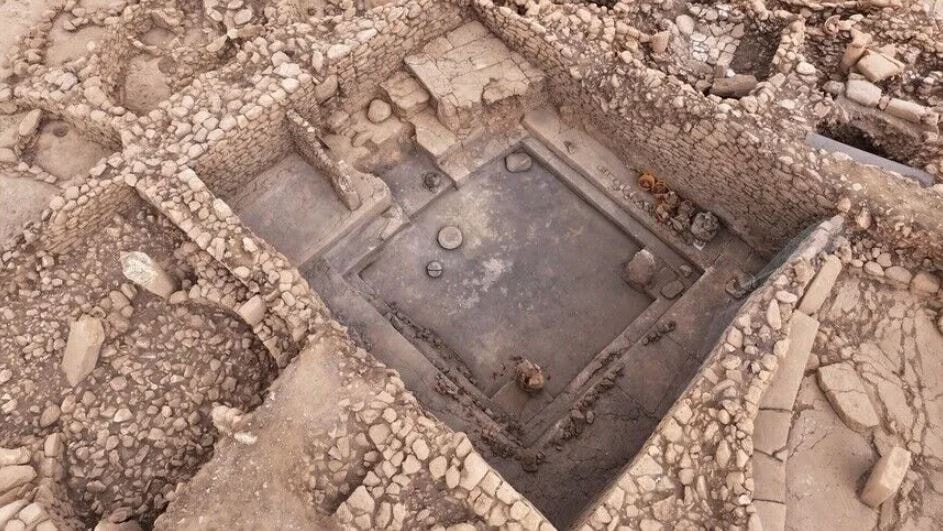
Archaeologists will open a stone-sealed chamber at Karahantepe in southeastern Türkiye during the 2026 excavation season, gaining access to a concealed section of one of the site’s unusual Neolithic buildings for the first time.
The chamber lies in a rectangular structure partially uncovered last year. Large, flat stone slabs cover its upper section, while its entrance cannot be used for excavation because it opens onto a shallow deposit. The team will therefore remove the covering stones individually and enter the chamber from above.
Excavation director Prof. Dr. Necmi Karul, who also coordinates the Taş Tepeler Project, said the building was constructed for a special purpose rather than ordinary domestic use. Archaeologists do not yet know what survives inside the chamber, but its deliberate enclosure raises the possibility that objects or architectural installations were left in place when it was closed.
A chamber hidden beneath massive slabs
The latest announcement has frequently been described as the opening of a mysterious “door.” In archaeological terms, however, the operation involves more than removing an entrance block. The chamber is inaccessible from the building’s interior, forcing excavators to dismantle its heavy stone covering before carefully removing the deposits below.
A project summary from the 2025 excavation season describes a small elevated room built into one corner of a rectangular communal structure known as Structure BH. Measuring approximately nine by seven metres, that building contains two-tiered benches, four symmetrically positioned T-shaped pillars and walls preserved to a height of 3.5 metres.
A large stone basin was also found beside a channel that appears to have carried liquid through the building. The corner room was specifically scheduled for excavation in 2026. Although the latest field report does not identify the chamber by its excavation code, the architectural description closely resembles Structure BH.
The presence of benches, pillars, a basin and a liquid channel suggests that the larger building accommodated organised communal activities. Whether these involved ceremonies, food preparation, offerings or another practice can only be determined after the chamber and surrounding deposits have been fully excavated.
Karahantepe was more than a ceremonial centre
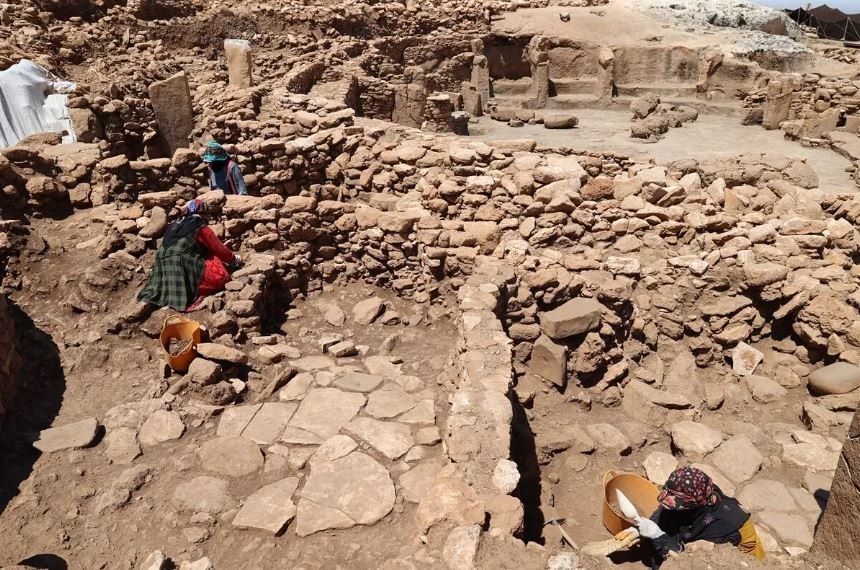
Located in Şanlıurfa Province, Karahantepe dates back to the Pre-Pottery Neolithic period and contains occupation beginning around 9500 BCE. Excavations started in 2019, although more than 250 T-shaped pillars had already been documented during earlier surveys.
The site extends across roughly 14 hectares, including areas where limestone pillars were quarried directly from the bedrock. Only a small part of this extensive settlement has so far been excavated.
Karahantepe was initially compared primarily with nearby Göbeklitepe because of its monumental pillars and large communal buildings. Recent work, however, has revealed small domestic structures surrounding public architecture. This arrangement shows that the site was not simply an isolated gathering place. People lived beside the monumental buildings, produced food, made tools and participated in collective activities within the same settlement.
One of Karahantepe’s largest known structures measures about 28 metres across and appears to have remained in use for several centuries. The combination of domestic buildings, communal spaces and stone-working areas makes the settlement particularly important for understanding how hunter-gatherer communities adopted permanent or long-term settled life before agriculture became fully established.
Buildings were deliberately buried
The stone-covered chamber also fits a broader pattern identified at Karahantepe. Earlier research led by Karul concluded that the special-purpose buildings excavated at the site had been intentionally filled and sealed rather than simply abandoned after collapsing.
One of the clearest examples is Structure AB, a sunken space carved partly into the natural bedrock. Its interior contained 11 upright pillars arranged around a human head sculpted directly from the rock. Archaeologists found evidence that the building was carefully filled at the end of its use, preserving its architecture beneath layers of stone and soil.
Such closures may have marked the end of a building’s social or symbolic role. They could also explain why sculptures, pillars and other installations have survived in relatively organised positions. The newly targeted chamber may therefore contain evidence not only of how the building was used, but also of how it was deliberately taken out of use.
Karahantepe has already produced some of the earliest monumental representations of the human body, including a 2.3-metre seated figure and a T-shaped pillar bearing a carved human face. A carefully arranged group of miniature fox, vulture, and wild boar figures has also been interpreted as an early example of storytelling through three-dimensional objects.
Excavations are expected to continue until October. The team will focus on exposing the architecture built above the bedrock as a connected complex rather than examining isolated structures. After the season concludes, the excavated area is scheduled to be covered by a protective roof designed to shield the fragile Neolithic remains from extreme weather.
Cover Image Credit: AA
