
13 January 2026 The Future is the Product of the Past

Unique Roman Aristocratic Tomb Discovered in Sillyon Ancient City

Archaeologists have uncovered a unique Roman-era tomb during ongoing excavations in Sillyon Ancient City, located in Türkiye’s Antalya’s Serik district.

The discovery provides significant insight into burial traditions of the region and adds a new layer of understanding to the history of this multi-period settlement.

A City of Civilizations

Sillyon Ancient City, founded at the beginning of the 2nd millennium BC, was strategically built on a high hill for defense purposes. The site preserves traces of Roman, Byzantine, Seljuk, and Ottoman civilizations, making it a rare location where multiple cultural heritages converge. Today, excavations continue year-round under the “Heritage for the Future Project,” supported by the Turkish Ministry of Culture and Tourism.

Discovery of Four Roman Tombs

During the 2025 excavation season, archaeologists unearthed four Roman-era tombs. Among these, one stood out as a particularly remarkable find: a square-planned chamber tomb with unique architectural and ritual features.

Inside, researchers discovered three separate burials belonging to three different periods, all within the same chamber. This sequential burial practice, combined with the artifacts uncovered, reveals a distinctive local funerary tradition.


📣 Our WhatsApp channel is now LIVE! Stay up-to-date with the latest news and updates, just click here to follow us on WhatsApp and never miss a thing!!


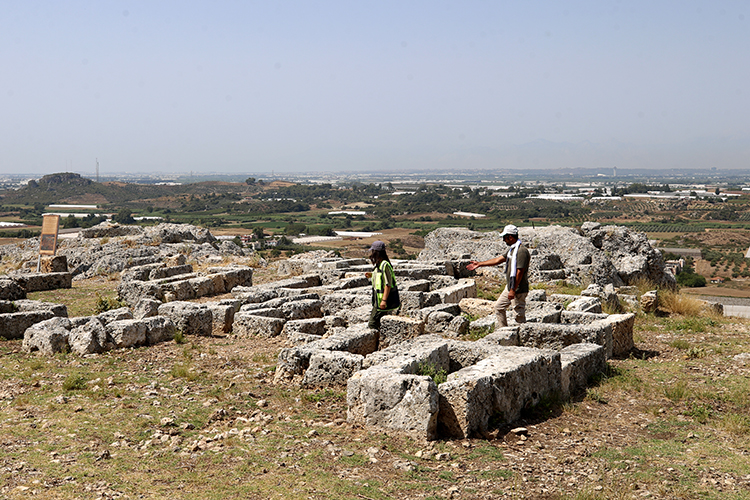
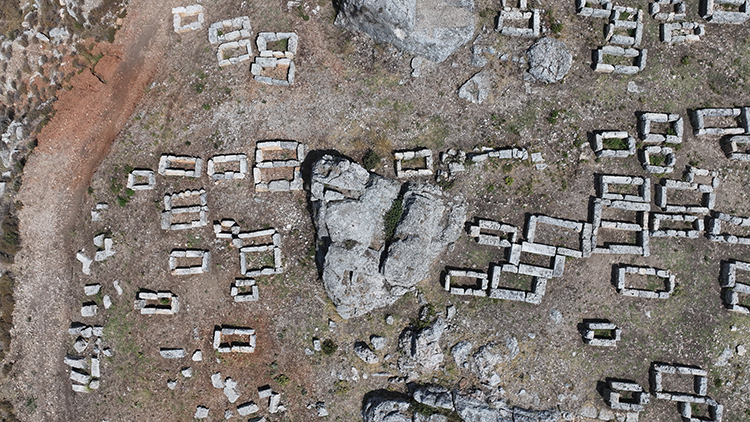
The area where these Roman tombs were located later became a Muslim Turkish cemetery between the 13th and 15th centuries. Credit: AA

Burial Treasures Unearthed

The tomb yielded a variety of artifacts, including rings, earrings, a hairpin, coins, terracotta vessels, glass objects, figurines, and metal accessories.

These grave goods, often referred to as “funerary offerings,” were carefully examined by the excavation team. Based on the coins and other items, the tomb has been dated to the late 2nd century AD. Archaeologists concluded that the individuals buried here were members of Sillyon’s aristocracy, given the richness and variety of the artifacts.

Unique Funerary Rituals

Dr. Murat Taşkıran, excavation director and faculty member at Pamukkale University, emphasized the uniqueness of the tomb:

“We encountered a chamber-type tomb placed at the very center of a square-planned structure. The presence of three burials from different times demonstrates an ongoing reuse of the space, reflecting a ritual tradition unique to Sillyon. This discovery enriches our understanding not only of Sillyon but also of burial practices across the region.”

The careful arrangement of remains and the symbolic artifacts highlight how the community valued the memory of their elite citizens. The find represents a previously unknown typology of tomb in the area.
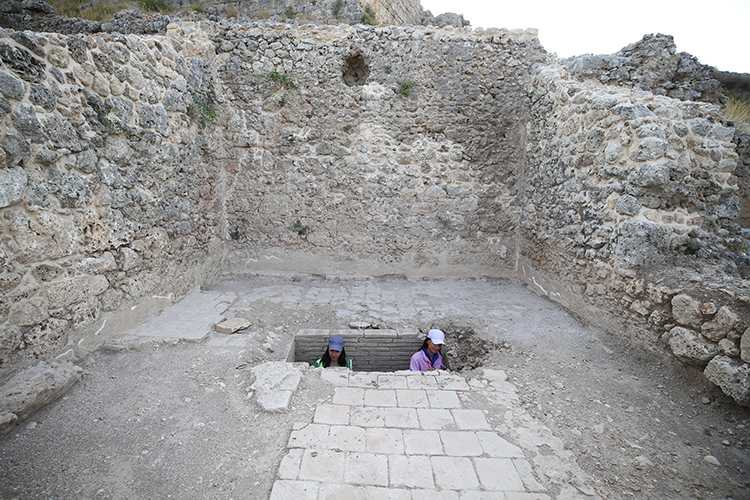
Researchers discovered three separate burials belonging to three different periods, all within the same chamber. Credit: AA

From Roman to Turkish-Islamic Heritage

Interestingly, the area where these Roman tombs were located later became a Muslim Turkish cemetery between the 13th and 15th centuries.

Excavations revealed that the necropolis was reused by soldiers and their families during the Turkish-Islamic period. Elements of Central Asian Turkic traditions were identified in the burial architecture, reflecting how cultural practices evolved after the region came under Turkish rule.

Dr. Taşkıran noted that such findings are rare in this part of Anatolia:

“We discovered reflections of early Turkish burial traditions within Sillyon’s Islamic-era graves. These findings represent crucial evidence of the cultural transformation of the region after the Turks established dominance.”
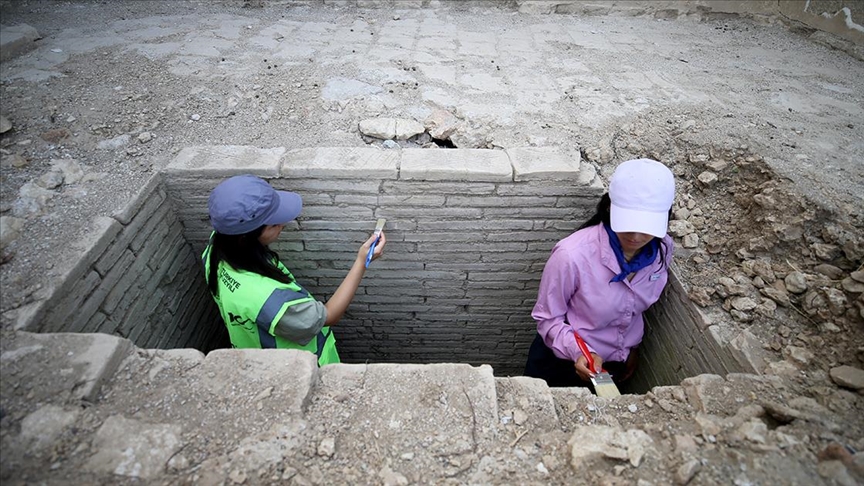
Researchers discovered three separate burials belonging to three different periods, all within the same chamber. Credit: AA

A Treasure for Archaeology

Sillyon’s continuous occupation and layered heritage make it one of the most valuable archaeological sites in Antalya. The newly discovered Roman tomb, in particular, adds an unparalleled dimension to the site’s historical narrative. Through conservation and restoration efforts, the excavation team has stabilized the structure, allowing future generations to study and appreciate its significance.

Supported by Opet as the main sponsor, the excavations under the “Heritage for the Future Project” continue to shed light on Sillyon’s role as a crossroads of civilizations. Each discovery, from Roman chamber tombs to Turkish-Islamic burials, contributes vital details to the broader history of Anatolia.

Unveiling the Secrets of Sillyon

The discovery of a unique Roman tomb in Sillyon Ancient City is more than just an archaeological milestone; it is a window into the cultural and social life of a city that thrived for centuries. As excavations progress, Sillyon continues to reveal its secrets, confirming its status as one of the most important archaeological treasures of Türkiye.

Cover Image Credit: AA

Related Articles

New study says earliest recorded kiss occurred 4500 years ago in Mesopotamia

18 May 2023

18 May 2023

The University of Copenhagen according to researchers, humanity’s earliest recorded kiss occurred around 4,500 years ago in the ancient Middle...

Archaeologists Discover Prehistoric Irish Monuments That May Have Been ‘Routes For The Dead’

27 April 2024

27 April 2024

Traces of hundreds of monuments, which were previously unknown, have been identified in an archaeological survey in Ireland. Five of...

Kent Archaeological Society purchased an Anglo-Saxon hoard ahead of a London auction

1 November 2022

1 November 2022

The Kent Archaeological Society has bought a large collection of Anglo-Saxon artifacts from the sixth and seventh centuries known as...

Parts of the City of the old city of Ghadames called the pearl of the desert collapsed due to rainfall

28 January 2022

28 January 2022

Some parts of the Old City of Ghadames, located in an oasis about 600km southwest of Tripoli near Libya’s border...

The earliest manuscript of Gospel about Jesus’s childhood discovered in Germany

14 June 2024

14 June 2024

A newly deciphered manuscript dating back 1,600 years has been determined to be the oldest record of Jesus Christ’s childhood,...

5000-year-old female figurines found in a Ukrainian cave

15 May 2023

15 May 2023

Archaeologists discovered five clay female figurines hidden inside a hole in a wall in Verteba Cave, in the Borshchiv Region...

2,300-year-old Punic tomb complex found during works on car park for staff

26 October 2024

26 October 2024

A 2,300-year-old Punic tomb was discovered during work in a car park near Mater Dei Hospital in Msida, Malta. The...

Ancient Ruins Hidden Under Thessaloniki Metro Revealed

15 January 2023

15 January 2023

The finds unearthed during the construction of local metro facilities in Thessaloniki, a Greek port city on the Thermaic Gulf...

Unearthed in Perthshire: GUARD Archaeologists Discover Hidden Iron Age Settlement

1 November 2025

1 November 2025

A vanished community that once thrived on a windswept hilltop near Perth, Scotland, has resurfaced after lying buried for over...

6,000-year-old island settlement found off the Croatian coast

24 June 2021

24 June 2021

Archaeologist Mate Parica, a professor at the University of Zadar, noticed something unusual while examining satellite images of Croatia‘s coastline....

Botanical Findings Analysis from Biblical area of Goliath sheds Unprecedented Light on Philistine Ritual Practices

27 February 2024

27 February 2024

Bar-Ilan University researchers shed “unprecedented light” on Philistine ritual practices, such as the use of psychoactive and medicinal plants, by...

Archaeologists have discovered 85 ancient tombs, a watchtower, and a temple site in Egypt’s Gabal al-Haridi region

5 May 2022

5 May 2022

The Egyptian archaeological mission discovered 85 tombs, a watchtower, and a temple site in the Gabal al-Haridi area of Sohag,...

Archaeologists discover complete armored 14th-century gauntlet in Switzerland

18 January 2024

18 January 2024

Excavations in Kyburg in the canton of Zürich, northeastern Switzerland have discovered a 14th-century fully preserved gauntlet of armor in...

A Large Roman Building Discovered on the Limmat

13 April 2024

13 April 2024

In the Steinacher area (Canton of Aargau) on the Limmat there was a Roman settlement that was significantly larger than...

Archaeologists Uncover a 2,500-Year-Old Monumental Solstice Sanctuary in Spain

24 September 2025

24 September 2025

In the hills near the Andalusian town of Jódar, Spain, archaeologists have uncovered a monumental solstice sanctuary where the sun...