
23 June 2026 The Future is the Product of the Past

Recent Excavations Unveil Five Remarkable Statues, Shedding Light on Perge’s Roman Heritage

During the excavations in the ancient city of Perge in Antalya, one of the most organized Roman cities of Anatolia, five different statues were unearthed.

Perge is an ancient city located in the Antalya province of modern-day Turkey, approximately 15 kilometers east of the city of Antalya. Founded in the Hellenistic period, around the 3rd century BC, Perge became an important center of commerce and culture in the region. The city was initially settled by the Pamphylian people and later came under Roman control in the 1st century BC. The ancient city has been on the UNESCO World Heritage Tentative List since 2009.

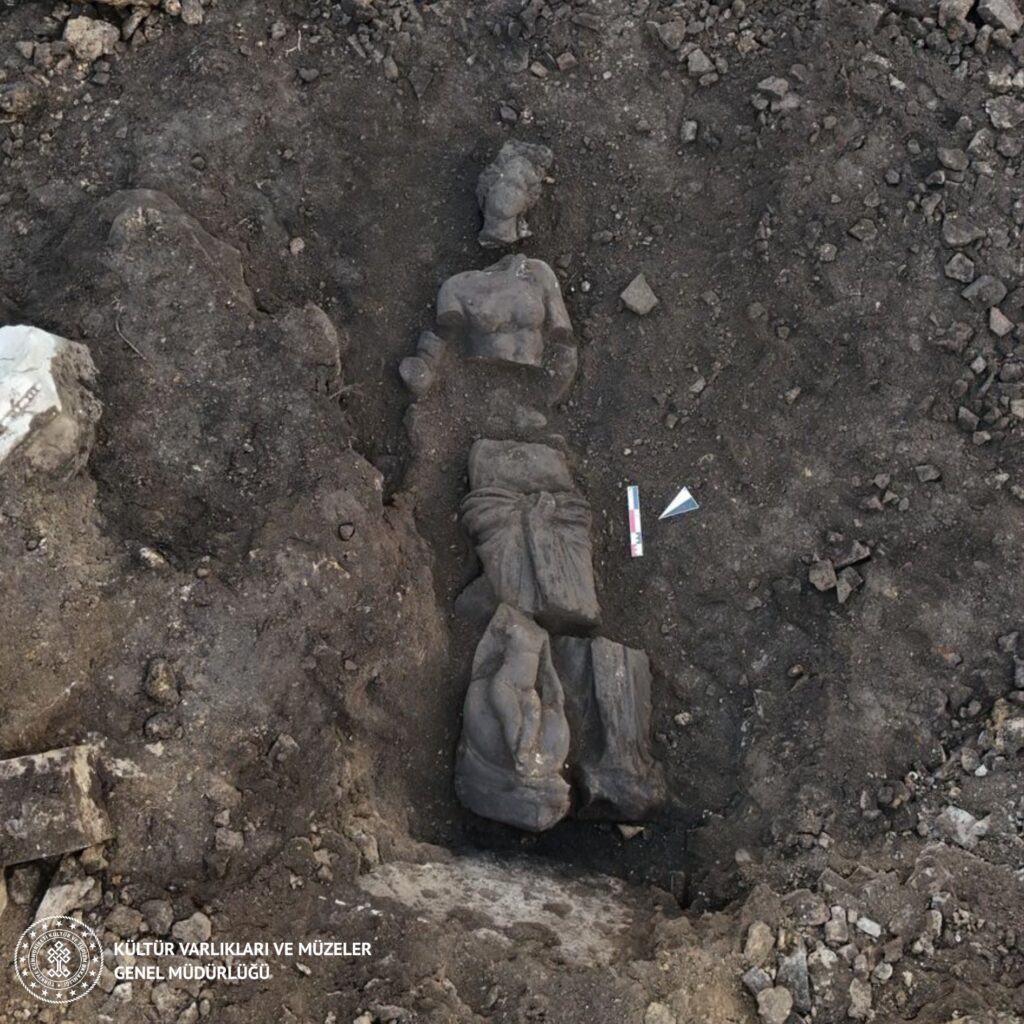
Recent excavations in the ancient city of Perge have unveiled remarkable statues that shed light on the region’s artistic heritage. Among the discoveries is a statue of Aphrodite, approximately 2 meters tall, depicted sitting on a dolphin alongside the god of love, Eros. Initial examinations suggest that this statue is a replica dating back to the 2nd century AD during the Roman Imperial Period.

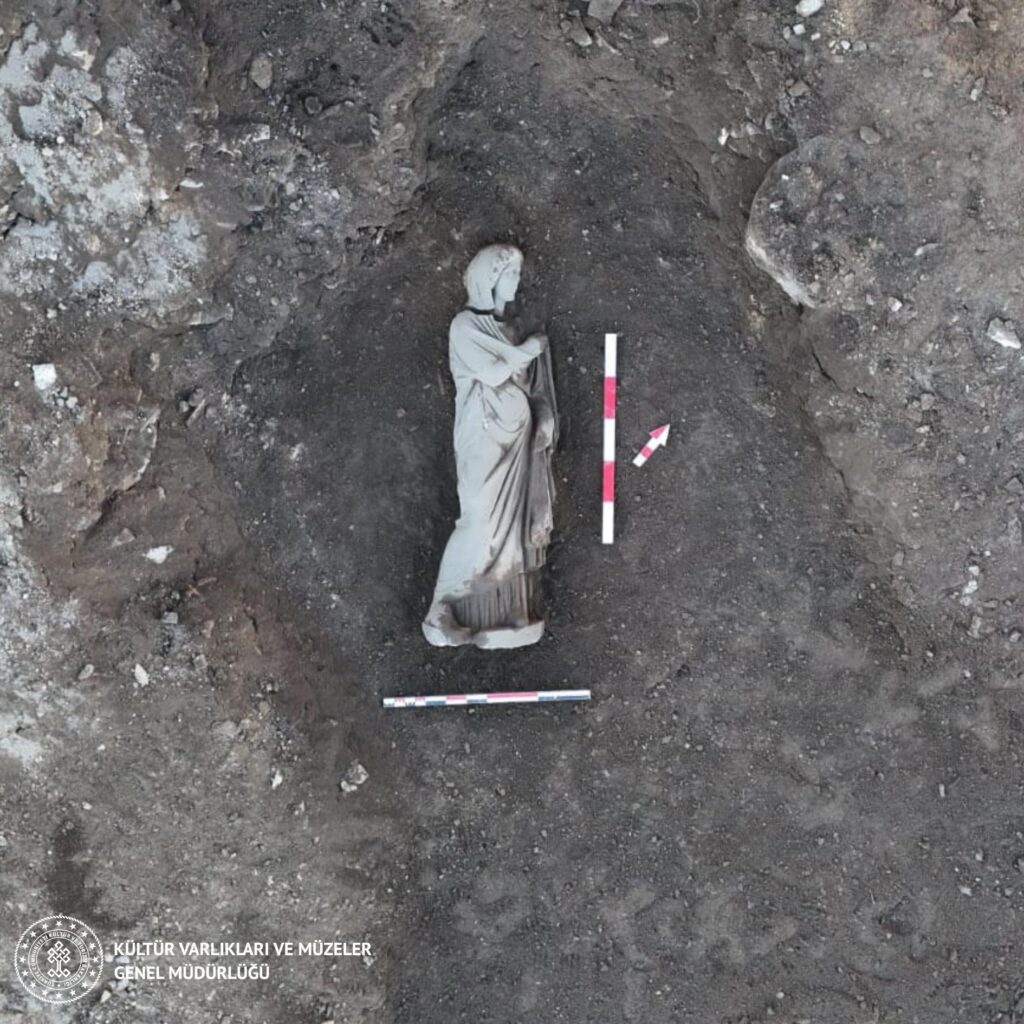
Adjacent to the Aphrodite statue, another significant find is a 1.87-meter tall statue of a clothed woman standing upright. Preliminary assessments indicate that this statue exhibits characteristics from the Severan Period. Additionally, within the same area, another clothed female statue with similar features was discovered in two separate pieces.
Credit: Türkiye Directorate of Cultural Heritage and Museums

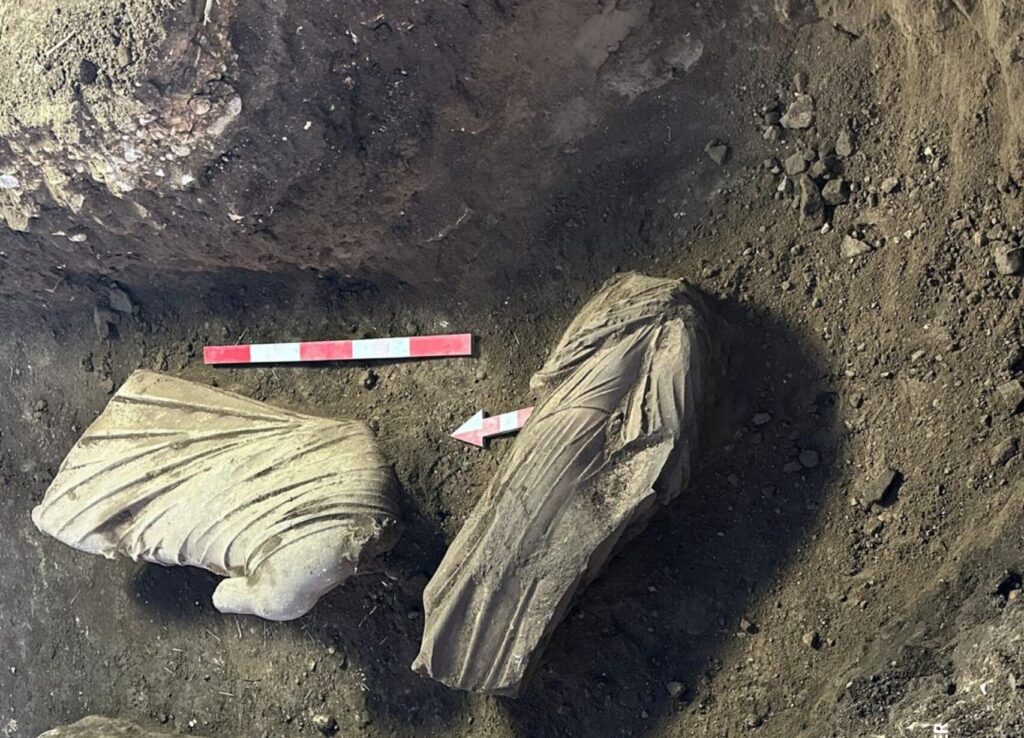
During the excavation works on the Eastern Street of the city, a clothed female statue and a clothed male statue were found side by side, marking them as the other two notable artifacts. These discoveries provide new insights into Perge’s sculptural tradition and contribute to our understanding of the social structure and artistic production processes of the time.


📣 Our WhatsApp channel is now LIVE! Stay up-to-date with the latest news and updates, just click here to follow us on WhatsApp and never miss a thing!!


Roman Imperial art, flourishing from the 1st century BC to the 5th century AD, is characterized by its grand scale, realism, and a blend of influences from earlier Greek and Etruscan traditions. This period saw the emergence of monumental architecture, intricate sculptures, and detailed frescoes that celebrated the power and achievements of the Roman Empire. Artists focused on portraying human figures with a high degree of realism, often emphasizing individual features and expressions.
Credit: Türkiye Directorate of Cultural Heritage and Museums

The ancient city of Perge, located in modern-day Türkiye, serves as a significant example of Roman Imperial art. Renowned for its well-preserved ruins, Perge showcases a rich artistic heritage that reflects the cultural and social dynamics of the time. The city is home to numerous sculptures, including depictions of gods, goddesses, and everyday life, which highlight the artistic techniques and styles prevalent during the Roman era. The recent discoveries of statues, such as those of Aphrodite and other figures, further illustrate the city’s role as a center of artistic production and its connection to the broader trends of Roman Imperial art.

Through these artifacts, we gain valuable insights into the aesthetic values, religious beliefs, and social structures of the Roman Empire, as well as the unique contributions of Perge to this rich artistic tradition.

The excavations in Perge are being conducted as part of the ‘Heritage to the Future Project,’ aimed at preserving and promoting the cultural heritage of the region.

Türkiye Directorate of Cultural Heritage and Museums

Cover Image Credit: Türkiye Directorate of Cultural Heritage and Museums

Related Articles

It may have been designed in Nevali Çori before Göbeklitepe was built

10 October 2021

10 October 2021

Göbeklitepe, Nevali Çori, Karahantepe, and Taştepeler, which will make us rethink what we know about human history, change the information...

New Study Reveals the Contribution of Female Scribes in Medieval Manuscript Production

2 April 2025

2 April 2025

A recent study sheds light on the often-overlooked contributions of women in the production of handwritten manuscripts during the Middle...

Research Team Identifies Oldest Bone Spear Point In The Americas

3 February 2023

3 February 2023

A team of researchers has identified the Manis bone projectile point as the oldest weapon made of bone ever found...

Hellenic and Roman statue heads unearthed in Knidos

9 December 2021

9 December 2021

Hellenic and Roman sculpture heads were unearthed in the ancient Carian settlement Knidos, located in the Datça district of Muğla...

Poseidon Temple in Greece Larger than Previously Assumed

27 January 2024

27 January 2024

New excavations at Kleidi-Samikon in Greece’s Western Peloponnese show that the temple, discovered in 2022, is more monumental than previously...

Researchers Discovered Wreckage of a Schooner that Sank in Lake Michigan in Late 1800s

27 July 2024

27 July 2024

Maritime historians from the Wisconsin Underwater Archeology Association discovered the wreckage of a schooner that sank in Lake Michigan in...

1,500-Year-Old Christian Ivory Reliquary Box Discovered in Austria

27 June 2024

27 June 2024

Archaeologists have discovered an exceptional Christian ancient ivory reliquary box in Austria that is thought to be around 1,500 years...

The Temple of Persian Water Goddess Anahita Discovered in Iraqi Kurdistan

8 March 2024

8 March 2024

Archaeologists excavating the Rabana-Merquly mountain fortress in what is present-day Iraqi Kurdistan suggest that it may also have served as...

Rare 1,400-Year-Old Stone Sculpture of a Woman Unearthed in Kyrgyzstan’s Chui Valley

31 October 2025

31 October 2025

Archaeologists from the Greater Altai Research and Educational Center for Altaic and Turkic Studies at Altai State University, in collaboration...

For the first time, a Viking Age grave rich in artifacts has been found in Norway’s capital city, Oslo

23 December 2022

23 December 2022

A Viking Age grave rich in artifacts has been discovered for the first time in Norway’s capital city, Oslo. The...

8,500-Year-Old Mirror Unearthed at Canhasan in Central Türkiye

29 November 2025

29 November 2025

An 8,500-year-old obsidian mirror has been unearthed at Canhasan in central Türkiye, revealing new insights into early Neolithic craftsmanship and...

A Chapel was Found Under the Madonna Tal-Hniena Church in Qrendi, Malta

21 May 2021

21 May 2021

Underneath the Madonna Tal-Hniena church in the village of Qrendi in the south of Malta, the remains of an ancient...

In Moravia, archaeologists discover divine thrones, thousands of artifacts and a new settlement

13 August 2021

13 August 2021

During a four-year dig in the Moravian city (Czech Republic) of Perov, rare gems, mysterious burial places, and divine thrones...

Largest Headhunting Massacre of Women and Children in Neolithic China

12 November 2023

12 November 2023

A new study discovers that ancient headless skeletons discovered in mass graves in China are the remains of victims who...

2,200-Year-Old Satyr Mask Unearthed in Phanagoria Confirms Existence of Ancient Greek Theater

26 September 2025

26 September 2025

First tangible evidence of Greek theater in the Black Sea colony sheds light on the cultural life of the Bosporan...