
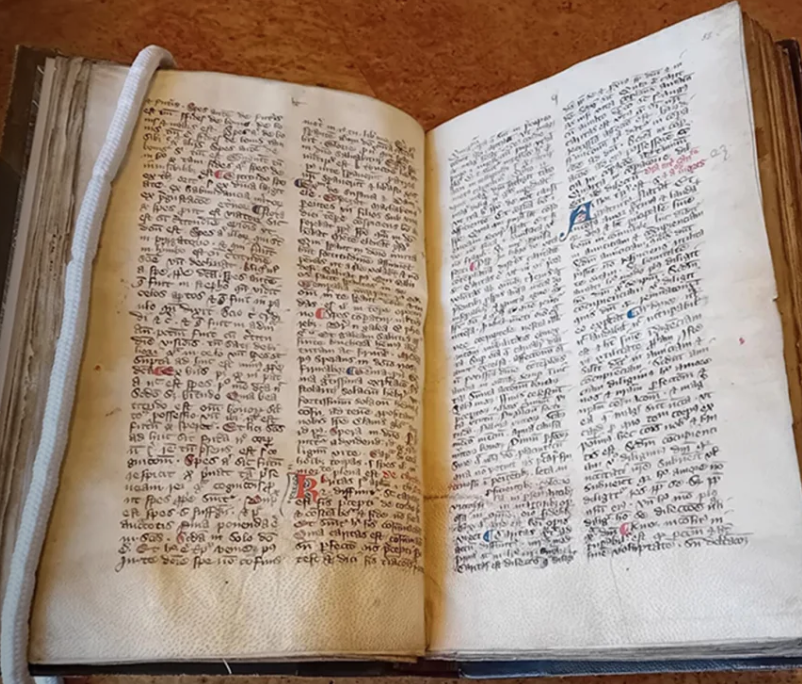
A medieval manuscript quietly preserved for centuries in a British school library has now been confirmed as a unique survival—the only complete version of a major spiritual work written by one of medieval England’s most influential authors.
The manuscript, housed in the Ancient Library of Shrewsbury School, has been identified as the sole surviving full version of Emendatio vitae (The Emending of Life), a 14th-century spiritual treatise by the English hermit and theologian Richard Rolle.
Scholars say the discovery reshapes current understanding of medieval Christian writing, authorship, and textual transmission in England.
A discovery hidden in plain sight
The manuscript has belonged to Shrewsbury School since 1607, when it entered the collection as a gift. For more than four centuries, it remained largely unnoticed—catalogued, but never recognized as an authorial original.
That changed when Dr Timothy Glover, a specialist in medieval literature at the University of Cambridge, examined the volume in detail.
Speaking to the BBC, Glover said he was likely “the only person since the Middle Ages to have read this book knowing it was Richard Rolle’s original, complete text.” According to the BBC, his analysis confirmed that the manuscript preserves the work exactly as Rolle composed it—without later abbreviation or editorial intervention.
According to a statement by Shrewsbury School, Dr Timothy Glover has confirmed that the manuscript—known internally as MS 25—preserves the text exactly as Richard Rolle originally wrote it. More than 120 surviving copies of Emendatio vitae are known worldwide, but all are shortened or adapted versions. The school added that the manuscript entered its collection in 1607, just one year after the Ancient Library was founded, and has remained there ever since.
Why this text matters
Richard Rolle was among the most widely read spiritual authors of medieval England. More than 650 manuscripts of his writings survive in libraries across Britain and Europe, a number that places him alongside figures such as Julian of Norwich and Walter Hilton in terms of influence.
Yet Emendatio vitae has long been known only through shortened or adapted versions. Over 120 manuscript copies of the work exist, but all are abridged.
The Shrewsbury manuscript is different.
According to the BBC, Cambridge scholars describe it as “priceless”, noting that it offers rare insight into Rolle’s working methods, the structure of his spiritual thought, and the identity of his earliest intended readers.
Twelve stages of spiritual transformation
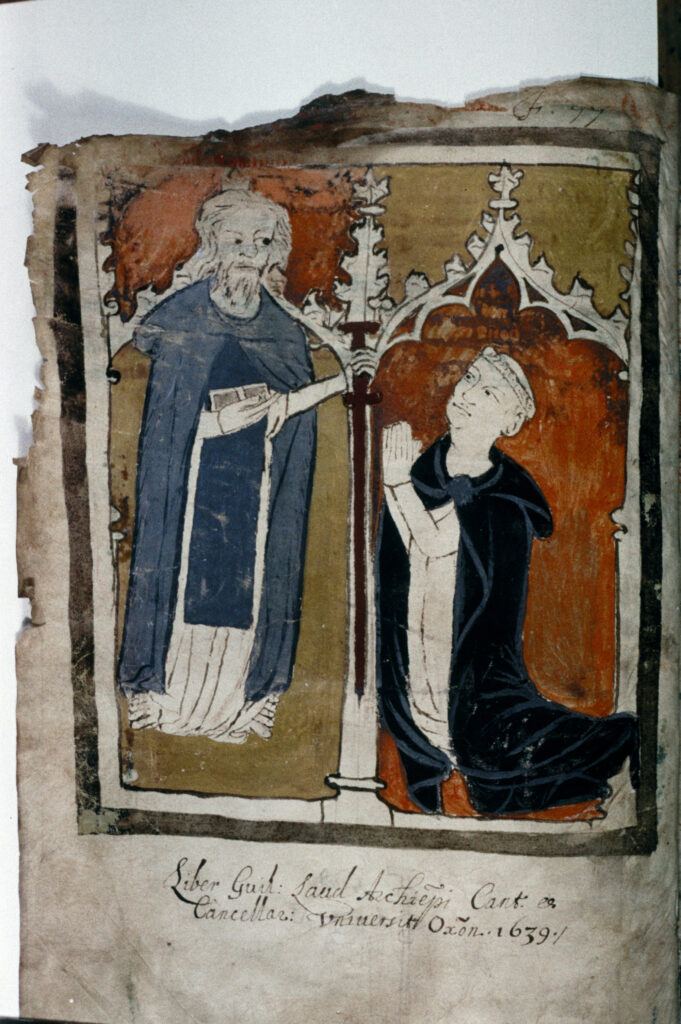
Written in the 14th century, Emendatio vitae sets out a structured spiritual journey in twelve distinct stages, beginning with a conscious rejection of worldly life and moving toward total devotion to God.
The text offers practical and theological guidance on:
cultivating virtue,
resisting sin,
prayer and meditation,
and sustaining inner discipline.
Rolle, who lived as a hermit in Yorkshire, was known for combining emotional spirituality with disciplined theological reflection—an approach that proved enormously influential among later medieval readers, especially women’s religious communities.
A clearer picture of medieval literary culture
The rediscovery of the complete text allows scholars to compare the original with later shortened versions, shedding light on how medieval scribes and readers reshaped spiritual works for different audiences.
This may reveal which passages were most frequently censored, simplified, or re-framed, and how spiritual literature evolved to meet the needs of monasteries, lay readers, and devotional movements.
For medievalists, this represents a rare opportunity: to study not only a text, but its entire afterlife.
A school library at the center of international research
Shrewsbury School’s headmaster, Leo Winkley, described the confirmation as “an extraordinary discovery” in comments reported by the BBC.
“We are honoured to be the custodians of the original and only surviving complete version of Richard Rolle’s Emendatio vitae,” he said.
The manuscript will remain at the school, but scholars expect it to become the focus of international research projects, including comparative textual studies and digital transcription initiatives.
Institutions such as Oxford and Cambridge libraries—long central to medieval manuscript scholarship—are expected to collaborate closely as further analysis continues.
Reassessing a medieval voice
For Dr Glover, the significance of the find goes beyond textual uniqueness. As he told, the manuscript offers “a direct connection to an author who deserves far greater recognition.”
Seven hundred years after it was written, Emendatio vitae has finally re-emerged—not as a fragmented echo, but as a complete voice from medieval England, preserved by chance and revealed by scholarship.
In a quiet school library, history had been waiting.
Cover Image Credit: Shrewsbury School
