
Advanced soil analysis uncovers hidden details of Mesolithic clothing at Skateholm cemetery
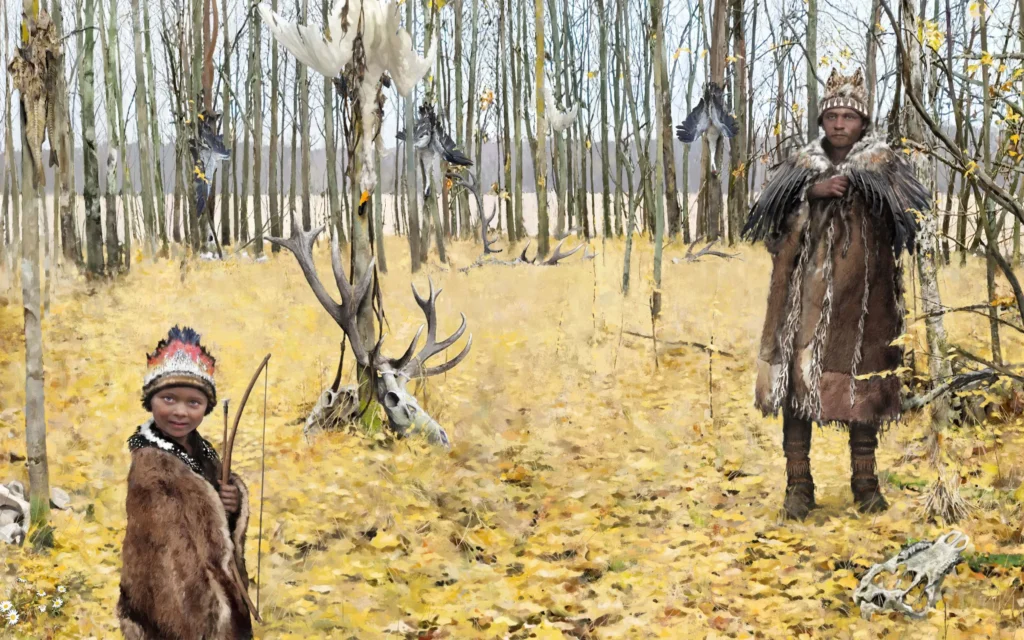
More than 7,000 years ago, along the southern coast of what is now Sweden, hunter-gatherer communities gathered to bury their dead with extraordinary care. Now, groundbreaking scientific analysis has revealed that some of these individuals were laid to rest wearing elaborate fur garments and feathered headdresses — including a young boy buried in deerskin and crowned with woodpecker feathers.
The discoveries come from the Late Mesolithic cemetery at Skateholm, located near the Baltic Sea. Used between 5200 and 4800 B.C., Skateholm has long been known as one of northern Europe’s most important Stone Age burial grounds. But until recently, much of the clothing and organic decoration worn by the deceased had vanished without a trace.
That changed with the development of a new microscopic soil analysis technique detailed in the journal Archaeological and Anthropological Sciences. The research was led by archaeologist Tuija Kirkinen of the University of Helsinki, alongside a multidisciplinary team of specialists in archaeology and environmental analysis.
A New Way to See the Invisible
Organic materials such as fur, plant fibers, and feathers rarely survive in ancient graves unless preserved in exceptional environments like peat bogs, glaciers, or waterlogged soils. In most terrestrial burial sites, centuries of microbial activity and soil chemistry erase such fragile traces.
To overcome this challenge, researchers analyzed 139 soil samples taken directly from 35 graves at Skateholm. The team first identified visible fragments — bone, flint, charcoal, seeds — before sieving and centrifuging the remaining sediments. Under a microscope, they examined microparticles, searching for minute fibers, hairs, and feather fragments invisible to the naked eye.
The results were striking.
Mammalian hairs were found in 20 of the graves. While only about a quarter could be confidently matched to specific animals, the identified species included deer, otter, and cattle. In one burial, hair from mountain hare, weasel or stoat, bat, and owl was recovered from the head area of a young adult male. The presence of red deer tooth beads near his skull suggests he may have been interred wearing decorative headgear.
Feather fragments proved even more widespread. At least 21 individuals appeared to have been buried with feathers, many from waterfowl species. Several of these were located around the head and neck, pointing to feathered headdresses or capes.
The Boy with the Woodpecker Crown
Among the most compelling graves was that of a child buried alongside an adult male. Excavators had previously uncovered brown bear teeth, amber beads, bone tools, stone implements, and traces of red ocher within the grave — all indicators of ceremonial significance.
Microscopic analysis of soil taken from between the two bodies revealed deer hair and what researchers identified as a likely woodpecker feather. These fragments suggest the child may have been dressed in a deerskin garment and adorned with a headdress featuring woodpecker feathers.
Woodpeckers hold ecological and symbolic importance in boreal forests, where their distinctive drumming and striking plumage make them highly visible. While the exact meaning of such adornment remains speculative, the findings suggest that feathers were not random decorations but meaningful elements in burial attire.
The combination of deerskin clothing and feathered headgear paints a vivid picture of a carefully prepared burial, challenging earlier assumptions that Stone Age clothing was purely functional.
The Woman with Feathered Garments and Fur Footwear
Another grave yielded equally remarkable details. An older woman buried at Skateholm had feather fragments concentrated around her neck area, likely forming part of a feather-fringed cape or headdress. Soil samples from her right heel revealed white hair from a weasel or stoat and brown hair from another carnivore.
Researchers believe she may have been buried wearing multicolored fur footwear — an extraordinary detail that would have otherwise disappeared entirely from the archaeological record.
These findings underline the aesthetic complexity of Mesolithic clothing. Far from being simple animal hides draped over the body, garments appear to have incorporated contrasting colors, textures, and species-specific materials.
Birds, Identity, and Symbolism
Co-author Kristiina Mannermaa emphasized the cultural significance of birds in these communities. Feathers from waterfowl were common, but the presence of woodpecker and possibly owl feathers suggests a broader symbolic repertoire.
In many traditional societies, birds are associated with spiritual mediation, seasonal cycles, and cosmological beliefs. Although no written records exist from the Mesolithic period, thecareful placement of feathers in burial contexts implies ritual intent.
The study also documented red ocher use in several graves — a practice widespread in prehistoric burials across Eurasia. The integration of ocher, animal teeth ornaments, fur garments, and feathered adornments points to highly structured funerary traditions.
Expanding the Archaeological Toolkit
While the technique marks a significant advance, the researchers caution that identifying species from microscopic feather and hair fragments remains challenging. Improvements in comparative reference collections and the integration of sediment DNA analysis may enhance future precision.
Nonetheless, the approach opens new possibilities for reexamining older excavation sites. Soil samples previously collected but never subjected to such detailed analysis could hold untapped information about clothing, symbolism, and identity in prehistoric societies.
At Skateholm, the findings transform our understanding of Mesolithic life and death. They suggest that clothing was not merely utilitarian but embedded with meaning — perhaps signaling age, status, kinship, or spiritual role.
Rewriting the Stone Age Wardrobe
For decades, reconstructions of Stone Age attire have relied largely on rare preserved artifacts or ethnographic analogy. The Skateholm study demonstrates that even in seemingly poor preservation conditions, microscopic evidence can survive.
The image that emerges is one of creativity and ceremony: a young boy in deerskin crowned with woodpecker feathers; an older woman wrapped in feathered garments, her feet protected by carefully crafted fur footwear; mourners assembling beads, teeth, pigments, and textiles in acts of remembrance.
In the quiet soils of southern Sweden, long-silent fibers have begun to speak. And through them, the people of the Mesolithic world regain color, texture, and individuality — reminding us that even seven millennia ago, humans marked life and death with artistry and meaning.
Kirkinen, T., Larsson, L. & Mannermaa, K. Waterbirds, mustelids and bast fibres – evidence of soft organic materials in the Late Mesolithic Skateholm I and II cemeteries, Sweden. Archaeol Anthropol Sci 18, 56 (2026). https://doi.org/10.1007/s12520-026-02415-7
Cover Image Credit: Tom Björklund
