
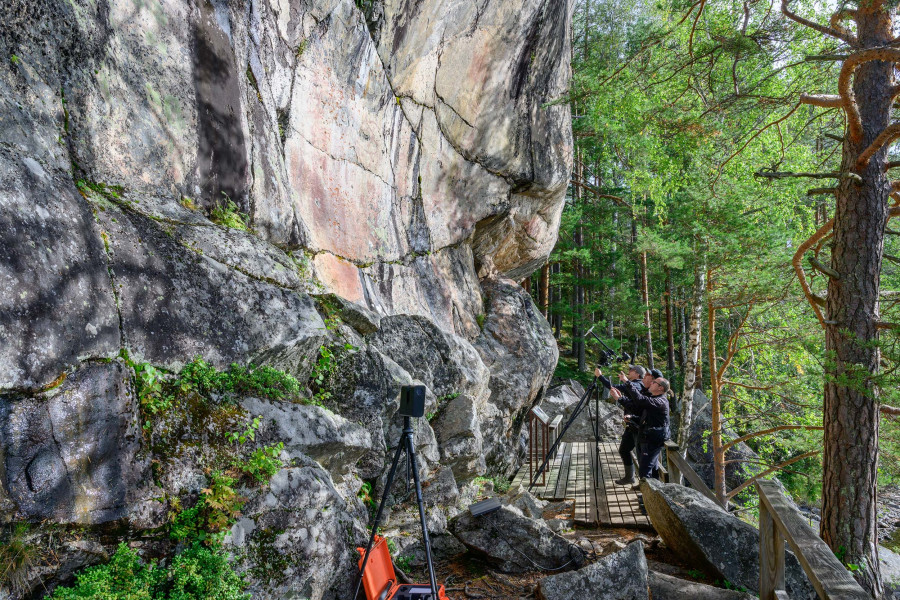
On the rocky shores of Lake Yövesi in Ristiina, Finland, a silent elk gazes into eternity. This iconic figure, painted in red ochre some 5,000 years ago, is part of the largest known rock art collection in the Nordic region — the Astuvansalmi rock paintings. Now, thanks to state-of-the-art imaging technologies, researchers believe the ancient site may still be hiding more images beneath layers of time, moss, and weathered stone.
A New Era in Archaeological Imaging
Until recently, around 80 prehistoric paintings were known to exist at Astuvansalmi. But a new research project led by the University of Eastern Finland’s School of Computing is pushing the boundaries of what the human eye can see.
“We’ve been here for three hours and already identified three potential new figures,” says Project Coordinator Veikko Miettinen. “We’re testing a completely new imaging technique — one that didn’t even exist a few years ago.”
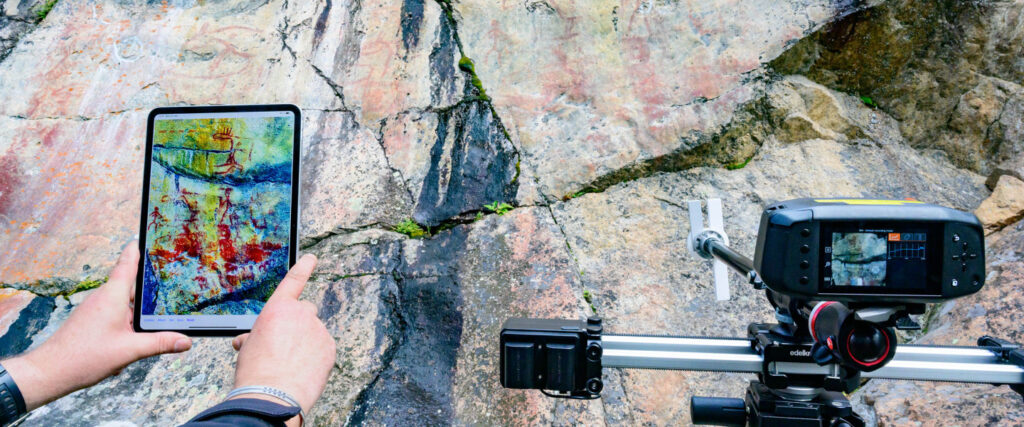
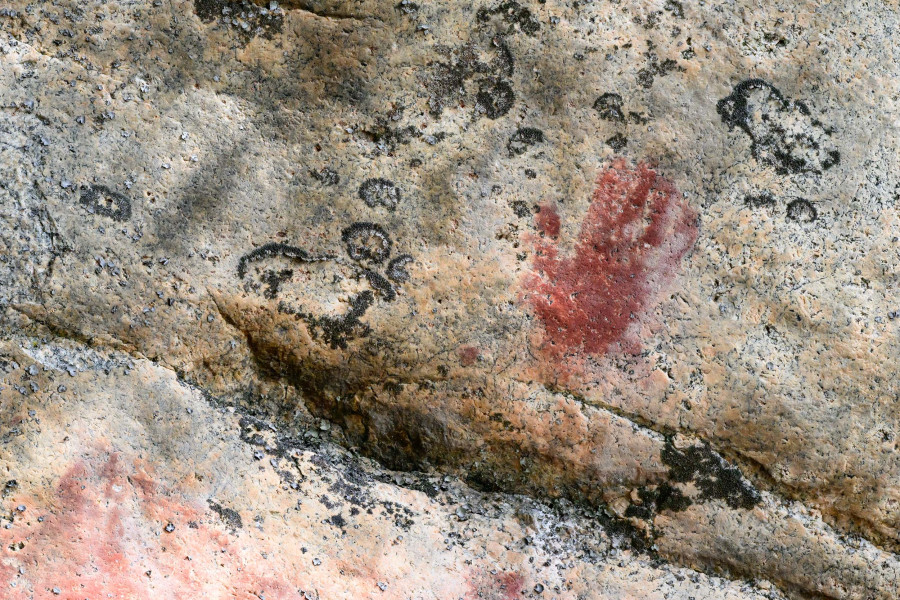
The team uses hyperspectral cameras capable of distinguishing subtle variations in red pigments and determining their age and chemical composition. Even to the naked eye, the rock reveals multiple shades of red — traces of different paint mixtures used by ancient artists.
“By analyzing hyperspectral images, we can separate these hues and even find out how many different pigment combinations were used,” Miettinen explains. “It’s computing science applied directly to archaeology.”
Creating a Digital Twin of the Rock Face
The Astuvansalmi cliff is being documented using several complementary technologies. First, the entire site is photographed with GigaPan panoramic imaging, then scanned using a Matterport 3D scanner and a custom-built triple-camera system mounted on an extended arm.
All visual data is uploaded to cloud servers directly from the site, forming a digital twin of the Astuvansalmi rock surface. This high-resolution model allows researchers to examine every millimeter of the paintings in detail — and preserve them digitally for future generations.
“Previously, cameras could only capture three color channels,” says 3D specialist Rami Saarikorpi from 360Finland. “Today, hyperspectral scanners can record hundreds of wavelengths, giving us a detailed look at pigments and the rock surface itself.”
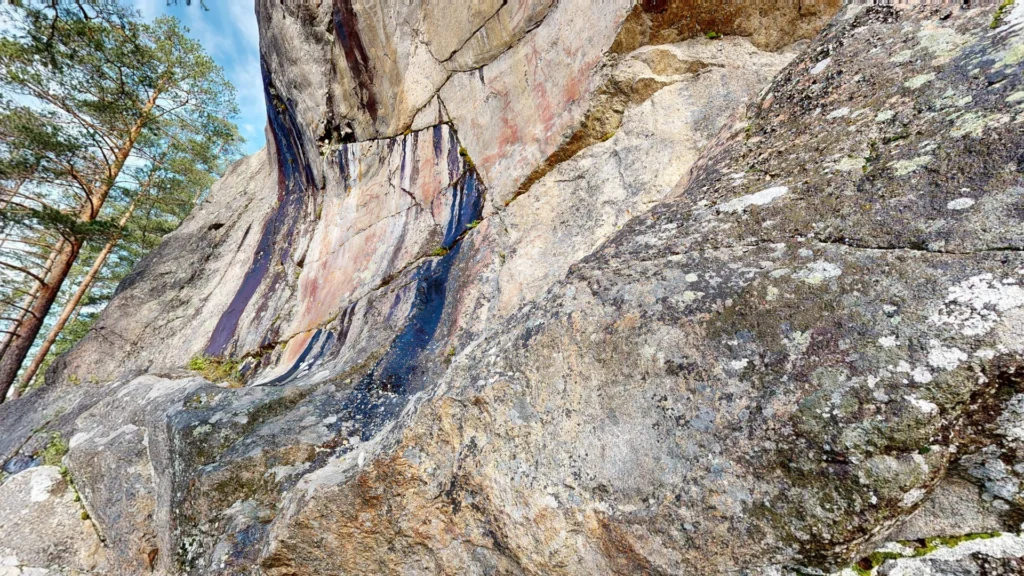
Using 3D Gaussian splatting rendering technology, the team can build an accurate three-dimensional model of the site and pinpoint the exact locations of pigment traces.
From Game Engines to Ancient Lakes
The researchers are also using game engine technology to recreate prehistoric landscapes. During the time the paintings were made, the water levels of the Saimaa lake system were significantly higher.
“By digitally raising the water surface to its ancient level, we can see where prehistoric artists might have stood — in a boat or on ice — and predict where more paintings could be found,” Miettinen notes.
Similar imaging surveys have already been conducted at other Finnish rock art sites, such as Hossa’s Värikallio and Saraakallio in Laukaa, and the same methods may soon reveal previously unknown locations.
Artificial Intelligence Meets Ancient Art
Artificial intelligence is also joining the investigation. Dr. Dmitri Semenov, Head of Research at the School of Computing, explains how neural networks are being trained to recognize recurring shapes within the rock imagery.
“Machine learning allows us to detect patterns and perhaps even identify an individual artist’s ‘signature’,” Semenov says. “We can compare motifs from Astuvansalmi with those in places like Alta in Norway or Murmansk in Russia.”
However, historians advise caution. Professor Kimmo Katajala of the University of Eastern Finland notes that prehistoric imagery reflects distinct cultural traditions.
“If AI is trained on data from one region, it may misinterpret images from another,” he warns. “Rock paintings and carvings come from very different cultures and time periods. Algorithms can be useful — but they must be used critically.”
Preserving Fragile Heritage for the Future
Exposure to wind, frost, and water erosion continues to endanger these irreplaceable paintings. That’s why creating a comprehensive digital record is so important.
“The weathered images might not survive another thousand years,” Semenov emphasizes. “Digitizing them ensures accessibility for everyone — not just those who can physically visit the site.”
The virtual preservation effort could soon reach museum audiences worldwide. In Russia’s Murmansk Regional Museum, visitors already explore underwater worlds through VR headsets, leaving digital handprints in virtual space — just as their ancestors once did on rock walls.
“The same technology can bring real rock art sites into museums,” Semenov says. “Visitors could walk virtually along the Astuvansalmi cliff and see every painting in its original context.”
A Bridge Between Past and Future
For thousands of years, humans have left their marks on stone — from the elk and swan motifs of Finnish hunter-gatherers to the carved whale and human figures on the shores of the White Sea. Each tells a story of identity, belief, and connection with nature.
Now, through the fusion of archaeology, computer science, and artificial intelligence, those ancient voices are being heard again — pixel by pixel, spectrum by spectrum.
The story of Astuvansalmi is far from over. Beneath the lichen and timeworn rock, more images may still wait to be revealed — their rediscovery bridging the deep past and the digital age.
Cover Image Credit: Researchers Veikko Miettinen, Dmitri Semenov, and Rami Saarikorpi at the Astuvansalmi rock cliffs in Finland. University of Eastern Finland
