17 February 2026 The Future is the Product of the Past

Spectacular Roman Mosaics Unearthed in Thalheim bei Wels: A Unique Discovery in Upper Austria

Archaeologists from the University of Salzburg uncovered three exceptionally preserved Roman mosaics during excavations

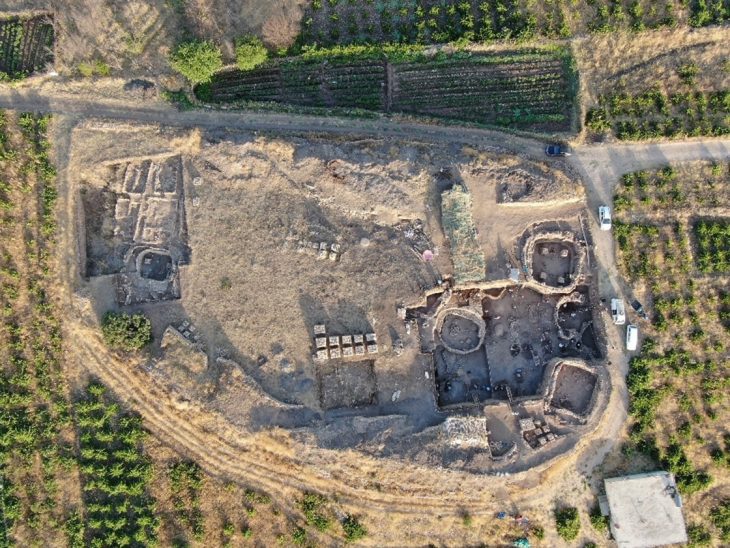
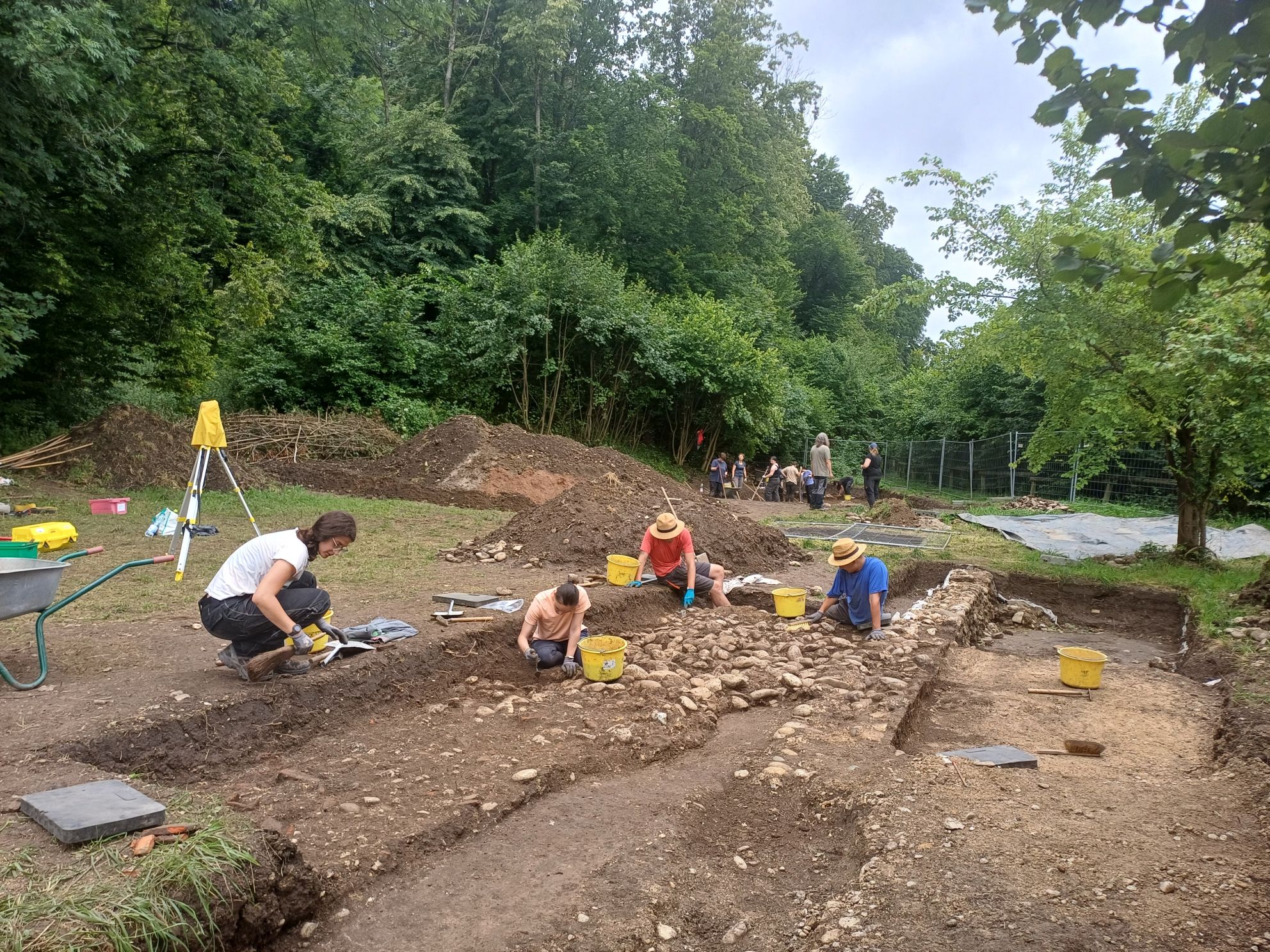
A remarkable archaeological discovery has captivated historians and culture enthusiasts alike: three extraordinarily well-preserved Roman mosaics have been uncovered in Thalheim bei Wels, a site near the ancient Roman city of Ovilava (modern-day Wels). The ongoing excavations, led by archaeologists from the University of Salzburg in collaboration with the Upper Austrian State Cultural Institution (Oberösterreichische Landes-Kultur GmbH), have revealed a vast Roman villa complex dating back nearly 2,000 years.

A Major Archaeological Site Overlooking Roman Ovilava

Since 2023, researchers have been exploring the ruins situated on Reinberg hill, offering a commanding view of what was once Ovilava—an important Roman settlement in Noricum. The scale and location of the site are impressive. Covering more than 1,000 square meters, the villa likely belonged to one of the wealthiest families of the region, based on the architectural complexity and high-quality decorative elements found.

Three Unique Roman Mosaics Discovered

During the final week of the 2024 excavation campaign, archaeologists uncovered the first of three stunning mosaic floors. Two more mosaics have since been revealed during the 2025 dig. One features a large vessel with curved handles and a wide mouth, believed to depict a krater, an ancient mixing bowl for wine—an object commonly used in Roman feasting rituals. Another mosaic shows intricate geometric patterns, only partially excavated to date.
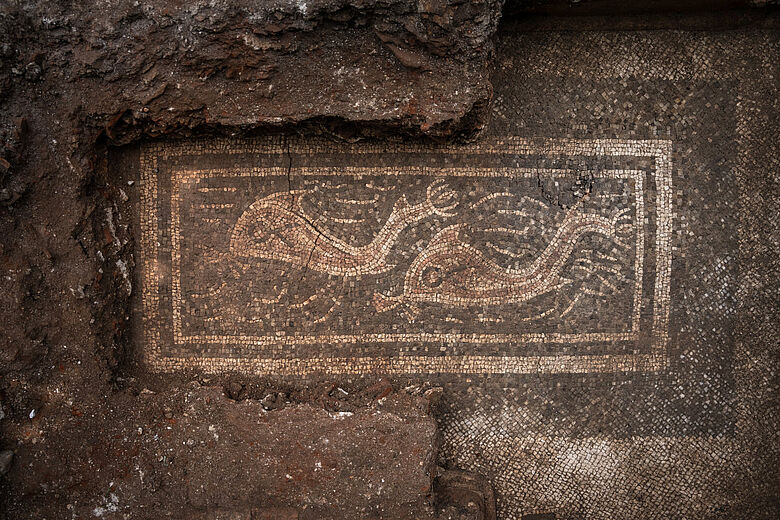
This Roman mosaic featuring dolphin depictions was uncovered in Thalheim. Credit: OÖLKG / University of Salzburg

The true highlight, however, is a mosaic depicting two dolphins, a rare and symbolic motif in Roman art often associated with marine themes and vitality. Roman mosaics are an extreme rarity in Upper Austria, making this find not only significant due to its excellent preservation but also because of its artistic and cultural value.


📣 Our WhatsApp channel is now LIVE! Stay up-to-date with the latest news and updates, just click here to follow us on WhatsApp and never miss a thing!!


Open Excavation Day: June 10, 2025

The excavation phase concluded on June 6, 2025, but the public will have a rare opportunity to view these ancient masterpieces up close. On Tuesday, June 10, a special Open Excavation Day will allow visitors to experience the mosaics on-site and learn more about the ongoing research from the experts themselves.

Led by Renowned Experts

The project is directed by Dr. Felix Lang of the University of Salzburg and Stefan Traxler from the Upper Austrian State Cultural Institution. Their work continues to shed new light on Roman life in Noricum and enrich our understanding of Upper Austria’s ancient heritage.

University of Salzburg

Cover Image Credit: Oberösterreichische Landes-Kultur GmbH
Related Articles

Lovingly gazing mosaics restored in Turkey’s Metropolis

16 October 2021

16 October 2021

In the ancient city of Metropolis in the Torbali district of the western Izmir province, mosaics portraying Eros, the Greek...

Severe drought in Italy unearths remains of an ancient bridge in Rome

15 July 2022

15 July 2022

Continued severe heat in Italy has uncovered an archaeological treasure in Rome: a bridge reportedly built by the Roman emperor...

Hundreds of oil lamps discovered in Aigai, “the City of Goats”

23 September 2023

23 September 2023

During the ongoing excavations in the Aigai Ancient City, located near the Yuntdağı Köseler Village of Manisa province in western...

3,500-Year-Old Dining Set Found at Konya Karahöyük, in Türkiye

5 September 2025

5 September 2025

Archaeologists in Türkiye have uncovered an extraordinary 3,500-year-old dining set, including a jug, plate, and cup, during excavations at Konya’s...

Ancient Mesopotamians bred horse-like hybrids

17 January 2022

17 January 2022

New research finds that Mesopotamians were utilizing hybrids of domesticated donkeys and wild asses to drive their war wagons 4,300...

An Unusual Artifact Points to Roman Britain Rituals Linked to Fertility, Painted Dog Penis Bone Found in England

9 January 2025

9 January 2025

In a Roman quarry shaft in Surrey, England, archaeologists have discovered one of the most unusual human and animal remains...

Oldest Known Tiger Figurine Unearthed in Northern Iran — 5,000 Years Old

21 October 2025

21 October 2025

Archaeologists have identified what may be the world’s oldest depiction of a tiger — a 5,000-year-old ceramic figurine excavated at...

Remains of the summer palace of Genghis Khan’s grandson, Hulagu Khan, found in eastern Turkey

7 July 2022

7 July 2022

The archeology study team, consisting of Turkish and Mongolian scientists, found important findings in the study carried out to find...

Are There Stone Age Megastructures on the Baltic Sea Floor?

11 June 2025

11 June 2025

The western Baltic Sea may conceal far more prehistoric cultural heritage than previously believed — including monumental underwater structures created...

Rare 2nd–3rd Century Roman Intaglios Unearthed at Bremenium Fort in England

6 November 2025

6 November 2025

Archaeologists excavating the remote Bremenium Roman Fort in High Rochester, Northumberland, have uncovered two exquisite intaglios—engraved gemstones once set into...

An Urartian fortress was discovered at an altitude of 3,300 meters in eastern Turkey

2 July 2022

2 July 2022

In the Gürpınar district of Van, located in eastern Turkey, a fortress ruin, which is considered to be used by...

A 500-year-old mural linked to an Aztec god was found under layers of paint in Mexican Church

15 October 2022

15 October 2022

A mural of an Aztec rabbit God of alcohol is not something anyone expects to see inside a church, but...

3,000-Year-Old Cave Paintings Discovered in Itatiaia National Park in Rio de Janeiro, Brazil

13 April 2025

13 April 2025

In a stunning revelation, a dedicated team of researchers from the National Museum, in collaboration with the Federal University of...

In Ryazan, the first birch bark letters were discovered

13 September 2021

13 September 2021

The first birch bark letters were found at the Vvedensky excavation site in the Kremlin in Pereyaslavl Ryazan (modern Ryazan)....

A rare 6,000-year-old elephant ivory vessel was unearthed near Beersheba

9 April 2024

9 April 2024

A recent excavation near Beersheba in southern Israel uncovered an ivory vessel crafted of elephant tusks dating to the Chalcolithic...