
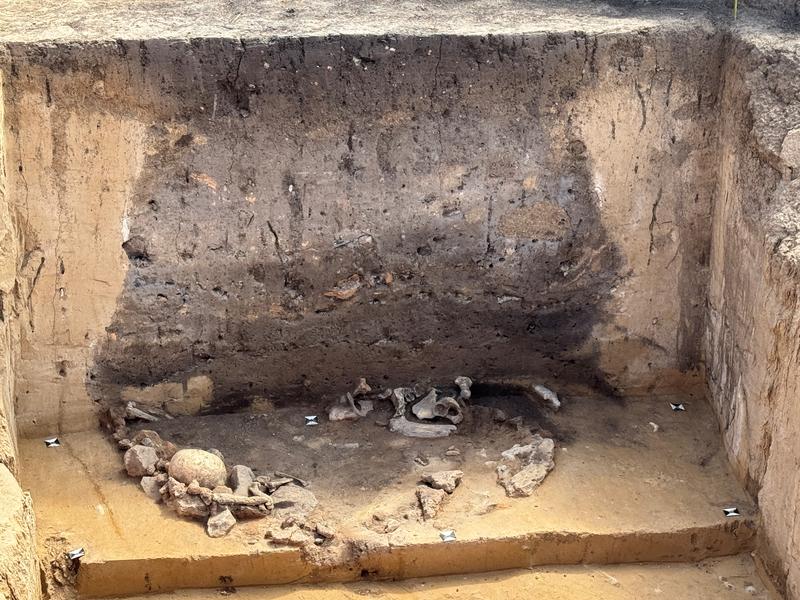
Archaeologists uncover over 5,000-year-old ritual pits filled with burned structures, dog remains, and human skulls in Saxony-Anhalt, suggesting complex ceremonies amid societal turmoil.
In a stunning archaeological discovery near Gerstewitz, eastern Germany, researchers have uncovered twelve ritual pits dating back over 5,000 years to the Salzmünde culture—a late Neolithic society known for its enigmatic and often violent funerary practices. The find was made ahead of construction for the SuedOstLink, a major electric transmission project, and is being hailed as a significant contribution to understanding prehistoric European cultures.
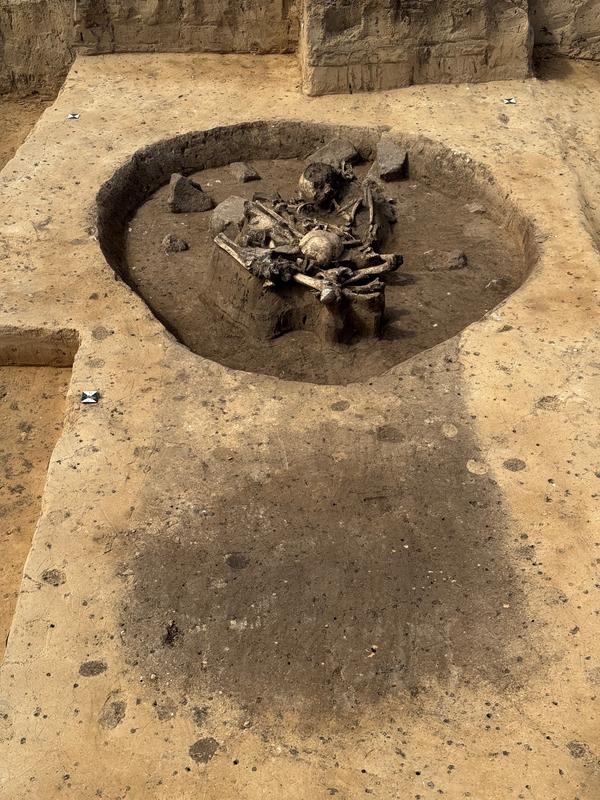
Led by the State Office for Heritage Management and Archaeology Saxony-Anhalt, in collaboration with grid operator 50Hertz, the excavation reveals a previously unknown ceremonial landscape beneath the planned power line. The pits—circular in shape and up to 2.5 meters deep—contained an array of ritual materials: dog bones arranged in anatomical order, a human skull, charred remnants of houses, and intact pottery vessels likely used as sacrificial offerings.
Ritual Pits Reflect Fire Ceremonies and Ancestor Veneration
Each pit appears to have been more than just a burial or refuse site. According to the archaeologists, the contents and organization of the deposits suggest deliberate, multi-stage rituals involving fire, animal sacrifice, and perhaps extended periods of exposure or ceremony. One particularly notable find includes a pair of ceramic vessels carefully placed within a pit—seemingly untouched by time—indicating their ceremonial purpose.
Another striking element is the presence of dog bones still in anatomical order, but clearly affected by fire. Next to them, a human skull was discovered without weathering, implying it had been deposited more recently than the dog remains. This discrepancy suggests the pits may have remained open for long periods, accommodating complex ritual stages or that the dog remains were preserved elsewhere before being ritually buried.
Further deepening the mystery, researchers found an ancient oven pit converted into a grave containing two human bodies that had been exposed elsewhere prior to burial. Such reuse of domestic features for funerary purposes speaks to a symbolic transformation of the everyday into sacred space.
The Salzmünde Culture: A Legacy of Complexity and Contradiction
The Salzmünde culture (ca. 3400–3050 BCE), a regional branch of the larger Funnel Beaker Culture, inhabited areas along the middle and lower Saale River in present-day Saxony-Anhalt. Previously excavated sites have shown signs of unusual mortuary behavior—burials beneath piles of broken pottery, burned house debris, and frequent reburials involving only parts of skeletons, particularly skulls.
Violence, too, was a recurring theme. Signs of trauma and post-mortem manipulation indicate that death and memory were anything but straightforward for these communities. The new findings near Gerstewitz support this image, adding fresh evidence that ritual, memory, and identity were deeply intertwined in Salzmünde cosmology.
Climate Crisis and Cultural Upheaval: A Ritual Response?
The late 4th millennium BCE marked a time of growing instability in Central Europe. Archaeological and climatological data suggest a shift toward cooler, less stable weather patterns, which would have severely impacted agricultural societies like the Salzmünde. Simultaneously, the Bernburg culture, another Neolithic group, was expanding into the region from the north, possibly leading to social disruption or competition for resources.
Experts believe that these ritual activities—especially those invoking ancestors through skulls, burned homes, and sacrificial animals—could have been a spiritual response to external threats and internal uncertainty. Dogs, often seen in ancient cultures as guides or protectors of the dead, may have been central to these ceremonies as intermediaries between worlds.
Unanswered Questions and Ongoing Research
Despite the breakthrough, much remains unknown. Why were homes deliberately burned and their remnants buried with the dead? What was the precise symbolic role of dogs? Were these rituals communal, seasonal, or reserved for specific social groups?
Future DNA analysis and isotopic studies may shed light on the identities and relationships of those buried, as well as the origins of the animal remains. For now, the Gerstewitz site provides a rare and haunting glimpse into the spiritual lives of our Neolithic ancestors.
As modern infrastructure meets ancient mystery, this discovery reminds us that ritual, memory, and identity have always been part of the human experience—even in the face of environmental crisis and social transformation.
State Office for Heritage Management and Archaeology Saxony-Anhalt
Cover Image Credit: Gerstewitz, sacrificial pit of the Salzmünde Culture, containing dog bones, a human skull, burnt loam from a house wall and a horn core. State Office for Heritage Management and Archaeology Saxony-Anhalt
