
15 April 2026 The Future is the Product of the Past

Medieval Masterpiece: Rare Jesus Christ Relief from Ani Ruins Unveiled After 130 Years

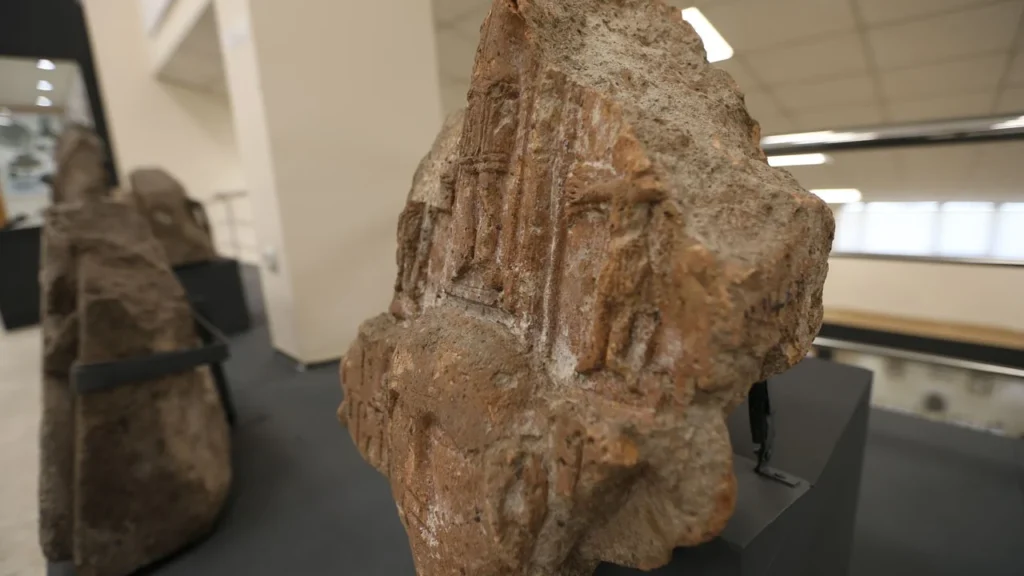
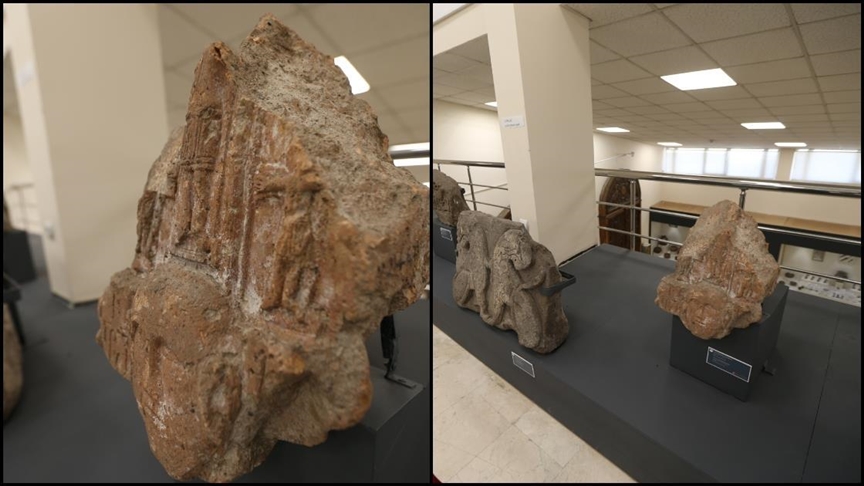
A significant archaeological artifact depicting Jesus Christ has been put on public display for the first time at the Kars Archaeology and Ethnography Museum. The stone relief, originally excavated in 1892 from the ancient Ani Ruins, had been preserved in the museum’s storage for over a century before finally being exhibited.

The Ani Ruins, a UNESCO World Heritage Site, are renowned for having hosted 23 different civilizations throughout history. Spanning across a vast area, Ani features a remarkable collection of architectural remains, including fortifications, mosques, cathedrals, palaces, churches, monasteries, baths, bridges, and partially destroyed covered passages. About 25 major structures still stand, providing a vivid glimpse into the city’s rich past. Archaeological excavations in Ani have been ongoing for over a century, continuously uncovering artifacts that shed light on the cultural and religious history of the region.

The newly displayed relief was uncovered by Russian archaeologist Nikolai Yarkovlevich Marr during his 1892 excavation. According to Hakim Aslan, Acting Director of the Kars Archaeology and Ethnography Museum, the relief is part of the “Ani’s Story” exhibition, which showcases 244 artifacts, including 196 items on display for the first time.

Describing the artifact, Aslan explained: “At the center and bottom of the relief, there is a portrait of a saint. Above it, Jesus Christ is depicted standing on a throne in a frontal position. On either side, two soldiers present offerings to Jesus. This stone relief is considered one of the most important pieces in our museum collection.”

While the relief was discovered 133 years ago, its creation likely dates back much further. Experts suggest it originates from the 11th to 12th century, during the height of the Armenian Kingdom of Ani, making it approximately 850 to 950 years old. This period saw the flourishing of stone architecture and detailed figurative reliefs in Ani’s churches and monasteries, highlighting the city’s religious and cultural significance.


📣 Our WhatsApp channel is now LIVE! Stay up-to-date with the latest news and updates, just click here to follow us on WhatsApp and never miss a thing!!


Credit: Anadolu Agency (AA)

The Ani Ruins themselves hold immense historical and archaeological value. Located near the modern border of Türkiye and Armenia, Ani was once a bustling medieval city, often referred to as the “City of 1001 Churches” due to its numerous religious structures. Its strategic location along trade routes made it a center of commerce and culture. Over time, Ani experienced earthquakes, invasions, and political decline, but many structures still survive, offering a window into medieval urban life.

The display of the Jesus Christ relief is part of the Ministry of Culture and Tourism’s “100+2 Temporary Museum Exhibitions Project”, which aims to bring rarely seen artifacts into public view. According to Aslan, “The exhibition allows visitors to connect with Ani’s rich history and see items that have remained in storage for decades.”

The Ani exhibition and the Jesus Christ relief highlight the region’s deep religious, historical, and artistic heritage. Visitors can now witness firsthand the intricate craftsmanship of medieval Armenian stonework and the city’s long-standing significance in Anatolian history.

With Ani continuing to be a focus of archaeological study, the museum hopes to expand its collection of exhibited items, offering both scholars and the general public a chance to explore one of the most remarkable ancient cities in the world.

Cover Image Credit: Anadolu Agency (AA)

Related Articles

Lost Kingdom of Purušhanda? Archaeologists Unearth Ancient Ovens and Hearths in Üçhöyük, Türkiye

29 September 2025

29 September 2025

Archaeologists excavating at Üçhöyük in Bolvadin, Afyonkarahisar (western Türkiye) have uncovered remarkable new evidence that may help identify the long-lost...

8,000-Year-Old Botanical Art Reveals Humanity’s Earliest Mathematical Thinking

15 December 2025

15 December 2025

Long before numbers were written on clay tablets or calculations recorded in cuneiform, early farming communities in the Near East...

A 2100-year-old inscription found İn Türkiye: Antiochos of Commagene calls on the people to ‘obey and respect the law’

15 March 2024

15 March 2024

The ancient inscription found near Kımıldağı (Kımıl Mount) in Önevler village of Adıyaman’s Gerger district in 2023 will shed light...

Scientists reconstruct Late Bronze and Iron Age Mediterranean silver trade

11 July 2021

11 July 2021

Scientists have recreated the Eastern Mediterranean silver trade across a time span that includes the conventional dates of the Trojan...

Forged 5,000 Years Ago: The World’s Oldest Swords Discovered at Arslantepe Mound, Türkiye

10 June 2025

10 June 2025

In the arid plains of Eastern Anatolia, nestled along the western bank of the Euphrates River near Malatya, Turkey, lies...

Norwegian couple found a Viking Age Grave And Sword in their garden

3 July 2023

3 July 2023

While trying to expand their home, a Norwegian couple found a Viking Age grave and sword in their garden. It’s...

Lost 4,000-Year-Old Bronze Age Settlement Uncovered at Khaybar Oasis in Northern Saudi Arabia

31 October 2024

31 October 2024

A team of archaeologists led by Guillaume Charloux of France’s National Center for Scientific Research (CNRS) announced Wednesday the discovery...

An exciting discovery in Hattusa, the capital of the Hittites

11 September 2022

11 September 2022

It is aimed to reach new information about the traditions of the Hittite civilization with 249 new hieroglyphs discovered in...

Rare Tales of Merlin and King Arthur Found in 13th Century Manuscript

17 April 2025

17 April 2025

In a remarkable discovery, a fragile manuscript fragment dating back to the 13th century has been found hidden within the...

A Mysterious Ring and a Viking Pin: Novgorod’s Archaeology Reveals a Hidden War Route

26 January 2026

26 January 2026

Two rare artifacts found at Novgorod’s Knyazhya Gora—an ancient spiral ring and a Viking-era iron pin—may be war trophies from...

Yes — Camels Really Lived in Basel During the Roman Era!

4 January 2026

4 January 2026

Archaeologists in Switzerland have uncovered compelling evidence that reshapes our understanding of everyday life in Roman-era Europe: camels — yes,...

UK’s Oldest Hospice Discovered: Anglo-Saxon Monastery Unearthed in Cookham Reveals Early Medical Care

11 August 2025

11 August 2025

An extraordinary archaeological discovery in Cookham, Berkshire, is rewriting our understanding of healthcare in early medieval England. Unearthed behind the...

Pendants and beads reveal nine European Cultures living across the continent 30,000 years ago

1 February 2024

1 February 2024

In a new study, researchers have constructed a continent-wide database of personal ornaments worn by Europeans 34,000-24,000 years ago, a...

Magnificent Romanesque and Peasant war fury in the lost Kaltenborn monastery near Allstedt

18 August 2023

18 August 2023

From the 12th to the 16th century, the Kaltenborn monastery near Allstedt was a religious, cultural, and economic center of...

Morocco team announces 1.3 million years major Stone Age find

29 July 2021

29 July 2021

A multinational team of archaeologists announced the discovery of North Africa’s oldest Stone Age hand-ax manufacturing site, going back 1.3...