
18 June 2026 The Future is the Product of the Past

31 Unknown Shipwrecks, Including a Rare Sailing Ship, Discovered in Lake Constance

In a groundbreaking underwater archaeology project, researchers have discovered 31 previously unknown shipwrecks lying silently on the floor of Lake Constance (Bodensee). The ambitious “Wrecks and Deep Sea” project, launched in 2022 by the State Office for Monument Preservation (LAD) in Baden-Württemberg, is the first systematic exploration of the lake’s submerged cultural heritage.

Over the past two years, scientists have used cutting-edge geophysical surveys, diver teams, and remotely operated vehicles (ROVs) to uncover a remarkable collection of finds — from 19th-century paddle steamers to a rare, fully intact historical cargo sailing ship.

Mapping the Depths

Lake Constance (Bodensee) plunges to a maximum depth of 251 meters, and much of its underwater world has remained unexplored — until now. By the end of 2024, the team had identified over 250 “anomalies” — unusual shapes or features on the lakebed — using high-resolution bathymetric data from the Institute for Lake Research (ISF) and advanced side-scan sonar imaging.

Of these anomalies, 186 were systematically examined. The majority turned out to be natural formations or modern debris. However, 31 were confirmed as genuine shipwrecks — vessels that once carried passengers, cargo, and stories across the lake.

The Stars of the Find: Paddle Steamers and a Time-Capsule Cargo Ship

Among the most striking discoveries are the remains of two large metal hulls, which preliminary analysis suggests could belong to the paddle steamers “SD Baden” (originally the Kaiser Wilhelm, launched in 1871) and “SD Friedrichshafen II” (in service from 1909). These majestic vessels once carried up to 600 passengers each, but both met tragic ends. The Friedrichshafen II was destroyed in a World War II air raid and later scuttled in 1946; the Baden was decommissioned in 1930 and eventually sunk.


📣 Our WhatsApp channel is now LIVE! Stay up-to-date with the latest news and updates, just click here to follow us on WhatsApp and never miss a thing!!


The crown jewel, however, is a nearly intact historical cargo sailing ship — complete with mast and yardarm still in place. Such preservation is rare in freshwater archaeology. Minimal colonization by invasive quagga mussels means that intricate details — including bow fittings, belaying pins, and a toothed ratchet wheel — remain visible.

“The find offers unique insights into the sailing technology and shipbuilding of historical Lake Constance vessels,” said Alexandra Ulisch, scientific associate on the project. “It is a significant reference object for research.”
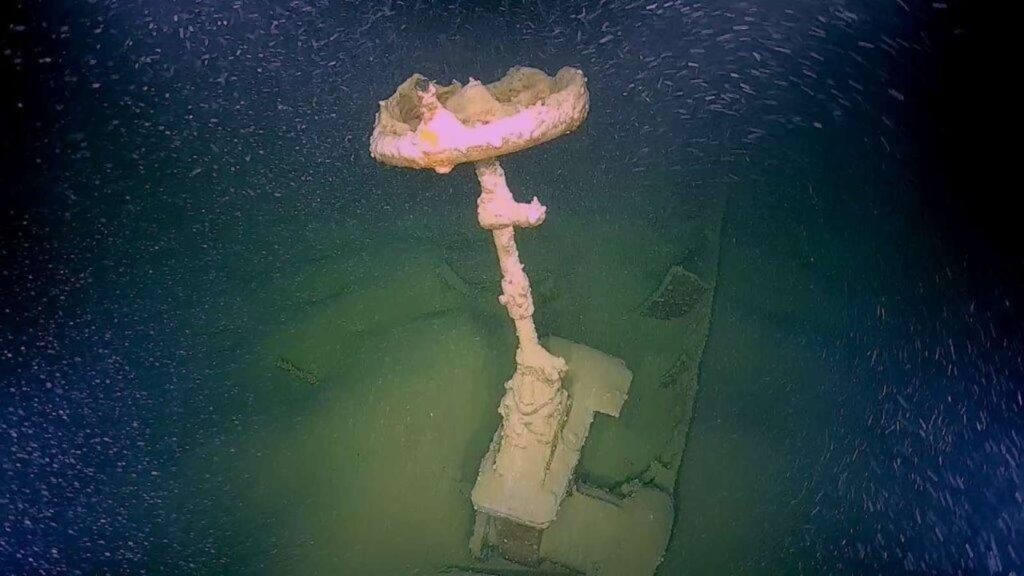
Among the finds was a shipwreck that could be the SD Friedrichshafen II. Credit: Marcel Edel/LAD at RPS/ISF of LUBW/picture alliance/dpa

Lost Cargo and Forgotten Journeys

In another location, the team found a scattered debris field of at least 17 wooden barrels, some with intact lids and potential branding marks. Without an associated shipwreck, the origin of this cargo remains a mystery. Plans for further investigation are underway.

To the LAD researchers, shipwrecks are not just lost vehicles — they are “time capsules preserving craftsmanship and stories from long-forgotten days,” as Ulisch notes. From the Titanic to local legends like the Säntis or Lady Jay, the fascination with shipwrecks spans cultures and centuries.

A Methodology That Sets New Standards

The “Wrecks and Deep Sea” project represents a methodological milestone in inland water archaeology.

The process involves: Bathymetric mapping to detect anomalies.

Side-scan sonar surveys to create near-photographic images of the lakebed.

ROV or diver inspections for confirmation and documentation.

This approach allows archaeologists to distinguish natural features from human-made objects with precision, ensuring that only genuine cultural heritage sites are recorded.

Project leader Dr. Julia Goldhammer emphasized that the initiative is about more than just spectacular finds:

“The insights gained will form the basis of an archaeological inventory of Lake Constance wrecks, providing critical data on their condition and threats.”

No salvaging is currently planned, as recovery and conservation costs are high. Instead, the focus remains on thorough documentation and long-term preservation through research.
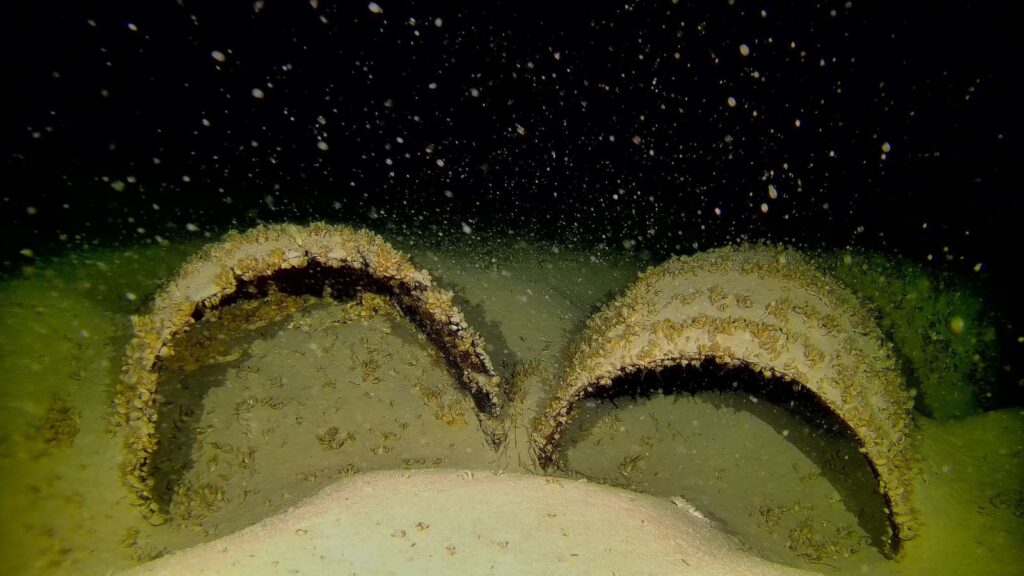
Among other things, the researchers found wooden barrels in Lake Constance. Credit:  Alexander Heidacher/LAD at RPS/Bodenseetaucher/picture alliance/dp
Among other things, the researchers found wooden barrels in Lake Constance. Credit: Alexander Heidacher/LAD at RPS/Bodenseetaucher/picture alliance/dp

Why It Matters

Beyond their historical intrigue, these wrecks tell a broader story about trade, transportation, and daily life on Lake Constance across centuries. Scientific analysis of preserved materials can reveal the origins, processing methods, and quality of goods transported — from building materials to raw resources.

As the project continues, researchers expect more revelations before its scheduled conclusion in 2027. Until then, the silent fleet beneath Lake Constance will continue to guard its secrets — at least, until the next sonar sweep.

State Office for Monument Preservation (LAD)

Cover Image Credit: LAD at RPS/ISF of LUBW/picture alliance/dpa

Related Articles

Archaeologists Discovered Medieval Silver Communion Set and 70 Silver Coins in Hungary

16 June 2024

16 June 2024

A 14th-century silver communion set (chalice and wafer holder) and a treasure trove of 70 silver coins were discovered in...

Evidence of Brain Surgery performed 3,000 years ago discovered in the ancient city of Tel Megiddo

27 February 2023

27 February 2023

Researchers have discovered a rare instance of delicate cranial surgery, possibly the earliest of its kind in the Middle East,...

Elite Hungarian Conquest-Era Horseman’s Grave with Rich Grave Goods Unearthed at Csongrád-Bokros

31 May 2026

31 May 2026

An elite horseman’s grave from the Hungarian Conquest period has been uncovered at Csongrád-Bokros in southern Hungary, offering archaeologists a...

The Mystery of the Hekatompedon: An Ancient Shepherd’s Graffiti Sheds New Light on the Mystery of the Acropolis’ Lost Temple

13 June 2024

13 June 2024

The Acropolis of Athens and its monuments, the greatest architectural and artistic complex bequeathed to the world by ancient Greece,...

Remarkable Discovery: Roman-British Coins Hoard Unearthed Near Utrecht, Netherlands

29 January 2025

29 January 2025

In 2023, a unique collection of 404 silver and gold coins dating back to 46 A.D. has been discovered by...

2,000-Year-Old Graves Found in Kyrgyzstan Reveal Hidden Chapter of Silk Road History

12 August 2025

12 August 2025

Archaeologists have discovered graves dating back approximately 2,000 years in the village of Kyzyl-Koshun-1, located in the Batken district of...

Anatolia’s Lost Language Sidetic Moves Closer to Decipherment as Ancient Side Alphabet Expands to 31 Letters

4 June 2026

4 June 2026

New inscriptions bring fresh hope for Anatolia’s lost language A lost Anatolian language once spoken in the ancient city of...

A large stone monument depicting the goddess Ishtar has been unearthed in the ancient Assyrian city of Nimrud

26 June 2023

26 June 2023

Archaeologists from the University of Pennsylvania Museum of Archeology and Anthropology, working with an Iraqi excavation team, have unearthed a...

Cut-Marked Human Bones in Denmark Reveal a Disturbing Stone Age Mystery

8 May 2026

8 May 2026

Along the vanished shore of a prehistoric fjord in eastern Jutland, archaeologists are returning to one of Denmark’s most unsettling...

4,000-year-old Rock Art From A Previously Unknown Ancient Culture uncovered in Venezuela

4 July 2024

4 July 2024

An archaeological team in Venezuela has uncovered 20 ancient rock art sites in Canaima National Park in the southeastern part...

A rural necropolis from Late Antiquity discovered in northeastern France

5 November 2022

5 November 2022

Inrap archaeologists have unearthed a small rural necropolis from the late 5th century (Late Antiquity) at Sainte-Marie-aux-Chênes in northeastern France....

Possible Remains of a Monumental Persian Garden Complex Identified Near Tabriz

6 February 2026

6 February 2026

A vast, long-lost landscape may once have shaped the southern edge of historic Tabriz. Using declassified military aerial photographs and...

First-Ever Painted Depiction of Celtic God Sucellus Discovered at Gallo-Roman Sanctuary

16 March 2026

16 March 2026

Archaeologists excavating a hilltop sanctuary in eastern France have uncovered a remarkable painted altar block depicting Sucellus, a powerful Celtic...

World’s Oldest Evidence of Wick Use Discovered in 4,000-Year-Old Lamps in Israel

31 August 2025

31 August 2025

Archaeologists in Israel have uncovered one of the oldest known pieces of evidence for wick use in the world—4,000-year-old textile...

New studies confirm that there was indeed a shipyard at Lothal, the commercial center of the Harappan civilization and world’s oldest port

6 September 2024

6 September 2024

Since the discovery of Harappan sites at Lothal, located about 30 kilometers inland from the coast of the Gulf of...