
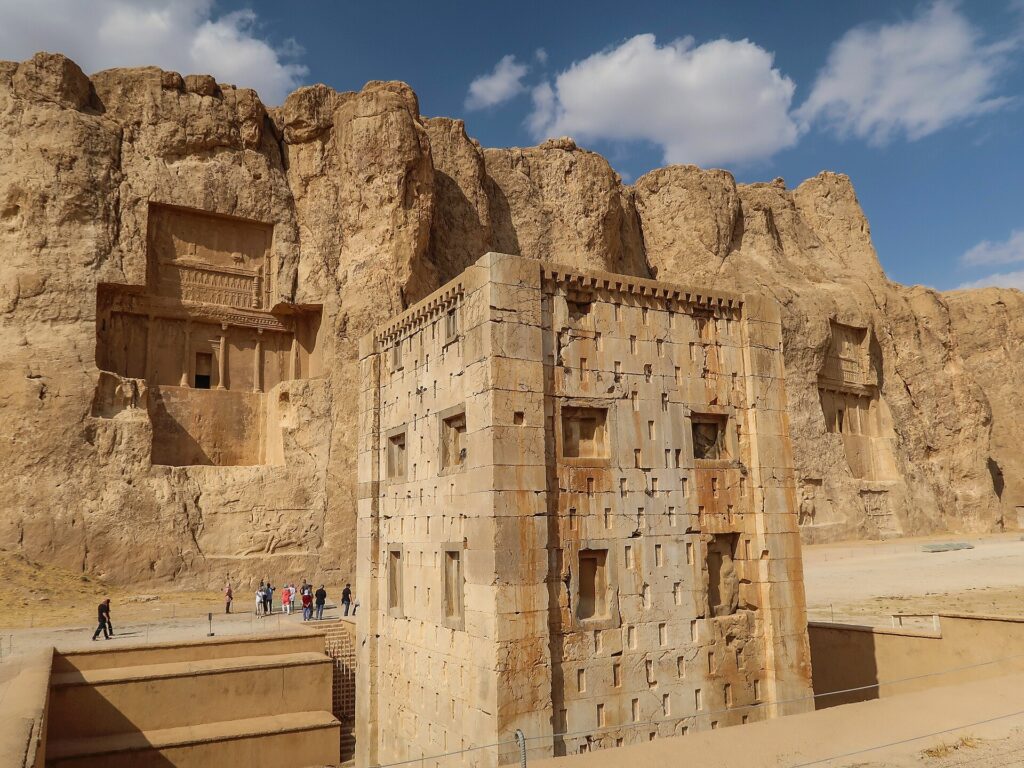
Archaeologists have recently discovered a significant funerary inscription associated with an ossuary dating back to the late Sasanian period at the renowned Naqsh-e Rostam archaeological site in Marvdasht, southern Iran. This remarkable find sheds new light on the burial traditions and religious beliefs of the Sasanians, one of the most influential empires in ancient Persian history.
The Discovery and Its Importance
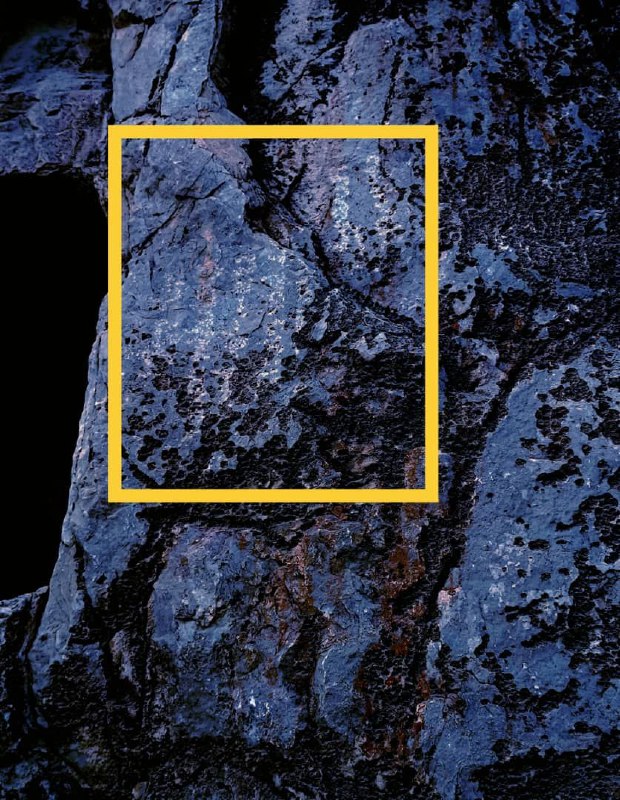
The newly uncovered inscription, carved horizontally in Pahlavi script on a rock surface adjacent to an ossuary, belongs to a specialized category of funerary texts. According to historian Abolhassan Atabaki, who spoke with local media, the inscription consists of seven lines but has suffered significant weathering over time, making many characters difficult to decipher. Nevertheless, preliminary studies suggest that the text contains the name of the deceased individual who commissioned the ossuary’s construction, firmly placing the artifact in the late Sasanian era (224–651 CE).
Najmeh Ebrahimi, a scholar specializing in Sasanian history, explained that ossuaries were a common method of burial during this period. The process involved exposing corpses on mountaintops or cliff faces, allowing scavenging birds and animals to cleanse the bodies of flesh. The remaining bones, bleached by the sun, were then carefully collected and placed into stone niches carved into the cliffs—preserving the purity of the earth, which Zoroastrians revered as sacred.
Understanding the Pahlavi Script: The Writing System of the Sasanians
The inscription found at Naqsh-e Rostam is written in Pahlavi script, the writing system used by the Sasanian Empire. Pahlavi is derived from the Aramaic alphabet and was adapted to write Middle Persian, the official language of the Sasanians. This script is notable for its complex ligatures and use of Aramaic words as ideograms—meaning some characters represented entire words rather than just sounds. Pahlavi was predominantly used for religious, administrative, and funerary texts, making it a key source for understanding Sasanian culture, religion, and governance. Despite its importance, the script can be challenging to decipher due to its ambiguous characters and centuries of damage on surviving inscriptions.
The Significance of Ossuary Burial in Zoroastrianism
This burial method aligns closely with Zoroastrian principles, which emphasize the sanctity of the natural elements, particularly soil and fire. By avoiding direct burial in the ground or cremation, Zoroastrians sought to prevent contamination of these pure elements. Ossuary niches thus represent an intersection of religious belief and practical funerary customs in the Sasanian period.
Ebrahimi pointed out that most known ossuary niches are found in the central Marvdasht region, particularly near the ancient city of Estakhr and across the broader Naqsh-e Rostam area. Surrounding sites such as Hajjiabad and Garmabad have collectively revealed over 100 ossuary niches, marking this region as a significant center for Sasanian funerary culture.
Naqsh-e Rostam: A Historic and Cultural Landmark
Naqsh-e Rostam itself is a monumental necropolis situated near the ancient city of Persepolis, serving as a royal burial site for Achaemenid kings such as Darius I. The site is famous for its colossal rock-cut tombs and an array of intricate reliefs spanning several ancient Iranian civilizations, including the Elamites, Achaemenids, and Sasanians.
Among the notable structures at Naqsh-e Rostam is the Ka’ba-ye Zartosht, a square stone edifice believed to have served religious or ceremonial purposes during the Sasanian era. The necropolis’s rich assortment of inscriptions and rock art provides invaluable insights into the religious, political, and cultural history of pre-Islamic Iran.
The name “Naqsh-e Rostam” translates to “Picture of Rostam,” honoring the legendary Persian hero from the epic Shahnameh. Ancient locals mistakenly attributed the carvings beneath the royal tombs to scenes from Rostam’s mythical adventures, intertwining the site’s history with Persian folklore.
The Sasanian Empire: A Legacy of Cultural and Religious Flourishing
The Sasanian Empire, ruling from 224 to 651 CE, is widely regarded as the last great Persian empire before the rise of Islam. It is renowned for its cultural, artistic, and religious developments, particularly the establishment and spread of Zoroastrianism as the state religion.
Sasanians fostered architectural innovations, including rock reliefs and monumental tombs, many of which survive today at sites like Naqsh-e Rostam. Their influence extended across a vast territory, covering modern-day Iran, Iraq, and parts of Central Asia, shaping the region’s history and identity for centuries.

New Perspectives on Sasanian Burial Customs
The discovery of this ossuary inscription at Naqsh-e Rostam enriches our understanding of late Sasanian funerary practices. It highlights the continued importance of Zoroastrian burial rituals focused on purity, the afterlife, and respect for the natural elements.
Archaeologists anticipate that further analysis of this inscription and other funerary artifacts from the site will deepen knowledge about Sasanian beliefs regarding death, purification, and spiritual transition. As research progresses, Naqsh-e Rostam remains a vital window into the ancient Persian world’s complex religious and cultural fabric.
Cover Image Credit: Naqsh-e Rustam necropolis in Iran, a view from South-West. Foreground: stone tower Ka’ba-ye Zartosht; background: left – tomb of king Darius II, right – tomb of Darius I (Darius the Great). Public Domain
