
21 January 2026 The Future is the Product of the Past

1,000-Year-Old Kufic-Inscribed Tombstone Unearthed at Dowlatshahi Mosque in UNESCO-Listed Yazd, Iran

In a remarkable archaeological discovery, a nearly 1,000-year-old Kufic-Inscribed tombstone has been unearthed during restoration efforts at the Dowlatshahi Mosque, nestled in the heart of Yazd, a UNESCO World Heritage city in central Iran. This significant find sheds new light on the layered history of one of Iran’s most iconic desert cities.

Ancient Tombstone Found in the Mihrab of Dowlatshahi Mosque

Majid Oloumi, the director of Yazd’s World Heritage Base, announced that the tombstone was found hidden within the small mihrab (prayer niche) of the Dowlatshahi Mosque, located in the Charsouq Shahi section of a historical bazaar in the city’s old quarters.

Measuring approximately 80 by 40 centimeters and buried about one meter deep, the tombstone was carefully extracted under the guidance of archaeologists and officials from the Cultural Heritage, Tourism, and Handicrafts Department of Yazd Province.

The stone bears an inscription in Kufic script—one of the earliest forms of Arabic calligraphy—dated 493 AH (circa 1099 CE). The inscription features Quranic verses along its margins, while the central section provides honorary titles and identifies the deceased. This dating links the tombstone to the Kakuyid dynasty, a Shia Daylamite dynasty that ruled parts of Iran in the 11th century.
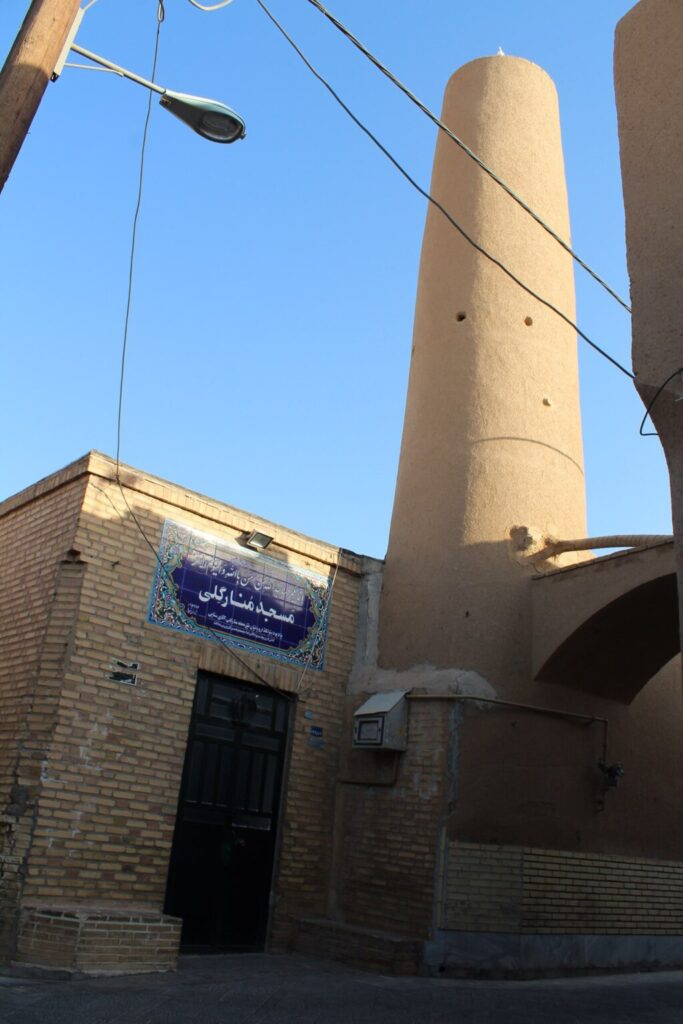
Dowlatshahi Mosque. Credit: CC BY 2.0

A Bridge Between Two Eras: Kakuyid and Muzaffarid Dynasties

While the tombstone dates to the Kakuyid period, the Dowlatshahi Mosque itself is historically attributed to the Muzaffarid dynasty, which ruled Yazd and other regions of Iran in the 14th century. The mosque and the surrounding Charsouq Shahi complex are examples of medieval Islamic architecture, marked by the use of mudbrick, intricate tile work, and geometric designs.


📣 Our WhatsApp channel is now LIVE! Stay up-to-date with the latest news and updates, just click here to follow us on WhatsApp and never miss a thing!!


This discrepancy between the mosque’s construction period and the tombstone’s dating could provide valuable insights into earlier religious structures or burials that may have existed on the site prior to the mosque’s construction, adding complexity to Yazd’s historical narrative.

Why This Discovery Matters

Oloumi emphasized the importance of continuing all restoration and archaeological work in Yazd under expert supervision, noting that the city is layered with concealed historical treasures. Ongoing studies on this tombstone and its architectural context may reveal previously unknown facets of Yazd’s early Islamic heritage and offer a deeper understanding of the city’s development through the centuries.
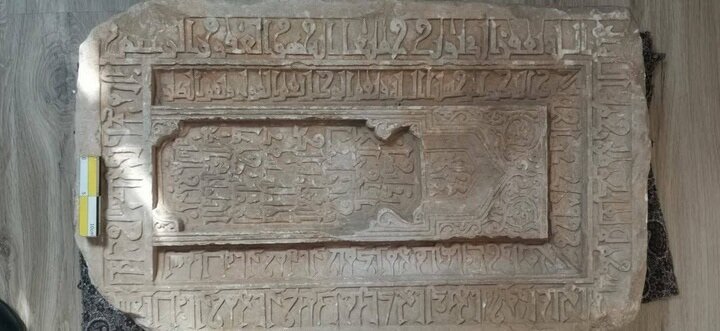

The stone bears an inscription in Kufic script—one of the earliest forms of Arabic calligraphy—dated 493 AH (circa 1099 CE).

The stone bears an inscription in Kufic script—one of the earliest forms of Arabic calligraphy—dated 493 AH (circa 1099 CE). Credit: Tehran Times

Yazd: A Living Museum of Persian-Islamic Architecture

Designated a UNESCO World Heritage Site in 2017, the historical city of Yazd is renowned for its unique desert architecture, including badgirs (wind catchers), mudbrick houses, narrow alleyways, and centuries-old mosques and bazaars. The city has long been a crossroads of Zoroastrian, Islamic, and Persian cultures, making it a must-visit destination for heritage travelers.

The Dowlatshahi Mosque, though less internationally known than the Jameh Mosque of Yazd, stands as a significant representation of the city’s medieval Islamic identity, especially as new discoveries like this tombstone continue to enrich its historical tapestry.

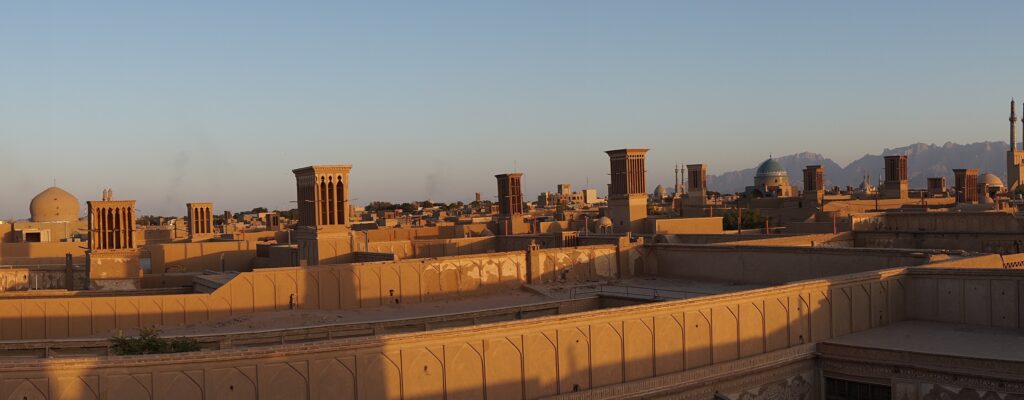
Cover Image Credit: Yazd Historic City. CC BY 2.0

Related Articles

A bronze seal matrix of St George slaying the dragon has been discovered at the royal Château of Villers-Cotterêts in northern France

21 March 2022

21 March 2022

A previously unpublished and unknown bronze seal matrix of Saint George slaying the dragon has been discovered at the royal...

Archaeologists unearthed a pot of copper coins in first major discovery at Mohenjo Daro in Pakistan, in 93 years

18 November 2023

18 November 2023

A pot full of copper coins was discovered from a stupa (a dome-shaped building erected as a Buddhist shrine) at...

2900-Year-Old Erzin Stele: A Key to Understanding the Hittite to Greek Mythological Transition

5 April 2025

5 April 2025

In a significant archaeological discovery, a basalt stele was unearthed in 1987 by O. Günay while plowing his field at...

21 Copperplate Inscriptions discovered at Ghanta Matham in India

14 June 2021

14 June 2021

During excavations at Ghanta Matham in the Indian state of Andhra Pradesh,  important 21 copper plates for the Mallikarjuna Swami...

2800-year-old settlement discovered in Vadnagar, India

17 January 2024

17 January 2024

An excavation in Gujarat’s Vadnagar, about 900 km southwest of New Delhi, India, has found the remains of a settlement...

During roadwork in Oregon, a woolly mammoth tusk was discovered

21 June 2021

21 June 2021

A 12,000-year-old woolly mammoth tusk was discovered beneath the street by crews rerouting a gas line in Corvallis, Oregon. “Whenever...

Chinese Paleontologists discovered a 170-million-year-old flower

29 March 2023

29 March 2023

Chinese paleontologists discovered fossils of an ancient plant dating back approximately 170 million years. The Chinese Academy of Sciences Nanjing...

Archaeologists have found seven pairs of Anglo-Saxon brooches in seven graves during an excavation in Gloucestershire

5 April 2022

5 April 2022

Archaeologists have found seven pairs of Anglo-Saxon saucer brooches, one pair in each of seven burials unearthed in an excavation...

Roman Canal and Road Uncovered in The Netherlands near UNESCO heritage sites

30 July 2021

30 July 2021

Dutch archaeologists that a canal and gravel road thought to have been built and used by the Roman military have...

Interesting discovery at Crowland digs, a human poo from the Saxon period or coprolite found

16 August 2021

16 August 2021

Excavations in Abbey Church Field in Crowland, near Peterborough, have also yielded such amazing finds results for archaeologists. The archaeological...

Researchers believe mass immigration to Orkney during the Bronze Age was mostly led by women

8 February 2022

8 February 2022

Researchers believe mass immigration to Orkney during the Bronze Age was mostly led by women.  Mass migration to Orkney during...

2000-year-old passage found after Latrina at Smyrna Theater

28 January 2022

28 January 2022

Archaeologists discovered a 2,000-year-old passage that was 26 meters long and constructed in an “L” form in the theater part...

Ancient Cymbals Unearthed in Oman Reveal Shared Musical Traditions Across Bronze Age Cultures

8 April 2025

8 April 2025

Recent archaeological discoveries in Oman have unveiled significant insights into the musical practices of Bronze Age societies, suggesting a rich...

2,800-Year-Old ‘Pharmaceutical production area’ discovered in ancient Thracian City

19 January 2024

19 January 2024

Archaeologists have unearthed a “pharmaceutical production area” supported by a water source during ongoing excavations in the Thracian Ancient City...

2,000-Year-Old Garlanded Sarcophagus Unearthed in City of Gladiators

2 May 2025

2 May 2025

A remarkably well-preserved, 2,000-year-old sarcophagus adorned with intricate garlands has been discovered during ongoing excavations in the ancient city of...