
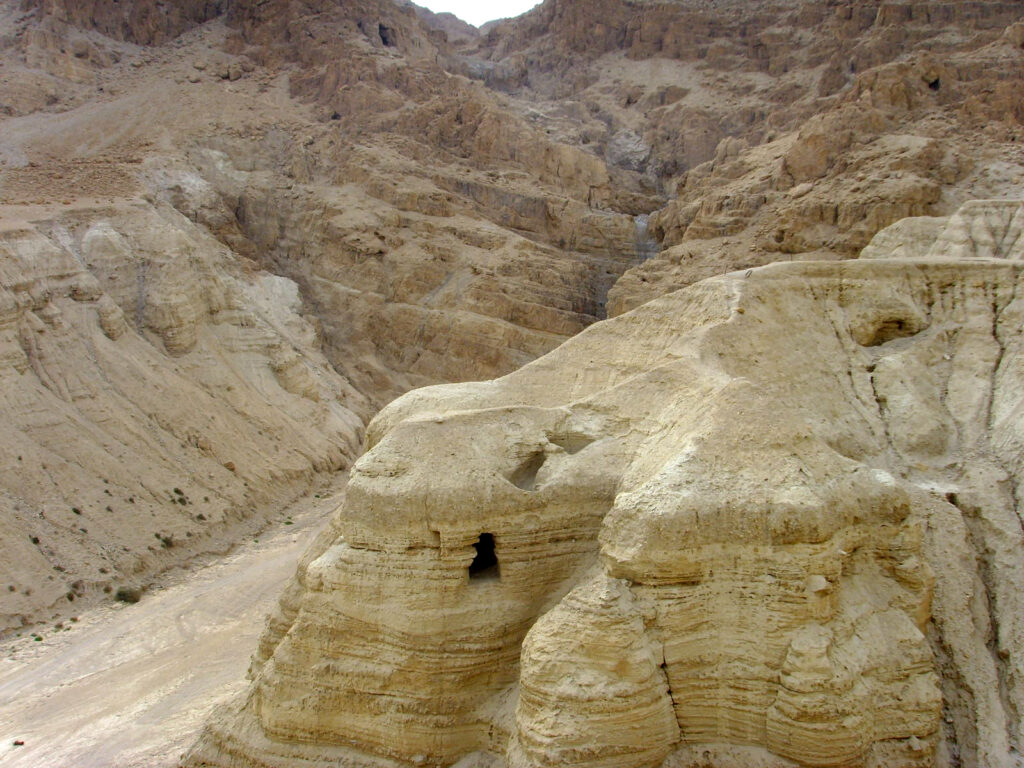
5 December 2025 The Future is the Product of the Past

Rare 1,900-Year-Old Aramaic Inscription Discovered in Dead Sea Cave Near Ein Gedi

Archaeologists have uncovered a rare 1,900-year-old Aramaic inscription in a Dead Sea cave near Ein Gedi, possibly linked to the Bar Kochba revolt.

A team of Israeli archaeologists has made an extraordinary discovery deep within a Dead Sea cave near Ein Gedi National Park — a four-line Aramaic inscription dating back nearly 1,900 years. Engraved in square Hebrew script, the text begins with the haunting words: “Abba of Naburya has perished.” Experts believe the inscription may be connected to the Bar Kochba revolt (132–135 CE), a Jewish uprising against Roman rule.

A Rare Written Record from the Judean Desert

According to researchers from Ariel University, Tel Aviv University, and the Hebrew University of Jerusalem, inscriptions from this era are exceptionally rare. Aside from the Dead Sea Scrolls, most written artifacts from the Judean Desert consist of only a single name or word. This four-line text, measuring approximately 8 by 3.5 centimeters, is therefore considered a major archaeological find.

The name “Abba” was a common Jewish personal name in the first centuries CE, while “Naburya” refers to a Jewish village in the Galilee, near present-day Safed. The remaining three lines of the inscription have yet to be fully deciphered, though partial words such as “on us,” “he took,” and “the” have been identified.
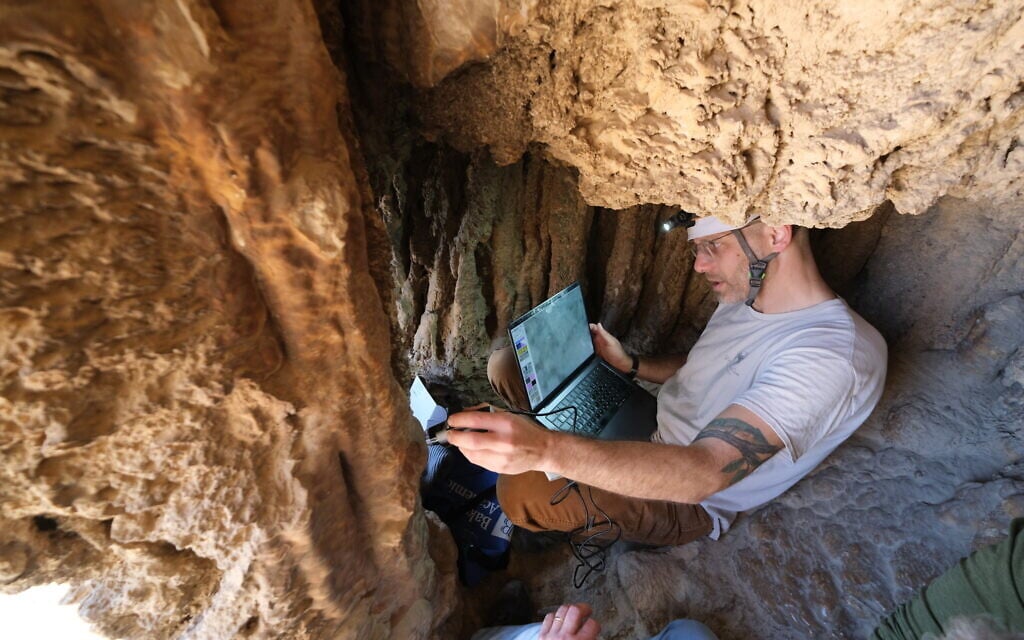
Dr. Asaf Gayer from the Department of Land of Israel Studies and Archaeology, Ariel University, examines a cave near the Ein Gedi National Park in the Dead Sea region, featuring an ancient Aramaic inscription, possibly dated to the Bar Kochba Revolt, that was first revealed to the public in August 2025. Image credit: Asaf Gayer

Discovered Alongside Roman Swords

The discovery came during a 2023 expedition to photograph an older First Temple period inscription on a stalactite in the same cave. Using multispectral imaging, the team unexpectedly spotted the Aramaic text — just inches away from four exceptionally well-preserved Roman swords and a Bar Kochba coin.


📣 Our WhatsApp channel is now LIVE! Stay up-to-date with the latest news and updates, just click here to follow us on WhatsApp and never miss a thing!!


Archaeologists believe the swords were likely seized from Roman soldiers by Judean rebels and hidden in the cave to avoid detection. Three of the swords were still sheathed in their scabbards. The cave, too small to serve as a dwelling, may have been used as a guerrilla outpost during the revolt.

The Language and Script

The inscription is written in square Hebrew script, the same script still used in modern Hebrew writing. This style gradually replaced ancient Hebrew script after the Babylonian exile in the 6th century BCE, becoming widespread between the 4th and 3rd centuries BCE as Aramaic emerged as the region’s lingua franca.

Paleographic analysis suggests the text dates to the 1st or 2nd century CE. While it cannot be determined with certainty whether it was carved during the First Jewish Revolt (66–73 CE) or the Bar Kochba Revolt, the close proximity to Roman-era weapons strongly points to the latter.
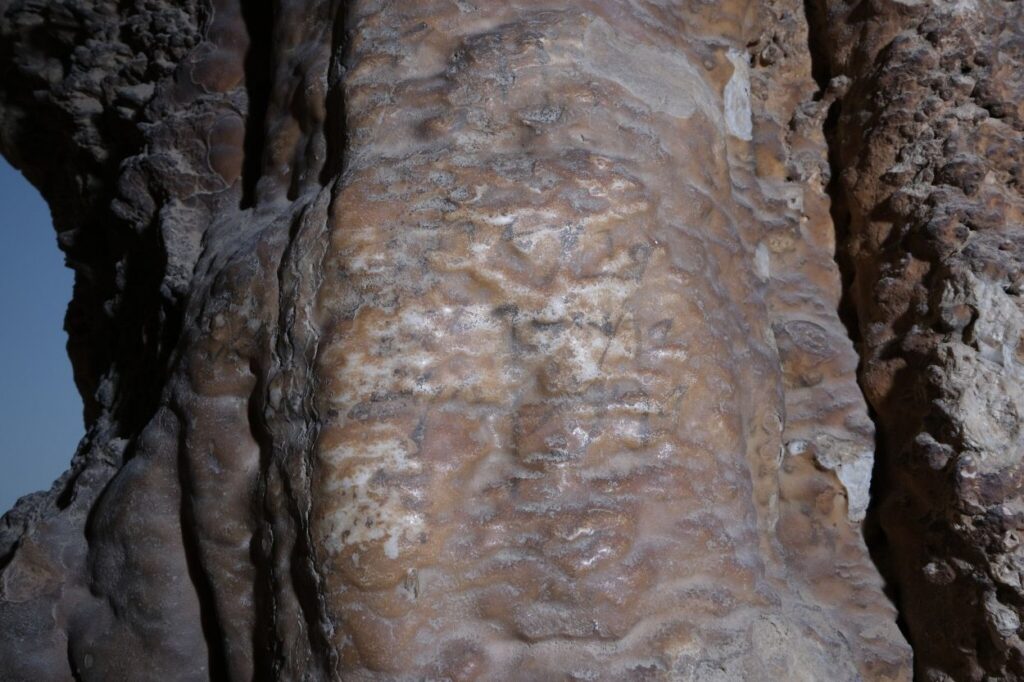
An image of a First Temple period inscription painted on a stalactite in a cave near Ein Gedi. Image Credit: Boaz Langford

Dead Sea Caves: A Treasure Trove of History

The Dead Sea caves have long been a rich source of archaeological treasures. The most famous finds are the Dead Sea Scrolls, ancient Jewish texts discovered between 1947 and 1956 in the Qumran Caves. Dating from the 3rd century BCE to the 1st century CE, these scrolls include some of the oldest known biblical manuscripts and have reshaped scholarly understanding of Jewish history and early Christianity.

Many caves in the Judean Desert served as hiding places for Jewish refugees during periods of conflict. Narrow, hard-to-reach entrances and dry conditions helped preserve organic materials, making the region a rare time capsule for ancient artifacts.

Historical Significance

The “Abba of Naburya” inscription not only provides a rare glimpse into the lives of individuals caught in the turbulence of Roman-occupied Judea but also enriches the narrative of the Bar Kochba revolt. This was one of the most significant Jewish uprisings against the Roman Empire, ultimately leading to massive destruction and the dispersal of the Jewish population from Judea.

According to Dr. Asaf Gayer of Ariel University, the chance discovery of the inscription underscores the potential for new finds in the Judean Desert. “If this one was missed for so long, there could be others waiting to be found,” he noted. The team has since been surveying nearby caves with advanced imaging technology, already identifying additional fragments of inscriptions.

Archaeologists at work excavating the cave where an Aramaic inscription and four Roman swords were discovered in the Judean Desert, with a view of the Dead Sea. Credit: Oriya Amichai/IAA

Continuing Research

Researchers are preparing a detailed academic publication of the inscription. While further decipherment of the text is uncertain due to its small size and worn condition, even single-letter discoveries contribute valuable information.

The find highlights the importance of ongoing exploration in the Dead Sea cave region, where each discovery adds another piece to the puzzle of ancient Jewish history.

Cover Image Credit: Public Domain

Related Articles

A New Hypothesis Tries to Explain What Triggers People’s Big Brains

14 March 2021

14 March 2021

The big brain is the decisive feature of our species. Not only are they the most complex organs in the...

1,400-Year-Old Ice Storage Unearthed at Baekje Fortress Reveals Ancient Korean Engineering

16 October 2025

16 October 2025

Archaeologists in South Korea have unearthed the first-ever Baekje-era ice storage facility at Busosanseong Fortress, a UNESCO World Heritage site...

Slavic settlement and burial ground with two unusual graves discovered in Saxony-Anhalt

7 August 2024

7 August 2024

Archaeologists from the State Office for Monument Preservation and Archaeology (LDA) of Saxony-Anhalt have uncovered a wealth of medieval treasures,...

The oldest grave in northern Germany 10,500 years old

14 October 2022

14 October 2022

Archaeologists have discovered the oldest known human remains in northern Germany in a 10,500-year-old cremation grave in Lüchow, Schleswig-Holstein. The...

Astonishing Find in the Czech Republic: Hikers Discover a 3.7 Kilogram Serbian/Bosnian Gold Treasure

29 April 2025

29 April 2025

A leisurely hike on the slopes of Zvičina Hill in the Czech Republic turned into an extraordinary discovery for two...

Researchers extract ancient DNA from a 2,900-year-old clay brick

6 September 2023

6 September 2023

Researchers have successfully extracted ancient DNA from a 2,900-year-old clay brick, uncovering a wealth of information about the plant life...

70-Million-Year-Old Giant Flying Reptile Unearthed in Syria — The Country’s First Pterosaur Fossil

24 October 2025

24 October 2025

A colossal flying reptile that once soared over the Cretaceous skies has been discovered in Syria — marking the first-ever...

Ancient Synagogue found in Turkey’s popular tourist center Side

27 December 2021

27 December 2021

A 7th-century ancient synagogue has been found in Side, a resort town on Turkey’s Mediterranean coast. The synagogue found was...

A new study reveals the Achaemenid Kingdom paid its workers silver

21 September 2021

21 September 2021

A new study on inscribed clay tablets that were used in the treasury archives of the Achaemenid Empire revealed that...

‘Incredibly Rare’ Roman Mausoleum Unearthed Near London Bridge Station

13 June 2023

13 June 2023

Archaeologists report discovering an “incredibly rare” and featured preserved floors and walls Roman mausoleum near London Bridge Station, UK. Archaeologists...

60 Elongated Structures of Unknown Function and Neolithic Silos Discovered in France

12 October 2024

12 October 2024

The Pfulgriesheim site, located in northeastern France’s Alsace region, underwent extensive archaeological research before being developed as a new urban...

One of its kind, 1,500-year-old Roman ‘Lorica Squamata’ legion armor restored

19 June 2024

19 June 2024

The 1,500-year-old Roman ‘Lorica Squamata’ legion armor, the only known example in the world, found in the ancient city of...

Doune Pistols: The Spark That Ignited a Revolution Returns Home

5 May 2025

5 May 2025

A remarkable piece of Scottish history has returned to its roots as a collection of ten exquisite 18th-century pistols, crafted...

New Research Reveals Previously Unknown Aspects of the Construction, Use, and Ritual Significance of a Neolithic Rondel Found in Poland

12 December 2024

12 December 2024

An archaeological excavation at Nowe Objezierze in north-western Poland has uncovered a rondel dating to around 4800 BC, offering new...

1000-year-old Cats and Babies mummies of Turkey’s

30 March 2022

30 March 2022

Cat, baby, and adult mummies in Aksaray, which took its place in history as Cappadocia’s gateway to the west on...