
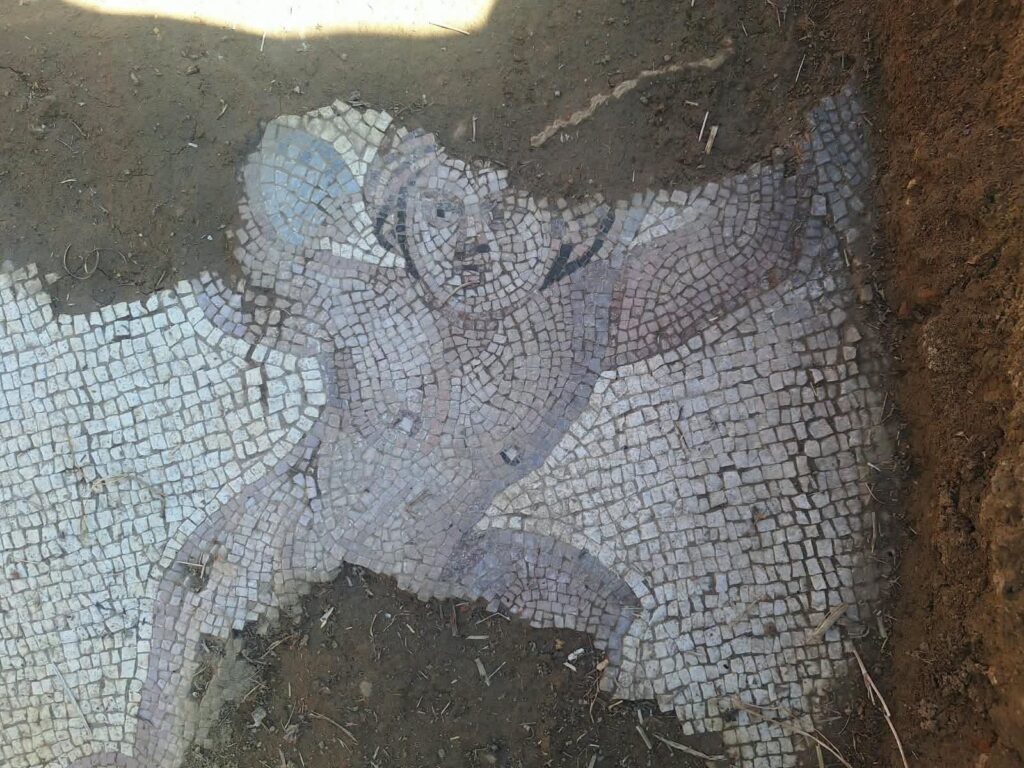
Archaeologists working in southern Albania have uncovered six richly decorated mosaic floors inside a Roman-period architectural complex, revealing a previously little-known center of life along the middle Vjosa Valley.
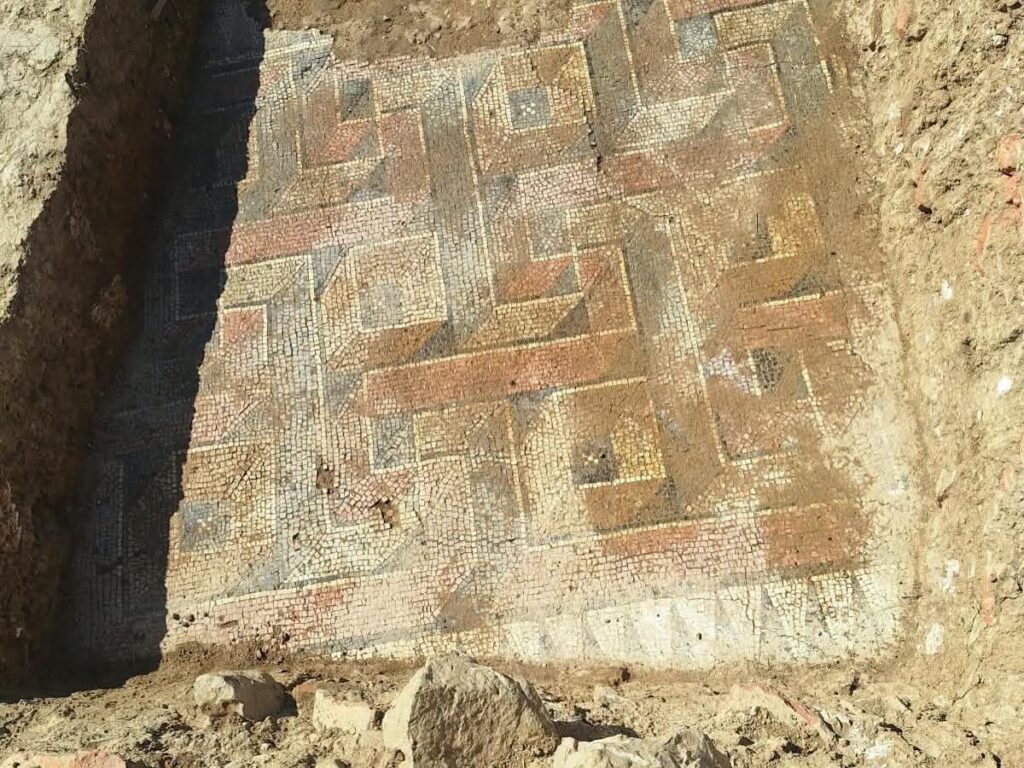
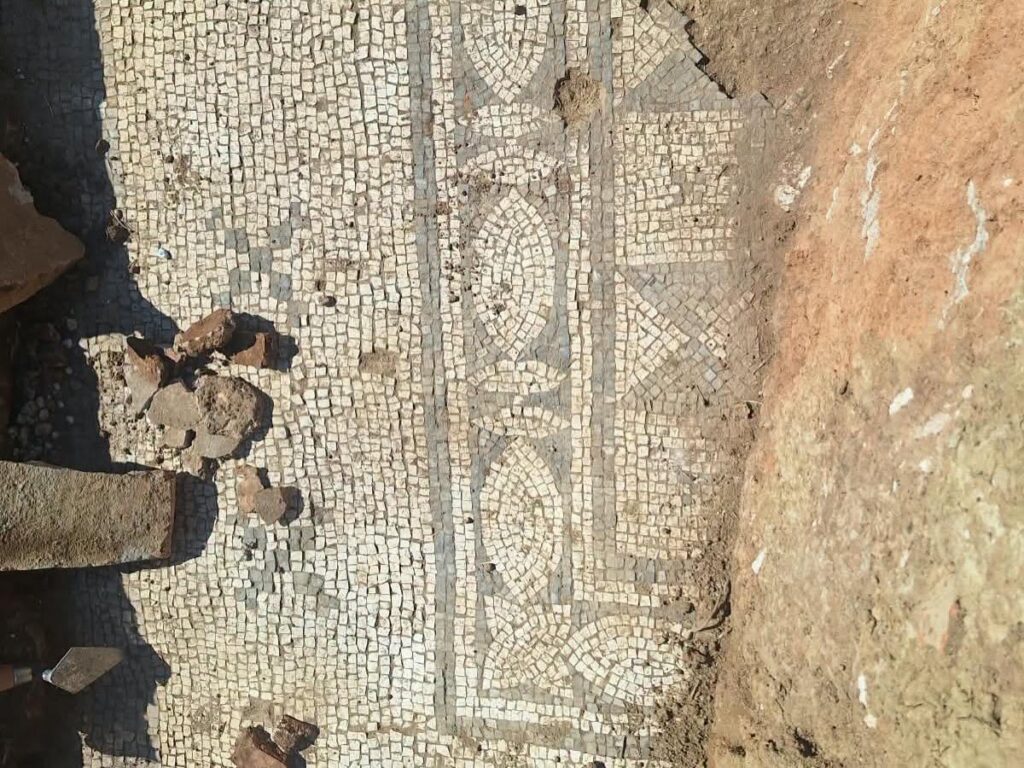
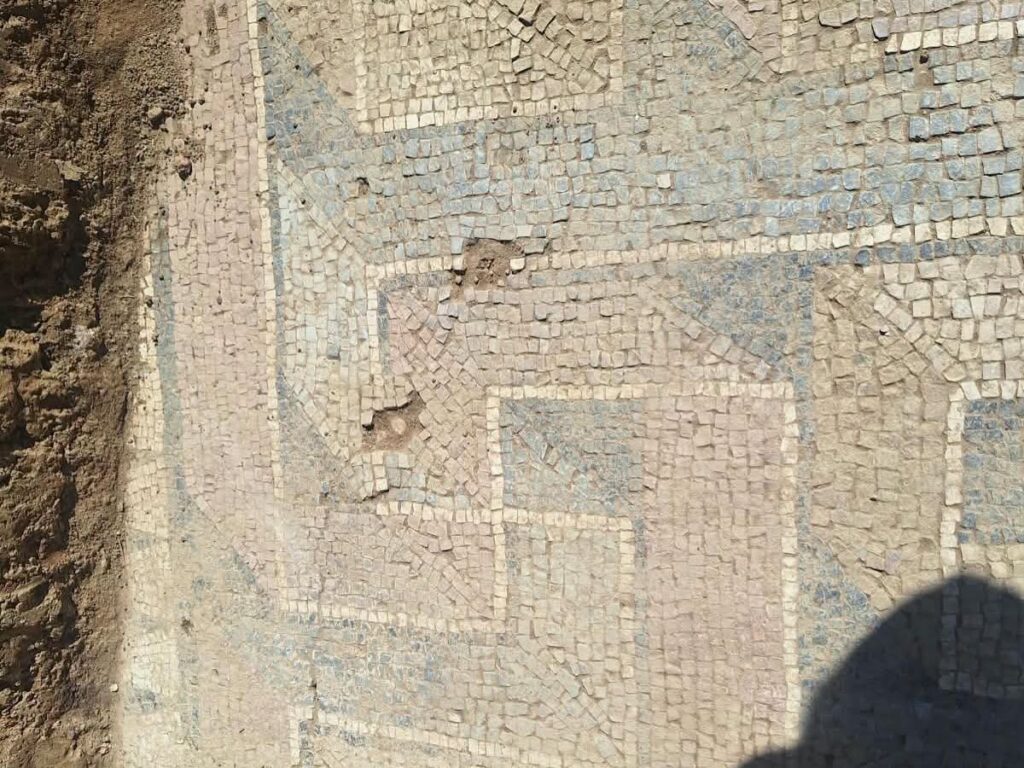
The discovery was made at Qesarat, near Tepelenë, during the 2026 season of a joint Albanian-Italian archaeological project. The floors, dated to the fourth century AD, feature multicolored mosaics with geometric designs and human figures. Fragments of painted wall decoration have also survived within the complex.
The find was announced by Vjosa – Park Kombëtar, citing the archaeologists leading the research: Eduart Shehi and Sabina Veseli of Albania’s Institute of Archaeology, and Custode Silvio Fioriello of the University of Bari Aldo Moro.
Although the six mosaics are the latest highlight, years of research suggest that what lies beneath modern Qesarat is considerably larger and more complex than a single decorated building.
A Roman settlement emerging beside the Vjosa
Archaeological work in the area began to reveal the scale of the site several years ago. Research led by the Albanian-Italian team has identified Qesarat as a large, multi-layered settlement dating mainly from the Roman and Late Antique periods.
Earlier investigations suggested that the settlement may have developed around a substantial Roman villa before gradually expanding across much of the natural amphitheater formed by the hill on which the modern village stands. The site overlooks the bends of the Vjosa River, a landscape that appears to have supported settlement and economic activity for centuries.
The scale became clearer during systematic surveys. Work carried out during the first seasons examined roughly 70 hectares, recorded 67 topographical units and identified around 20 archaeological sites, many showing evidence of occupation during more than one period. Previous investigations had already encountered a large building with thermal spaces as well as traces of wealthy Roman residences with mosaics and painted walls.
That earlier evidence gives the newly uncovered mosaic floors a broader context. Rather than appearing as isolated luxury decoration, they may belong to a much larger concentration of buildings that developed at Qesarat through the Roman imperial period and into Late Antiquity.
Six mosaic floors from the fourth century
During the 2026 campaign, archaeologists exposed six floors decorated with polychrome mosaics. According to the announcement, the compositions include geometric motifs and human figures, while fragments of wall paintings indicate that the interiors above the floors were also elaborately decorated.
Researchers currently date the newly revealed complex to the fourth century AD. That places it during Late Antiquity, several centuries after Rome had established control over the region and at a time when important rural estates and settlements continued to shape the landscapes of the southern Balkans.
The mosaics therefore offer more than a collection of decorative images. Together with the architecture and painted plaster, they provide evidence for the wealth, building traditions and cultural life of the people occupying Qesarat around 1,600 years ago.
Archaeologists have not yet published a full interpretation of the newly excavated structures, and the precise function of the complex remains to be established.
A site with a much longer history
Qesarat’s importance may extend far beyond its Roman remains. Earlier surveys around the village also recovered evidence of prehistoric activity, including material attributed to the Late Neolithic and Bronze Age.
One concentration of prehistoric material extended across more than three hectares and included more than 1,100 flint artifacts and hundreds of pottery fragments. Researchers previously suggested that the area could represent an unusually large prehistoric settlement, although further excavation is required to determine its extent and character.
The current excavations form part of the project “Landscape Archaeology in the Tepelenë-Memaliaj Area,” carried out through cooperation between Albanian and Italian researchers. The wider program is designed not simply to excavate individual buildings, but to reconstruct how communities occupied and transformed the middle Vjosa Valley over long periods of time. The project has remained an active part of archaeological research presented by Albania’s Academy of Sciences in recent years.
For Qesarat, the six newly exposed mosaics now provide the clearest visual evidence yet of one chapter in that long history. As excavation continues around the decorated complex, researchers may be able to determine whether it belonged to an elite residence, formed part of a larger settlement, or represents another kind of Roman-period center that developed beside the Vjosa.
