
16 February 2026 The Future is the Product of the Past

A One-of-a-Kind Roman Tomb with Bilingual Inscription: The First Monumental Discovery in Dibra, Albania

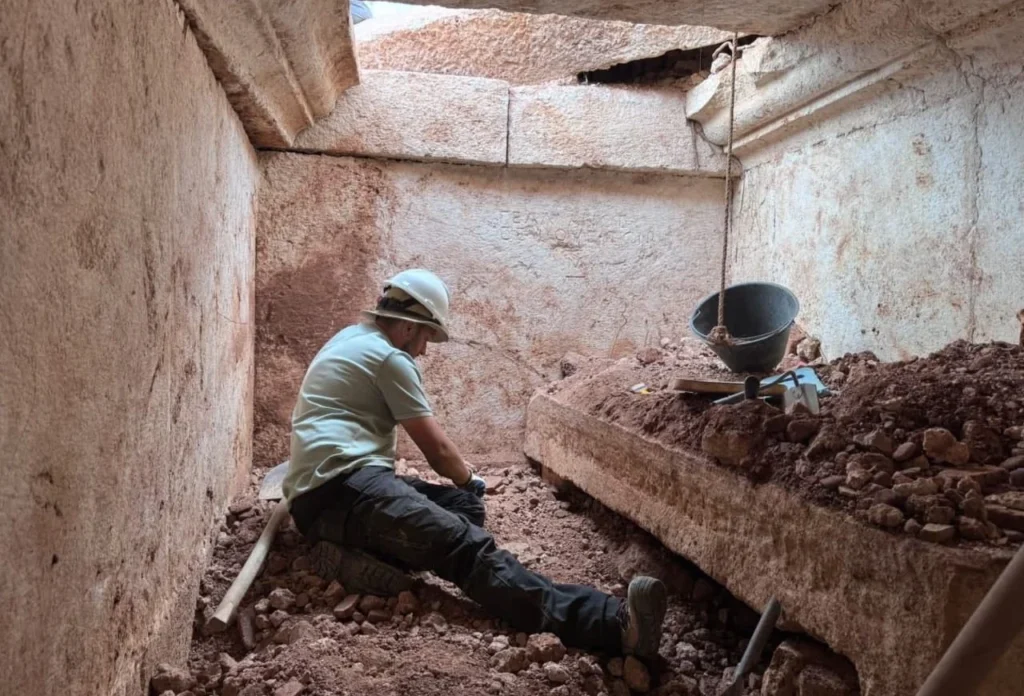
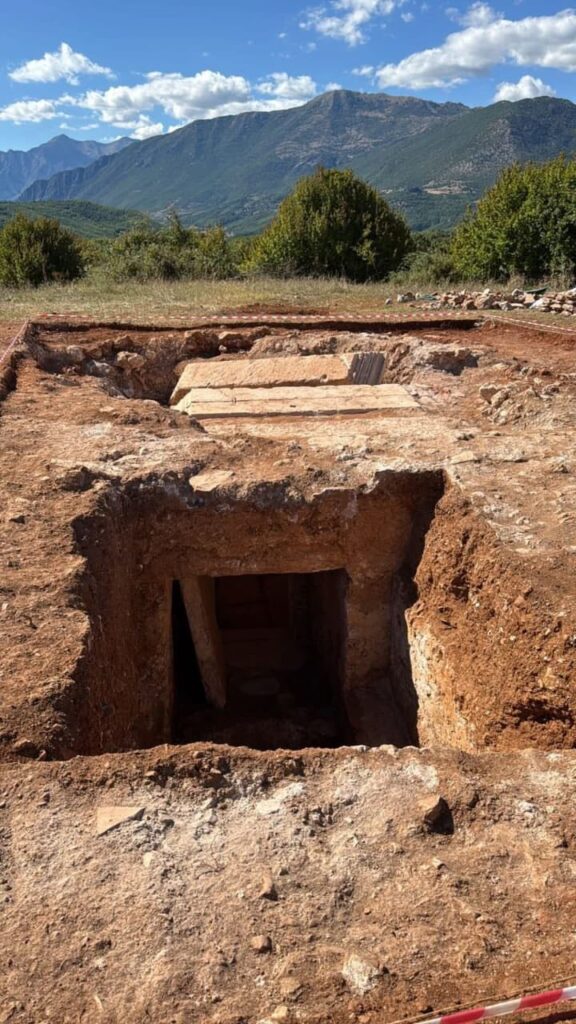
Archaeologists have uncovered a monumental Roman-era tomb in Strikçan, near Bulqiza, in northern Albania’s historic Dibra region, approximately 90 kilometers from Tirana. The tomb is remarkable for containing a rare bilingual Roman inscription dedicated both to the deceased, Gellianos, and the god Jupiter.

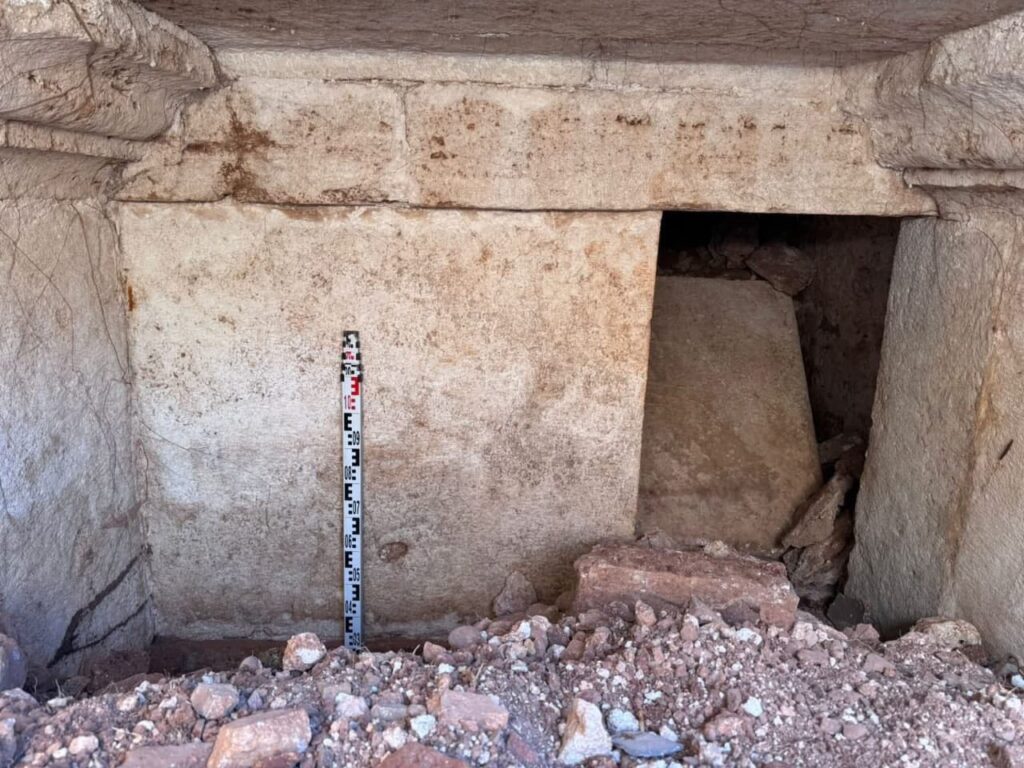
The tomb, dating back to the 3rd–4th centuries AD, is the first of its kind discovered in the area and measures approximately 9 by 6 meters. It features a 2.4-meter-high burial chamber and a monumental staircase adorned with geometric motifs, as well as evidence suggesting it may have functioned as a mausoleum.

The discovery was officially announced by Albania’s Minister of Economy, Culture, and Innovation, Blendi Gonxhja, via his Facebook page, highlighting the significance of the find for both Albanian archaeology and cultural heritage. The tomb was uncovered during the scientific research project “Archaeological Research in the Bulqiza Valley,” led by the Institute of Archaeology alongside local experts, including Academician Adem Bonguri and MSc. Erikson Nikolli.
The tomb is a monumental structure measuring approximately 9 by 6 meters, featuring a 2.4-meter-high burial chamber and rare architectural and epigraphic elements. Credit: Minister Blendi Gonxhja,
The tomb is a monumental structure measuring approximately 9 by 6 meters, featuring a 2.4-meter-high burial chamber and rare architectural and epigraphic elements. Credit: Minister Blendi Gonxhja

The tomb contains a rare bilingual Roman inscription dedicated to the deceased, Gellianos, and the Roman god Jupiter. According to Minister Gonxhja, this is the first bilingual Roman inscription ever found in the Dibra region, offering invaluable insight into the ancient cultural and religious practices of the area.

Although the tomb had been looted in antiquity, archaeologists were able to recover part of its original inventory, including glass vessels of various types, bone combs, knives, and a large section of textile woven with gold threads that had been used to wrap the deceased. The tomb is structured into three main areas: the burial chamber, an antechamber, and the monumental staircase. Additional wall structures above the tomb suggest it may have served as a small mausoleum rather than a simple grave.


📣 Our WhatsApp channel is now LIVE! Stay up-to-date with the latest news and updates, just click here to follow us on WhatsApp and never miss a thing!!


 The tomb features a 2.4-meter-high burial chamber and a monumental staircase adorned with geometric motifs, as well as evidence suggesting it may have functioned as a mausoleum. Credit: Minister Blendi Gonxhja
The tomb features a 2.4-meter-high burial chamber and a monumental staircase adorned with geometric motifs, as well as evidence suggesting it may have functioned as a mausoleum. Credit: Minister Blendi Gonxhja

The construction of the tomb highlights remarkable architectural and engineering skills for the period. Large stones were quarried from distant sites and precisely shaped to form the tomb’s structural framework. The combination of carefully carved stones, monumental staircases, and decorative stucco suggests a high level of craftsmanship and indicates the social status of the individual buried there. A nearby damaged funerary inscription is currently under study, which may offer further insights into local funerary customs and the social structure of Roman-era Dibra.

Historically, Dibra was part of the Roman province of Moesia, serving as a crossroads for trade, military, and cultural exchange. Discoveries like this monumental tomb give archaeologists a rare glimpse into the funerary practices, religious beliefs, and architectural sophistication of northern Albania during Roman times. They also enhance the cultural heritage map of Albania and demonstrate the region’s historical significance in the Balkans.
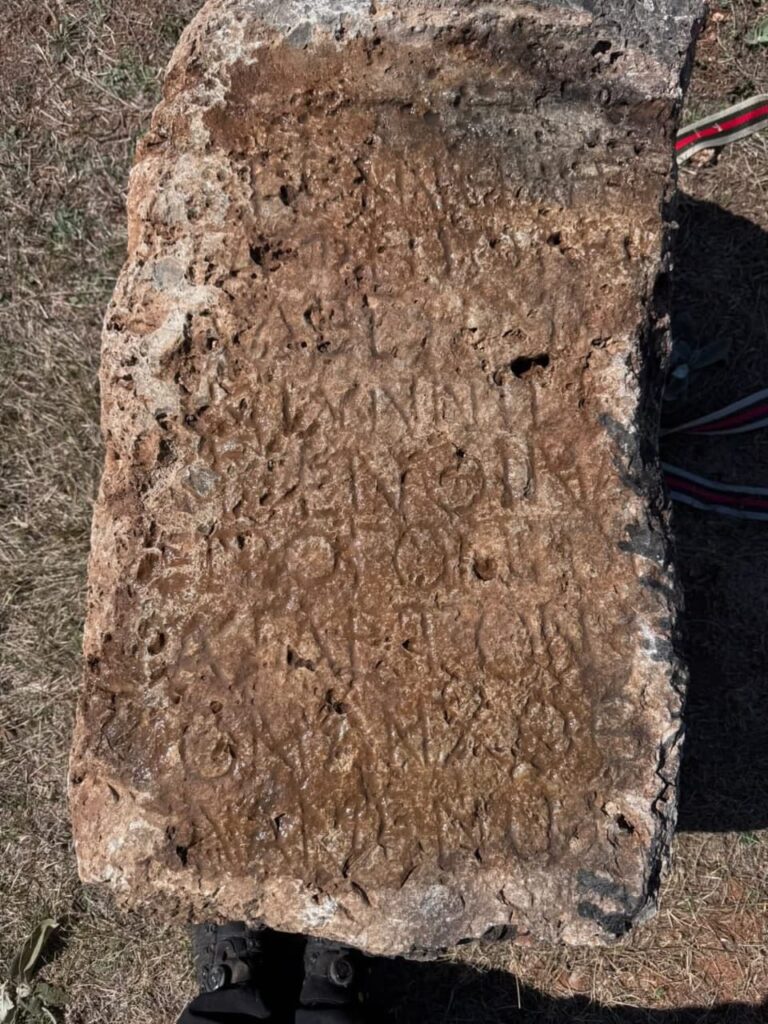

The tomb contains a rare bilingual Roman inscription dedicated to the deceased, Gellianos, and the Roman god Jupiter.Credit: Minister Blendi Gonxhja

The announcement by Minister Gonxhja has drawn national attention to the site, emphasizing both its historical value and potential for tourism. As excavations continue, researchers hope to uncover additional tombs, inscriptions, and artifacts that will shed light on the lives, beliefs, and artistry of ancient communities in Dibra.

With its combination of historical, architectural, and cultural value, the monumental tomb in Strikçan stands as a testament to Albania’s rich Roman heritage and the enduring influence of ancient civilization in the Balkans.

Cover Image Credit: Albania’s Minister of Economy, Culture, and Innovation, Blendi Gonxhja,

Related Articles

1,000-Year-Old Mass Grave in Peru Shows Victims Bludgeoned with Star-Headed Maces

26 May 2025

26 May 2025

Archaeologists from the University of Wrocław have uncovered a 1,000-year-old mass grave at the El Curaca site in southern Peru,...

2,500-Year-Old Phoenician Shipwreck Being Rescued By Spanish Archaeologists

6 July 2023

6 July 2023

A 2,500-year-old Phoenician shipwreck has been found underwater in the southeastern Spanish region of Murcia. An extraordinary Phoenician shipwreck dating...

Archaeologists unearth 128 ancient urn burial tombs for children in north China

22 November 2021

22 November 2021

Archaeologists have uncovered urn burial chambers containing the remains of 128 infants among the ruins of an ancient city of...

Archaeologists discovered a dragon made of mussel shells in in Inner Mongolia

26 August 2023

26 August 2023

Archaeologists discovered a dragon made of mussel shells earlier this week in Chifeng, North China’s Inner Mongolia Autonomous Region, which...

Fragments of the World’s Oldest Known Rune Stone Discovered in Norway

3 February 2025

3 February 2025

Archaeologists have found fragments of the world’s oldest known rune stone at the Svingerud burial field in Norway and fitted...

More than 50 pairs of tweezers found during an excavation of a 2,000-year-old Roman settlement – Romans to blame for no-body-hair trend

31 May 2023

31 May 2023

More than 50 pairs of tweezers were found during the major excavation in Wroxeter City, Shropshire, one of the largest...

The Oldest Known Map of Europe, “Saint-Bélec Slab”

6 April 2021

6 April 2021

An ornate Bronze Age stone slab (Saint-Bélec slab) that was excavated in France in 1900 and forgotten about for over...

Divers Discover 2,500-Year-Old Shipwreck and anchors Off the Coast of Sicily

23 January 2025

23 January 2025

A shipwreck dating back to the 5th and 6th centuries BC was discovered in the waters of Santa Maria del...

The researchers unearthed the earliest evidence of warfare and organized arming in the Southern Levant

28 November 2023

28 November 2023

Israel Antiquities Authority researchers have unearthed the earliest evidence of warfare and organized arming in the Southern Levant, dating back...

Hellenistic cremation tomb found in Istanbul’s Haydarpasa excavations

11 April 2022

11 April 2022

A brick tomb belonging to the Hellenistic period (330 BC – 30 BC) was found during the Haydarpaşa excavations, which...

The International Congress of Hittitology will be held in Istanbul for the first time in its history

29 December 2021

29 December 2021

The International Congress of Hittitology, which has been held every three years since 1990, was postponed for one year due...

Tajik Buddha in Nirvana – the Largest in the World: 42 feet long and 9 feet high

31 December 2023

31 December 2023

In the past, while Taliban soldiers in Afghanistan destroyed two immense statues of Buddha, art historians in neighboring Tajikistan meticulously...

Network analysis of prehistoric relationships using raw archaeological finds and AI

24 July 2023

24 July 2023

A project of the Cluster of Excellence ROOTS uses archaeological raw material finds for network analyses from the Middle Stone...

Archaeologists Uncover Remains of Roman Soldiers in a 3rd-Century Well in Croatia

15 October 2025

15 October 2025

A multidisciplinary team combined archaeology, DNA, and isotopic science to reveal the human toll of Rome’s “Crisis of the Third...

In Turkey’s Zerzevan Castle, a badge bearing the US national symbol was discovered

4 October 2021

4 October 2021

Recent investigations have led to the discovery of a badge bearing the pattern of the Great Seal of the United...