Archaeological excavations at the ancient city of Lystra (Listra) in central Türkiye have revealed a remarkable new discovery: a bronze amulet believed to date back to the Seljuk period, offering rare insight into religious life and cultural continuity in medieval Anatolia.
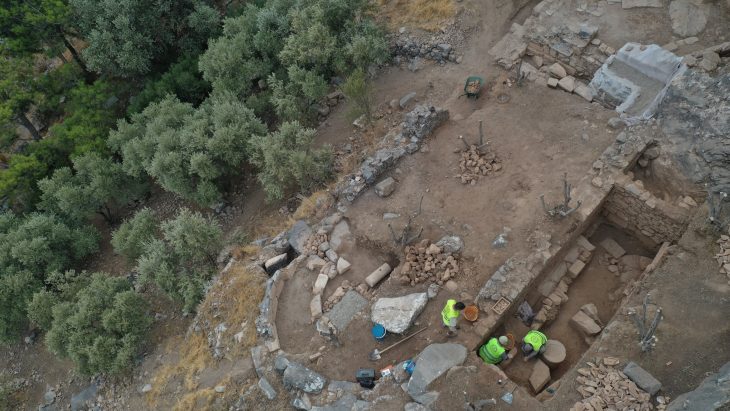
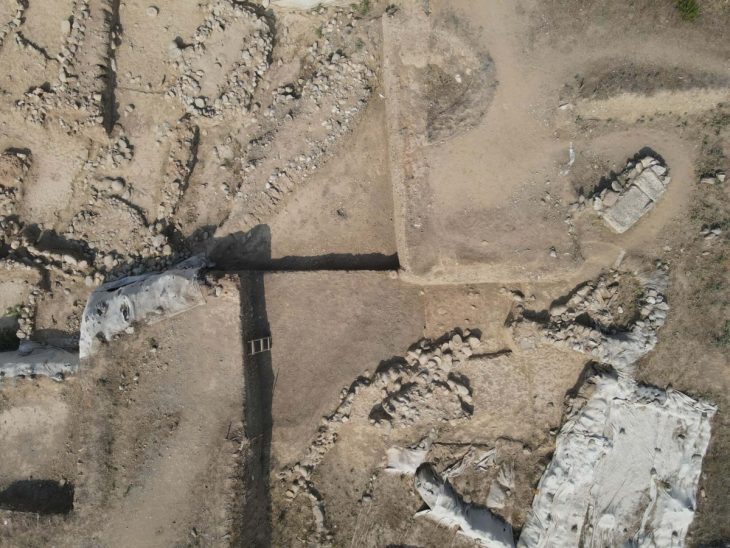
The excavation works at Lystra are being carried out with permission from Türkiye’s Ministry of Culture and Tourism, under the leadership of Necmettin Erbakan University (NEU), and with support from Konya Metropolitan Municipality and Meram Municipality. The site is located within the borders of Hatunsaray and Botsa neighborhoods, southwest of Konya.
Lystra: A City of Deep Religious Significance
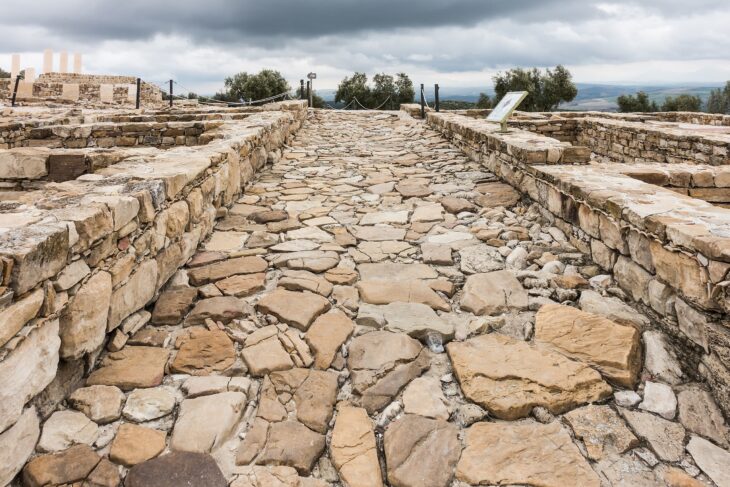
Lystra is widely known as one of the cities visited by Saint Paul, making it a significant location in the spread of early Christianity. The ancient city has long attracted historians and archaeologists due to its layered history, spanning from Roman and Late Antique periods through the Seljuk and Ottoman eras.
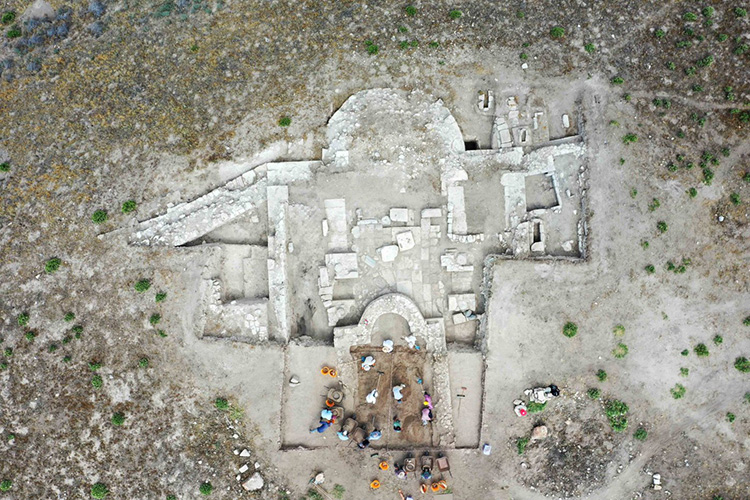
According to Assoc. Prof. Dr. İlker Mete Mimiroğlu, head of the excavation team, the second year of archaeological projects at Lystra has now been successfully completed. Excavations initially focused on a main church complex, which has proven to be far larger and more complex than previously thought.
“Last year, we continued excavations in the main church and discovered that it was part of a large architectural complex,” Mimiroğlu explained. “In addition to the chapel, we also uncovered another church structure dating to the Late Antique period.”
📣 Our WhatsApp channel is now LIVE! Stay up-to-date with the latest news and updates, just click here to follow us on WhatsApp and never miss a thing!!
Seljuk-Era Christian Graves Unearthed
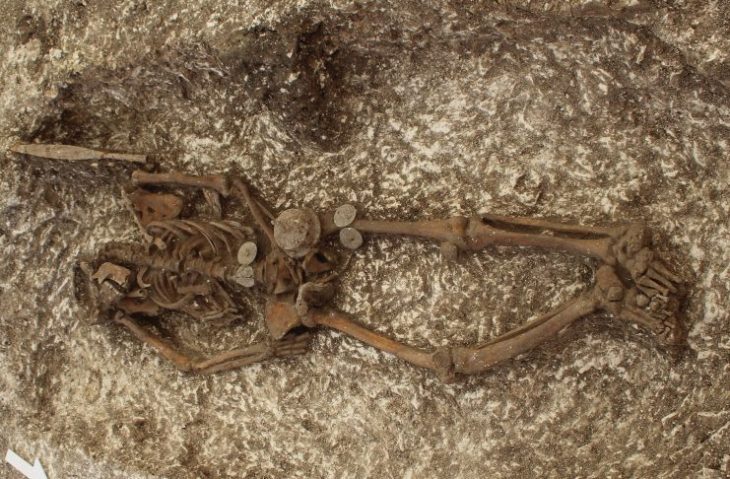
One of the most striking discoveries came from the upper church area, where nearly 80 graves were identified. Archaeological evidence suggests that many of these burials belonged to Christians living in the region during the Seljuk period.
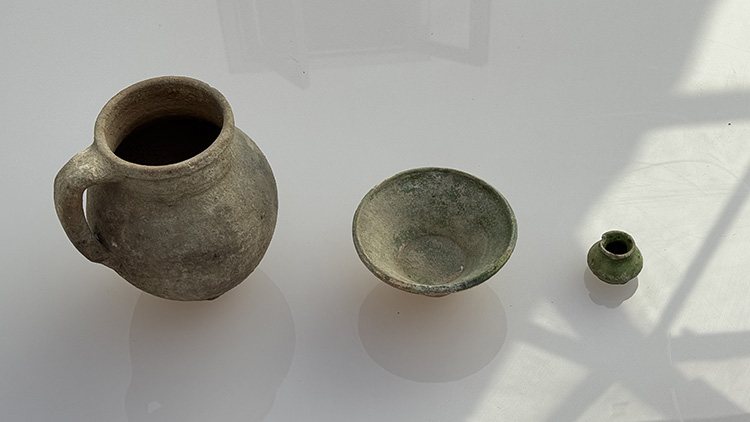
Inside the graves, researchers found Seljuk-era glazed inkwells, coins, and turquoise beads, confirming historical records that indicate the presence of Christian communities under Seljuk rule.
“Historical sources tell us that Christians lived in Anatolia during the Seljuk period,” said Mimiroğlu. “However, this excavation clearly demonstrates, through archaeological evidence, that Christian burials from the Seljuk era existed here.”
This finding is particularly important because material evidence of Christian daily life during the Seljuk period is relatively rare in Anatolia.
A Rare Bronze Amulet from the Seljuk Period
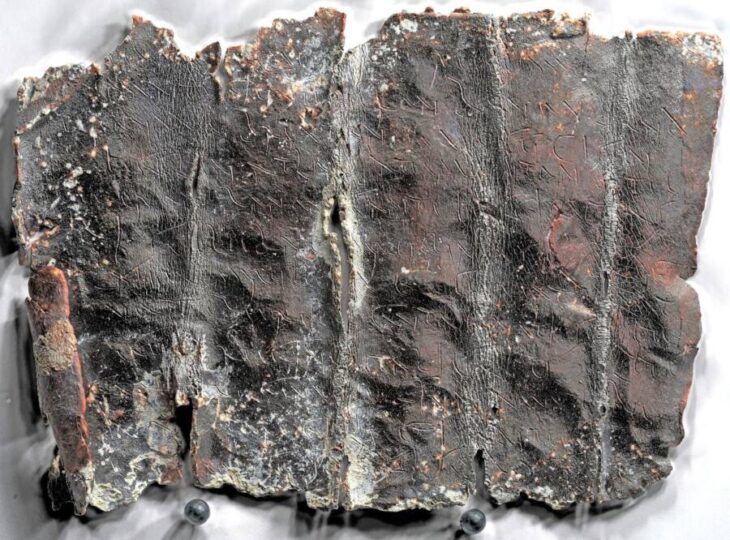
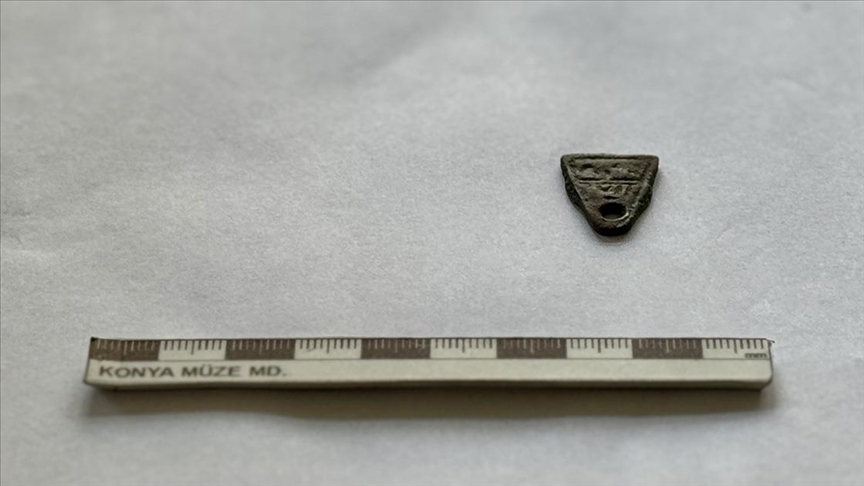
The most eye-catching artifact uncovered this season is a bronze amulet, discovered inside what is believed to be a Seljuk-era residential structure. The amulet, triangular in shape and designed as a necklace pendant, features inscriptions on both sides, arranged in two lines and written in reverse orientation.
“Next to a green-glazed Seljuk inkwell, we found a bronze amulet that we believe dates to the Seljuk period,” Mimiroğlu said. “Restoration work is currently ongoing. Once the inscriptions are fully legible, we will be able to provide a more precise interpretation.”
Similar amulets are more commonly found in Central Asia, where they were often worn by soldiers and travelers as protective talismans. Their discovery at Lystra highlights the cultural connections between Anatolia and the broader Seljuk world.
Konya and the Seljuk Legacy
Konya served as the capital of the Anatolian Seljuk Sultanate from the 12th to the early 14th century and was one of the most important political, religious, and cultural centers of medieval Anatolia. During this period, Konya became a hub of trade, scholarship, and architectural innovation.
Historical sources indicate that under Seljuk rule, Christian and Jewish communities continued to practice their religions while remaining active in economic and social life. The discoveries at Lystra strongly support this historical understanding, offering tangible proof of coexistence between Muslim and Christian populations.
Ottoman-Era Finds and International Trade
Excavations at Lystra have not been limited to religious structures. On the hillside area of the site, archaeologists uncovered Ottoman-era residential buildings and large storage jars (pithoi). Among these finds was a 17th-century Austrian silver coin, indicating that Lystra continued to play a role in regional and international trade routes during the Ottoman period.
“This coin shows that Lystra maintained its importance on trade routes during the Ottoman era,” Mimiroğlu noted. “Small finds like these confirm the circulation of goods and people from different geographies.”
Growing Interest and Tourism Potential
Meram Mayor Mustafa Kavuş emphasized the increasing public interest in the excavation site.
“Even before the second excavation season was completed and officially promoted, thousands of visitors have already come,” Kavuş said. “Lystra is a project that everyone wants to be part of. With continued support and sponsorship, we expect tens of thousands of tourists to visit in the near future.”
A Window into Anatolia’s Multilayered Past
The discovery of the Seljuk-era bronze amulet at Lystra is more than just an isolated find—it represents a powerful symbol of Anatolia’s multicultural and multi-religious past. As restoration and analysis continue, researchers hope the inscriptions on the amulet will reveal even more about the beliefs and daily lives of the people who once called Lystra home.
With each excavation season, Lystra continues to emerge as a key archaeological site, connecting early Christianity, Seljuk Anatolia, and Ottoman trade networks in one remarkable landscape.
Cover Image Credit: Abdullah Doğan/AA