
For centuries, historians, archaeologists, and treasure hunters have searched for one of the most elusive burial sites in world history—the tomb of Genghis Khan, the legendary founder of the Mongol Empire. Despite his immense influence on global history and the vast territories he conquered, the final resting place of the powerful ruler remains unknown.
However, recent archaeological discoveries in Central Asia may bring researchers closer than ever to solving this ancient mystery. New evidence uncovered in Kazakhstan suggests that scientists may have found an important genetic and historical link connected to Genghis Khan’s family—potentially offering fresh clues about where the conqueror himself was buried.
Archaeological Discoveries in Kazakhstan
The key development comes from archaeological work in the Ulytau region of central Kazakhstan, an area steeped in historical legends and associated with the Mongol Empire. According to medieval sources, this region is connected to Jochi, the eldest son of Genghis Khan and the first ruler of the Golden Horde, a powerful Mongol state that controlled large parts of Eurasia.
Historical chronicles written by the Turkic historian Jamal al-Karshi describe how Jochi reportedly died during a hunting expedition in the mountains of Ulytau. According to the account, he was chasing a herd of deer when he fell from his horse, broke his neck, and died. Local traditions claim that he was secretly buried in the same region, following the burial customs of the Mongol elite.
For years, scholars regarded the story as little more than legend. But a joint archaeological expedition involving researchers from the United States, Japan, and Kazakhstan decided to investigate whether the story might have a factual basis.
DNA Evidence Linked to the Mongol Empire
During excavations in the Ulytau area, archaeologists identified several burial sites matching the historical descriptions of elite graves. Although the tombs initially appeared to date from the second half of the 13th century—slightly later than Jochi’s presumed death in 1227—the remains still provided valuable clues.
Scientists conducted genetic testing on the skeletal remains, focusing on Y-chromosome DNA markers. The analysis revealed that several individuals carried a specific genetic pattern known as the C3 cluster. This genetic signature has been widely documented across Central Asia and parts of Eurasia and is often associated with the descendants of Mongol populations that expanded during the empire’s rise.
According to Professor Aiken Askapuli, a biologist from the University of Wisconsin–Madison who participated in the research, the genetic analysis functions like a form of forensic investigation.
“By analyzing the genomes, we discovered that the Y-chromosomes of four individuals belonged to a branch of the C3 cluster,” he explained.
Although the results still need further verification, researchers believe the discovery strengthens the connection between the Ulytau burials and the ruling lineage of the Mongol Empire.
Why Jochi’s Tomb Matters
The possible identification of burial sites linked to Jochi is particularly important because it could help locate the tomb of his father, Genghis Khan. Historical sources often mention that the two figures died around the same time.
If researchers can confirm the burial place of Jochi, it could narrow the search for Genghis Khan’s grave, which was intentionally hidden after his death in 1227.
According to Persian historian Rashid al-Din, who wrote in the 14th century, the burial of Genghis Khan was surrounded by extraordinary secrecy. The ruler’s body was reportedly placed in a wooden coffin decorated with gold and silver. Anyone who encountered the funeral procession was allegedly killed to preserve the secret location of the grave.
Legends also claim that thousands of horses were driven across the burial site to erase any trace of the grave, ensuring that the exact location would remain unknown forever.
Competing Theories About the Tomb’s Location
Over the centuries, historians have proposed several possible locations for Genghis Khan’s tomb.
One of the earliest theories comes from the famous Venetian traveler Marco Polo, who claimed that the Mongol leader was buried near the “Great Mountains” north of the empire. Some researchers interpret this description as referring to the Greater Khingan mountain range in northeastern China.
Another account from Rashid al-Din suggests that the tomb lies about six days’ journey from the sacred Burkhan Khaldun mountain, a location associated with the birth and early life of Genghis Khan. Modern scholars often link this description to Mongolia’s Khentii mountain range.
Extensive archaeological expeditions have been conducted in the Khentii region since the late 1990s. Researchers have uncovered Bronze Age burial sites, ritual complexes, and large ceremonial structures that may have been used in ancient funerary practices. However, the tomb of Genghis Khan itself has never been found.
Hidden Treasure and Ancient Burial Customs
If the tomb is eventually discovered, experts believe it could contain extraordinary treasures.
Ethnographers studying ancient steppe cultures suggest that the Mongols may have followed burial traditions similar to those of the Xiongnu nomadic tribes that lived in the region more than 2,000 years ago. Elite graves from this culture were often deep—sometimes more than 20 meters underground—and filled with valuable items such as gold, silver, weapons, and ceremonial artifacts.
Archaeologists who excavated a Xiongnu burial mound in 2001 discovered items including a Chinese chariot and rare antique glass, suggesting that powerful rulers were buried alongside symbols of their wealth and influence.
If similar traditions were followed for Genghis Khan, his tomb could contain immense historical and material riches accumulated during the Mongol Empire’s vast conquests.
The Mystery Continues
Despite decades of research and multiple expeditions across Mongolia and Central Asia, the tomb of Genghis Khan remains one of the greatest unsolved mysteries in archaeology.
The recent discoveries in Kazakhstan do not provide a definitive answer, but they offer a promising new direction for researchers. By combining historical texts, archaeology, and modern genetic analysis, scientists are slowly piecing together clues that could eventually lead to the legendary ruler’s hidden grave.
For now, the secret burial site of Genghis Khan continues to lie somewhere beneath the vast landscapes of Eurasia—waiting for the moment when history’s greatest mystery may finally be revealed.
Ayken Askapuli et al, Genomes of the Golden Horde elites and their implications for the rulers of the Mongol Empire, Proceedings of the National Academy of Sciences (2026). DOI:10.1073/pnas.2531003123
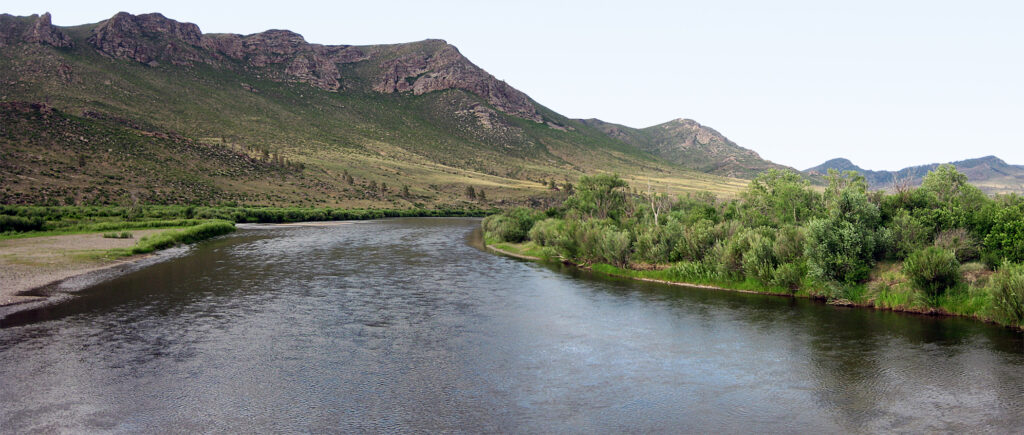
Cover Image Credit: The Onon River, near which Temüjin was born, pictured here in Khentii Province, Mongolia. Public Domain
