
10 March 2026 The Future is the Product of the Past

Iran’s Golestan Palace, a UNESCO World Heritage site, sustains damage following US-Israeli strikes

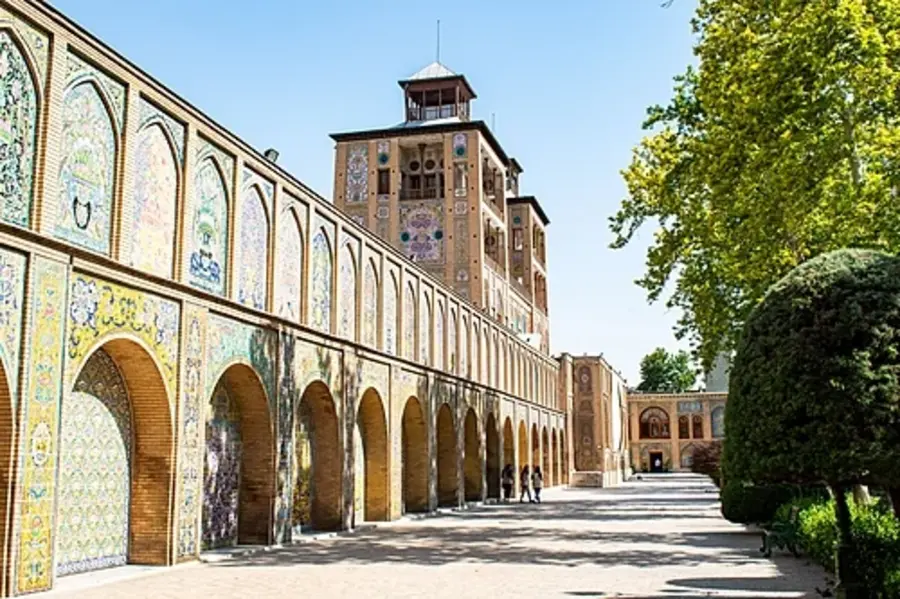
In a recent announcement, Iran’s cultural heritage minister, Reza Salehi-Amiri, revealed that the UNESCO-listed Golestan Palace in Tehran has sustained significant damage due to air strikes attributed to US-Israeli forces.

This incident raises concerns about the physical integrity of the historical site and highlights the broader implications for cultural heritage preservation. The Iranian government plans to submit a formal report to UNESCO, emphasizing the importance of protecting cultural heritage worldwide.

The Golestan Palace: A Historical Overview

The Golestan Palace, a masterpiece of Qajar era architecture, is one of the oldest and most important historical monuments in Tehran. Constructed during the 16th century, the palace complex reflects the fusion of Persian tradition and Western influences that marked the Qajar dynasty. Its exquisite gardens, intricate tile work, and stunning mirror halls have earned it a place on UNESCO’s World Heritage List since 2013.

The palace served as the royal residence for many Iranian monarchs and has played a significant role in the country’s history. It witnessed numerous political events, including the signing of treaties and the establishment of the first Iranian parliament in the early 20th century. The Golestan Palace is not just an architectural wonder; it is a symbol of Iran’s rich cultural heritage and history.
Credit: Iran Ministry of Cultural Heritage

Recent Strikes and Their Impact

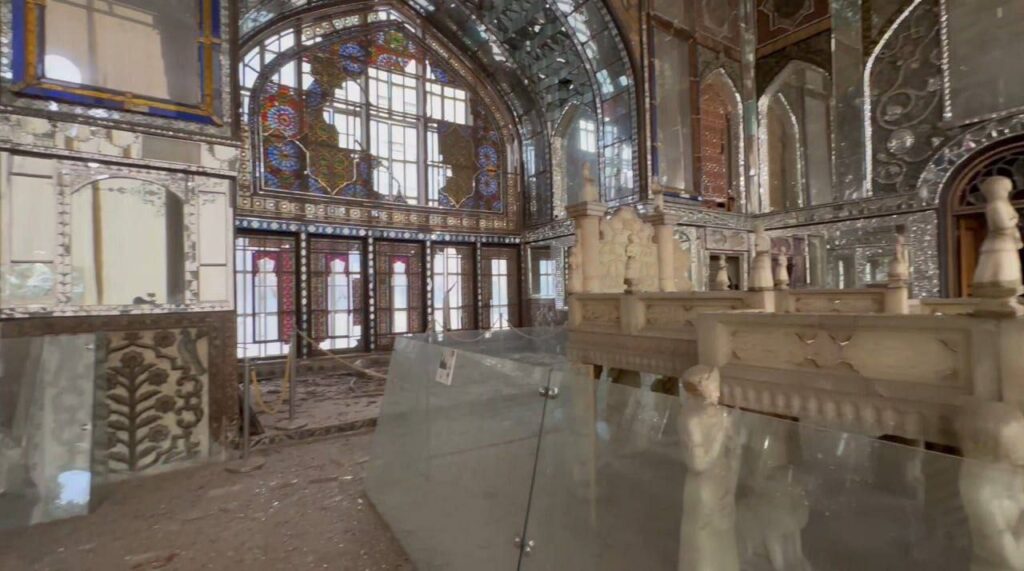
The air strikes that reportedly damaged the Golestan Palace have been met with widespread condemnation. Minister Salehi-Amiri stated that this attack was not merely on a physical structure but an assault on Iran’s cultural and national identity. The damage inflicted upon the palace raises critical concerns about the protection of cultural heritage sites in conflict zones.


📣 Our WhatsApp channel is now LIVE! Stay up-to-date with the latest news and updates, just click here to follow us on WhatsApp and never miss a thing!!


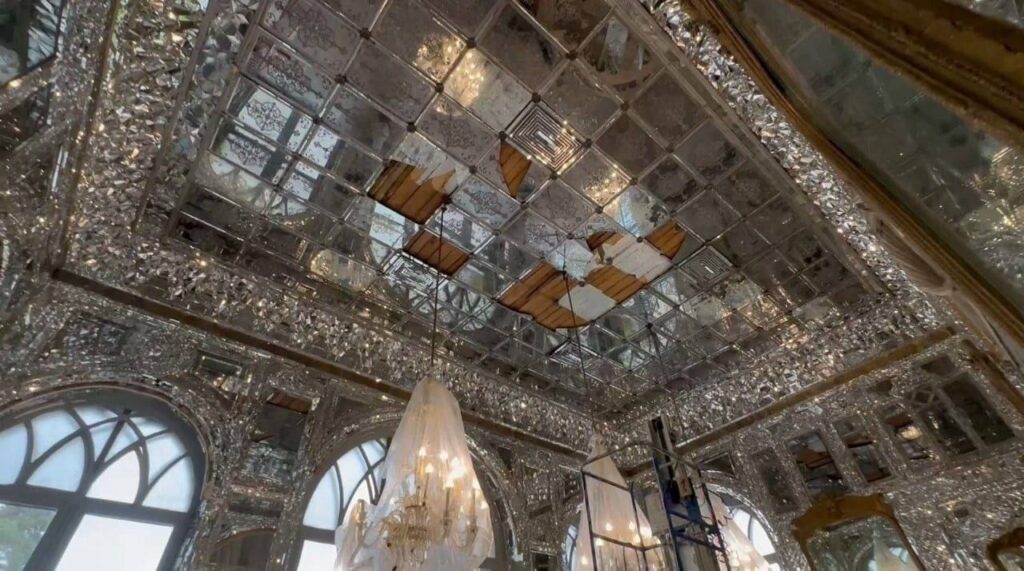
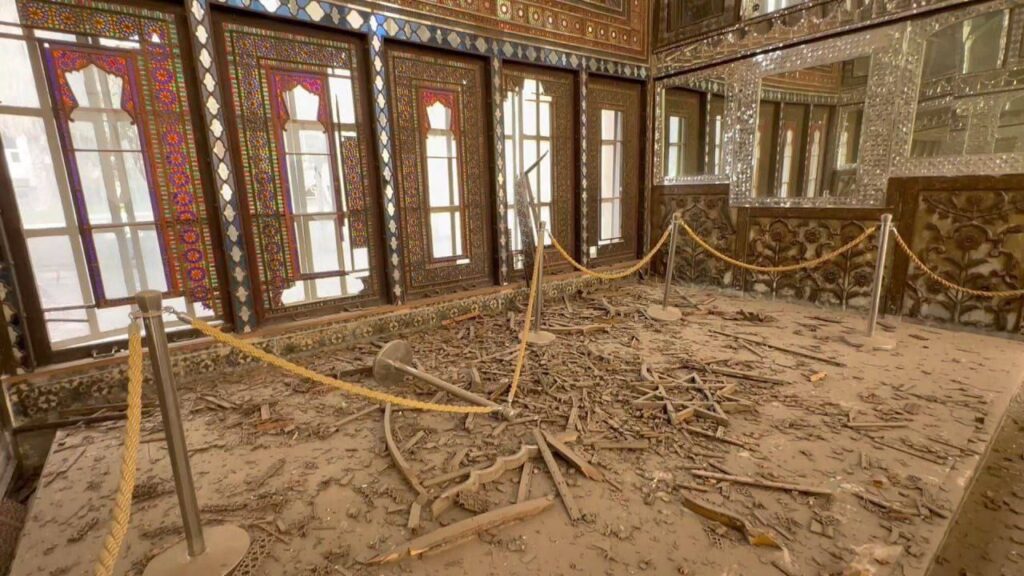
The strikes have reportedly affected several parts of the palace, including its gardens and some of the intricate decorative elements that adorn the buildings. As UNESCO emphasizes the need for the protection of cultural heritage during armed conflicts, this incident serves as a stark reminder of the vulnerabilities faced by such sites around the world.

Iran’s Response and International Implications

In response to the damage, Iran has vowed to take action through international channels. The formal report to UNESCO will outline the extent of the damage and call for immediate attention to prevent further assaults on cultural heritage sites. Iran’s government has expressed hope that the international community will recognize the importance of preserving such sites, not only for Iran but for humanity as a whole.

The situation is delicate, as it intertwines cultural preservation with geopolitical tensions. Iran’s call to action may lead to increased scrutiny of military operations in the region and their collateral damage to historical sites.
Credit: Iran Ministry of Cultural Heritage

The Importance of Cultural Heritage

Cultural heritage is a vital aspect of national identity and collective memory. The Golestan Palace, with its stunning architecture and historical significance, embodies the essence of Iran’s past. The loss or damage to such sites can have lasting effects on cultural identity and heritage.

UNESCO defines cultural heritage as the legacy of physical artifacts and intangible attributes of a group or society that are inherited from past generations. The destruction of these assets diminishes not only the cultural narrative of a nation but also the shared history of humanity. Recognizing this, it becomes imperative to advocate for the protection of cultural heritage during conflicts.

The Urgency of Protecting Cultural Heritage

The damage inflicted on the Golestan Palace serves as a poignant reminder of the fragility of cultural heritage in times of conflict. As Iran prepares to submit its report to UNESCO, it is essential for the international community to rally together in support of cultural preservation. The Golestan Palace is not just a relic of the past; it represents the spirit and identity of the Iranian people. Protecting such heritage is crucial for future generations, ensuring that they can connect with their history and culture.

As discussions continue surrounding the implications of these strikes, the hope remains that global awareness will lead to stronger protections for cultural sites worldwide. The Golestan Palace must be preserved, not only for Iran but for the collective heritage of humanity.
Credit: Iran Ministry of Cultural Heritage

Iran International

Cover Image Credit: Public Domain

Related Articles

Archaeologists Uncover a 2,300-Year-Old Fortress City in Uzbekistan’s Kashkadarya Oasis

23 November 2025

23 November 2025

The windswept hills of Uzbekistan’s Kashkadarya Oasis, long known as one of the cradles of human settlement in Central Asia,...

Contemporaneous with ancient Egypt and Mesopotamia the Indus Valley Civilization city of ‘Mohenjo Daro’: Skilled urban planners with a reverence for the control of water

10 September 2022

10 September 2022

The Indus River Valley (or Harappan) civilization (3300-1300 BCE) lasted 2,000 years and spanned northeast Afghanistan to Pakistan and northwest...

Ancient Humans Used Indigo Plant 34,000 Years Ago: First Evidence of Non-Food Plant Processing Found in Georgia

3 September 2025

3 September 2025

34,000-year-old indigo plant residues found in Georgia’s Dzudzuana Cave reveal that prehistoric humans processed plants for more than just food....

Rare Roman-Era Artifacts From Possible “Princely Burial” Illegally Excavated and Put Up for Sale in Ukraine

13 February 2026

13 February 2026

Ukrainian law enforcement authorities have prevented the illegal sale of a collection of rare Roman-era archaeological artifacts believed to originate...

A Detectorist has Discovered a Completely Unique Medieval Seal Matrix in the UK

2 December 2023

2 December 2023

A medieval seal die, described by experts as ‘completely unique’, has been found by a metal detector at a field...

Rock Ship of Masuda, Japan’s mysterious monolith

17 April 2023

17 April 2023

Located in the Takaichi District of Nara Prefecture, Japan, the village of Asuka is famous for its mysterious stones. The...

Egypt dig unearths 41 mln-year-old Whale in desert -Tutcetus rayanensis-

12 August 2023

12 August 2023

Paleontologists in Egypt announced the discovery of a new species of extinct whale that inhabited the sea covering present-day Egypt...

The University of Aberdeen is to Return a Benin Bronze

5 April 2021

5 April 2021

Since Nigeria gained independence in 1960, Nigeria has been calling for the return of stolen Benin bronzes (including brass reliefs,...

In French Necropolis 21 Roman “curse tablets” discovered including one written in the extinct Celtic language of Gaulish

18 January 2025

18 January 2025

During the excavation of an eighteenth-century hospital in north-western France by researchers from the Orléans Archaeological Service, a 2,000-year-old necropolis...

Ancient Balkan genomes trace the rise and fall of the Roman Empire’s frontier, reveal Slavic migrations to southeastern Europe

7 January 2024

7 January 2024

The genomic history of the Balkan Peninsula during the first millennium of the common era—a period marked by significant changes...

Many Ancient Artifacts Discovered in Vietnam’s Rice Fields

28 December 2025

28 December 2025

In Vietnam’s central Ha Tinh province, archaeologists have uncovered a remarkable concentration of ancient artifacts beneath rice fields in the...

483 Celtic gold coins worth several million euros stolen from German museum

23 November 2022

23 November 2022

A huge horde of ancient gold coins dating back to 100 BC was stolen from the Celtic and Roman Museum...

14,000-year-old settlement discovered in western Turkey

26 November 2021

26 November 2021

During the rescue excavation carried out in a cave in Dikili, İzmir, in western Turkey, 14 thousand-year-old stone tools and...

Earliest glass workshop north of the Alps unearthed in Němčice

25 July 2023

25 July 2023

Archaeologists excavated the famous Iron Age site Němčice and uncovered the earliest glass workshop north of the Alps. Numerous beautiful...

11,000-Year-Old Settlement Unearthed: Saudi Arabia Reveals Oldest Human Settlement in Arabian Peninsula

27 September 2025

27 September 2025

The Saudi Heritage Commission has announced, in partnership with Japanese scholars from Kanazawa University, the discovery of the oldest known...

Comments
Leave a Reply

Your email address will not be published. Required fields are marked *