
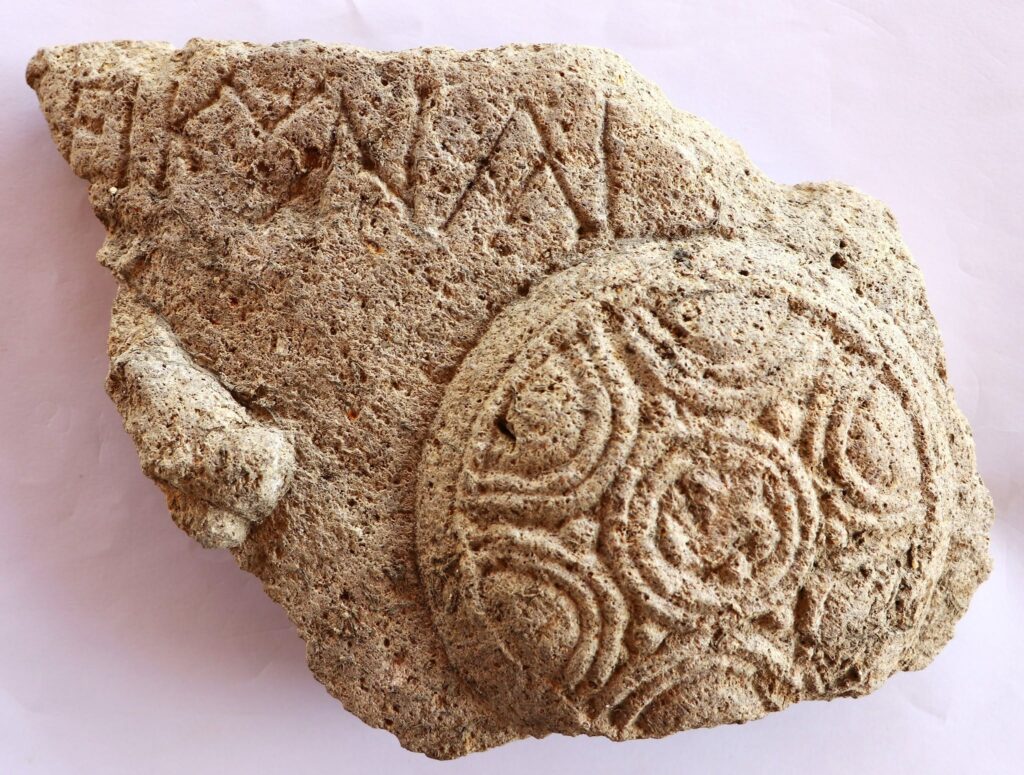
A second inscription naming Heracles Kynagidas, or “Heracles the Hunter,” has been uncovered at the ancient city of Heraclea Sintica in southwestern Bulgaria, adding new evidence for a local cult dedicated to the mythological hero.
The find was made during ongoing excavations led by Prof. Ludmil Vagalinski of the National Archaeological Institute with Museum at the Bulgarian Academy of Sciences. According to information reported by BTA and Archaeologia Bulgarica, the inscription was engraved on a large stone cup, only partly preserved but still clear enough to identify the dedication.
A ritual vessel linked to Heracles the Hunter
The stone cup carries more than text. Beneath the inscription, archaeologists identified a relief image of a shield typical of ancient Macedonian iconography. Similar shield forms are known from Macedonian coins and other artifacts. On the opposite side of the vessel, part of another figure is visible, possibly the head of a horse or a boar.
That detail may be important. Heracles Kynagidas refers to Heracles in his hunting aspect, a form of the hero closely tied to wilderness, strength, and ritual protection. The possible animal image, together with the Macedonian-style shield, suggests the vessel was not a casual object but part of a carefully designed cult setting.
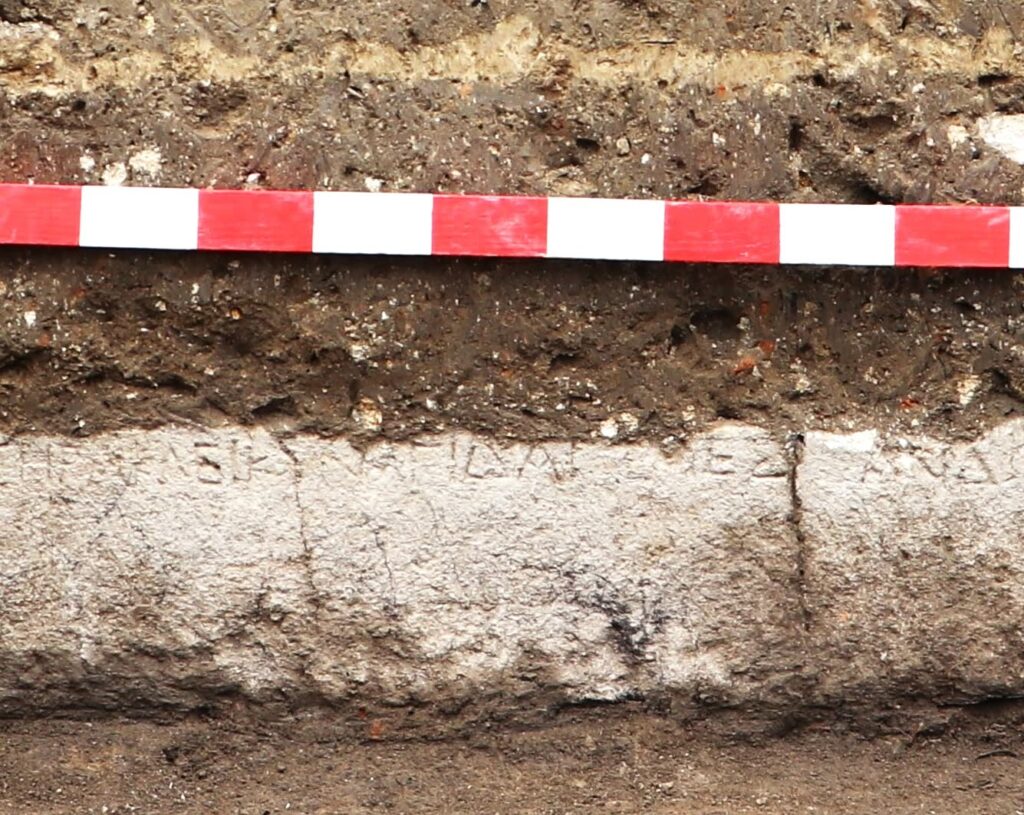
The cup was found near an altar where another inscription had been deciphered only days earlier. That earlier text included the dedication “Antigonus to Heracles Kynagidas,” according to the excavation team. Both finds appear to be contemporary and may have belonged to the same ritual complex.
New evidence for religious life in Heraclea Sintica
Archaeologists believe the stone cup was likely used in ceremonies connected with the temple of Heracles. The discovery is now the second epigraphic monument from the current excavation season linked directly to Heracles Kynagidas, making it an important addition to the study of religious practices in the city.
The team has also recovered a fragment from the base of a similar stone vessel. Petrographic analysis will be carried out to determine whether the pieces came from the same object or from separate ritual vessels. Specialists in stone materials are expected to take part in the examination.
For Heraclea Sintica, the new inscription is significant because it connects text, image, and ritual space in one archaeological context. The altar, the vessel, the Macedonian shield, and the repeated name of Heracles Kynagidas point to a cult that may have held a visible place in the public or sacred life of the city.
An ancient city between Macedonia and Thrace
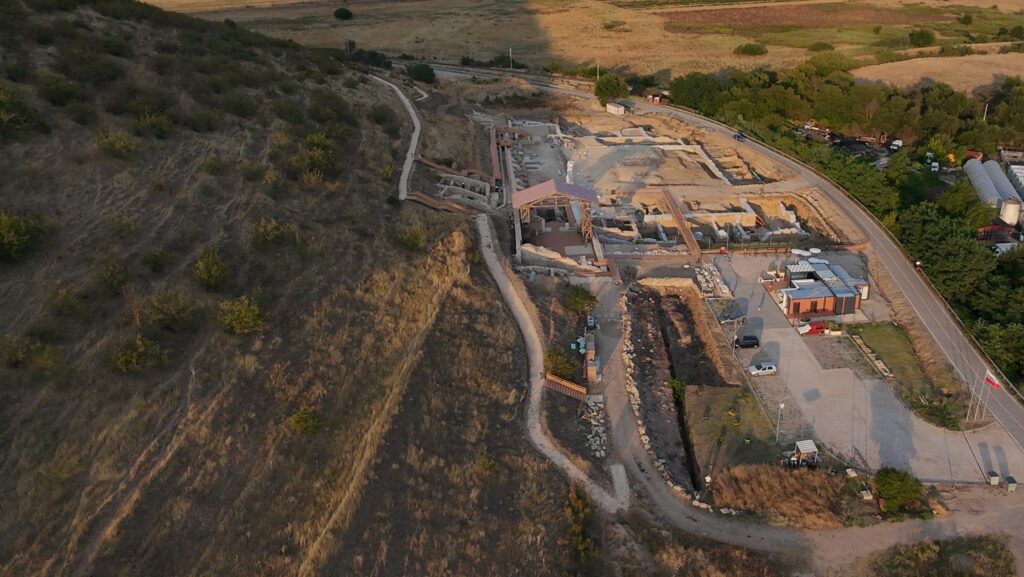
Heraclea Sintica lies near the village of Rupite, close to Petrich, in a region that stood between ancient Macedonia and Thrace. The city developed as an important urban center in antiquity and later continued under Roman rule. Its name preserves the memory of the Sintians, a Thracian group associated with the wider region of Sintica.
The site has become one of Bulgaria’s most closely watched archaeological projects. Previous discoveries, including inscriptions, statues, public buildings, and evidence of urban planning, have helped reconstruct the life of a city shaped by Macedonian, Thracian, Greek, and Roman traditions.
The latest inscription comes shortly after the discovery of a marble torso and part of a marble statue of a goddess at the same ancient city. Excavations are continuing, with archaeologists carefully documenting the context of the new finds to refine the dating and interpretation of the ritual structures.
For now, the stone cup adds one more piece to a growing picture: Heraclea Sintica was not only an urban and political center, but also a place where older heroic cults remained deeply embedded in civic and religious life.
Cover Image Credit: Archaeologia Bulgarica
