Ukrainian law enforcement authorities have prevented the illegal sale of a collection of rare Roman-era archaeological artifacts believed to originate from a unique “princely burial,” a discovery that experts say could fundamentally reshape understanding of social structures in Eastern Europe during the Late Roman period.
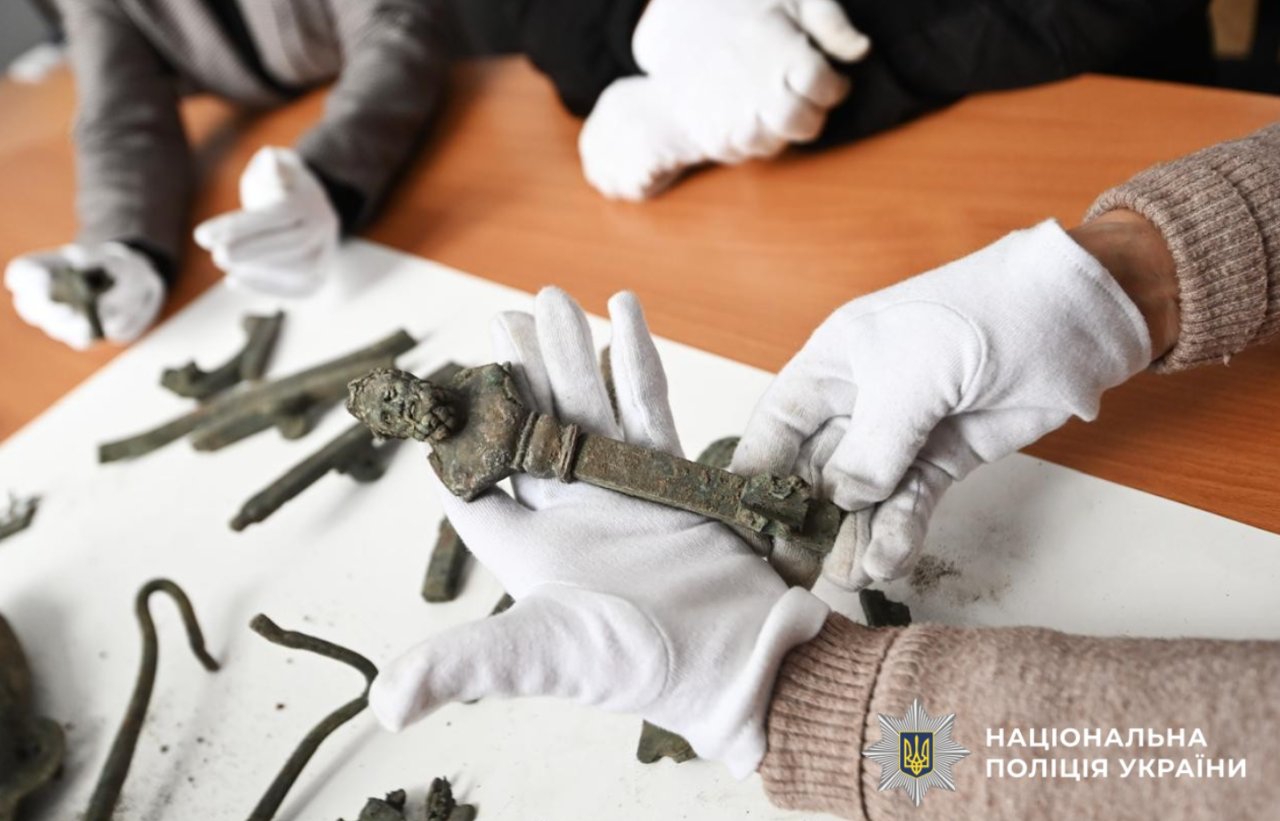
The incident occurred in Ukraine’s Vinnytsia region, where a 39-year-old local resident conducted unauthorized archaeological excavations using a metal detector on agricultural land located between several villages in the Vinnytsia district. According to the National Police of Ukraine, the man—described as a so-called “black archaeologist”—accidentally uncovered a cache of bronze artifacts dating back to the second half of the 3rd century AD.
Rather than reporting the discovery to cultural heritage authorities, as required by Ukrainian law, the suspect photographed the artifacts and attempted to sell them through social media platforms. His post, however, caught the attention of specialists from the National Museum of the History of Ukraine, who immediately alerted police.
Illegal Excavation and Police Investigation
Investigators established that the suspect had no permits to conduct archaeological or search operations. Despite being fully aware of the exceptional historical, scientific, and cultural value of the artifacts—and that such finds are considered state property—the man allegedly kept the items for personal gain.
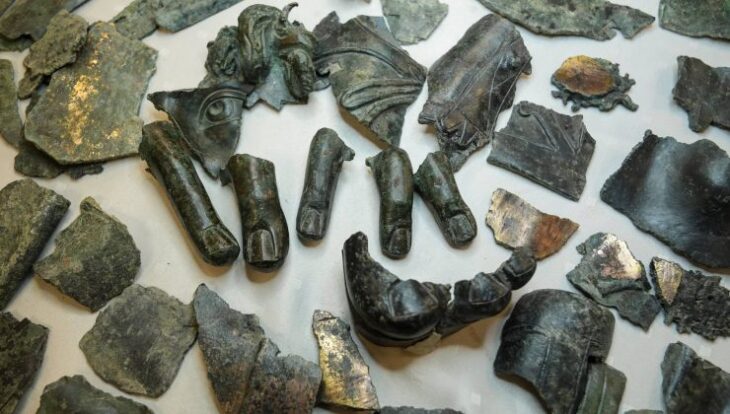
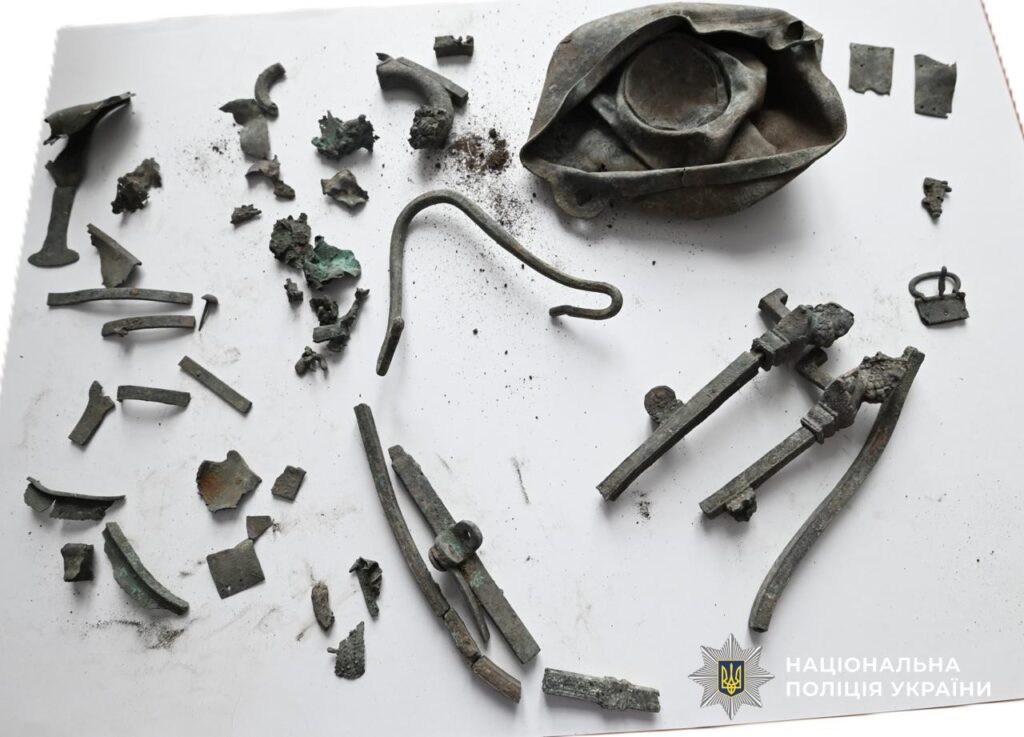
Following a court order, police conducted a search of the suspect’s residence, where he voluntarily handed over all 54 recovered fragments. The artifacts were subsequently transferred to museum experts for secure storage and detailed examination.
📣 Our WhatsApp channel is now LIVE! Stay up-to-date with the latest news and updates, just click here to follow us on WhatsApp and never miss a thing!!
The pre-trial investigation was carried out by the Vinnytsia District Police Department under the procedural supervision of the Nemyriv District Prosecutor’s Office. Authorities confirmed that the investigation has now been completed, and the indictment has been formally submitted to court.
The suspect has been charged under Part 1 of Article 193 of the Criminal Code of Ukraine, which covers the illegal appropriation of treasure possessing special historical, scientific, artistic, or cultural value. If convicted, he faces penalties ranging from fines to probationary supervision for up to two years.
A Discovery of Exceptional Historical Importance
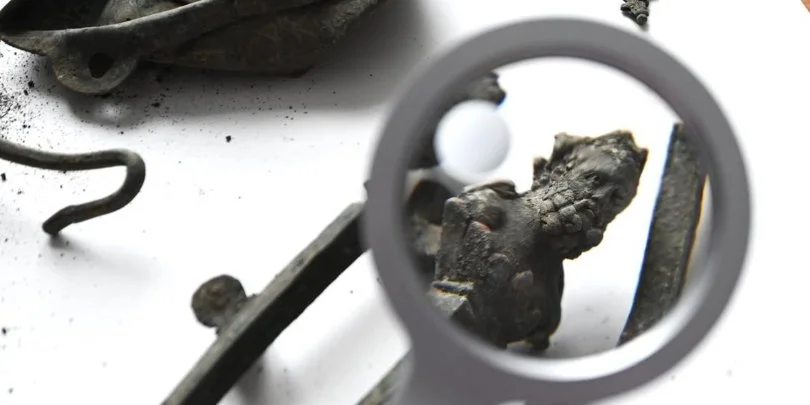
Museum experts stress that the significance of the find extends far beyond its monetary value. Preliminary analysis indicates that the artifacts form a single, intact deposit associated with a Germanic warrior cremation burial. Among the discoveries are Roman-imported items such as a bronze cauldron, a ladle, a strainer, and a rare tripod stand.
“The presence of Roman imports of this kind clearly indicates the extraordinarily high social status of the deceased,” museum specialists noted. “The discovery of a Roman tripod, in particular, points to the exceptional nature of this burial.”
Scholars believe the site may represent the first documented “princely burial” in Eastern Europe. If confirmed, this would challenge long-held assumptions about the social hierarchy and political organization of communities inhabiting what is now Ukraine during the Late Roman era.
Cultural Heritage Protection in Focus
Ukrainian authorities emphasize that the case underscores the importance of protecting archaeological heritage, especially during a time when illicit excavations and black-market artifact sales remain a persistent problem.
“Cultural heritage belongs to the entire nation, not to individuals seeking profit,” police representatives stated. “This case demonstrates effective cooperation between museum professionals and law enforcement in safeguarding Ukraine’s historical legacy.”
As the artifacts undergo further scientific study, historians and archaeologists alike are hopeful that the discovery will offer new insights into ancient trade networks, elite status, and cross-cultural connections between the Roman world and barbarian societies on its eastern frontier.
Communications Department of the Vinnytsia Regional Police
Cover Image Credit: National Police of Ukraine