
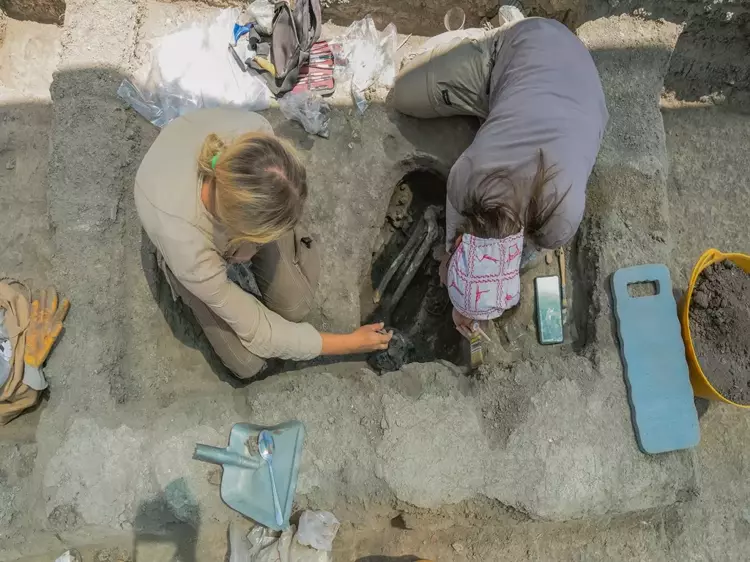
Nestled in the Konya Plain of central Türkiye, Çatalhöyük, a 9,000-year-old Neolithic settlement and UNESCO World Heritage Site, continues to reveal extraordinary insights into humanity’s earliest urban experiments. Recent archaeological excavations led by Turkish and international teams have uncovered new evidence suggesting that social transformation drove ancient inhabitants to migrate from the eastern to the western mound of the settlement. At the same time, researchers have identified a remarkable mortuary structure, dubbed the “House of the Dead,” where the remains of 20 individuals were ritually placed.
These discoveries are reshaping our understanding of Neolithic society, highlighting how shifts in community life, spiritual practices, and social organization contributed to one of the earliest known examples of urban migration.
Shifting Social Structures: Why Did Neolithic People Move?
Archaeologists have long debated why the population of eastern Çatalhöyük eventually abandoned their tightly packed homes and relocated to the western mound. According to excavation director Assoc. Prof. Dr. Ali Ozan of Pamukkale University, the answer may lie in evolving social dynamics.
“In the lower levels, architecture shows a dense, interconnected pattern,” Ozan explains. “But as we move to later layers, we see signs of increasing separation between buildings. This suggests that social structures were gradually changing. Once these changes intensified, people may have chosen to leave the east and establish themselves in the west.”
This transformation marks a critical phase in human history, reflecting not just architectural evolution but a deeper shift in how early farming societies organized themselves. What began as a tightly bound community may have gradually diversified into more individual households — a change that reshaped daily life, ritual, and even burial practices.
The Discovery of the “House of the Dead”
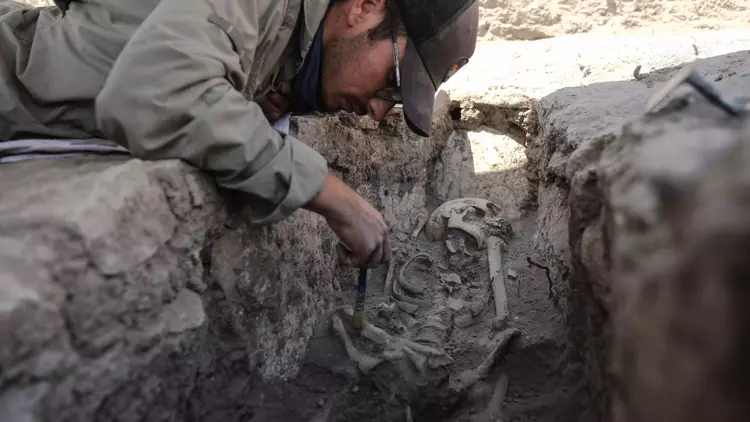
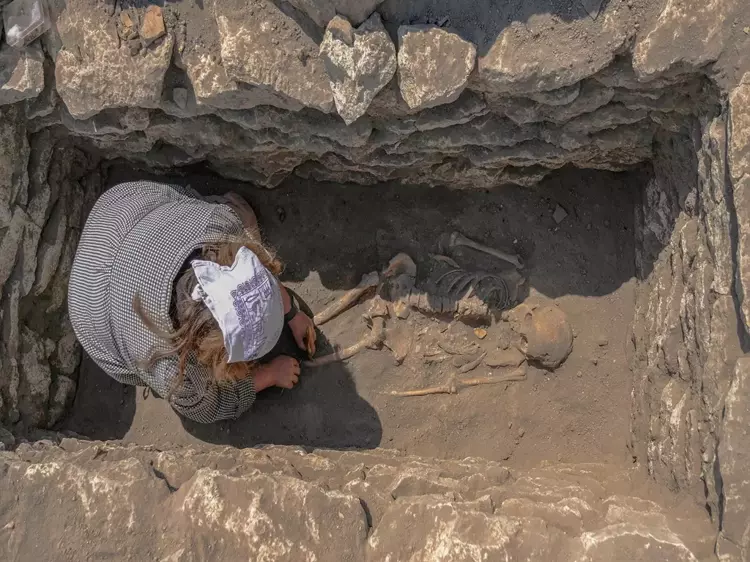
While the western mound tells the story of migration, excavations on the eastern side have brought to light one of Çatalhöyük’s most remarkable discoveries to date. A team led by Prof. Dr. Arkadiusz Marciniak of Poznań University in Poland has uncovered a cluster of non-domestic structures arranged around a courtyard. Among them lies the “House of the Dead” (Spiritual House), where archaeologists found the remains of at least 20 individuals deliberately placed beneath the floor.
Marciniak suggests these people likely died elsewhere before their remains were brought to the site, indicating a ritual deposition rather than conventional burial. Such practices underscore the symbolic and spiritual importance of Çatalhöyük’s built environment, where homes and ritual structures blurred the line between everyday life and the sacred.
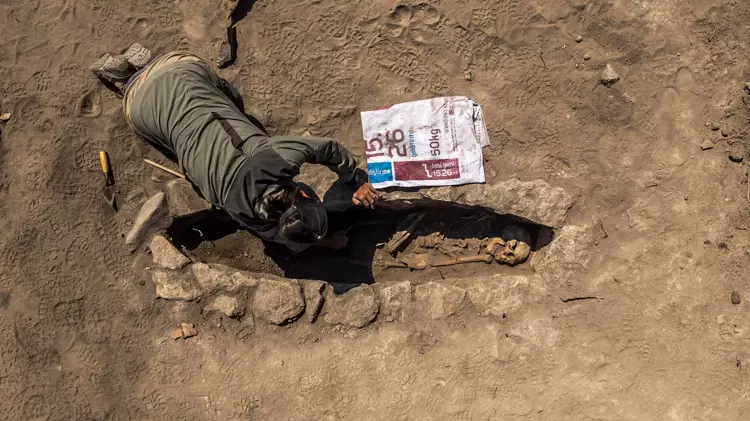
Other discoveries include a large painted ritual building with 14 platforms, slated for excavation next year, as well as one of the oldest known structures in the eastern settlement, containing three burials beneath its platforms. Although radiocarbon dating is pending, these findings shed light on how the earliest farmers integrated spirituality into the very fabric of their architecture.
Çatalhöyük: A Living Laboratory of Early Urbanism
Founded around 7,500 BCE, Çatalhöyük was home to as many as 8,000 inhabitants at its peak, making it one of the world’s first urban centers. Unlike later cities with streets and open squares, Çatalhöyük was composed of adjoining mudbrick houses accessed through roof openings. The settlement lacked public buildings in the traditional sense; instead, each household functioned as both a domestic and ritual space.
Houses served as sacred places where families buried their dead beneath floors, painted walls with symbolic designs, and performed communal ceremonies. The integration of ritual and daily life illustrates how early agricultural societies conceived of spirituality not as separate from the everyday, but as embedded within it.
The settlement’s discovery has had profound implications for archaeology. Since its inclusion on the UNESCO World Heritage List in 2012, Çatalhöyük has been recognized not only for its remarkable preservation but also for its role in illuminating the transition from mobile hunter-gatherer groups to sedentary, farming-based communities. Today, it remains a crucial site for understanding how humans first experimented with concepts of community, identity, and social complexity.
A Legacy for the Future
Ongoing excavations at Çatalhöyük, supported by Türkiye’s Ministry of Culture and Tourism under the “Heritage for the Future Project,” promise to deepen our knowledge of how the first cities emerged and how people adapted to shifting social realities. The discovery of the “House of the Dead” and evidence of migration between the eastern and western mounds reveal that Neolithic society was far from static — it was dynamic, adaptive, and deeply symbolic.
As scholars continue to unearth new layers of this ancient settlement, Çatalhöyük stands as a powerful reminder that the roots of urban life, spiritual tradition, and social change stretch back much further than we once imagined.
Cover Image Credit: DHA
