
A rare stone weight inscribed with the word “ratl” has been unearthed at the Hillit archaeological site, an early Islamic mining settlement in Saudi Arabia’s Riyadh Region.
The artifact was discovered alongside 18 architectural units during the fourth season of excavations at the site, located about 110 kilometers northwest of Al-Dawadmi. The findings provide new evidence of the systems of measurement, production, and daily life that supported the settlement more than 1,200 years ago.
Saudi Arabia’s Heritage Commission, which announced the results, describes Hillit as an important historic gold-mining site. The Commission’s official English-language announcement said the latest campaign had uncovered archaeological evidence associated with one of the oldest gold mines in the Arabian Peninsula.
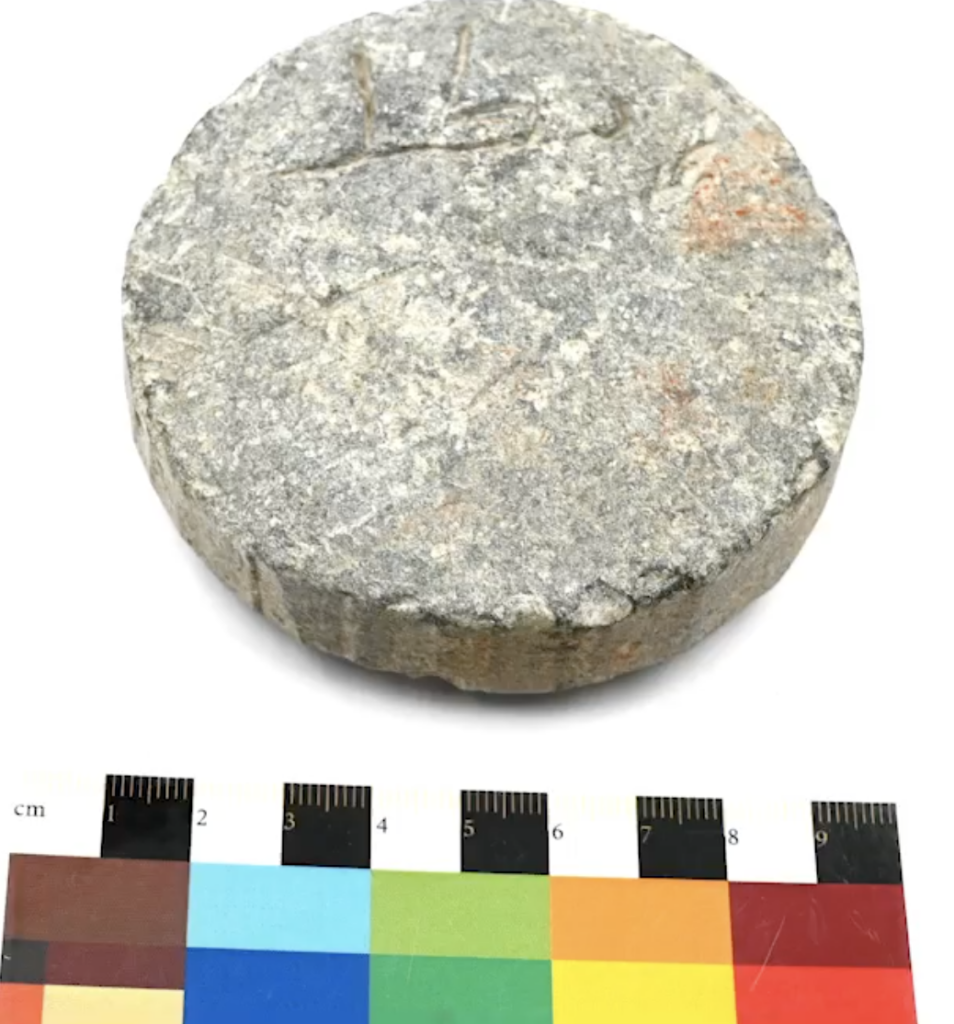
A stone weight marked “ratl”
The most distinctive object recovered during the excavation is a stone weight bearing the Arabic word “ratl,” a historical unit of weight used in commercial transactions.
According to the Heritage Commission, the inscription was written in the early Jazm script and dates from the first or second century of the Hijri calendar. This places the artifact broadly between the seventh and early ninth centuries CE, during the formative centuries of Islamic rule.
The discovery indicates that measured quantities were used within the settlement, possibly in transactions involving mined materials, food or other commodities. Although the precise value represented by a ratl could vary between regions and periods, the inscription shows that recognized weighing terminology formed part of Hillit’s economic activity.
The artifact may therefore help researchers examine how mined resources were processed, measured and exchanged within early Islamic Arabia.
Eighteen architectural units uncovered
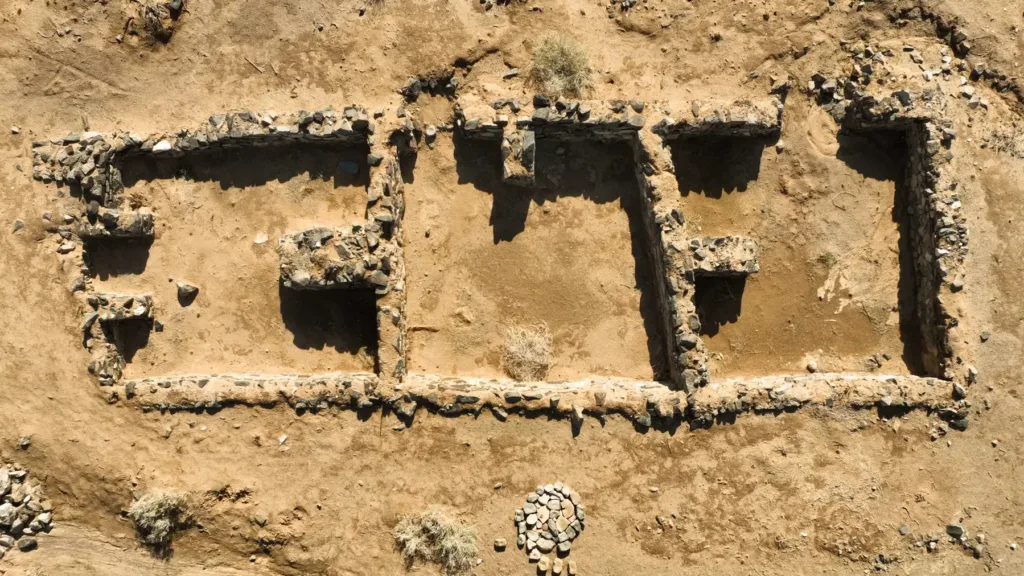
Excavations also exposed 18 architectural units of varying sizes, including rooms, corridors and connecting passages.
Their arrangement suggests that Hillit was not merely a temporary mining camp. Instead, it appears to have been a structured settlement with spaces used for domestic life, production, storage and movement between different working areas.
The latest campaign recovered a wide range of smaller finds, including part of a metal bracelet and beads in different shapes and colors. Archaeologists also documented fragments of glazed and undecorated pottery, soapstone vessels and glass bottles.
Millstones, pestles and other stone implements provide further evidence of food preparation and material processing. Together, the objects offer a broader view of the miners, craftspeople and families who lived at the settlement.
An Umayyad mining community
Earlier excavation seasons revealed that Hillit developed as an organized mining community during the Umayyad period.
Previous discoveries included residential units, a mosque positioned within the settlement and a market composed of adjoining rooms with side entrances. Archaeologists also found furnaces used to process raw material, basins associated with washing minerals, and large numbers of grinding stones and pestles.
Among the most important earlier finds was an Umayyad coin dated to 85 AH, corresponding to the early eighth century CE. Another weight containing an early Arabic inscription was also recovered.
Early historical sources reportedly referred to the mining site as Ma‘dan al-Najadi, a name connected with the descendants of Najad ibn Musa ibn Sa‘d ibn Abi Waqqas. The settlement’s mosque, market, workshops and domestic structures indicate that mining supported a permanent community rather than an isolated industrial operation.
Preliminary analysis from the fourth excavation season agrees with evidence gathered during earlier campaigns. Researchers currently date the principal occupation of Hillit to the first century AH, while evidence suggests activity may have continued into the second century AH.
Further study of the inscribed weight, architectural remains, and associated artifacts could clarify how mining settlements contributed to commerce and settlement growth in the Arabian Peninsula during the early Islamic period.
Heritage Commission, Saudi Arabia
Cover Image Credit: Saudi Ministry of Culture / Heritage Commission
