
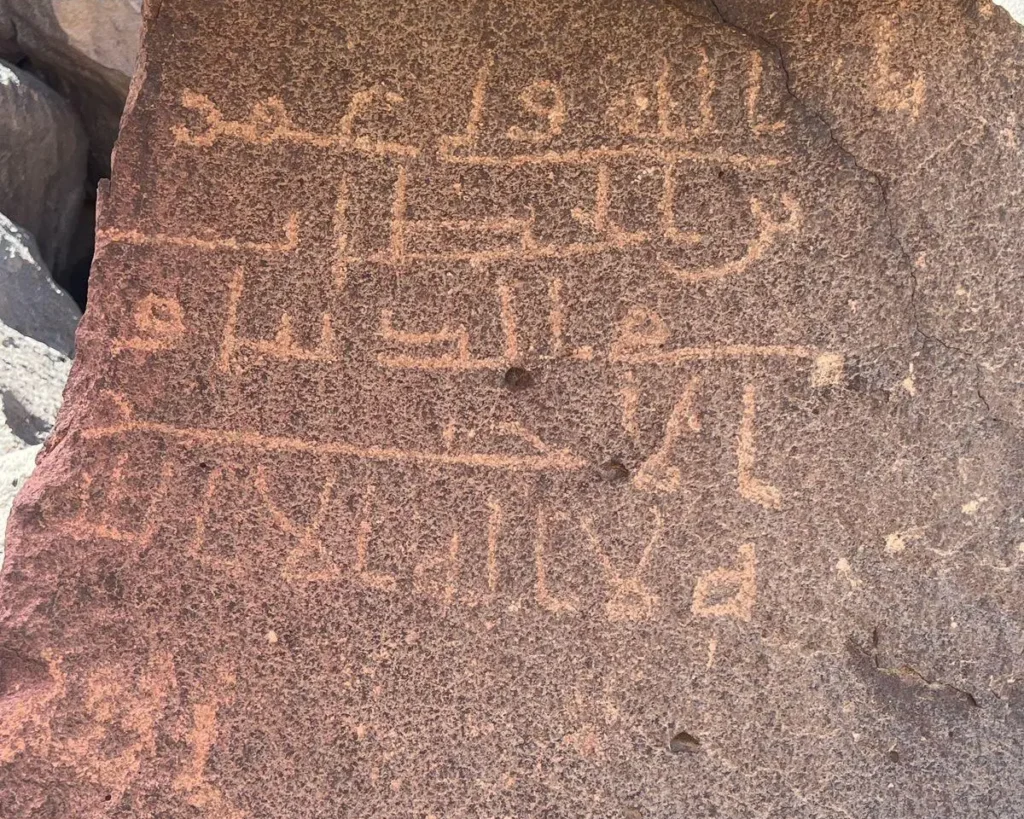
Saudi Arabia’s Heritage Commission has documented 1,774 archaeological finds in Al Mahd Governorate, including inscriptions bearing the name of Umar ibn al-Khattab, rock art, caravan routes, wells, and early Islamic inscriptions.
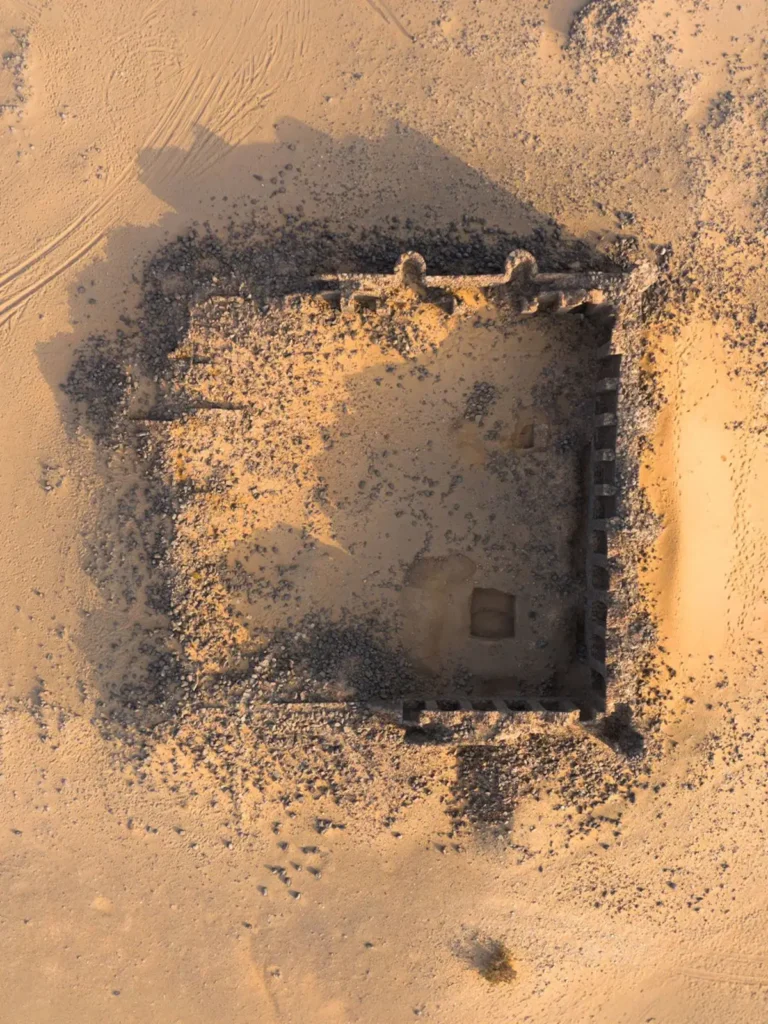
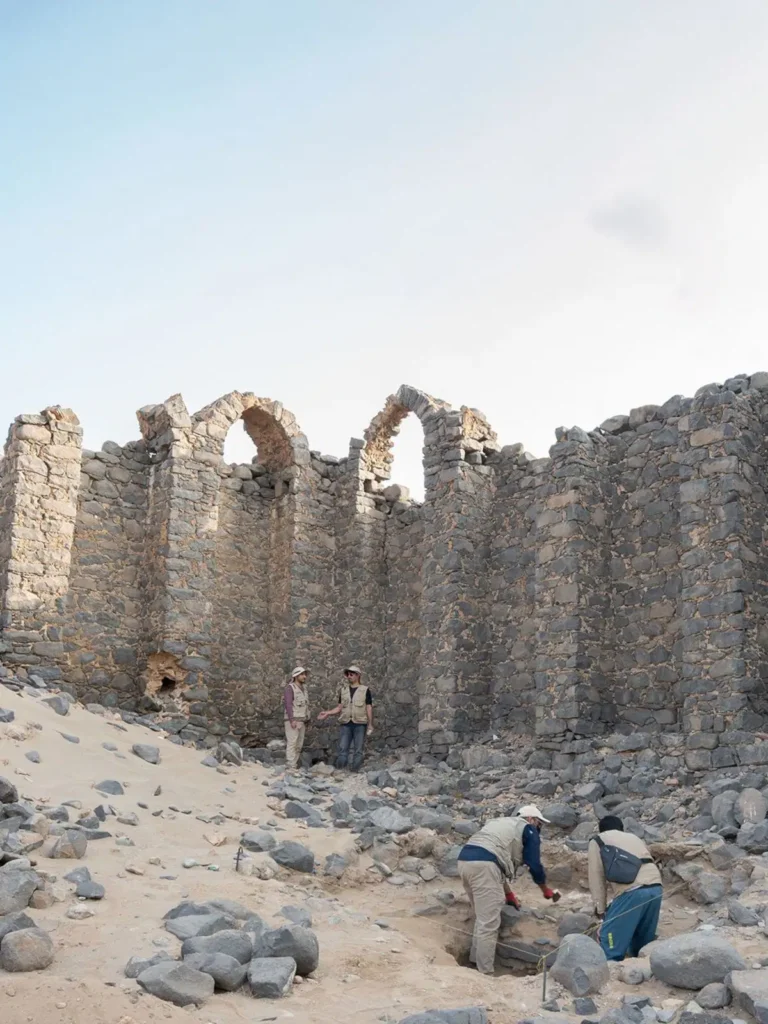
The Heritage Commission announced that the second season of survey work in Al Mahd Governorate recorded finds across three areas: Al Suwayriqiyah, Al Muwayhiyah, and Hadhah. The newly documented material includes Islamic inscriptions, Thamudic inscriptions, rock art panels, stone structures, historical palaces, wells, and two caravan routes.
Among the most significant discoveries are rock inscriptions bearing the name of Umar ibn al-Khattab, the second caliph of Islam. Their presence gives the survey particular historical weight, not because they prove a direct personal link to Umar, but because his name carried strong religious and political meaning in the early Islamic centuries.
A desert archive carved into stone
The survey recorded 156 new archaeological sites. Within them, researchers identified 461 Islamic inscriptions, 34 Thamudic inscriptions, 1,259 rock art panels, 11 stone structures, three historical palaces, two caravan routes, and four wells.
Taken together, the finds show Al Mahd not as an empty desert margin, but as a landscape repeatedly crossed, marked, and used by different communities. Rock inscriptions in Arabia often served as personal statements, prayers, names, tribal markers, poetic fragments, or signs of movement across long-distance routes.
The Thamudic inscriptions point to an older pre-Islamic writing tradition in northern and central Arabia. The term “Thamudic” is commonly used for a group of ancient North Arabian scripts, many of them carved by travelers, pastoralists, or local groups who moved through desert zones before the rise of Islam.
The Islamic inscriptions, by contrast, belong to a later world shaped by Arabic literacy, religious expression, and the growth of pilgrimage and trade networks. The name of Umar ibn al-Khattab stands out because of his central place in Islamic memory. As caliph from 634 to 644 CE, Umar was associated with the early expansion and institutional formation of the Islamic state.
A Caliph’s Name in the Desert Stone
The importance of the Umar-related inscriptions lies in what they reveal about memory and identity. Names of major early Islamic figures often appear in devotional or commemorative contexts. They can reflect reverence, political loyalty, religious education, or the spread of shared Islamic historical memory among communities living far from major urban centers.
For archaeologists, such inscriptions help connect written history with the physical landscape. They show how early Islamic names, beliefs, and poetic language circulated across routes used by travelers, traders, herders, and local populations.
The Arabic poetry engraved on rock faces adds another layer. Poetry was not merely literary decoration in the Arabian Peninsula. It was a vehicle of memory, status, emotion, and identity. When carved into stone, poetic lines could transform a passing moment into a lasting mark on the landscape.
Routes, wells, and the infrastructure of movement
The documentation of two caravan routes and four wells is especially important. In arid regions, movement depended on water points, known paths, seasonal knowledge, and stopping places. Wells were not minor features. They shaped where people could travel, where animals could rest, and where settlements or waystations could survive.
The Al Mahd discoveries also fit into a broader pattern emerging from recent Saudi archaeological work. At Miqat Al-Juhfah, a separate Heritage Commission project in collaboration with the University of Exeter documented more than 1,700 finds at one of the historic entry stations for pilgrims traveling toward Makkah. That site produced ceramics, glass, shells, beads, metal objects, six pottery kilns, a water canal, and tombstones linked in part to the Umayyad and Abbasid periods.
Although Al Mahd and Miqat Al-Juhfah are separate archaeological contexts, together they point to the same larger reality: early Islamic Arabia was connected by routes, water systems, craft activity, inscriptions, and religious movement. These landscapes were not static backdrops. They were active corridors of travel, exchange, belief, and memory.
Saudi Arabia’s expanding archaeological record
The Heritage Commission said the Al Mahd survey forms part of its continuing national program to identify, document, and protect archaeological sites across Saudi Arabia. The work also supports Saudi Vision 2030’s cultural heritage objectives, which place archaeology, museums, and heritage tourism at the center of the kingdom’s cultural strategy.
For Al Mahd Governorate, the latest survey results offer more than a large number of reded finds. They provide a clearer view of how people used the Madinah landscape across different periods. Rock art preserves older visual traditions. Thamudic inscriptions recall pre-Islamic mobility. Islamic inscriptions and Arabic poetry point to a later world of faith, memory, and written expression.
The inscriptions bearing Umar ibn al-Khattab’s name will likely draw the widest public attention. Yet their real value is part of a wider archaeological picture. They belong to a landscape where stones, routes, wells, and words still preserve traces of the people who crossed Arabia’s deserts centuries ago.
Cover Image Credit: Saudi Ministry of Culture
