
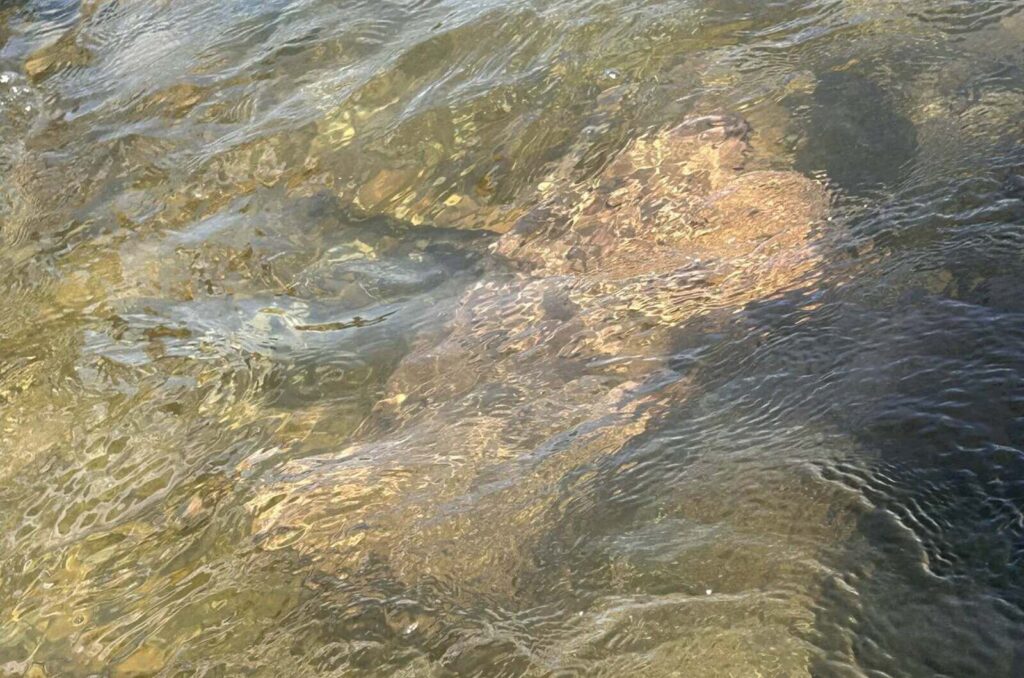
Record-low Danube water levels near Dunaújváros have uncovered a Roman altar to Jupiter and inscribed limestone tablets, plus a suspected wartime grenade, near the ancient fort of Intercisa.
An unusually dry summer has pulled the Danube back from its banks near Dunaújváros in central Hungary, and the retreating water has given up a striking mix of finds.
Over the course of just a few days in early August, staff from the Intercisa Museum recovered a limestone altar dedicated to Jupiter and two inscribed limestone tablet fragments from stretches of riverbed that are normally submerged, and, in the same stretch of shoreline, came across a suspected grenade that forced them to call in a bomb disposal team.
A Riverbed Survey Turns Up an Unexpected Find
The discoveries began on August 3, when museum staff, joined by underwater archaeologist Attila J. Tóth, carried out a field survey along the Danube shoreline around Szalki Island. The team’s original goal was archaeological rather than accidental: they were focused on the area where the medieval Pentele monastery is believed to have once stood, hoping the falling water might expose traces of the site.
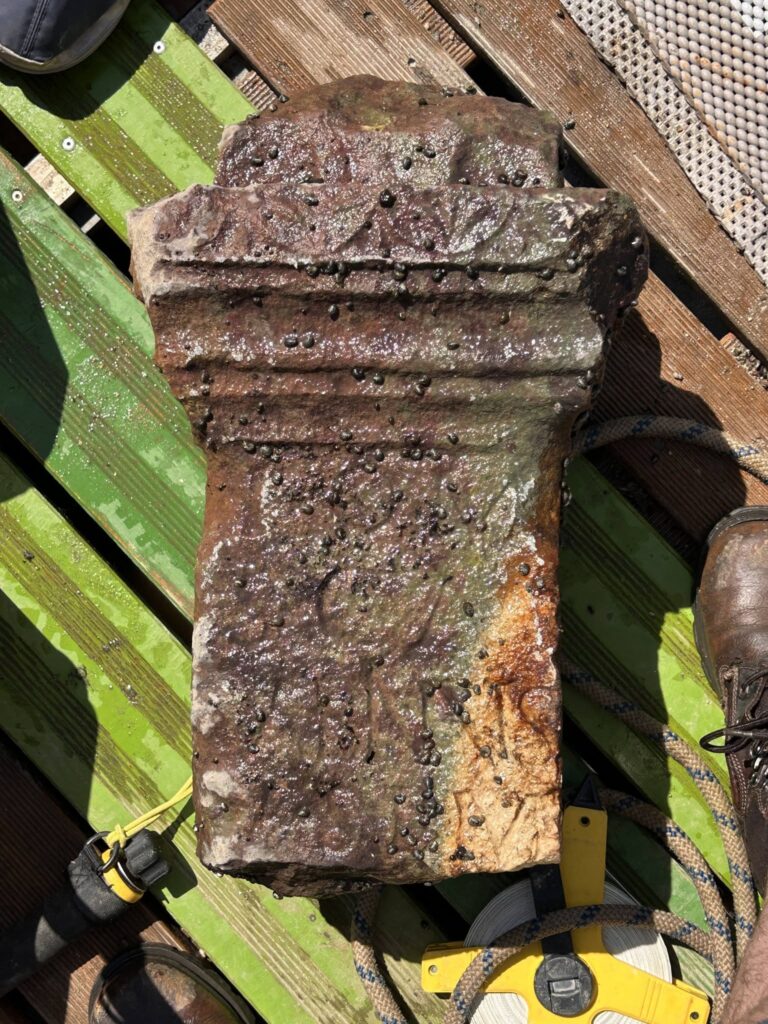
The monastery remains elusive for now, but the river offered something else instead. Not far from the suspected monastery grounds, surveyors pulled a Roman altar stone from the Danube, carved and dedicated to Jupiter, the chief god of the Roman pantheon.
Altars of this kind were typically commissioned by soldiers, officials, or private individuals to fulfil a religious vow, and their inscriptions can preserve names, military units, or dates that help archaeologists reconstruct daily life along the frontier.
More Carved Stone Follows Within Days
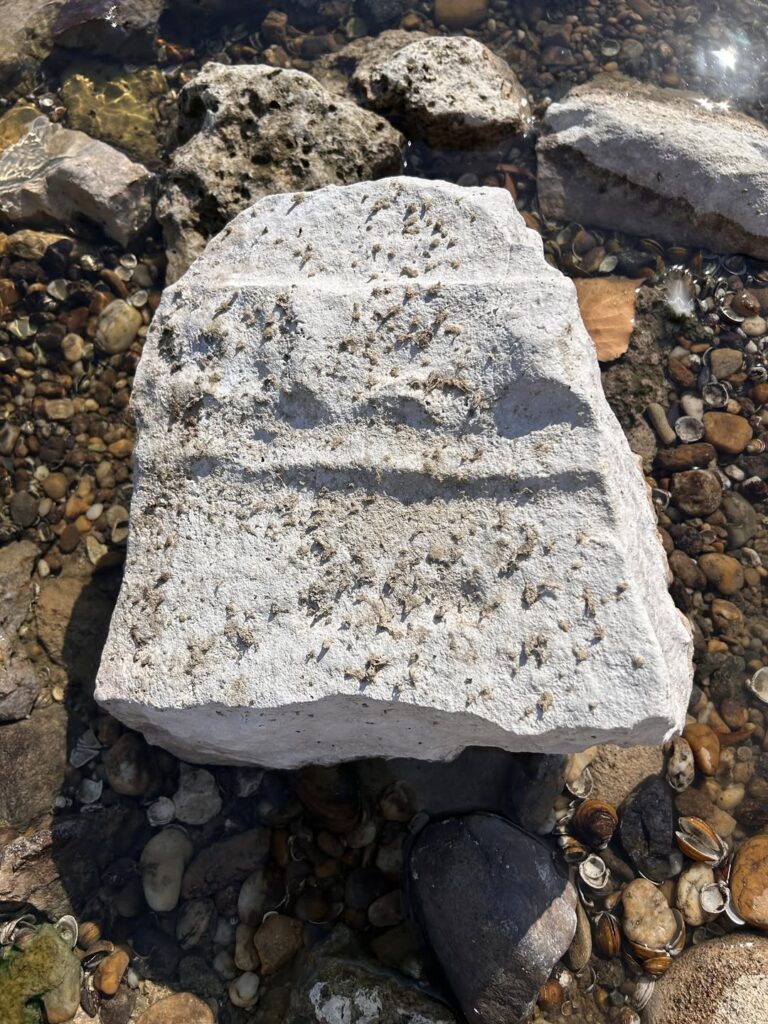
The find was not an isolated stroke of luck. Two days later, on August 5, museum staff returned to the same formerly submerged stretch of shoreline and found a fragment of a Roman limestone slab. The team documented and photographed the piece on-site before removing it to the museum for further study.
Later that same morning, a second carved fragment turned up nearby: again worked by human hands and, based on its appearance, likely of Roman date. Museum staff have brought it in for documentation as well, and specialists are now working to determine what the slab originally belonged to, whether a funerary monument, a building inscription, or another type of dedication.
Researchers say more finds could still be waiting in the exposed riverbed, and they plan to keep surveying the area as conditions allow.
Why the Danube Is Giving Up Its Secrets Now
The reason so much is surfacing at once comes down to water levels. Prolonged low flow on the Danube has drawn the river back from sections of shoreline near Dunaújváros that are normally underwater year-round, opening up ground that archaeologists rarely get the chance to examine directly.
Similar drought-driven discoveries have made headlines elsewhere along the Danube and other major European rivers in recent years, as retreating water repeatedly exposes shipwrecks, boundary stones, and other long-submerged remains.
For the Intercisa Museum team, the drop has turned a difficult season on the river into an opportunity: ground that would usually require diving or dredging to reach is, for now, simply walkable.
A Wartime Warning Alongside the Archaeology
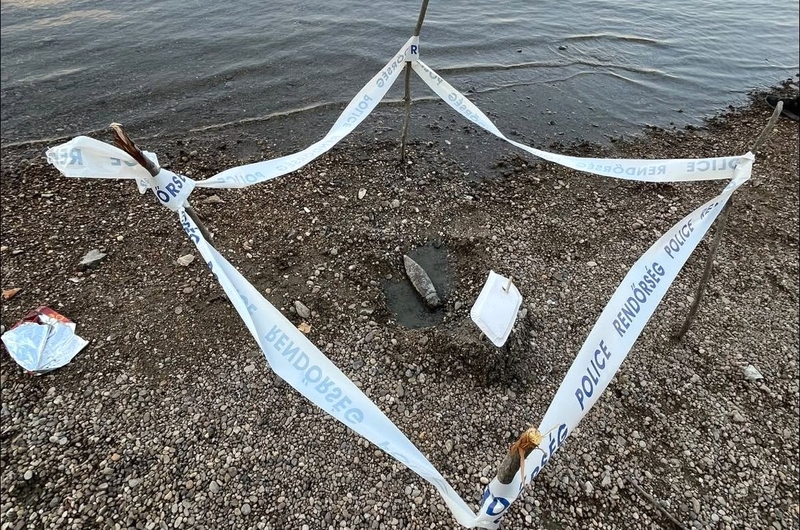
The riverbed survey has not been limited to ancient material. During the same series of walkovers, staff came across a suspected grenade, prompting them to call in a bomb disposal team as a precaution. Given the Danube’s role as a wartime frontline in the 20th century, unexploded ordnance from the Second World War is a recognised risk along many stretches of the river, and museum staff are treating the area with corresponding caution.
Officials are urging the public to do the same. Anyone who spots an unfamiliar object in the exposed riverbed or along the shore is asked not to touch or move it, and to notify the authorities instead. Beyond the risk of live ordnance, disturbing an artefact before it has been properly recorded in place can strip away exactly the contextual information — its precise location, depth, and surrounding layers — that gives archaeologists the fullest picture of a find.
Intercisa: A Roman Fort on the Danube Frontier
The finds are not happening in just any stretch of river. Dunaújváros sits on the site of Intercisa, a Roman auxiliary fort and its associated civilian settlement, or vicus, that once stood on the western bank of the Danube in the province of Pannonia Inferior. The area has been inhabited since ancient times, and when western Hungary was part of the Roman province of Pannonia, a military camp and town called Intercisa stood at the province’s border.
Intercisa formed part of the Ripa Pannonica, the fortified Roman riverbank frontier running along the Danube, which was defended by a Roman army of roughly forty thousand troops drawn from four legions and numerous auxiliary units stationed along the river’s right bank.
The Danube itself was more than a defensive line: as a waterway, it connected Intercisa and other settlements along the frontier to the wider network of Roman provinces to the north, and archaeological finds confirm the route’s importance as far back as the second century.
Excavations at the fort site over the past decade have added considerable detail to this picture. Work at Intercisa has confirmed the layout and chronology of the fort’s defences, with a major building phase dated to around AD 185, while geophysical surveys have revealed previously unknown features, including a western rampart and elements of the fort’s internal layout.
Excavation campaigns in 2016 examined the fort’s defensive layout and a wooden structure near its northwest gate tower, drawing on stone monuments and fragmentary building inscriptions to help date uncertain phases from the late second and early third centuries, and further work at a watchtower followed in 2020.
Everyday life at Intercisa has also come into focus through smaller finds. Glass vessels recovered from the fort and its civilian settlement, including a distinctive style of square bottle, make up a modest but informative share of the material excavated there, with most pieces featuring geometric or, less commonly, plant motifs and inscriptions.
Set against this backdrop, a freshly surfaced altar to Jupiter and a pair of inscribed or carved limestone fragments are a meaningful addition: each has the potential to supply a name, a unit, a date, or a dedication that sharpens the historical record of a frontier post that guarded this bend of the Danube for centuries.
What Comes Next
For now, the Jupiter altar and the two limestone fragments are being documented and studied at the Intercisa Museum, where specialists will work to establish their original function and context. Researchers say they expect to share further details — and possibly further finds — as the survey of the exposed riverbed continues.
Until water levels recover, the Danube at Dunaújváros looks set to keep offering up pieces of the Roman world it has kept hidden for close to two thousand years.
