
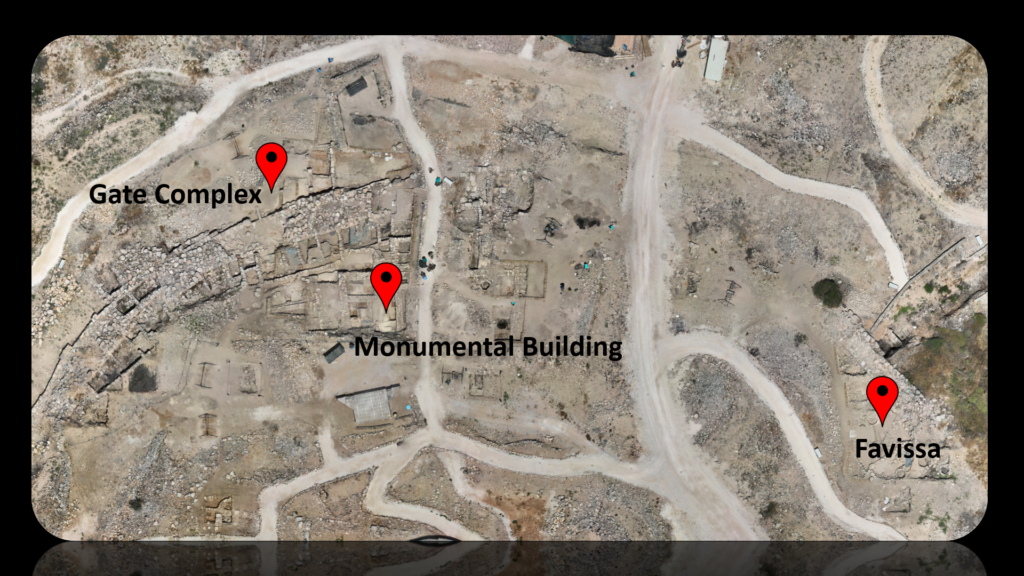
On a stony ridge north of Jerusalem, archaeologists are slowly redrawing the outline of one of the Bible’s most important sacred places.
The site is Tel Shiloh, identified with biblical Shiloh, where the Hebrew Bible says the Israelites set up the Tabernacle after entering the land. Long before Jerusalem became the center of worship, Shiloh is described as the place where the Ark of the Covenant was kept, where Eli served as priest, and where the young Samuel grew up.
Now, discoveries from the eighth excavation season at Shiloh are giving archaeologists a clearer view of a monumental structure that has become central to the debate over the possible location of the ancient Tabernacle.
The season’s results were reported by Bryan Windle in Bible Archaeology Report after his return from the excavation, where he served as a square supervisor. The work is directed by Dr. Scott Stripling of the Associates for Biblical Research, whose team has been excavating the northern end of the site.
The most important development this season was the discovery of the southern wall of a large east-west structure. For Stripling’s team, that wall is not just another line of stones. It helps complete the plan of a building whose proportions, orientation, and associated finds have led the excavators to examine whether this could be the area of Shiloh’s biblical Tabernacle.
Before Jerusalem, There Was Shiloh
Shiloh occupies a special place in the biblical story because it belongs to the period before the Jerusalem Temple. According to the Book of Joshua, the Israelites assembled there and divided the land among the tribes. In the books of Samuel, Shiloh appears as a functioning religious center, with priests, offerings, pilgrimage, and the Ark of the Covenant.
The Tabernacle was not a temple in the later Jerusalem sense. In biblical tradition, it was the portable sanctuary associated with Israel’s wilderness period and early settlement. Shiloh is remembered as the place where that sanctuary took on a more permanent role.
That is why the architecture matters. If a monumental building at Shiloh can be securely defined, measured, and placed in its archaeological context, it gives scholars a physical framework for discussing one of the earliest sacred centers in Israelite tradition.
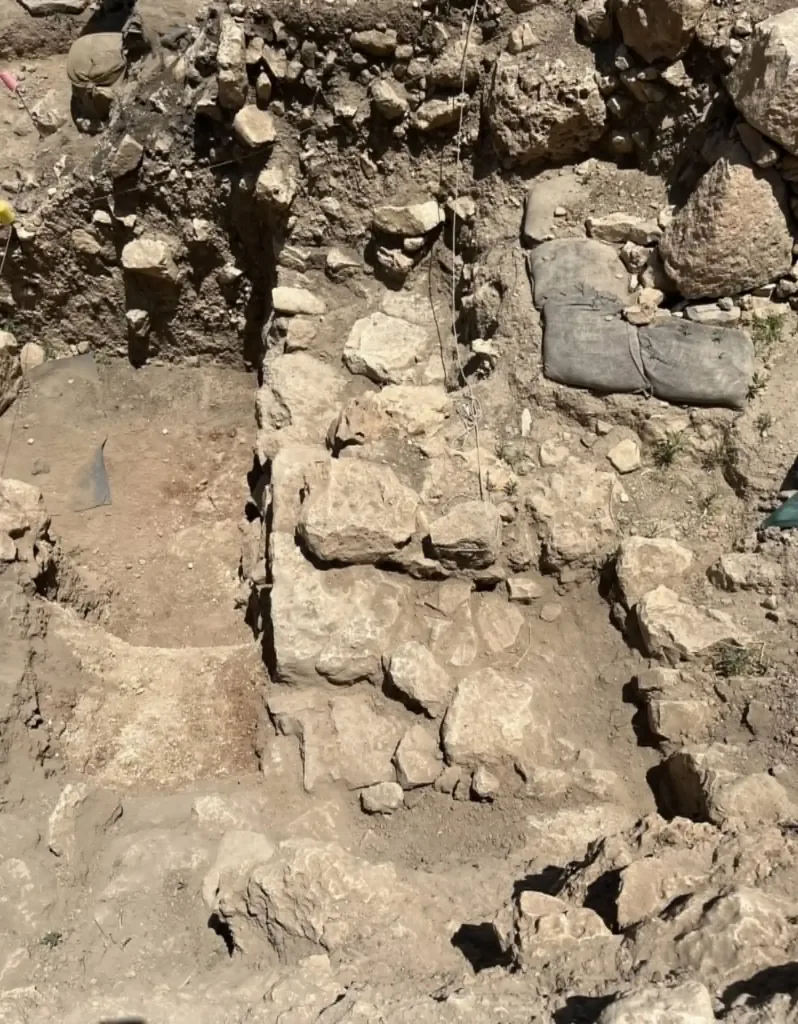
The newly exposed southern wall brings that discussion into sharper focus. According to the excavation report, the building is oriented east to west and has proportions similar to those described for the biblical Tabernacle. With the southern wall now identified, researchers can reconstruct the full dimensions of the structure more clearly and consider how it functioned within the ancient settlement.
A Wall That Sharpens the Tabernacle Question
Archaeology often turns on details that look modest at first glance. A wall may not sound dramatic, but in this case it changes the scale of the question.
Before the southern wall was exposed, the structure could be discussed only in partial terms. Its general orientation and some of its limits were known, but its full footprint remained less secure. The new wall helps close that gap. It gives the team a firmer architectural plan, and a plan is what allows comparison: with other buildings, with cultic architecture, and with the dimensions preserved in biblical tradition.
Stripling has said the discovery allows researchers to reconstruct the building’s full dimensions and better evaluate its function and significance.
That is the key point of the season. The find is not important simply because it is a wall. It is important because it helps define the building at the heart of the Tabernacle debate.
Around the monumental structure, ABR has reported a group of objects that the team associates with worship activity. These include altar horns, ceramic pomegranates, and murex shells. Each of these categories carries religious weight in the context of the ancient Near East and the Hebrew Bible.
Altar horns are associated with sacrificial installations. Pomegranates appear in biblical descriptions of priestly and sacred decoration. Murex shells are significant because they were used to produce blue and purple dyes, colors connected with elite and priestly textiles.
Individually, such finds can be debated. Together, and in relation to a large east-west building at Shiloh, they create a more compelling archaeological setting for a structure being examined as a possible sacred complex.
The Ark Was Part of a Larger Sacred System
The Ark of the Covenant is the element that gives Shiloh its wider fascination, but the archaeological question is not only about the Ark. It is about the Tabernacle and the sacred system around it.
In the biblical narrative, the Ark was not an isolated treasure. It belonged inside a sanctuary, served by priests, approached through ritual, and connected with sacrifice, pilgrimage, and sacred space. If archaeology can identify the area where that system operated at Shiloh, it would matter even without the discovery of the Ark itself.
That is what makes the latest season important. The excavation is not simply chasing a famous object. It is trying to understand whether the northern end of Tel Shiloh preserves remains of the sacred complex remembered in the Bible as Israel’s early place of assembly and worship.
This is also where the evidence has to be handled carefully. A monumental building with suggestive proportions is not the same as an inscription naming the Tabernacle. Ritual objects near a structure do not automatically settle the question. But they do give archaeologists something real to test.
At Shiloh, the discussion is now less abstract than before. There is a building plan. There are walls. There are ritual-related finds. There is a wider settlement layout beginning to emerge.
A Gate Where the Story Turns Dark
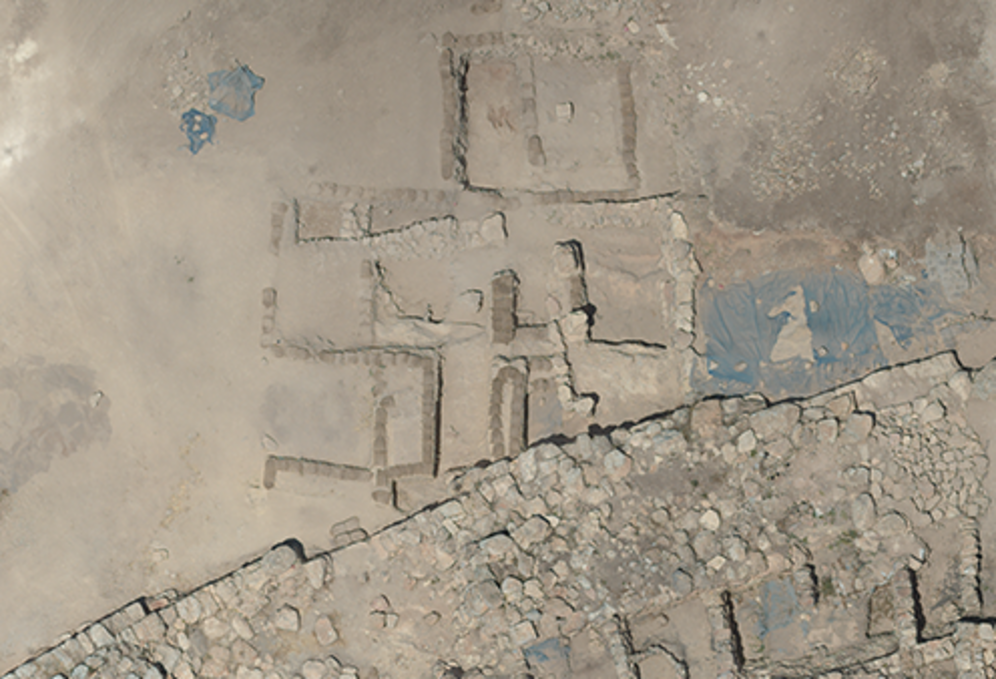
The excavation also produced new evidence from Shiloh’s northern gate complex. The team uncovered additional walls belonging to the fortification system, showing that the entrance was built as a bent-axis gate with multiple rooms.
A bent-axis gate forces movement through a controlled, indirect route rather than a straight passage. It is a practical feature of defense and urban planning, but at Shiloh it also carries narrative resonance.
In 1 Samuel 4, the priest Eli is described as sitting near the gate when he hears that the Ark has been captured by the Philistines and that his sons have died. The shock of the news leads to his death. The scene marks a turning point in Shiloh’s biblical memory: the sanctuary loses the Ark, and the site’s central role fades.
The newly exposed gate complex does not prove that episode. But it does show that Shiloh had a substantial entrance system, and it gives researchers a clearer setting for understanding how the settlement was organized during the periods under discussion.
For readers, the gate is important because it places the sacred story inside a real topography. Shiloh was not only a name in a text. It was a fortified site with buildings, controlled entrances, storage areas, and layers of occupation.
Older Canaanite Layers Beneath the Biblical Site
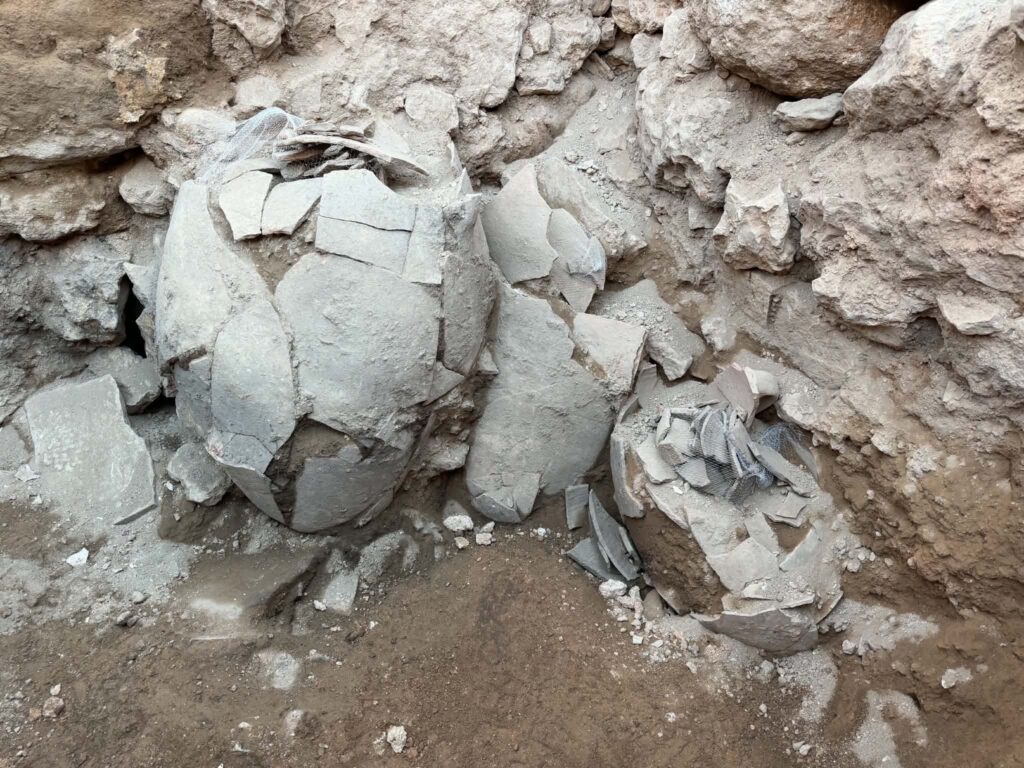
Not all of this season’s discoveries belong to the Tabernacle debate. In Area D, where the team has been excavating near the favissa, archaeologists uncovered three large Middle Bronze Age storage jars, or pithoi.
The jars were found about two meters below the Late Bronze Age level, beneath fallen stones and collapsed mudbrick. The excavation team has suggested that the sequence may represent a destruction event, possibly caused by an earthquake.
The contents of the vessels may become especially valuable. Two of the jars contained charred olives, while the third contained wheat. ABR plans radiocarbon testing on the organic remains, which could provide a more precise date for the destruction layer.
These jars matter because they show that Shiloh’s history did not begin with the Israelites. Before the site became associated with the Tabernacle traditions preserved in the Bible, it already had a Canaanite past. Its later sacred identity was built on a place with older occupation, older storage systems, and earlier episodes of destruction and rebuilding.
A Clearer Shape for Shiloh’s Sacred Past
The latest discoveries at Shiloh are important because they make the Tabernacle question more concrete.
For years, discussions of Shiloh have moved between biblical memory and archaeological possibility. The new southern wall adds architectural definition to that debate. The ritual-related finds give the structure a stronger religious context. The gate complex helps reconstruct the movement and defenses of the ancient settlement. The Middle Bronze Age jars push the story below the Israelite levels and into the site’s earlier Canaanite life.
The result is not a solved mystery, but it is not an empty claim either.
What is emerging at Tel Shiloh is a layered archaeological landscape: an earlier Canaanite settlement, a fortified urban space, a monumental east-west building, and a cluster of finds that point toward ritual activity. For a site remembered in the Bible as the home of the Tabernacle and the Ark of the Covenant, that combination is powerful.
Shiloh’s importance has always rested on what the biblical text says happened there. The new excavations are beginning to show what the ground itself can add to that memory.
