
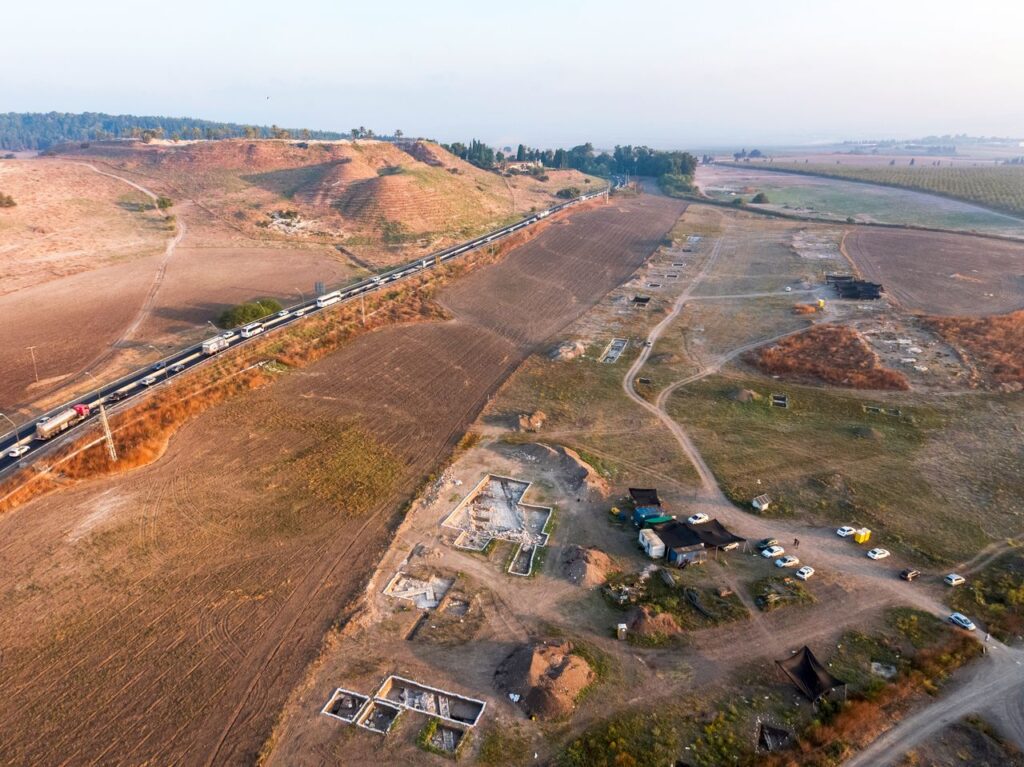
Archaeologists in northern Israel have uncovered extraordinary evidence of ancient wine production and early Canaanite worship, shedding new light on the dawn of urban civilization in the Jezreel Valley. The Israel Antiquities Authority (IAA) announced the discovery of a 5,000-year-old rock-hewn winepress — one of the oldest ever found in the country — along with ritual artifacts from 3,300 years ago that provide rare insight into the spiritual life of the Canaanites before the arrival of the Israelites.
The groundbreaking finds were made east of Tel Megiddo, one of the most significant archaeological sites in the ancient Near East, during large-scale excavations conducted ahead of the expansion of Highway 66, a major infrastructure project led by the Netivei Yisrael – National Transport Infrastructure Company. The discoveries will be publicly presented for the first time on Thursday, November 6, at the Annual Conference on Innovations and Research in Northern Israel Excavations, hosted by the IAA and the University of Haifa’s School of Archaeology and Maritime Civilizations.
The Oldest Evidence of Wine Production in the Jezreel Valley
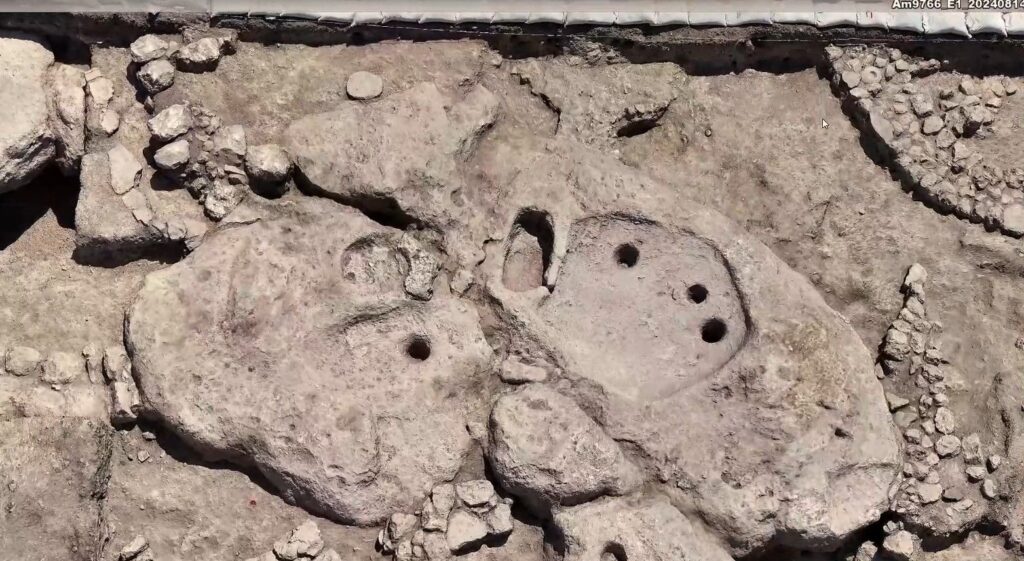
Among the earliest finds is a small, rock-cut winepress dating to the Early Bronze Age IB (circa 5,000 years ago). The installation features a sloping treading floor and a collection vat for gathering grape juice — unmistakable evidence of organized wine production at the dawn of urbanization in the southern Levant.
According to excavation directors Dr. Amir Golani and Barak Tzin of the Israel Antiquities Authority, “This winepress is unique, one of very few known from such an ancient period when the first cities were emerging in our region. Until now, only indirect evidence suggested that wine was produced here 5,000 years ago. This discovery is the first conclusive proof that local communities were already engaged in winemaking during this early urban era.”
Surrounding the winepress, archaeologists uncovered numerous domestic structures, suggesting that the site was a thriving community and part of Megiddo’s early expansion beyond the main mound (the “tel”). The discovery provides unprecedented insight into the economic and social organization of early Canaanite society and highlights the Jezreel Valley as one of the cradles of the ancient wine industry.
Ritual Offerings Reveal Ancient Canaanite Worship Practices
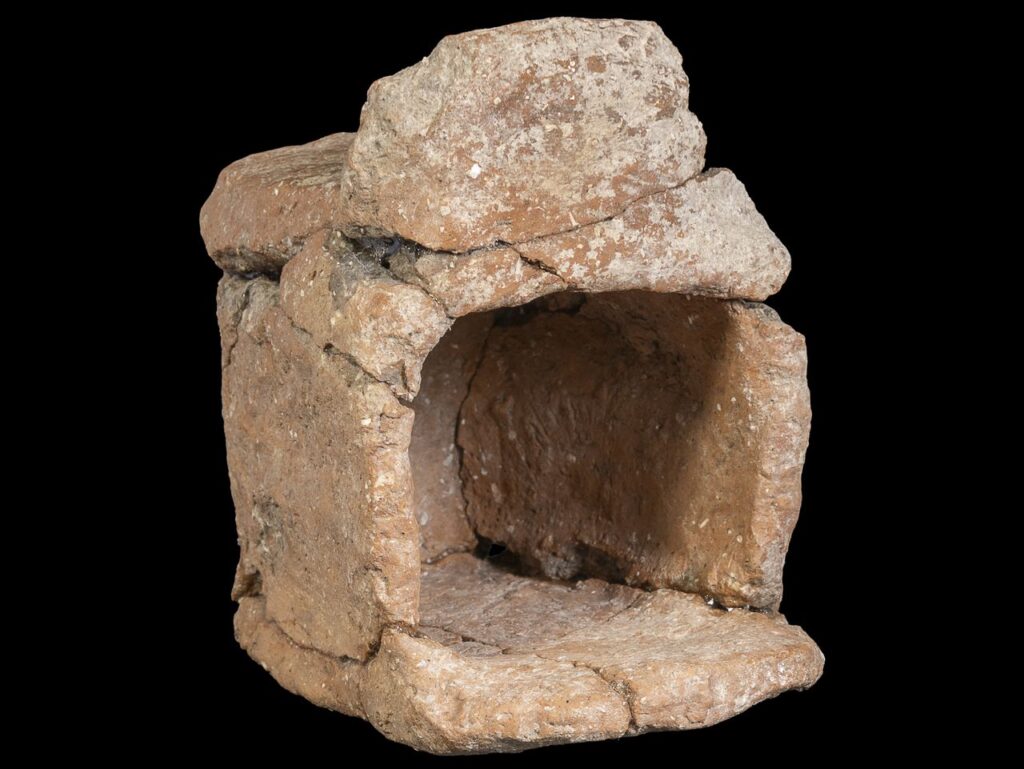
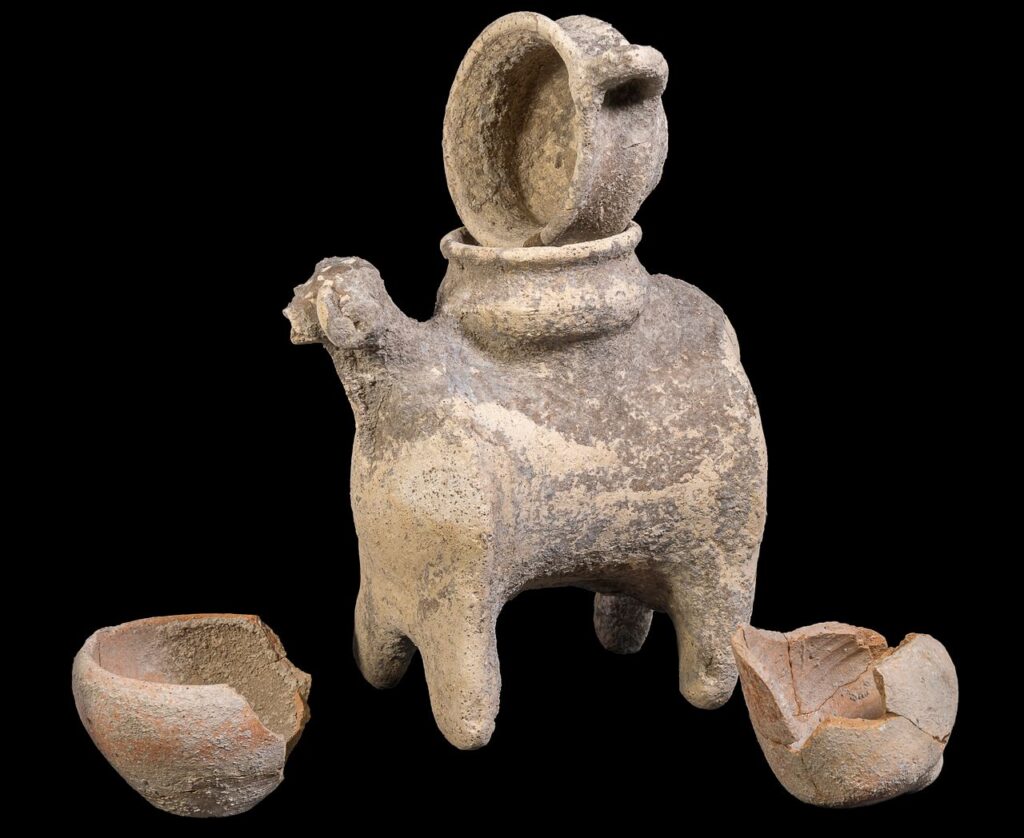
Equally fascinating are the finds from the Late Bronze Age II (circa 3,300 years ago) — artifacts that appear to have been part of a folk cult practiced outside the city walls of Megiddo. Archaeologists discovered a carefully arranged set of ritual vessels, buried intact as votive offerings. These include a miniature ceramic shrine, imported Cypriot jugs and juglets, and a remarkable zoomorphic libation vessel shaped like a ram, accompanied by small bowls used for pouring liquids.
“This set is exceptionally rare,” the researchers explained. “Usually, such vessels are found as broken fragments, making it difficult to understand their complete form and use. Here, we have a full set buried in its original ritual context, offering an unprecedented glimpse into the ceremonial life of the Canaanites.”
The ram-shaped vessel includes a small bowl attached to its body that functioned as a funnel, while another handled bowl was used to pour liquids into it. When filled and tilted, liquid flowed through the ram’s mouth — an ingenious design for controlled libations. Researchers believe it was used to pour valuable substances such as wine, oil, or milk, either as offerings or as part of ceremonial drinking.
A Window into Canaanite Folk Religion
The location of the buried ritual vessels, directly aligned with the main temple complex on Tel Megiddo, suggests that the area served as a ritual zone for local farmers. These individuals may not have had access to the city’s formal temples, leading them to perform their own folk worship ceremonies in open-air altars or sacred spaces outside the urban center. Some offerings were discovered beside large stone outcrops that may have functioned as natural altars.
“Megiddo has been excavated for more than a century,” the archaeologists noted, “but these new findings east of the tel expand our understanding of life and ritual beyond the city walls. The winepress demonstrates the early beginnings of organized wine production, while the ritual vessels reveal the continuity of ceremonial practices in the region over millennia.”
Balancing Progress and Preservation
The excavations were carried out in cooperation with Netivei Yisrael, as part of the Highway 66 development project connecting Yokneam, the Jezreel Valley, and the Gilboa region. Despite the large-scale infrastructure work, the project’s planners emphasized their commitment to protecting Israel’s cultural heritage.
Nissim Peretz, CEO of Netivei Yisrael, stated: “The Highway 66 project is a cornerstone of our ‘Connecting Israel’ initiative, which links the periphery with the center while maintaining safety, efficiency, and respect for our historical legacy. These discoveries are a national treasure, demonstrating that development and heritage preservation can advance hand in hand.”
Eli Escusido, Director of the Israel Antiquities Authority, added: “The Jezreel Valley continues to reveal layer upon layer of our ancient past. The newly uncovered winepress and ritual artifacts illuminate daily life and spiritual traditions that flourished here thousands of years ago. We invite the public to learn more about these extraordinary findings at our upcoming conference.”
A Glimpse into Israel’s Deep Past
From the earliest winemakers of the Jezreel Valley to the ritual practices of Canaanite farmers, the discoveries near Tel Megiddo bridge 1,700 years of cultural continuity in one of the most storied landscapes of the ancient world. They underscore the region’s role as both an early center of urbanization and a hub of spiritual expression — where the seeds of civilization, and perhaps the first vines of Israel’s wine tradition, were planted thousands of years ago.
Cover Image Credit: The Israel Antiquities Authority excavation on Highway 66, near Tel Megiddo. Assaf Peretz, Israel Antiquities Authority
