
11 November 2025 The Future is the Product of the Past

Findings showing the connection between Troy and Tavşanlı Höyük have been reached

Archaeologists unearthed 4,200-year-old hazelnut remains and marble idols during excavations at Tavşanlı Höyük (Tavsanlı Mound), located in the central Turkish province of Kütahya, a region with a history spanning 8,000 years.

Tavşanlı Höyük, one of the important Bronze Age cities in Western Anatolia, is situated approximately 2 km from Tavsanlı District of Kütahya Province, and in the central part of the Tavsanlı Plain.

The Tavşanlı Mound excavations are part of a state-approved project run by Bilecik Şeyh Edebali University (BŞEÜ)  in collaboration with the Ministry of Culture and Tourism. Tavsanlı Höyük is also known as the “Heart of Kütahya” due to its shape that was discovered through aerial footage.
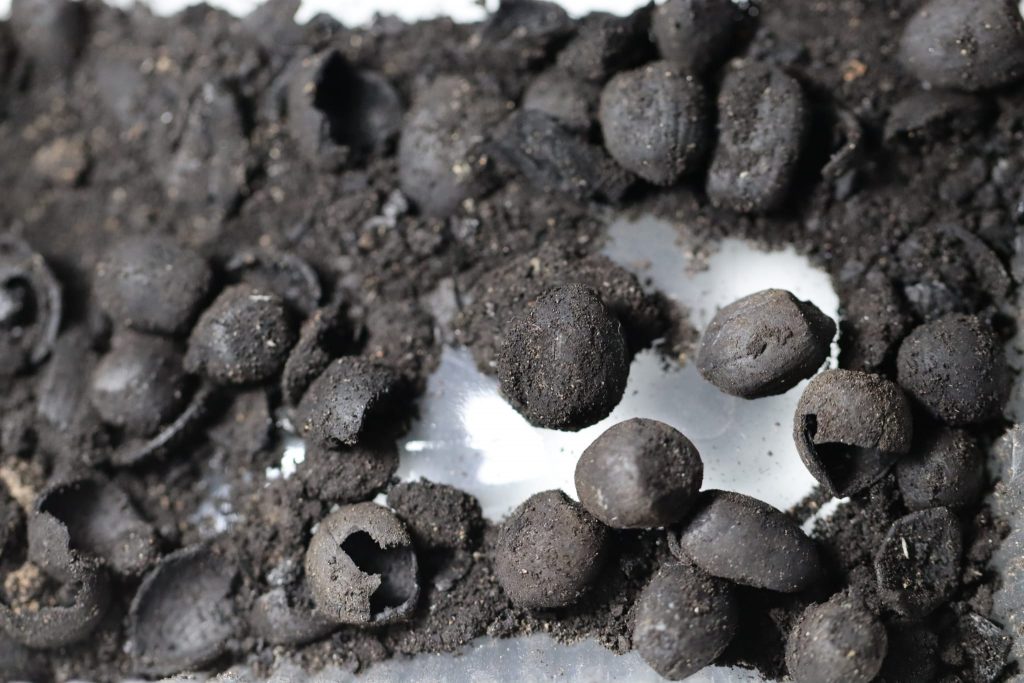
Photo: Excavations and Research Department of the General Directorate of Cultural Heritage and Museums of the Ministry of Culture and Tourism

In the new period excavations, which started 2 months ago under the chairmanship of BŞEÜ Archeology Department lecturer Associate Professor Erkan Fidan, remnants of hazelnuts and marble idols were found in the layer dated to 4,200 years ago.

The unearthed remains were evaluated as findings showing that Tavşanlı Höyük had a very close connection with Troy during the Bronze Age.


📣 Our WhatsApp channel is now LIVE! Stay up-to-date with the latest news and updates, just click here to follow us on WhatsApp and never miss a thing!!


The findings were shared on the social media account of the Excavations and Research Department of the General Directorate of Cultural Heritage and Museums of the Ministry of Culture and Tourism.

The archaeologists aim to uncover many new archaeological finds during the new period of excavations.

According to the results of carbon 14 analyzes carried out in Tavşanlı Höyük, which is the oldest known settlement in Kütahya, it was determined that settlement began in this area 8,100 years ago.

Earlier Tavsanli Höyük’s excavations revealed that Western Anatolia was the center of the mining and textile trade. It seems that Tavşanlı Höyük will continue to surprise with its new findings.

Related Articles

The three-headed statue of Goddess Hecate discovered in Turkey’s Mersin

18 August 2023

18 August 2023

In the ancient city of Kelenderis in Mersin, located in the south of Turkey, the statue of the 3-headed goddess...

The unknown importance of Göllü Dağ on the route of the first humans’ Transition from Africa to Europe

4 October 2021

4 October 2021

The researches conducted in Göllü Dağ and its surroundings, located within the borders of Niğde province in Central Anatolia, and...

Archaeologists Discovered “Temple of the Emperors” in the Agora of the Ancient City of Nikopolis, Greece

30 May 2024

30 May 2024

The Greek Ministry of Culture declared that fresh discoveries had been made during archaeological excavations at the ancient Nikopolis Agora...

A stunning fresco depicting Helen of Troy is revealed during excavations at the ancient Roman city

11 April 2024

11 April 2024

Archeologists have uncovered remarkably preserved ‘fresco’ paintings on a wall in the banqueting room of a large house along Via...

Traces of a 3,600-year-old settlement have been discovered in Qatar’s desert

8 February 2022

8 February 2022

Researchers looking for underground water sources on the Eastern Arabian Peninsula have accidentally uncovered the outlines of a settlement that...

Excavations at Aizanoi in Western Turkey to Resume

29 March 2021

29 March 2021

The ancient city of Aizanoi is located in the town of Çavdarhisar, 57 km from the center of Kütahya (Turkey’s...

New study reveals Dog ancestry can be traced back to two separate wolf populations

30 June 2022

30 June 2022

An international group of geneticists and archaeologists with participation of the University of Potsdam have found that the ancestry of...

In Parion, one of the most important cities of the Troas region, 2,000-year-old mother-child graves were unearthed

1 November 2022

1 November 2022

Archaeological excavations in the ancient city of Parion, the most important harbor city in the Hellenistic era, have uncovered  2,000-year-old...

1,800-Year-Old Gold Ring with ‘Venus the Victorious’ Carving and Carolingian Coins Discovered in France

25 December 2024

25 December 2024

Archaeologists from the French National Institute for Preventive Archaeological Research (INRAP) have discovered a 1,800-year-old gold ring with a chiseled...

Roman Era Mosaic Unearthed in Illegal Excavation Near Zile Castle

13 May 2025

13 May 2025

A stunning mosaic has been unearthed during an illegal excavation near Zile Castle, located in the Tokat province of Türkiye,...

Unique Roman Aristocratic Tomb Discovered in Sillyon Ancient City

19 August 2025

19 August 2025

Archaeologists have uncovered a unique Roman-era tomb during ongoing excavations in Sillyon Ancient City, located in Türkiye’s Antalya’s Serik district....

Construction Workers Discovered Ancient Sarcophagus in Turkey

2 March 2021

2 March 2021

On Monday, reports said that during excavations in the Seyitgazi region of Eskisehir Province in northwestern Turkey, municipal staff unexpectedly...

Earliest Known Stone Mold for Coin Production in Roman Hispania Unearthed

27 March 2025

27 March 2025

Researchers from the University of Jaén have made a groundbreaking discovery at the archaeological site of Obulco, modern-day Porcuna, revealing...

Two Altars Used for Blood Sacrifices and Divinations Discovered in the Ancient Thracian City of Perperikon

14 September 2024

14 September 2024

In the ancient Thracian city of Perperikon, partly carved into the rock in the Eastern Rhodope Mountains of Bulgaria, two...

Metal signature of Roman 19th Legion identified at Teutoburg battle site that shook Rome in AD9

5 December 2022

5 December 2022

Researchers in Germany have identified the metallurgic signature of the Roman 19th Legion in artifacts recovered from the Battle of...