
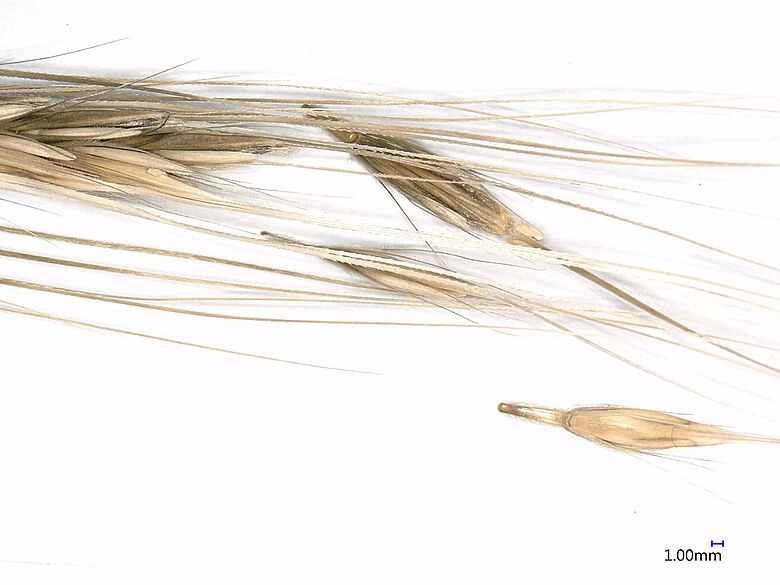
Archaeologists have uncovered groundbreaking evidence in southern Uzbekistan that reshapes our understanding of when and where farming began. A new international study, published in Proceedings of the National Academy of Sciences (PNAS), reveals that humans living in the foothills of the Surkhan Darya Valley harvested wild barley with stone sickles as early as 9,200 years ago
.
This discovery challenges the long-held belief that the origins of agriculture were confined to the Fertile Crescent in the Near East, suggesting that key cultural practices leading to farming were far more widespread across Eurasia than previously assumed.
Harvesting Wild Barley in Toda Cave
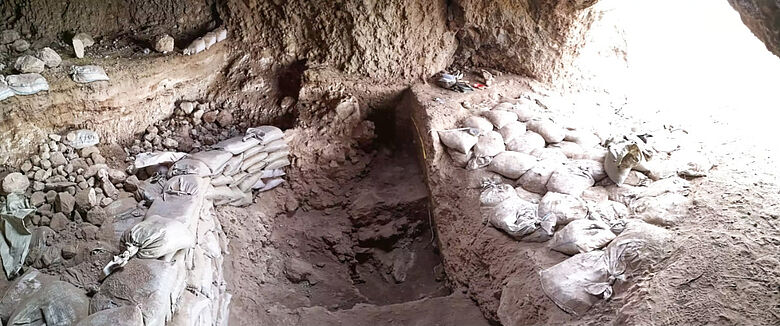
Excavations at Toda-1 Cave, led by researchers from the Institute of Vertebrate Paleontology and Paleoanthropology in Beijing and the Institute of Archaeology in Samarkand, uncovered barley grains, sickle blades, and grinding stones. Radiocarbon dating places these finds between 9,200 and 8,600 years ago, well before domesticated crops became common in Central Asia.
The barley remains, identified as wild Hordeum vulgare ssp. spontaneum, were accompanied by pistachio shells and wild apple seeds. These findings indicate that local foragers relied on a mixed diet of grains, nuts, and fruits, processed with advanced stone tools.
Use-wear analysis on the blades suggests they were hafted into composite sickles designed specifically for cutting grasses. This marks one of the earliest known examples of such harvesting tools in Central Asia, expanding the geographical range of pre-agricultural cereal foraging.
A Wider Stage for Early Agriculture
For decades, scholars have agreed that agriculture arose independently in several world regions, including Africa, the Americas, and East Asia. The Fertile Crescent, stretching across modern-day Iraq, Syria, and Turkey, has been considered the cradle of wheat and barley domestication. There, the Natufian culture harvested wild cereals around 10,000 years ago.
The Toda Cave evidence, however, shows that similar practices were already underway in Central Asia by 9,200 years ago. This suggests that the transition from hunting and gathering to farming was not a localized “revolution,” but part of a broader, more gradual cultural process.
Robert Spengler of the Max Planck Institute for Geoanthropology, a co-author of the study, emphasizes: “These early hunter-gatherers were already engaging in cultural practices that paved the way for agriculture. Increasing evidence shows that domestication may have been an unintended consequence of long-term human-plant interactions.”
Rethinking the Path to Domestication
The findings complicate traditional models that link the birth of agriculture to climate change or population pressure. Instead, they point to diverse and overlapping strategies of food production across Eurasia.
The archaeobotanical evidence from Toda Cave highlights behaviors such as repeated harvesting of wild cereal stands, nut cracking, and fruit collection. These practices created ecological conditions that may have encouraged gradual plant domestication—even if intentional cultivation was not yet practiced.
Interestingly, some barley grains from Toda Cave resemble early “naked” types of barley associated with pre-domestication cultivation in the Fertile Crescent. While most grains match wild morphologies, researchers are exploring whether low-level cultivation may have occurred in Central Asia, either as a local innovation or as an early extension of Fertile Crescent traditions.
Filling Gaps in Human History
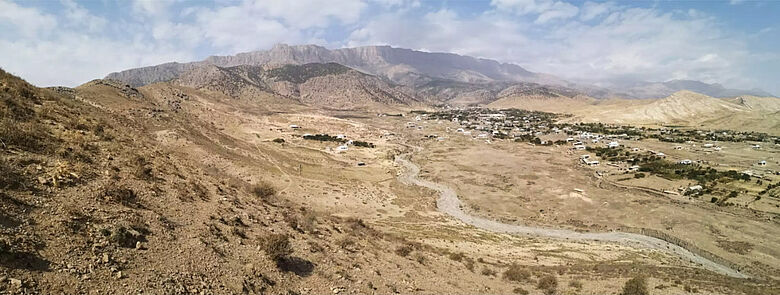
The Surkhan Darya Valley, today a dry region in southern Uzbekistan, would have been a mosaic of woodlands and grasslands during the early Holocene. This landscape mirrored the ecological conditions of the Zagros Mountains and the Fertile Crescent, possibly enabling cultural exchange and movement of ideas across Eurasia.
The Toda Cave discoveries provide the clearest picture yet of early Holocene lifeways in Central Asia, a region often overlooked in global narratives of agriculture. The evidence suggests that cereal foraging, nut collection, and fruit gathering were integral to human survival here for millennia before fully domesticated crops arrived from the west.
Lead researcher Xinying Zhou explains: “Our findings show that cultural developments leading toward agriculture were more widespread than previously assumed. This challenges the idea that farming was a single regional response to external pressures—it was part of a larger, interconnected process.”
Why This Discovery Matters
The implications of this research are far-reaching. If farming behaviors were already emerging in Central Asia 9,000 years ago, then the history of agriculture is not just a Fertile Crescent story. Instead, it is a tapestry of parallel experiments, adaptations, and cultural innovations stretching from the Near East to Central Asia and beyond.
Future studies aim to determine whether the barley at Toda Cave represents an early stage of cultivation or if foragers were simply exploiting wild stands. Either way, the evidence reshapes our understanding of how humans across different landscapes independently developed strategies that would eventually transform the world’s food systems.
X. Zhou, R.N. Spengler, B. Sayfullaev, K. Mutalibjon, J. Ma, J. Liu, H. Shen, K. Zhao, G. Chen, J. Wang, T.A. Stidham, H. Xu, G. Zhang, Q. Yang, Y., Hou, J. Ma, N. Kambarov, H. Jiang, F. Maksudov,[…] & X. Li, 9,000-year-old barley consumption in the foothills of central Asia, Proc. Natl. Acad. Sci. U.S.A. 122 (36) e2424093122, https://doi.org/10.1073/pnas.2424093122 (2025).
Cover Image Credit: A modern example of wild barley, in which the individual grains naturally disperse when ripe. Credit: Robert Spengler
