
8 December 2025 The Future is the Product of the Past

Stone Age Farmers Settled Near Dortmund Airport 7,000 Years Ago

Archaeological discoveries at Dortmund Airport reveal that early Neolithic farmers lived and built houses in the region nearly 7,000 years ago. The findings shed light on the Rössen culture, one of Central Europe’s most influential prehistoric farming communities.

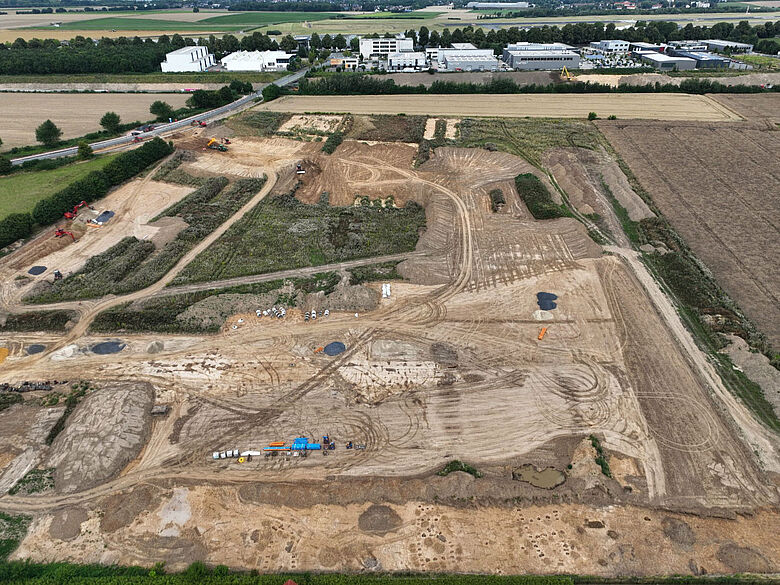
Archaeologists from the Landschaftsverband Westfalen-Lippe (LWL) have unearthed remarkable evidence of Stone Age life at a large construction site near Holzwickede, where the Eco Port Süd business park is set to be developed next to Dortmund Airport. After more than a year of excavation, experts confirmed that early farming societies built houses and lived in the area during the Middle Neolithic period.

Ancient Houses Revealed Beneath Modern Development

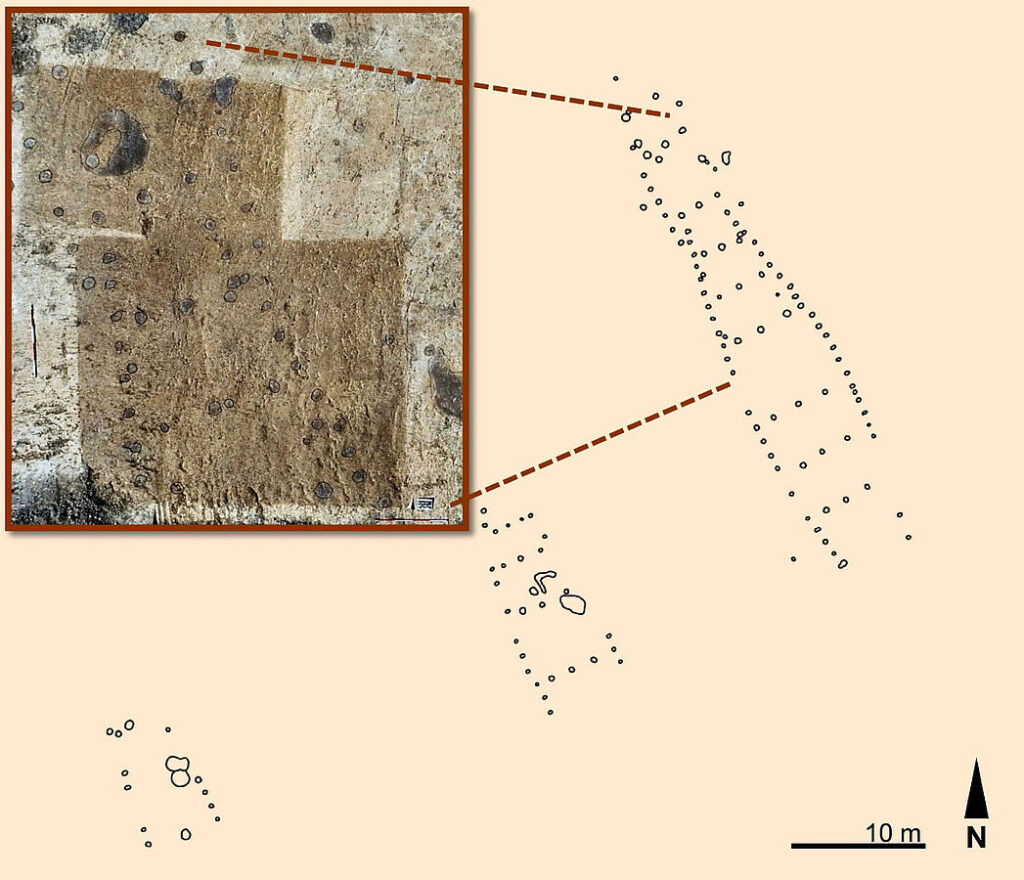
Led by archaeologist Philipp Bockelbrink, the excavation team uncovered several house foundations. In the northern section, they completed the outline of a building previously identified during a preliminary survey. Meanwhile, in the southern part of the site, they found remains of at least four or five additional structures.

According to the experts, the site may represent two separate settlement phases, both dating back nearly 7,000 years. While artifacts such as pottery were scarce, the foundations themselves provide significant evidence of early habitation.

Dr. Petra Bergmann of the Unna District Economic Development Agency noted that such discoveries had been anticipated: “The preliminary surveys already suggested prehistoric activity here. Now, after fascinating insights into the past, the land has been released for construction of Eco Port Süd, which will provide high-quality commercial space in a prime location.”


📣 Our WhatsApp channel is now LIVE! Stay up-to-date with the latest news and updates, just click here to follow us on WhatsApp and never miss a thing!!


In the southern part of the excavation site, several floor plans of Neolithic houses built around 4700 BC were uncovered. The photo shows the area where two house layouts overlap. Graphic: LQ Archaeology / LWL Archaeology for Westphalia / M. Baales.

Insights into the Rössen Culture

The houses unearthed at Holzwickede are typical of the Rössen culture, a farming community that flourished around 4,700 BCE. This culture, named after a district of Leuna in Saxony-Anhalt, was one of the most widely spread Neolithic groups in Central Europe.

Professor Dr. Michael Baales, head of the LWL Archaeology for Westphalia, explained: “These buildings reflect the Rössen culture, which was especially common on the fertile loess soils of Westphalia. Settlements are often found along the Hellweg corridor, between the Sauerland and the Ruhr.”

Comparable finds have been documented across the region. In the 1950s, archaeologists discovered a massive 65-meter-long house in Bochum-Gerthe—one of the largest known wooden structures from prehistory. By comparison, the nearly complete house outline found at Holzwickede, measuring around 30 meters, appears relatively modest. These houses often sheltered both people and animals, with storage space for grain under the same roof.
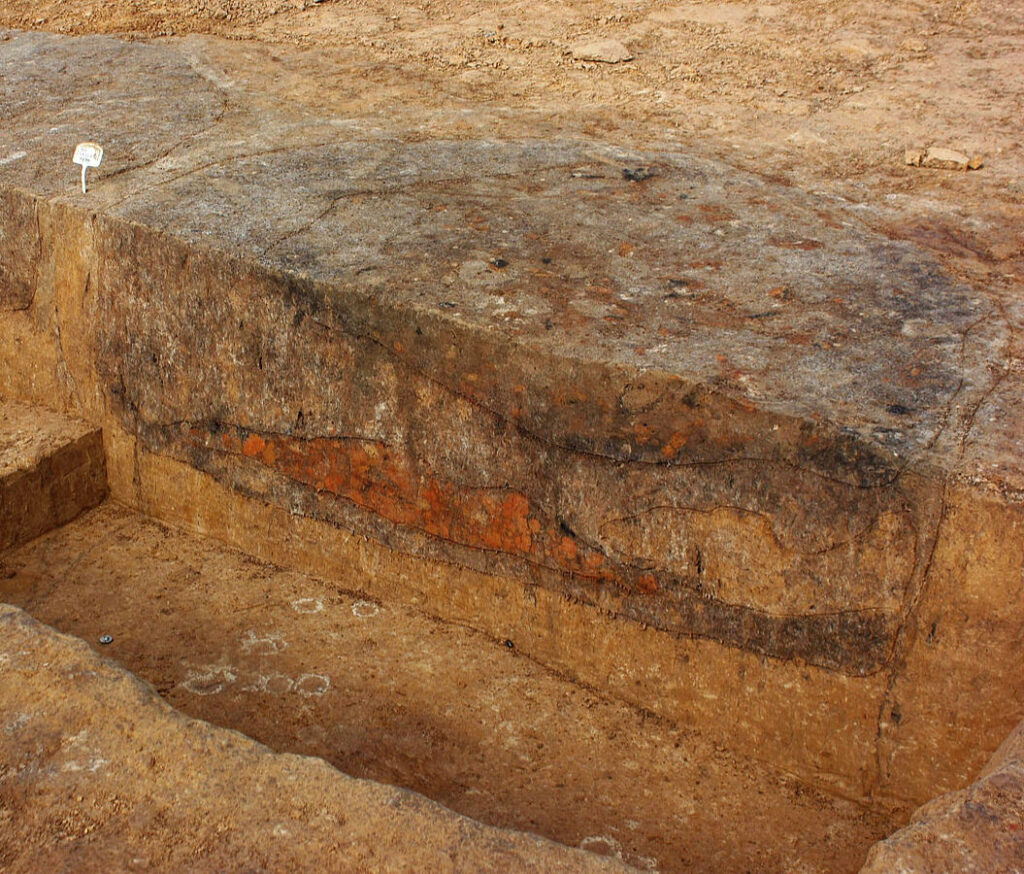
This Iron Age pit was filled with fire debris. Credit: LWL Archaeology for Westphalia / E. Cichy.

Construction and Preservation

Though the wooden structures themselves have long decayed, archaeologists identified deep postholes where the walls and roofs once stood. The sloping terrain near Dortmund allowed these features to be preserved in the soil for millennia.

Interestingly, while Neolithic sites often yield large quantities of ceramics and tools, very few such artifacts were recovered here. This raises questions: Was the settlement short-lived? Did inhabitants move on quickly? One building in the southern section even overlaps an older foundation, suggesting different phases of occupation.

Signs of Later Settlements

The excavation also revealed traces of Iron Age activity, dating to just a few centuries before the birth of Christ. Smaller posthole structures, likely granaries or storage buildings, were identified, along with pottery fragments that can be clearly attributed to this later period.

“This excavation emphasizes how long agricultural societies have lived and left their mark along the Hellweg,” said Professor Baales. “It is essential that modern development respects this cultural heritage and ensures these traces are documented for future generations.”
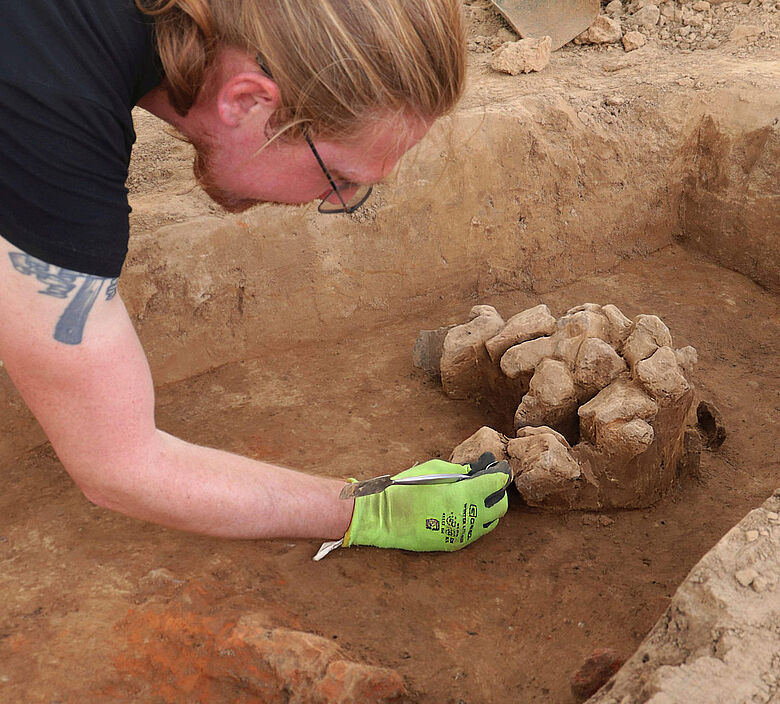

In one of the Iron Age pits, an unusual concentration of stones was uncovered and is being carefully excavated. Credit: LQ Archaeology / C. Bariszlovich.

A Bridge Between Past and Present

The discovery at Dortmund Airport highlights the deep history of human settlement in the Ruhr region. What is today a bustling transportation hub and future business park was once home to Neolithic farmers who cultivated the land, lived in wooden longhouses, and laid the foundations of early European society.

As construction of the Eco Port Süd moves forward, the site stands as a reminder that beneath modern infrastructure lies a cultural heritage stretching back thousands of years—a heritage that continues to shape our understanding of Europe’s prehistoric past.

Landschaftsverband Westfalen-Lippe (LWL)

Cover Image Credit: LQ Archäologie/C. Bariszlovich

Related Articles

Long-Awaited Excavation to Commence at Mount Ararat ‘Noah’s Ark’ Site

9 May 2025

9 May 2025

The legendary search for Noah’s Ark, a tale that has captivated imaginations and spurred countless expeditions for generations, is poised...

The Walking Giants of Easter Island: How Physics Solved an 800-Year-Old Mystery

10 October 2025

10 October 2025

For centuries, the massive stone statues of Easter Island—known as the moai—have stood as one of archaeology’s greatest enigmas. How...

The largest marine turtle fossil of its kind ever discovered in Europe unearthed in Spain

21 November 2022

21 November 2022

In northern Spain, scientists discovered the remains of a new species of enormous marine turtle. The prehistoric creature is the...

Ancient Agora Discovered in Hyllarima: Shops to Be Excavated in the Heart of the City

29 June 2025

29 June 2025

A major archaeological discovery has been made in the ancient city of Hyllarima in southwestern Türkiye—the city’s central agora has...

After 150 years, Schliemann’s destruction in Troy was repaired

8 August 2021

8 August 2021

Heinrich Schliemann, a German businessman, excavated the ancient city of Troy in northwest Canakkale province 150 years ago. Archaeologists are...

One of the greatest gold treasures in Danish history found in Vindelev

6 September 2021

6 September 2021

Near the town of Jelling in Denmark, one of the biggest treasures ever found dating from the sixth century has...

The latest excavations in the ancient city of Dülük will shed light on the history of different religions

11 October 2021

11 October 2021

It is thought that the ancient city of Dülük, one of the 25 oldest settlements in the world, will shed...

Ancient Cymbals Unearthed in Oman Reveal Shared Musical Traditions Across Bronze Age Cultures

8 April 2025

8 April 2025

Recent archaeological discoveries in Oman have unveiled significant insights into the musical practices of Bronze Age societies, suggesting a rich...

A shipboard 14th-century cannon found off the Swedish coast may be the oldest in Europe

14 September 2023

14 September 2023

An international research team led by maritime archaeologist Staffan von Arbin of the University of Gothenburg has confirmed that a...

A surprising discovery in Lublin countryside! Ancient figurines of Egyptian and Roman gods found

6 May 2023

6 May 2023

Two ancient figurines depicting the Egyptian god Osiris and a bust of the Roman god Bacchus were found in the...

Evidence of Medieval Plague Victims Buried With “Significant Care” Found

23 June 2021

23 June 2021

The Black Death, which killed between 40 and 60% of Europe’s population in the mid-14th century, was a devastating epidemic...

Collectors In The Prehistoric World Recycled Old Stone Tools To Preserve The Memory Of Their Ancestors

16 March 2022

16 March 2022

A first-of-its-kind study at Tel Aviv University asks what drove prehistoric humans to collect and recycle flint tools that had...

A pendant made of mammoth bone with ‘mysterious dots’ could be the oldest known example of ornate jewelry in Eurasia

26 November 2021

26 November 2021

The fragments of an ancient pendant made of mammoth ivory were unearthed in Poland, and are regarded to be the...

The First Dinosaurs Discovered in Japan From the Late Cretaceous Period

30 April 2021

30 April 2021

Yamatosaurus Izanagii, a new genus, and species of hadrosaur or duck-billed dinosaur have been discovered on one of Japan’s southern...

The 2000-year-old origin mystery of the Etruscans solved

25 September 2021

25 September 2021

A genetic analysis of DNA taken from ancient skeletons appears to have answered a conundrum that has captivated researchers for...