
16 January 2026 The Future is the Product of the Past

1,000-Year-Old Mass Grave in Peru Shows Victims Bludgeoned with Star-Headed Maces

Archaeologists from the University of Wrocław have uncovered a 1,000-year-old mass grave at the El Curaca site in southern Peru, revealing the brutal deaths of mostly women and children during a violent raid. The victims show clear signs of trauma inflicted by star-shaped copper maces, shedding light on the violent conflicts that occurred in the region centuries ago.

Located in the Atico River valley, El Curaca has been under systematic excavation since 2022. The burial site contains the remains of 24 individuals, carefully wrapped in shrouds and buried with grave goods, indicating that despite the violent circumstances, the community honored their dead with respect and ceremony.

“Every skull showed signs of severe trauma, likely caused by star-shaped copper mace heads or stone clubs,” said Professor Józef Szykulski, head of the excavation project and honorary professor at Universidad Católica de Santa María in Arequipa.

Despite the violent nature of their deaths, the victims were respectfully buried, wrapped in textile shrouds and surrounded by grave offerings including tools, ornaments, and pottery linked to the Chuquibamba (Aruni) culture, native to the Majes River basin south of Atico. The burial structures were even reinforced with stone walls, suggesting their community managed to repel the attackers and honored their dead with care.
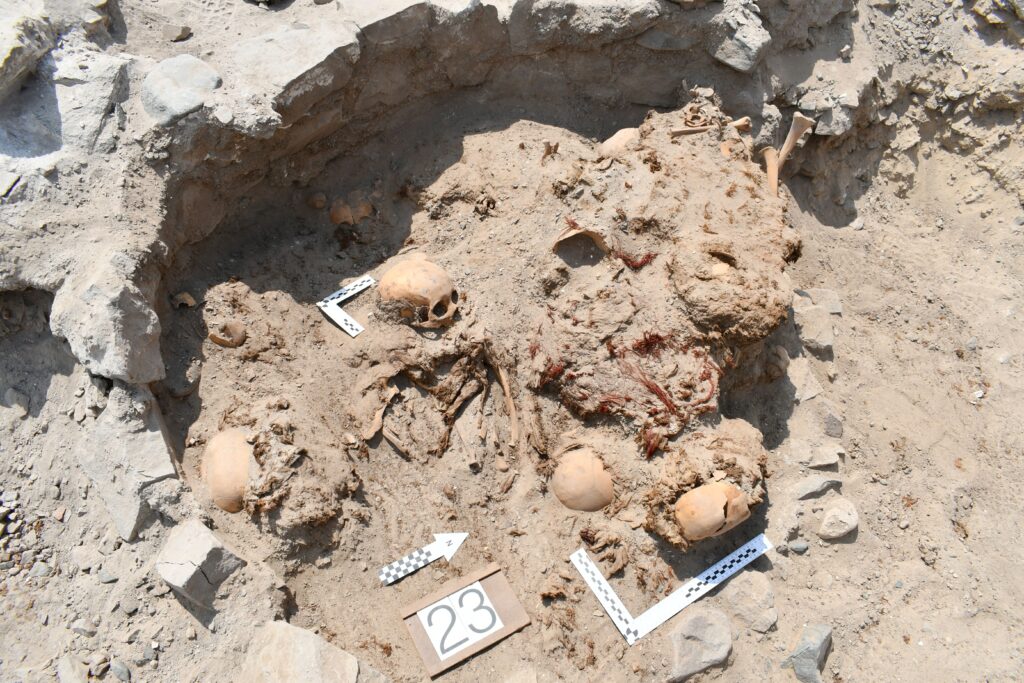

Mass grave with 24 burials; bodies wrapped in shrouds. Credit: Prof. Józef Szykulski

In addition to this dramatic mass grave, archaeologists also found a round stone-lined burial pit containing the remains of 29 women and children, buried over a span of 40 to 50 years. Radiocarbon dating places this collective grave in the 5th–6th centuries CE. Unlike the massacre victims, these individuals showed no signs of violent death. They were interred with intricately woven Nazca-style textiles, colorful thread spools, spindles, and ornamental pendants—some featuring human faces or entire figures carved from semi-precious stones.


📣 Our WhatsApp channel is now LIVE! Stay up-to-date with the latest news and updates, just click here to follow us on WhatsApp and never miss a thing!!


The unusually high number of child burials at El Curaca has raised further questions. “In most pre-Columbian communities, child mortality was already high, but here the rate appears even more alarming,” noted Professor Szykulski. One theory suggests the culprit might be arsenic contamination from nearby copper and gold deposits. The toxic element, if introduced into local water sources, could have posed serious health risks. Ongoing lab analyses in Peru may soon confirm whether this environmental hazard played a role in the community’s tragic past.
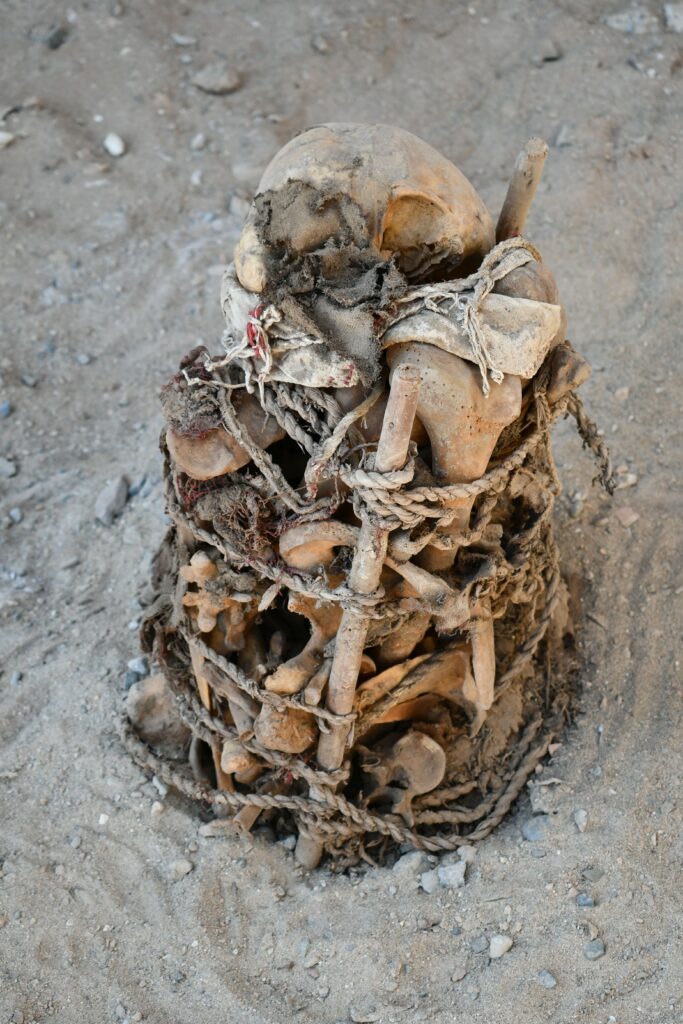
Excavated burial of one of the killed individuals. Credit: Prof. Józef Szykulski

The burial site and its grave goods are closely associated with the Chuquibamba (Aruni) culture, a little-known yet distinct pre-Columbian society that thrived in southern Peru between the 9th and 13th centuries CE. Centered in the Majes River basin, the Chuquibamba people developed a unique cultural identity, evident in their finely crafted ceramics, vibrant textiles, and stone-lined tombs. Though influenced by neighboring civilizations such as the Nasca, Wari, and Tiahuanaco, the Chuquibamba maintained their own artistic and architectural traditions. The discoveries at El Curaca expand the known reach of this culture toward the Pacific coast and shed light on their funerary practices, social structure, and violent encounters during a turbulent era in Andean history.

The El Curaca project is being carried out by the University of Wrocław in collaboration with Universidad Católica de Santa María, under the NCN’s OPUS21 grant.

PAP

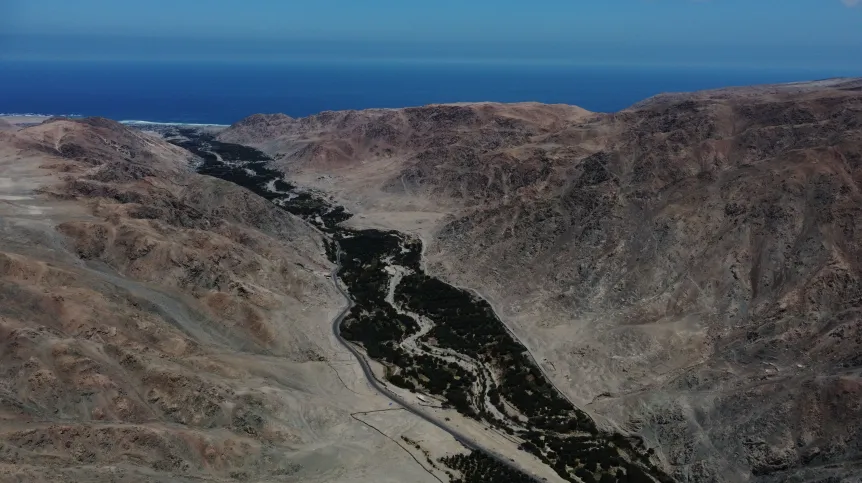
Cover Image credit: General view of the El Curaca site in the Atico Valley. Credit: Prof. Józef Szykulski

Related Articles

Roman Bone Box with No Known Parallels Discovered in Broadway Grave

11 January 2026

11 January 2026

Archaeologists in England have uncovered an extraordinary artefact that is reshaping our understanding of daily life and burial practices in...

Ancient Hebrew “Incantation Bowls” discovered in a home in Israel

8 March 2022

8 March 2022

The Israel Antiquities Authority (IAA) said Monday that 1,500-year-old magical “incantation bowls” and other rare and ornate bone and ivory...

Archaeologists Discover Kazakhstan’s Earliest Human Burial — A 7,000-Year-Old Neolithic Grave at Koken

24 October 2025

24 October 2025

Archaeologists in eastern Kazakhstan have uncovered the country’s oldest known human burial, dating back around 7,000 years. Found beneath Bronze...

Ice Age turtle finds near Magdeburg point to canned food from the Stone Age

2 May 2024

2 May 2024

Experts have recovered around 50,000-year-old turtle shell fragments from the Barleben-Adamsee gravel pit near Magdeburg. The turtles could have been...

Rare 6th-Century BCE Wash Basin ‘Louterion’ Discovered in Malta

11 September 2024

11 September 2024

Archaeological investigations, initiated by a proposal to build a 130-meter-long boulder revetment along the shore of Ballut ta’ Marsaxlokk to...

Earliest Modern Human Genome Identified

7 April 2021

7 April 2021

The fossilized skull of a woman in the Czech Republic provided the oldest modern human genome to date, which has...

Evidence of the Birth of Archaic Monotheism in Anatolia found at Oluz Höyük, “Havangah prayer at Oluz Höyük”

27 March 2022

27 March 2022

Oluz Höyük, located 25 kilometres west of Amasya, is an ancient city which has rich findings of religious structuring. During...

Storeroom and Soup Kitchen Unearthed in Ancient Timbriada: New Clues to Pisidia’s Forgotten City

25 September 2025

25 September 2025

Archaeologists have uncovered a 2,200-year-old storeroom and soup kitchen in the ancient city of Timbriada, located in Isparta’s Aksu district....

148 Ancient Tombs Spanning 2,100 Years Unearthed in the Construction Area of the Zoo

18 August 2024

18 August 2024

An ancient burial site with 148 tombs,  spanning over 2,100 years, has been discovered on the construction site of the...

Ancient Hippodrome, Subject of Ben-Hur Movie, Will Become “Arkeo Sports Park”

8 August 2021

8 August 2021

Ben-Hur, a wealthy prince living in Jerusalem, is a historical figure who struggled for the freedom of the Jews during...

Archaeologists uncovered a Roman settlement and what is thought to be an extremely rare early Medieval longhouse in North East Wales

16 August 2024

16 August 2024

The team from the University of Chester, Heneb: the Trust for Welsh Archaeology (Clwyd-Powys region), and the Portable Antiquities Scheme...

Surprising Genetic Findings from Early Middle Ages Burial Sites in Austria

22 January 2025

22 January 2025

In a groundbreaking archeogenetic study, researchers from the Max Planck Institute for Evolutionary Anthropology, in collaboration with an international team,...

Scientists discover 4 new Nazca Geoglyphs using AI deep learning

4 June 2023

4 June 2023

Scientists from Japan used AI deep learning to discover new geoglyphs in the Arid Peruvian coastal plain, in the northern...

300 Year Old “Exceptional” Prosthesis made of Gold and Copper and wool Discovered in Poland

14 April 2024

14 April 2024

Something novel has been discovered by Polish archaeologists working on the excavation of the Church of St. Francis of Assisi...

In the Mediterranean Oldest Hand-Sewn Boat is Preparing for its Next Journey

25 January 2024

25 January 2024

The oldest hand-sewn boat in the Mediterranean was discovered in the Bay of Zambratija near Umag on Croatia’s Istrian peninsula....