
An artificial intelligence system trained on ancient plant remains from archaeological sites across China could significantly speed up the painstaking work used to reconstruct what people grew, ate, and cultivated thousands of years ago.
Developed jointly by researchers at Lingnan University and Shandong University, the system, known as APSNet, can classify ancient plant seeds with an accuracy of 90.2 percent. Its dataset includes material from 18 archaeological sites dating from about 5400 BCE to 220 CE, with the oldest samples more than 7,000 years old.
For archaeologists, however, the value of APSNet extends far beyond automated image recognition. Plant remains recovered from archaeological sites offer direct evidence of how ancient communities grew, prepared, and consumed food. Identifying these remains can reveal which crops people cultivated, which foods formed part of their diets, and how agricultural practices evolved as communities adapted to changing environments.
The research, published in npj Heritage Science, provides both a large standardized image collection of archaeological seeds and an AI system designed specifically to help archaeobotanists identify them.
The Challenge of Identifying Ancient Seeds
Seeds are easy to overlook beside pottery, metalwork or monumental architecture, but in archaeobotany they can answer questions that many conventional artifacts cannot.
Charred grains recovered from houses, storage areas, hearths, pits and other archaeological deposits can preserve evidence of crops cultivated by past communities. Studied across different settlements and periods, these remains can help trace changes in food production, agricultural strategies and human interaction with the surrounding landscape.
But turning these tiny fragments into meaningful evidence first requires archaeologists to determine what plant remains they are looking at — a process that can be both demanding and time-consuming.
Archaeologists commonly recover plant remains by flotation, a process in which excavated soil is processed so that lightweight carbonized seeds and other organic remains can be separated for laboratory study. Specialists then examine the surviving material, often under a microscope, comparing characteristics such as size, shape and surface features.
Becoming proficient at this work can require years of specialist training, and large excavations may produce substantial quantities of material requiring individual examination. The researchers argue that this creates a bottleneck when archaeobotanical evidence must be processed on a large scale.
8,340 images from 18 archaeological sites
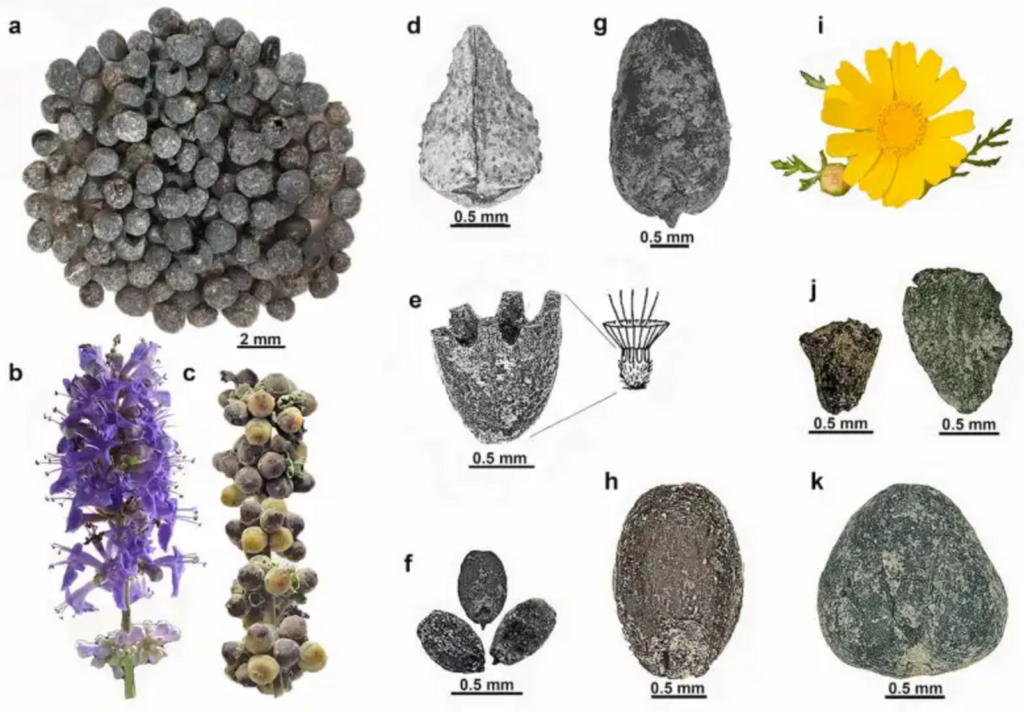
To address this challenge, the team assembled the Ancient Plant Seed Image Classification, or APS, dataset, bringing together 8,340 images of ancient plant remains across 17 genus- or species-level categories collected from 18 archaeological sites in northern and southern China. The sites span a period from approximately 5400 BCE to 220 CE, providing a broad collection of material from different archaeological contexts.
Among the remains represented are some of the crops that played important roles in ancient food production, including barley, wheat, foxtail millet, and broomcorn millet. Peach stones are also included.
That broad chronological and geographical range is important because archaeological seeds rarely resemble ideal modern reference specimens.
Many were carbonized before entering the archaeological record. Others became fragmented or distorted during burial. Seeds belonging to the same species can therefore look considerably different, while remains from different species may share almost identical shapes and surface textures.
These variations make identification difficult not only for computer systems but also for experienced researchers.
Training AI to Recognize Ancient Seeds
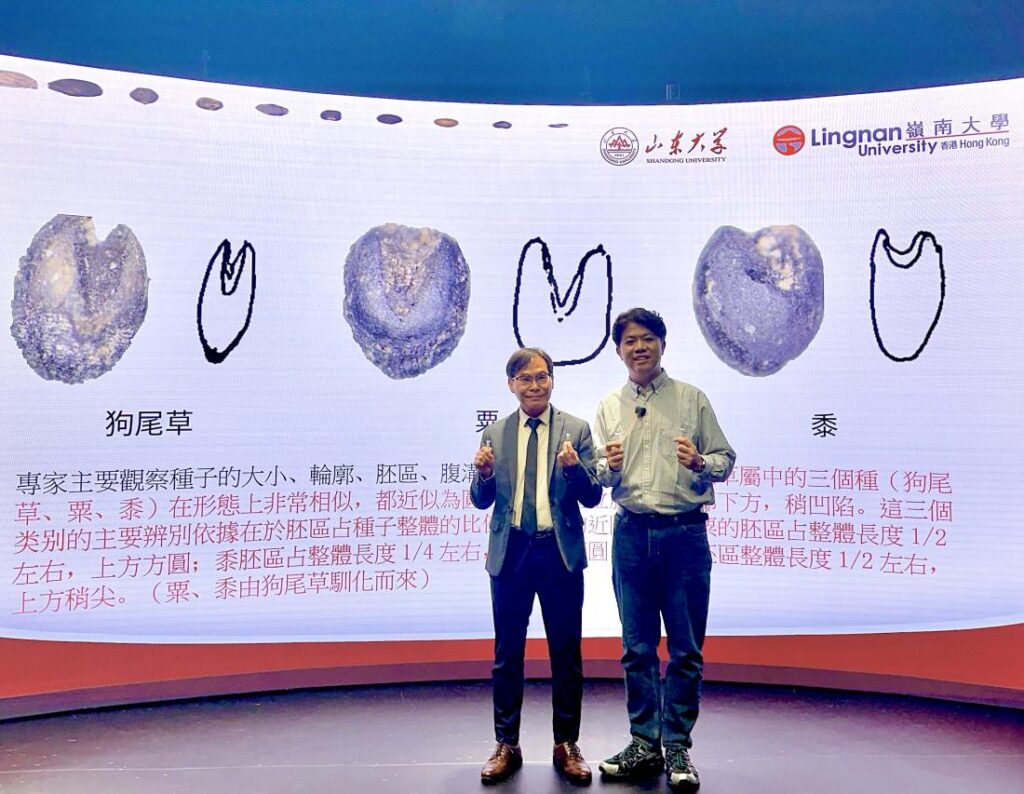
APSNet was designed around some of the same visual clues specialists use when examining archaeological plant remains.
Rather than relying only on general image patterns, the system incorporates information about seed size while also analyzing finer morphological characteristics. The research team describes this as a way of guiding the model toward features useful for distinguishing specimens that may otherwise look extremely similar.
In practical use, researchers can upload microscope images of seeds to the system and receive a preliminary classification. Identification records can also be stored digitally, creating a standardized workflow that could make large collections easier to process and compare.
Tests showed an overall classification accuracy of 90.2 percent. The researchers compared APSNet with 28 existing image-classification methods and reported that it achieved the strongest performance on the archaeological seed dataset.
The result matters because archaeobotanical collections pose problems quite different from ordinary image-recognition datasets. Ancient specimens may be burned, broken or deformed, while some plant groups are represented by far more archaeological examples than others.
Why faster seed identification matters for archaeology
The potential archaeological value of the system lies not simply in identifying seeds faster, but in what that speed could make possible at a larger scale. A faster method of preliminary classification could allow specialists to process larger assemblages of plant remains while freeing more time for the detailed interpretation of what those remains reveal about past communities, diets and agricultural practices.
Those interpretations can address fundamental questions about ancient societies: when particular crops appeared in a region, which plants became staple foods, how agricultural economies changed, and how communities adapted cultivation strategies to local ecological conditions.
Standardized identification may also make it easier to compare plant remains from different archaeological sites and periods. The researchers suggest that common datasets and analytical procedures could reduce some of the inconsistencies that arise when large collections are examined separately by different teams.
This could be particularly useful in China, where the long archaeological record preserves evidence for major developments in millet and wheat agriculture and changing relationships between communities, crops and landscapes.
Researchers Emphasize APSNet as an Assistive Tool
The researchers emphasize that APSNet is intended as an assistive tool rather than a replacement for archaeological expertise.
Its role is to carry out rapid preliminary classification. Specialists would still be needed to verify those classifications and, more importantly, interpret each specimen in relation to its excavation context, chronology and associated archaeological evidence.
That distinction is crucial. Recognizing a seed is only the first stage of archaeobotanical research. Understanding why it was present at a site, whether it represents cultivation, storage, food preparation, trade or accidental deposition requires archaeological judgment.
APSNet could also be applied in archaeobotanical research at Shandong University, where it could be tested on archaeological material related to questions of ancient crop cultivation, staple foods and environmental conditions.
For archaeologists, its greatest promise may therefore be relatively straightforward: reducing the time spent sorting thousands of difficult specimens while preserving specialist oversight.
If that approach proves effective across larger and more diverse archaeological collections, artificial intelligence could give some of archaeology’s smallest finds a much larger role in reconstructing how ancient communities lived from the land.
Xing, R., Cong, R., Wu, Y. et al. Towards ancient plant seed classification: a benchmark dataset and baseline model. npj Herit. Sci. (2026). https://doi.org/10.1038/s40494-026-02736-9
