
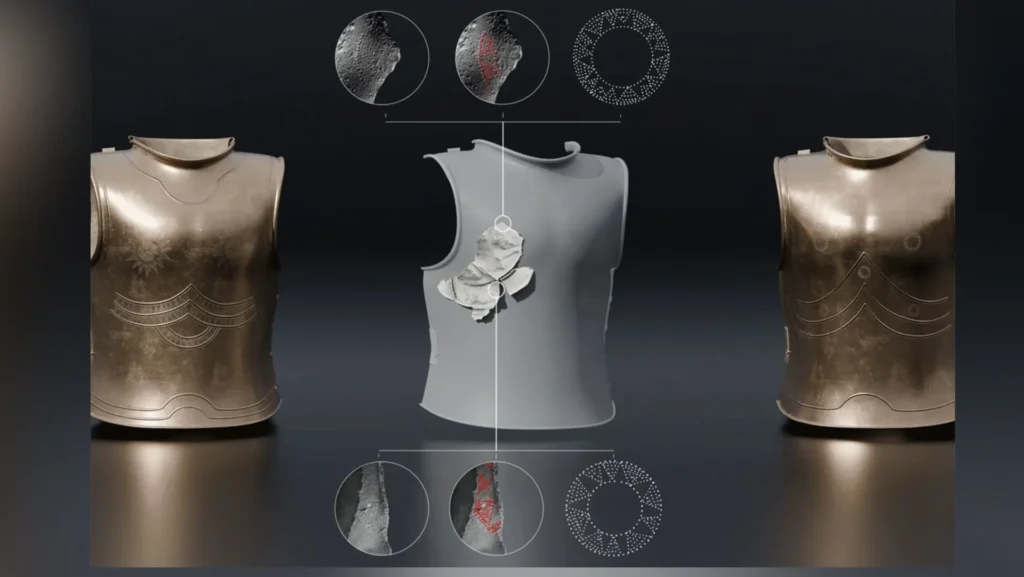
A remarkable archaeological discovery in South Moravia has brought new insights into Bronze Age Europe and its warrior elites. The Brno City Museum has unveiled a rare fragment of bronze armor, believed to date back more than 3,200 years, to the time traditionally associated with Homer’s Trojan War.
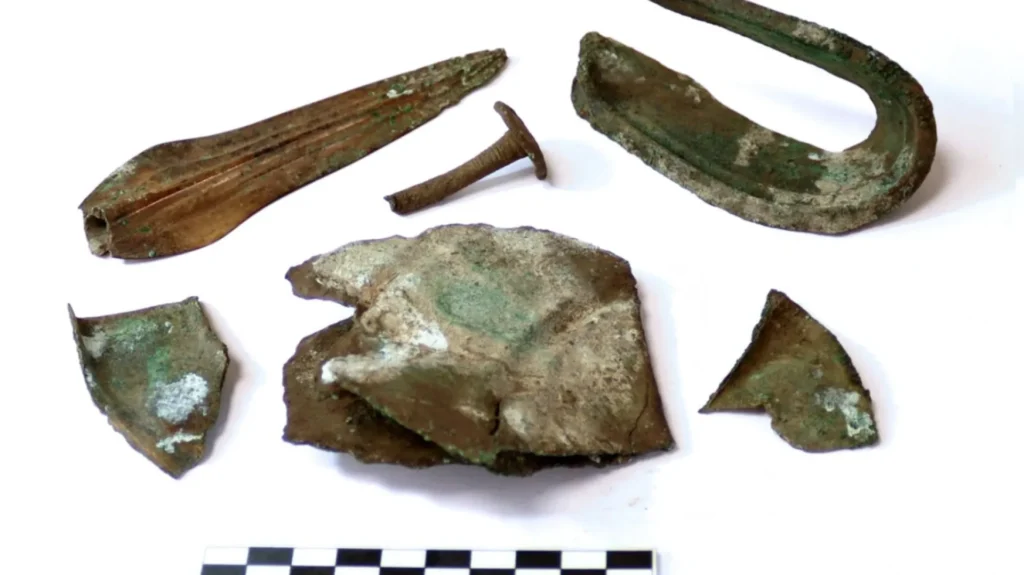
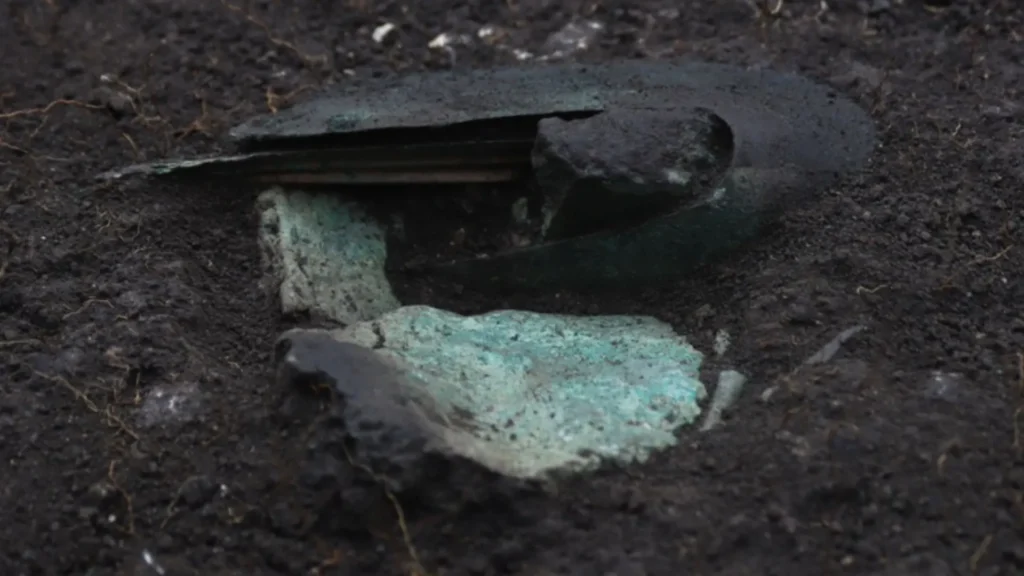
The damaged piece of chest armor, part of a buried hoard that included a spearhead, sickle, bronze pin, and other metal artifacts, was discovered in 2023 at a confidential location in South Moravia. The find was made possible through the collaboration between professional archaeologists and amateur metal detectorists, highlighting the value of public involvement in preserving cultural heritage.
According to experts, the objects were intentionally damaged and deposited together, likely as part of a ritual offering. Among them, a seemingly insignificant folded bronze sheet turned out to be the most extraordinary. Using advanced 3D scanning technology, specialists digitally “unfolded” the sheet, revealing its original shape and decorative details — confirming it was part of a chest plate worn by a Bronze Age warrior.
“Using 3D scanning, we were able to digitally ‘unfold’ the bent sheet and identify its shape and decoration,” said Aleš Navrátil, an archaeologist at the Brno City Museum.
This is only the second known example of a bronze chest armor found on Czech territory. The documentation and further analysis involved the Department of Archaeology and Museology of the Faculty of Arts at Masaryk University. The armor dates back about 3,200 years, the same era to which experts date the battles over Troy as described by Homer. At that time, bronze armor was reserved exclusively for the warrior elite. Their production required extraordinary craftsmanship, making them astronomically valuable by the standards of the time. In Homer’s Iliad, for example, King Diomedes is said to have armor worth nine bulls.
At the time, Moravia was inhabited by groups from the Urnfield culture — not a single people, but a broad cultural network sharing customs in burial, pottery, settlement, and weaponry. Though unrelated to the Slavs who would settle the region centuries later, these earlier communities left behind landscapes that their successors would later inhabit.
“This discovery underscores the importance of long-term collaboration between professionals and the public,” emphasized Zbyněk Šolc, Director of the Brno City Museum. “Thanks to such partnerships, we can uncover and protect valuable artifacts that offer deeper understanding of ancient civilizations and our shared history.”
Cover Image Credit: Brno City Museum
