
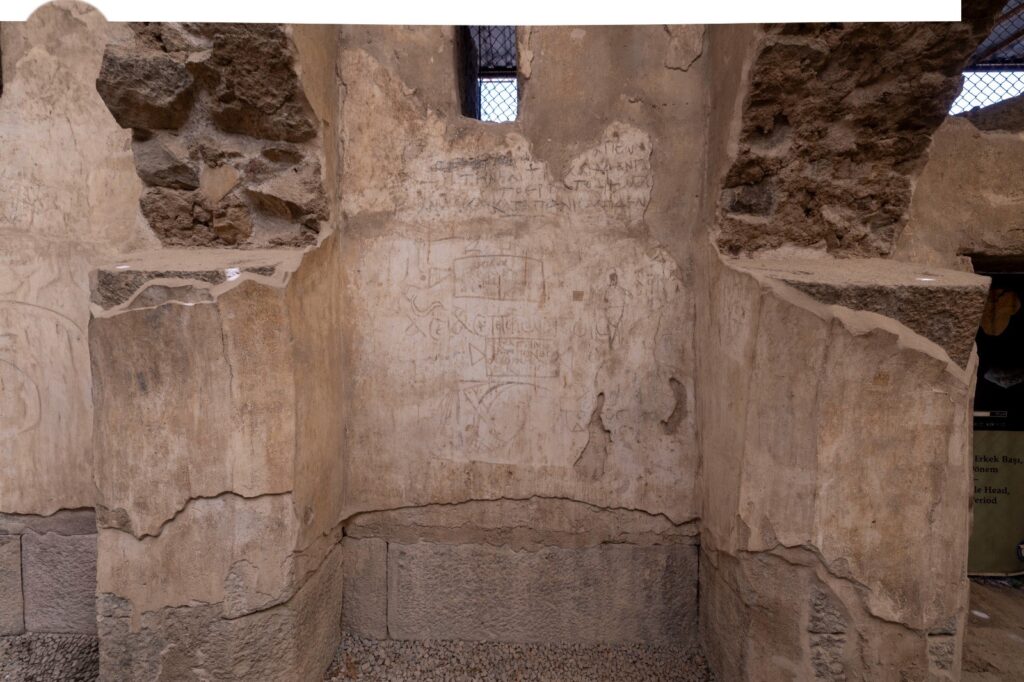
Archaeologists excavating the ancient city of Smyrna in western Türkiye have uncovered previously undocumented wall paintings and three rooms dating back approximately 1,500 years. The discoveries, made in the heart of modern İzmir, offer a new glimpse into a city that continued to change long after the height of the Roman Empire.
Two of the newly uncovered rooms contain mosaic floors, while a third features marble paving. The excavations have also brought renewed attention to an extraordinary feature beneath the ancient city: a Roman water channel that still carries water nearly 2,000 years after its construction.
Wall Paintings Emerge from Ancient Smyrna
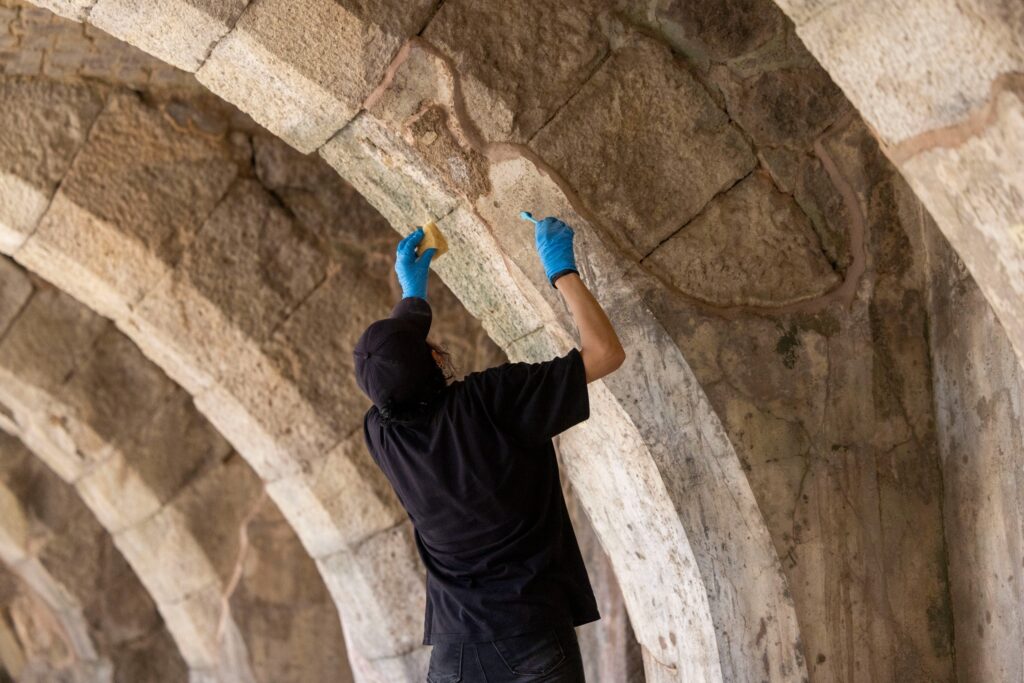
The discovery of wall paintings marks an important development in the ongoing excavations around Smyrna’s Agora and ancient theater. Although archaeologists have studied these areas for decades, they had not previously encountered this type of painted decoration in the newly investigated spaces.
Professor Akın Ersoy, who directs the excavations on behalf of İzmir Katip Çelebi University, confirmed that his team had encountered wall paintings for the first time in these areas. The finding adds another element to the architectural remains emerging from the historic city center.
Smyrna was already known for its remarkable collection of Roman graffiti, preserved on plastered walls and arch supports in the basement of the Agora’s basilica. These earlier discoveries include drawings of gladiators, ships, birds, personal names, and scenes reflecting everyday life.
The newly reported paintings are a separate discovery. Researchers have not yet released a detailed description of their colors, subjects, or decorative patterns, leaving their precise artistic character uncertain.
Their appearance nevertheless raises new questions about the buildings surrounding the Agora. Further investigation may help archaeologists determine how the decorated spaces were used and whether their paintings belonged to a broader architectural program.
Three Rooms with Mosaics and Marble Floors
The latest discoveries build on a mosaic floor that archaeologists began uncovering during the previous excavation season. As the team expanded its work, three additional rooms emerged, revealing that the earlier find belonged to a more extensive architectural arrangement.
Two rooms have mosaic floors, while the third contains marble paving. Ersoy has noted similarities between the newly uncovered spaces and the famous Terrace Houses of Ephesus, although he believes the Smyrna rooms may have served a public function. Their precise purpose remains under investigation.
The broader excavation area had already produced a notable mosaic discovery. In January 2026, archaeologists presented a floor measuring approximately 3 by 4 meters along the Agora’s North Street, decorated with interlocking geometric panels and a central Solomon’s Knot motif.
Ancient builders frequently employed this design as a protective symbol associated with warding off misfortune or the evil eye. At the time, Ersoy explained that the building’s identification as a private residence or public space remained unresolved.
The newly discovered rooms now give archaeologists additional architectural evidence to examine. Rather than interpreting an isolated decorated floor, they can investigate how adjoining spaces were arranged and whether their different finishes reflected particular activities.
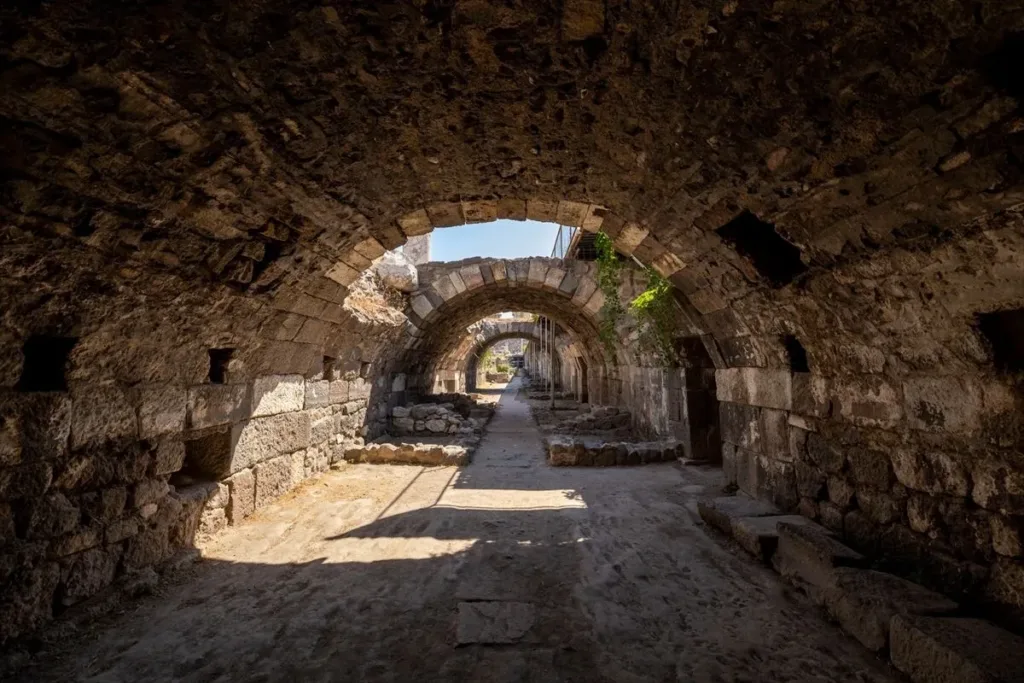
The vaulted galleries of the ancient Agora of Smyrna in İzmir, Türkiye. Much of the surviving Agora dates to the reconstruction that followed the devastating earthquake of AD 178. Credit: AA
A City Changing After the Roman Empire’s Division
Smyrna’s history stretches back thousands of years, but the latest discoveries belong to a particularly important phase of its development.
The city was reorganized as a major Hellenistic settlement following the era of Alexander the Great and later prospered under Roman rule. Its Agora became a central place for commercial and civic activity, surrounded by monumental buildings and colonnaded galleries.
Much of the Agora visible today dates to rebuilding after the devastating earthquake of AD 178. The reconstruction, supported by Emperor Marcus Aurelius, helped restore one of the major urban centers of Roman Asia Minor.
The three newly uncovered rooms, however, date to the fifth and sixth centuries AD. By then, the Roman Empire had formally divided into eastern and western halves, and Christianity had become a defining influence on urban life.
Ersoy considers the new structures relevant to understanding how Smyrna adapted during this period. The buildings may help clarify how parts of the older Roman city acquired new functions as its social and architectural character changed.
Excavations at the nearby theater offer another perspective on this long urban history. In a 2026 study published in the archaeological journal Höyük, Ersoy and his colleagues examined the theater’s development through architectural remains, inscriptions, and ancient written sources, documenting a monument that underwent significant changes during the Roman period.
A Roman Water Channel Still Carries Water
The excavations have also turned attention to a remarkable piece of Roman engineering beneath Smyrna’s historic center.
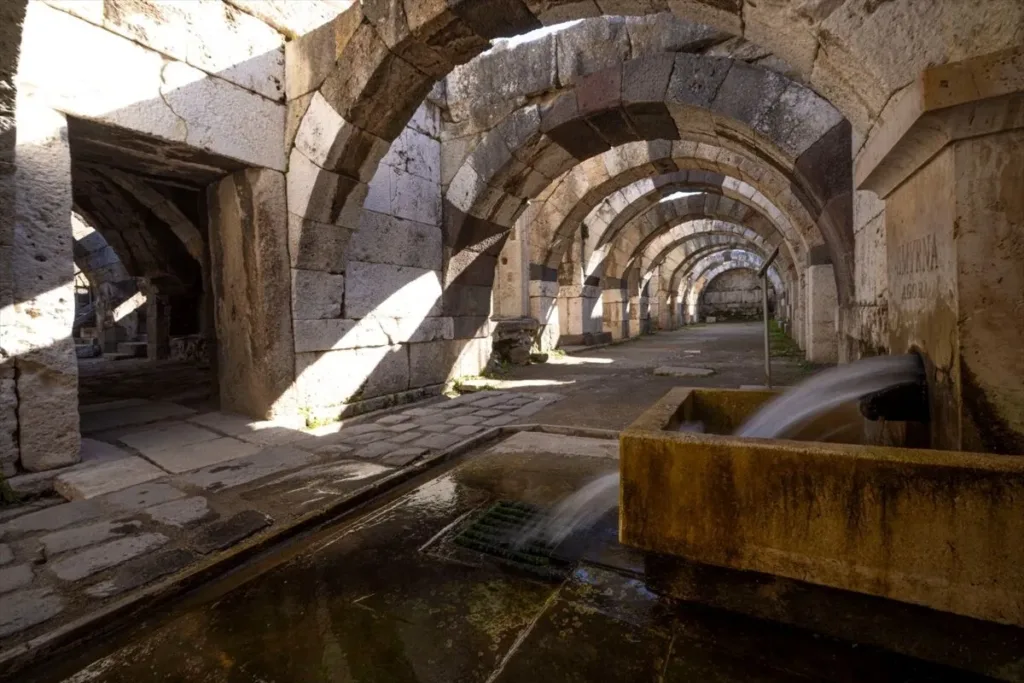
An ancient channel, originally part of the city’s water supply network, continues to carry flowing water today. Archaeologists have traced approximately 150 meters of its route toward the Agora, but the precise source remains unknown.
Ersoy believes the channel may connect to a spring near the Namazgah Bath and Kurşunlu Mosque, south of the archaeological site. During the Roman period, channels linked to natural springs supplied water to Smyrna’s lower neighborhoods.
The team hopes to establish where the water originates as investigations continue. Meanwhile, excavations will extend beyond the newly uncovered rooms before researchers turn their attention to the previously identified bath-gymnasium complex.
Together, the paintings, decorated floors, and functioning water channel reveal different aspects of ancient Smyrna. The new rooms offer evidence of how the city changed in Late Antiquity, while the Roman water system provides a surviving connection to the infrastructure that sustained its inhabitants centuries earlier.
Ersoy, A., Alatepeli, S., & Çakmak, O. (2026). Güncel arkeolojik veriler ışığında Smyrna / İzmir tiyatrosu (The Smyrna / İzmir theater in light of recent archaeological data). Höyük, (17), 155–174. https://doi.org/10.37879/hoyuk.2026.1.155
