Two rare artifacts found at Novgorod’s Knyazhya Gora—an ancient spiral ring and a Viking-era iron pin—may be war trophies from the destroyed Don trade center Supruta, revealing a hidden military route and early Rus’ interregional connections.
In archaeology, the most intriguing discoveries are often the ones that do not fit into established timelines. This is exactly the case with two unusual artifacts found nearly fifty years ago at the fortified settlement of Knyazhya Gora. While most of the 1,400 objects recovered from the site fit neatly into the known historical context of the region, these two pieces did not. A spiral ear ring and a horseshoe-shaped iron object were discovered in a 10th-century layer, yet their style clearly belongs to much earlier periods.
New research from the Center for Archaeological Studies at Novgorod State University (NovGU) now suggests that these artifacts may have been carried northward as war trophies, revealing a hidden military route that connected the Don River trade network with the Upper Volga region.
Knyazhya Gora: A Strategic Settlement on the Edge of Novgorod
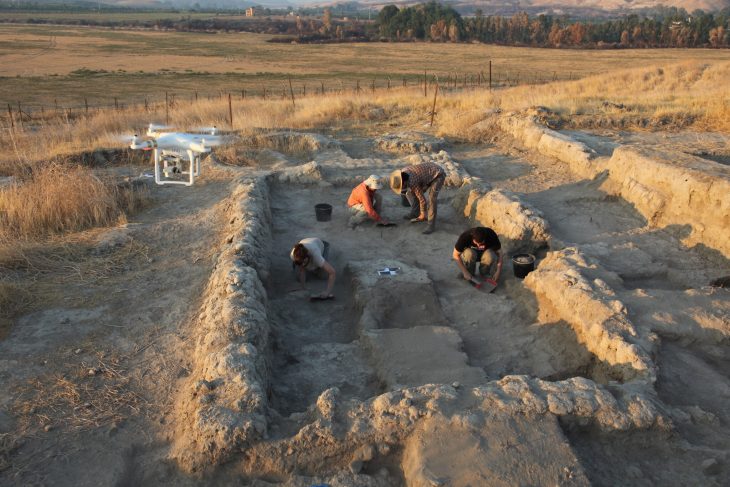
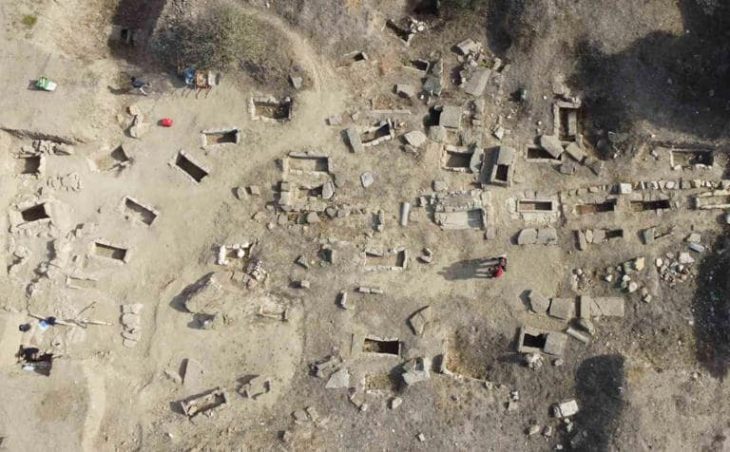
Knyazhya Gora, located on the banks of the Lovat River, was a significant strategic point during the 9th–10th and 12th–16th centuries. In the second half of the 12th century, a fortified town known as Demyan, or Demon, emerged here. Its location allowed control over the route from the Lake Ilmen region toward the Upper Volga, making it an important military and administrative center on the southern border of Novgorod lands.
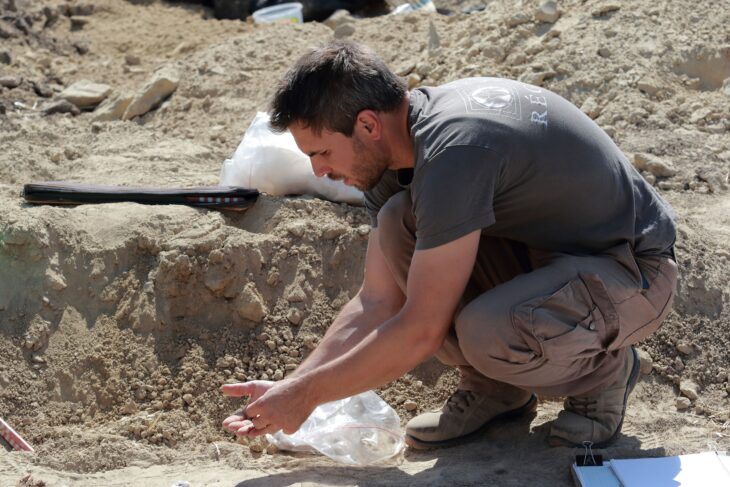
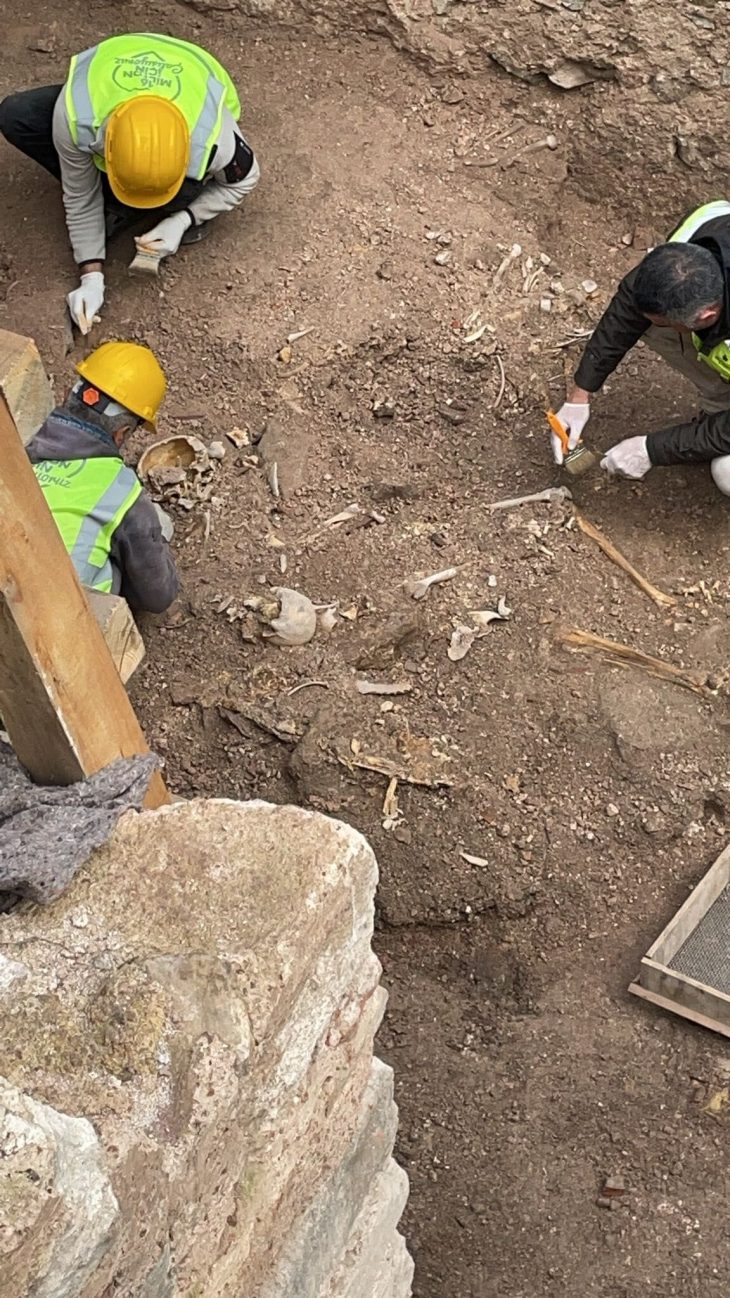
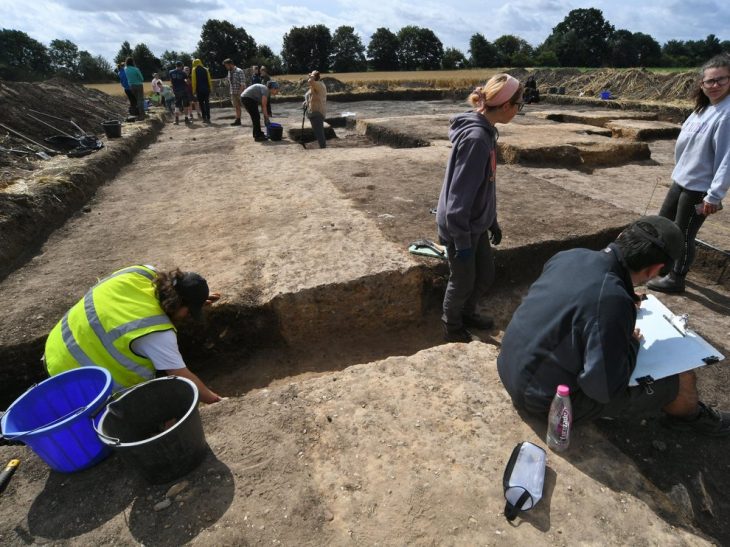
Over more than a century of excavations since 1902, archaeologists have uncovered around 1,400 artifacts. Nearly all of these finds align with the local historical narrative, which is why the two objects discovered in 1976 stood out so dramatically. They were located in a 10th-century complex, but their design suggested origins centuries earlier, creating a puzzle that lasted for decades.
📣 Our WhatsApp channel is now LIVE! Stay up-to-date with the latest news and updates, just click here to follow us on WhatsApp and never miss a thing!!
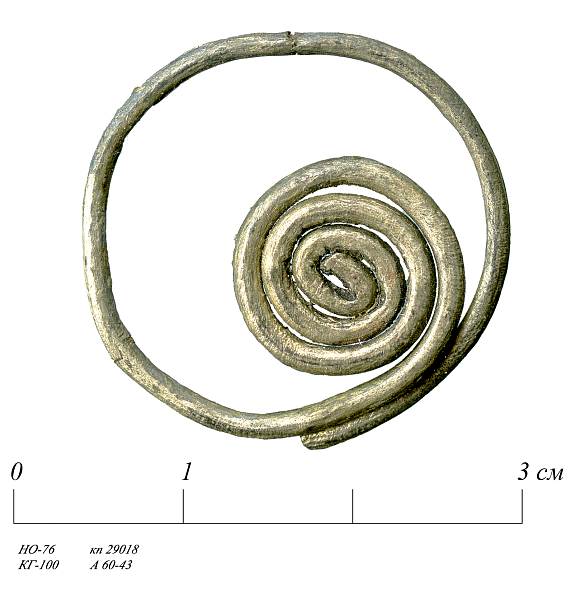
A C-Shaped Ring That Doesn’t Belong to the Region
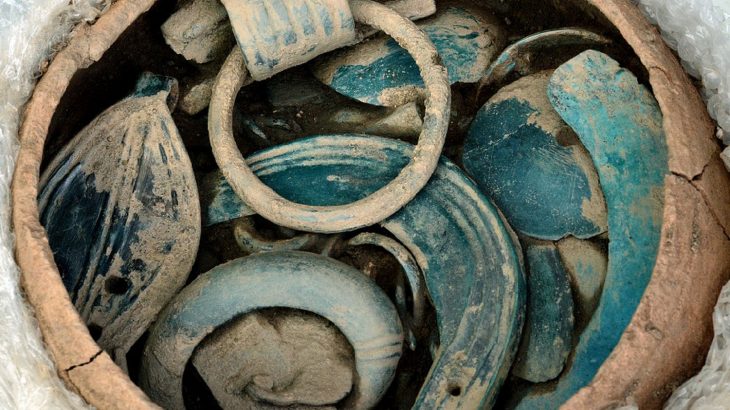
The first artifact is a C-shaped spiral ear ring, likely made of silver wire. For the Priilmenye region, this find is unique; no other similar item has been discovered there. Initially, researchers linked it to the Severians, a tribe mentioned in medieval chronicles, because of its visual similarity to S-shaped ear rings found in 11th–12th century burials in the Desna and Seim river basins. However, the comparison was later rejected. The ring from Knyazhya Gora is smaller, more tightly coiled, and distinctly C-shaped rather than S-shaped. This led researchers to consider a different cultural origin.
NovGU’s director of archaeological research, Sergey Toropov, suggests that the ring resembles the spiral ear ornaments of the Antae culture, an early Slavic group active in the 4th–7th centuries. Similar rings have been found in the Baltic region and at sites such as Gnezdovo and Merlugino, but even those examples are believed to be older than the layers in which they were found. The key question remained: how could such an ancient object appear in a 10th-century context?
The Supruta Connection: A War Route Revealed
The new interpretation proposes that the ring may have arrived in the region as a war trophy during the early 10th century. At that time, Rus’ forces from the Upper Volga reportedly destroyed the Don trade settlement of Supruta, an important node on the ancient Don River trade route. If Supruta was looted, the spoils could have included rare artifacts from older cultural layers. These items might then have been transported northward along strategic routes, reaching settlements like Knyazhya Gora.
Knyazhya Gora’s position on the route from Lake Ilmen to the Upper Volga makes it a plausible location for the transfer of war spoils. If the garrison of the settlement participated in such expeditions, the arrival of trophies from Supruta would not be surprising. This hypothesis also helps explain why similar artifacts have been found in other key sites along the route, such as Gnezdovo and Merlugino, suggesting a broader pattern of movement and exchange across regions.
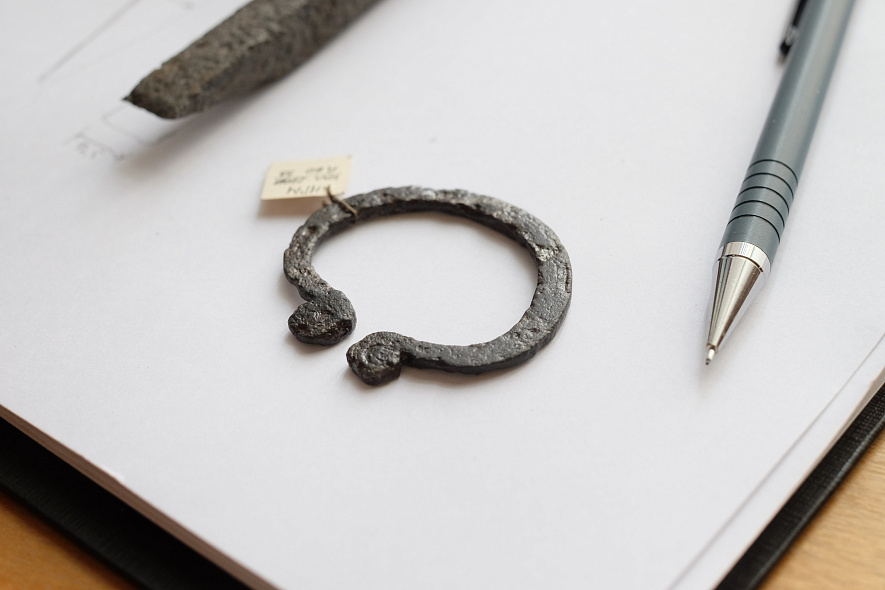
A Viking-Age Iron Object That Challenges the Timeline
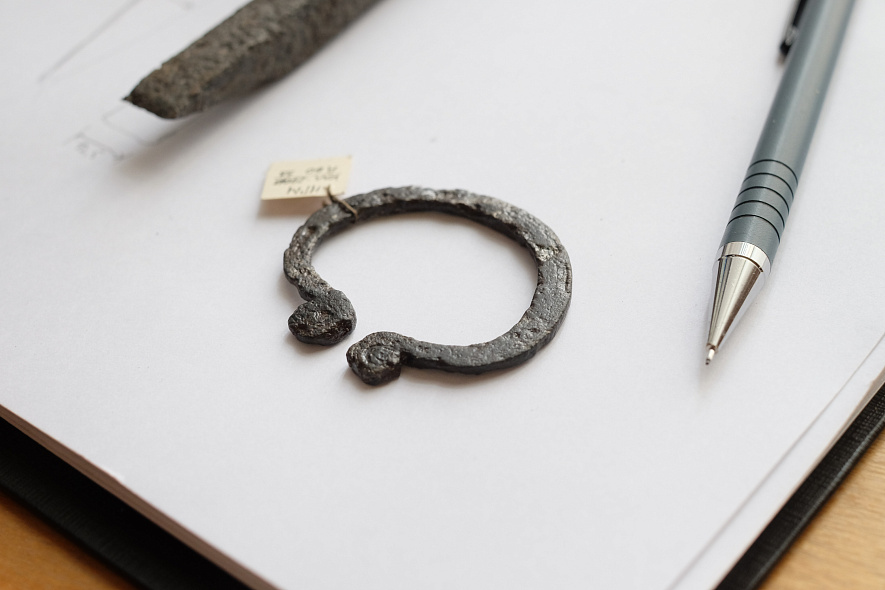
The second artifact is a horseshoe-shaped iron object with spiral ends. Initially thought to be a fibula or cloak clasp, its shape did not match typical fibulae of the period. Unlike common horseshoe fibulae, the spiral ends are bent outward in the same plane as the arc, and the item does not resemble a bracelet or pendant. Researchers also considered interpretations such as a decorative pendant, but the structure did not fit. Instead, Toropov proposes that the object may be part of a ring-shaped pin used in Viking-era male costume, similar to items found in the cultural layer of Hedeby, one of the largest Viking trade centers.
If this interpretation is correct, the presence of such an object at Knyazhya Gora provides further evidence that the settlement was connected to long-distance trade and cultural exchange. It also reinforces the idea that the region was not isolated but participated in a network of contacts stretching from the Baltic to the Volga.
A New Chapter in the Storyof Early Rus’ Expansion
The presence of these artifacts in a later layer highlights a crucial reality: early Rus’ society was not isolated or static. It was a dynamic world shaped by trade, military campaigns, and cultural exchange. If these objects were indeed brought from Supruta as trophies, they reveal the reach of early Rus’ military expeditions and the importance of strategic routes in shaping regional history. They also confirm that Knyazhya Gora was not merely a remote settlement, but a key military and administrative center on the southern borders of Novgorod lands.
As research continues, the Knyazhya Gora artifacts will likely remain central to discussions about the formation of the early Rus’ state and its connections to wider European networks. Their story proves that history is not only written in chronicles but also hidden in the soil, waiting for new interpretations to bring it to life.
Novgorod State University (NovGU)
Cover Image Credit: Novgorod State University (NovGU)