
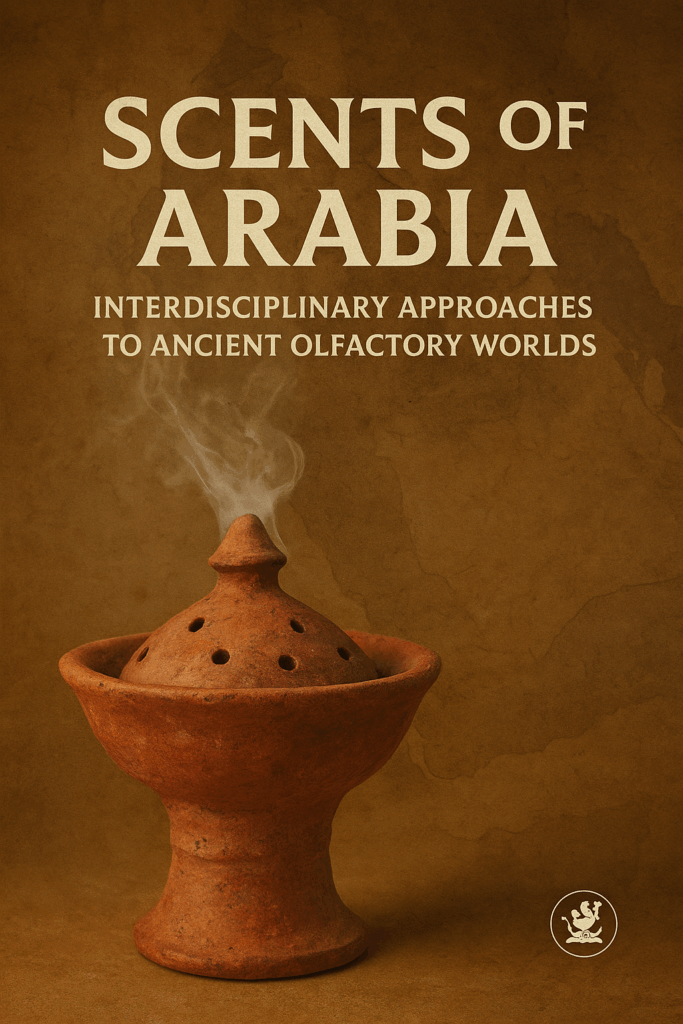
For centuries, historians described Arabia as the famous “incense highway,” a vast trade artery that carried frankincense and myrrh from South Arabia to the Mediterranean world. Yet new biomolecular discoveries from the oasis of Tayma challenge this linear narrative. According to recent analyses conducted by an international team of archaeologists and scientists, Arabia was not merely a passageway—it was a thriving center of aromatic innovation. The new findings reveal the presence of diverse resin types, plant oils, and complex fragrance mixtures that enriched ritual, domestic, and funerary practices long before the widespread arrival of frankincense.
These groundbreaking results come from a long-term collaboration between the German Archaeological Institute (DAI) and Saudi Arabia’s Heritage Commission. With support from laboratories at the Technical University of Berlin and the Max Planck Institute for Geoanthropology, researchers used advanced metabolomic techniques to identify molecular traces preserved inside ancient incense burners. For the first time, the invisible world of Arabian scents—once thought irretrievable—has been scientifically decoded.
Reconstructing the Ancient Aromatic Landscape of Tayma
The newly identified biomolecular signatures reveal a chronological evolution of scent traditions. In the Bronze Age, Tayma’s communities relied primarily on locally available materials such as conifer resins and regional plant oils. This suggests the existence of a deeply rooted indigenous aromatic culture, one that developed independently of long-distance exchange networks.
By the Iron Age, the aromatic landscape expanded significantly. Pistacia resins became widespread, and select Commiphora-type substances appeared in ritual contexts, particularly in funerary settings. These shifts reflect changing ritual needs, regional connections, and evolving sensory practices. The most surprising discovery concerns the timing of frankincense. Contrary to long-standing assumptions, classic Boswellia resin does not appear in Tayma until the Nabataean period. This suggests that the famed incense was not foundational to early Arabian ritual life but rather a later addition layered onto an already rich olfactory tradition.
As DAI archaeologist Arnulf Hausleiter notes, this timeline challenges earlier interpretations:
“Only with the Nabataeans do we finally see frankincense. Prior to this, communities in Tayma favored Pistacia, Commiphora, and conifer resins. These choices allow us to reconstruct not just trade connections but also cultural preferences and local identities.”
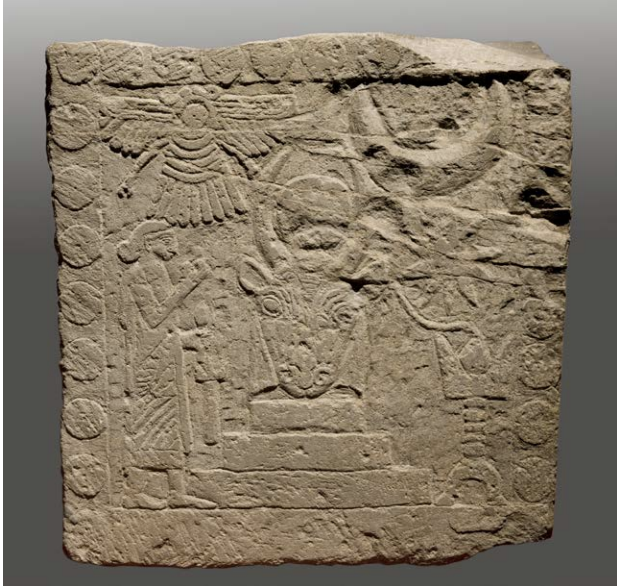
Aromatic Practices That Defined Ritual, Identity, and Daily Life
The findings reveal that scent permeated nearly every aspect of ancient Arabian life. Ritual spaces were suffused with aromatic smoke that framed spiritual experience, while domestic environments were enriched with carefully selected resins. In some houses, the presence of imported substances indicates personal rituals, notions of prestige, or acts of devotion within the intimate sphere of the home. Funerary practices also bear the imprint of scent; Commiphora-type resins were used in ways that suggest symbolic roles connected to transition, protection, or remembrance.
Scientific lead Barbara Huber underscores the cultural power of these discoveries: “Smell leaves almost no visible trace, and yet it shaped rituals, spaces, and emotional life. Through biomolecular analysis, we are recovering aspects of human experience that have been invisible for millennia.”
What emerges is a portrait of Tayma as a vibrant center of sensory culture—far removed from the simplistic notion of a desert crossroads. The oasis was home to communities that crafted their own fragrant worlds, blending local traditions with selective imports and elevating scent to a central place in social and spiritual expression.
A New Understanding of Arabia’s Cultural and Economic Influence
These insights have far-reaching implications for the broader history of the Arabian Peninsula. They highlight Arabia not only as a key player in ancient trade networks but as a producer and consumer of complex aromatic technologies. The findings also illuminate the cultural sophistication of oasis societies, revealing an economy and ritual system in which scents carried symbolic power, expressed social belonging, and shaped communal identity.
Ajab AlOtaibi, General Director of Archaeology at the Saudi Heritage Commission, emphasizes this significance: “These discoveries expand our understanding of the Arabian Peninsula’s past. They demonstrate that its oases were dynamic cultural and economic centers deeply connected to wider world traditions.”
A New Frontier in Sensory Archaeology
The research published in Scents of Arabia marks a major advance in the emerging field of sensory archaeology. By integrating archaeology, biomolecular science, historical analysis, and ethnographic perspectives, the project reconstructs the sensory dimensions of ancient life with unprecedented clarity. It opens a new frontier, proving that even the most ephemeral aspects of human experience—smell, smoke, and ritual atmosphere—can be recovered and studied.
The story of Tayma now stands as a testament to Arabia’s role as an ancient scent capital, a place where fragrance shaped ritual landscapes, infused domestic life, and forged enduring cultural identities. Through the lens of modern science, the aromatic worlds once carried in the air of this desert oasis rise again, offering a richer and more nuanced understanding of Arabia’s deep past.
Hausleiter, A., & Huber, B. (Eds.). (2025). Scents of Arabia: Interdisciplinary Approaches to Ancient Olfactory Worlds. Archaeopress. https://doi.org/10.32028/9781805830740
Cover Image Credit: This image was generated using artificial intelligence.
