
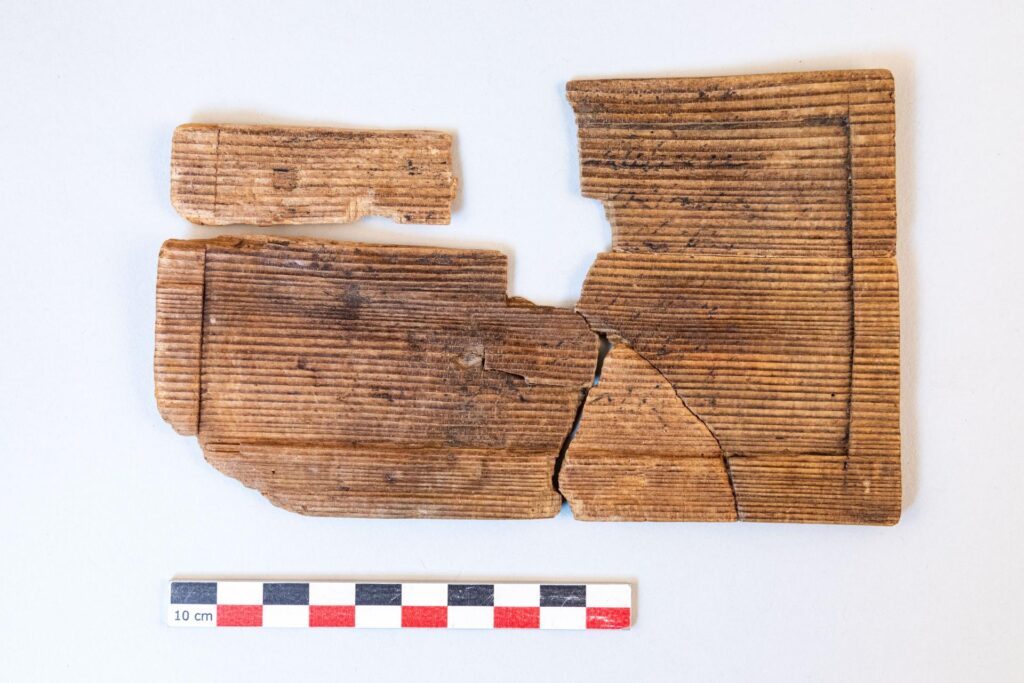
Inrap archaeologists have uncovered a Roman woodworking workshop in Izernore, France, featuring inked writing tablets, children’s wooden shoes, and artifacts made from boxwood, ash, hazel, and maple—offering a rare glimpse into daily life in ancient Gaul.
Excavating the Past: A Roman Neighborhood Revealed
In the eastern French commune of Izernore, the 2020 excavation led by the National Institute for Preventive Archaeological Research (Inrap) at Chemin des Trablettes has brought to light a remarkable Roman district. Known as Isarnodurum, this settlement combined residential and artisanal spaces, revealing how ordinary life and skilled craftsmanship intertwined nearly two millennia ago.
The site’s four ancient wells, long sealed and waterlogged, created ideal conditions for preserving organic material. Deprived of light and oxygen, the wells safeguarded fragile artifacts such as seeds, pollen, and an extraordinary range of wooden objects—from everyday items to tools of specialized craft—providing archaeologists with an unprecedented view into Roman Gaulish life.
The Woodworking Workshop: From Raw Timber to Finished Objects
Central to the discovery is a Roman woodworking workshop, identified through the presence of shavings, offcuts, and partially finished artifacts. While boxwood (Buxus sempervirens) appears frequently among the finds, other species—ash, hazel, and maple—were also used, reflecting the diversity of local forest resources.
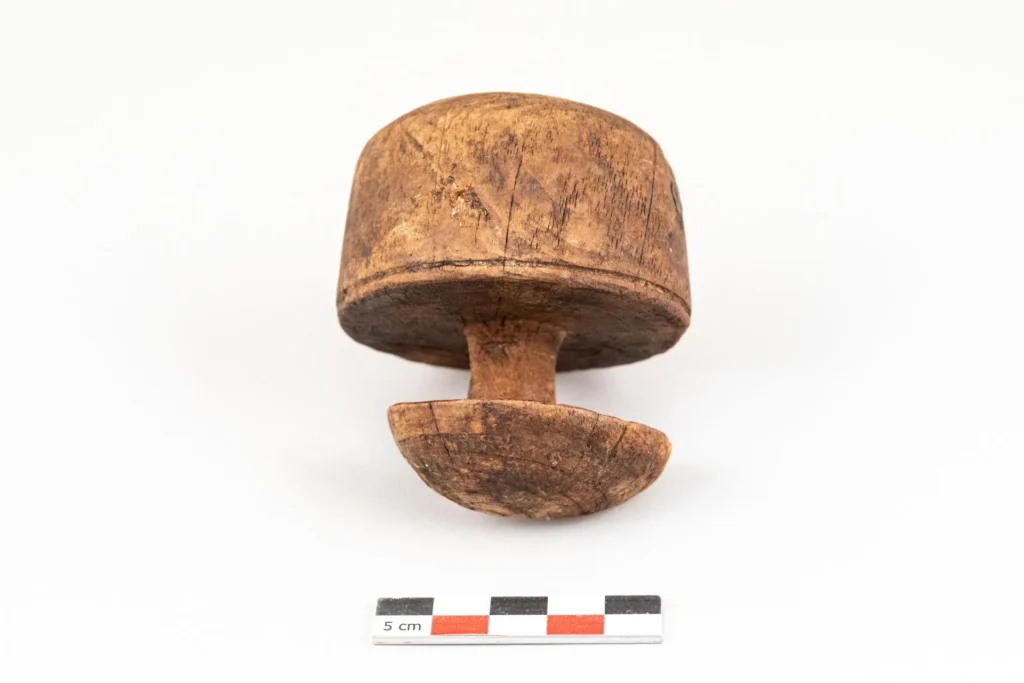
The workshop produced both carved and turned objects. Carved items include double-toothed combs, while turned pieces feature pyxides—small lidded boxes for personal items—and spindle whorls used in textile production. The proximity of the workshop to raw timber sources allowed craftsmen to work green wood, which is more pliable and easier to shape, highlighting the sophisticated technical knowledge required for their trade.
Notably, the region’s tradition of comb-making endured for centuries, continuing into the 18th century. The Izernore finds reveal that this Roman woodworking legacy had already established the high standards of craftsmanship that would define the area for generations.
Inked Writing Tablets: Ancient Messages Preserved
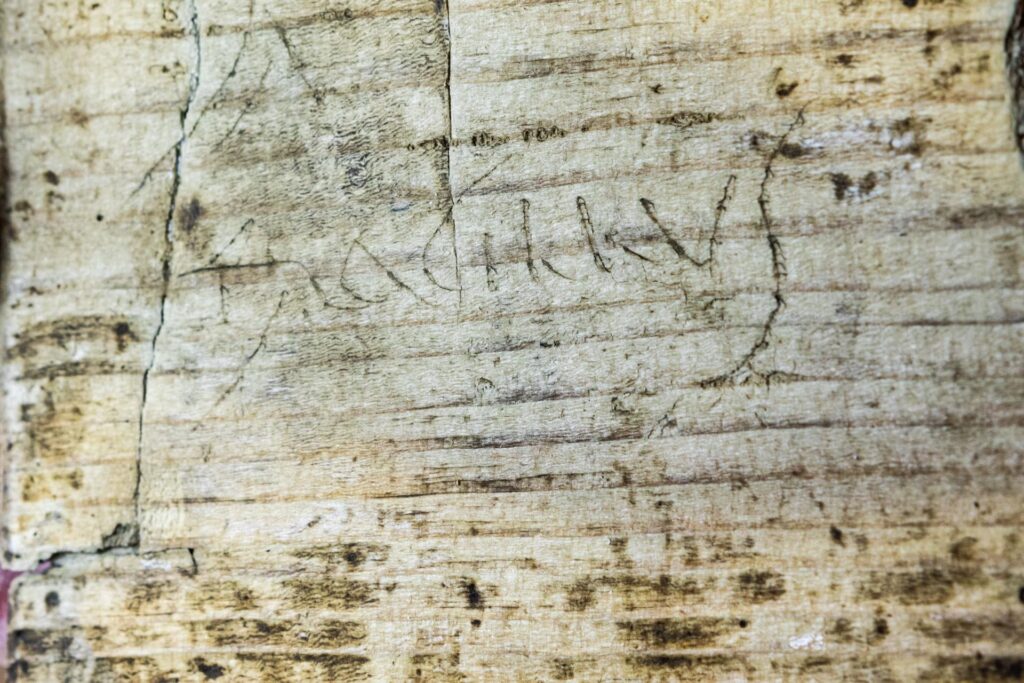
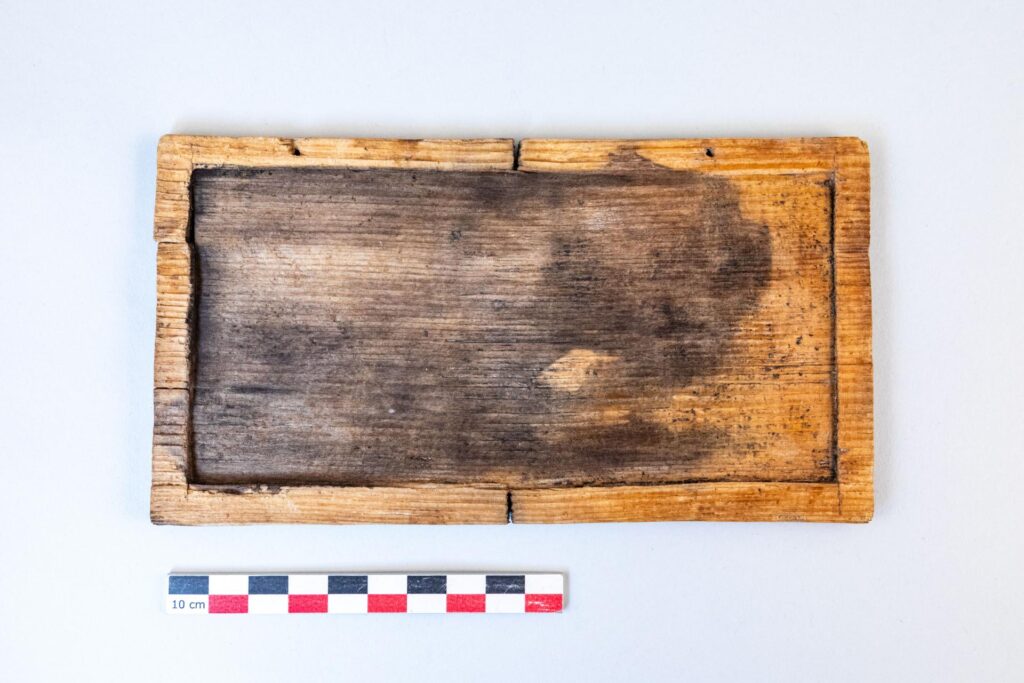
Among the most remarkable finds are at least fifteen Roman writing tablets, preserved in fragmentary form. These tablets served as school notebooks, official documents, and financial records, circulating widely throughout the Roman Empire.
The presence of manufacturing offcuts and at least one unfinished tablet strongly suggests that these objects may have been produced locally, likely using softwoods such as fir or spruce. One tablet, in particular, still bears traces of handwritten ink, a discovery of extraordinary rarity that is currently undergoing detailed epigraphic analysis.
These artifacts allow modern archaeologists to glimpse not only literacy and administration in the province but also the intimate daily routines of its inhabitants, bridging the gap between past and present.
Children’s Wooden Shoes: Small Footprints in History
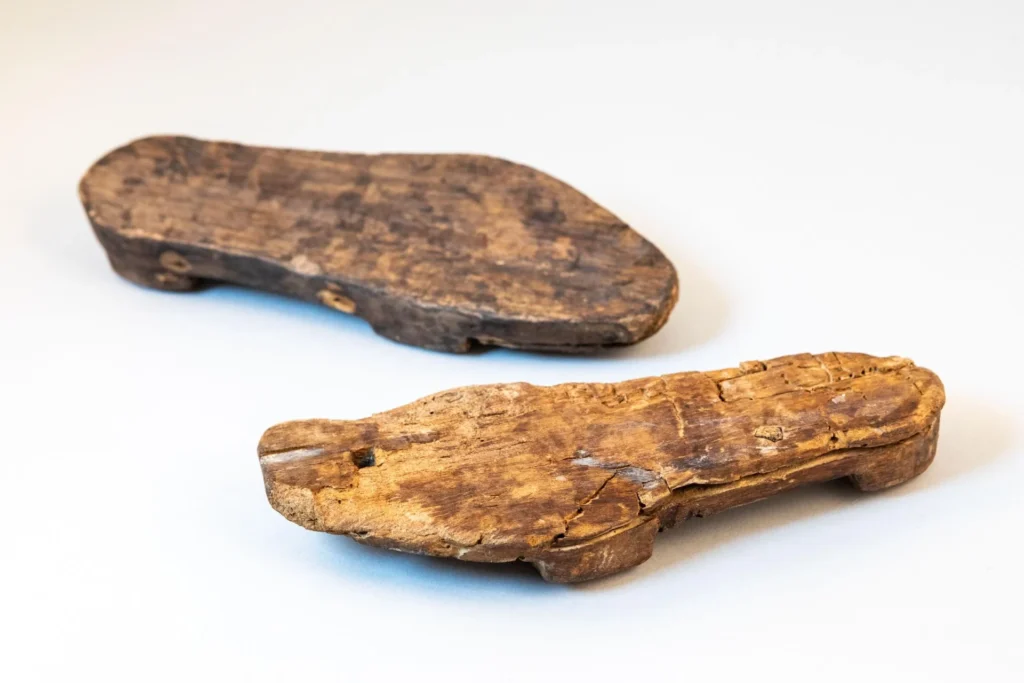
Adding a personal dimension to the excavation are two complete wooden shoe soles, carved from maple. Belonging to the sculponae type of Roman footwear, these soles reveal carefully engineered leather fastening systems designed to lift the foot above the ground.
The first sole, roughly corresponding to a modern size 29, would have fit a child aged six to seven; small nails around the perimeter held leather pieces in place. The second, size 27 for a four- to five-year-old, used a different method—a central toe perforation for a thong strap and a slit at the heel to secure a leather band. Wooden footwear of this kind is extremely rare in the Roman archaeological record, providing valuable insight into childhood, clothing, and daily life.
Wells of Preservation: How Time Protected the Past
The wells themselves are a defining feature of Isarnodurum. Geological conditions—a shallow water table atop impermeable clay—made well construction simple and inexpensive, encouraging households to dig their own water sources. Once abandoned, these wells functioned as refuse pits, inadvertently preserving fragile materials, including the rare wooden artifacts discovered at the site.
After excavation, the wooden objects were analyzed by Inrap’s wood specialist, who traced each artifact from tree growth and felling methods to use-wear and deposition patterns. Subsequently, they underwent stabilization treatment at ARC-Nucléart in Grenoble, ensuring their preservation outside the aquatic environment.
From Excavation to Exhibition
The findings from Izernore will be showcased in the upcoming exhibition “Wells of Knowledge: 240 Years of Excavations at Izernore”, organized by Inrap in partnership with the Izernore Archaeological Museum. Open from September 21, 2025, to December 31, 2026, the exhibition presents these artifacts in context, illustrating both the material culture and the human stories behind them.
Visitors will encounter crafted objects, inscribed tablets, and children’s shoes—each revealing the ingenuity, skill, and everyday life of a Roman provincial community. This rare combination of organic preservation and archaeological context offers an unparalleled window into Roman craftsmanship, literacy, and domestic life.
A Glimpse Into Roman Daily Life
The Izernore excavation underscores the importance of organic artifacts in reconstructing the past. While stone and pottery dominate conventional archaeological narratives, wood—once ephemeral—is here preserved in extraordinary detail, allowing researchers to explore crafting techniques, trade, and social life.
By revealing the artistry and innovation of Roman woodworking, the discovery illuminates the interwoven nature of material culture and human experience, from delicate combs to the smallest children’s shoes, and from inked writing to everyday tools. Through these finds, the community of Isarnodurum speaks across the centuries, offering modern audiences a tangible connection to life in Roman Gaul.
Cover Image Credit: Ink writing tablet, fully hollowed on one side. Six lines of inked handwriting, currently being deciphered by specialists, are still visible. The piece represents the reuse of a former writing tablet, as ink tablets typically do not feature such hollowed surfaces. Credit: Flore Giraud, Inrap
