
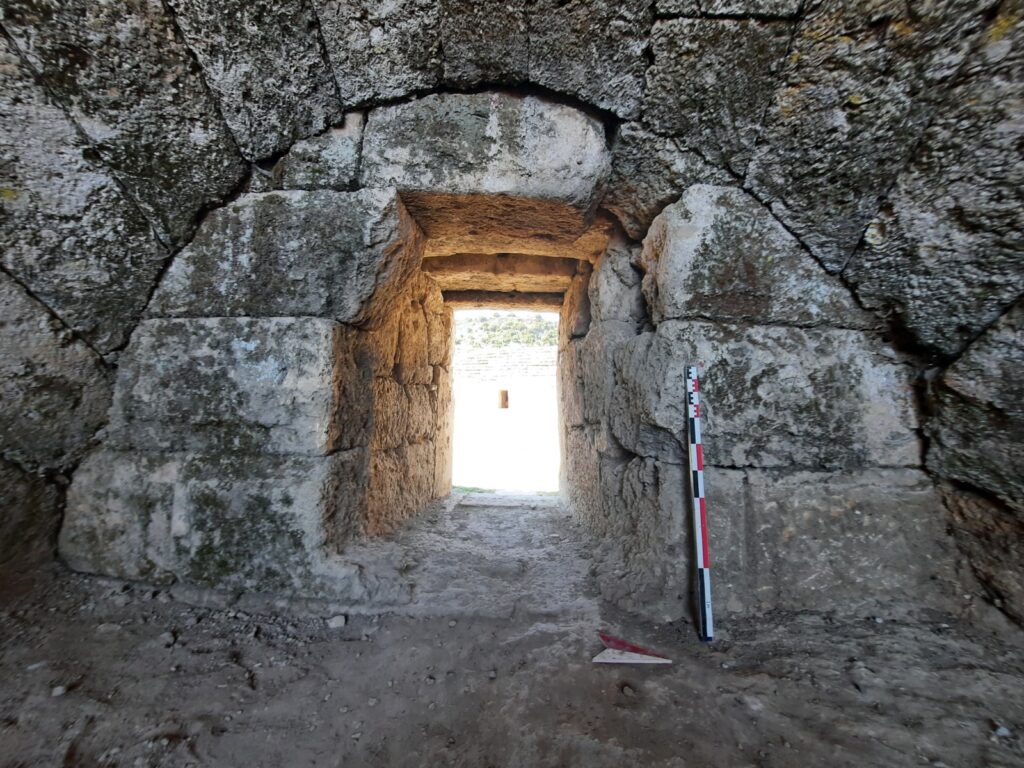
The discovery of the “Gates of Death” in Perge reveals a Roman stadium transformed into an arena of execution and spectacle.
A groundbreaking archaeological discovery at the ancient city of Perge has revealed a dramatic and unsettling transformation in the use of public space during the Late Roman period. Once a vibrant center for athletic competitions, Perge’s monumental stadium was later converted into a multifunctional arena designed for gladiatorial combat, animal spectacles, and public executions. The findings, part of the “Heritage for the Future Project” led by Prof. Dr. Sedef Çokay Kepçe of Istanbul University, provide rare and detailed insight into the social and political dynamics of Late Antiquity in Anatolia.
A Monument Reimagined: From Athletics to Spectacle
Perge, located in the Aksu district of Antalya, was one of the most important cities of ancient Pamphylia and served as its capital during the Hellenistic and Roman periods. The city is renowned for its well-preserved urban layout, including colonnaded streets, baths, temples, and a theater. Among these structures, the stadium—originally built in the 2nd century CE—stood as a symbol of civic pride and communal gathering.
Traditionally used for footraces and athletic contests, the stadium could accommodate thousands of spectators. However, new excavations reveal that by the Late Roman period (approximately 3rd to 6th centuries CE), the structure underwent significant architectural modifications. These changes were not merely cosmetic but functional, indicating a complete shift in the building’s purpose.
Architectural Evidence of Transformation
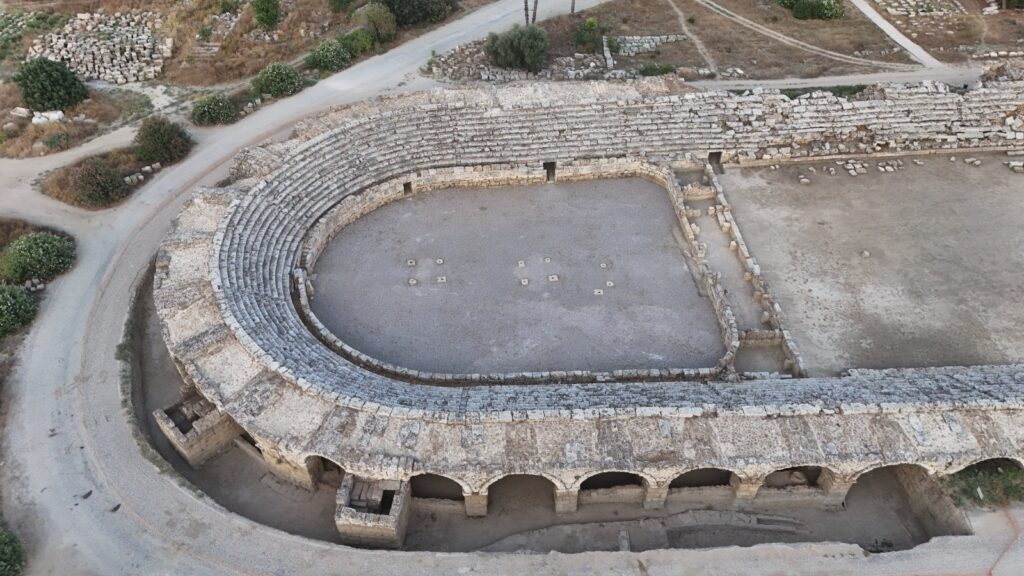
According to Dr. Aytaç Dönmez, Deputy Head of Excavations, the stadium was redesigned to support a variety of spectacles beyond sports. Archaeologists uncovered structural additions such as elevated platforms likely used for staging performances, enclosed chambers interpreted as animal holding cells, and complex gate mechanisms that controlled movement into the arena.
These features align closely with known Roman amphitheater designs, suggesting that Perge’s stadium was effectively repurposed into an execution arena without constructing a new building. This adaptation reflects both economic pragmatism and evolving public tastes in entertainment during the Late Roman Empire.
The Practice of Damnatio ad Bestias
One of the most significant interpretations arising from the excavation is the possibility that Perge hosted damnatio ad bestias, a form of capital punishment in which condemned individuals were executed by being exposed to wild animals. This practice, often carried out in front of large audiences, served both as a form of entertainment and as a demonstration of imperial authority.
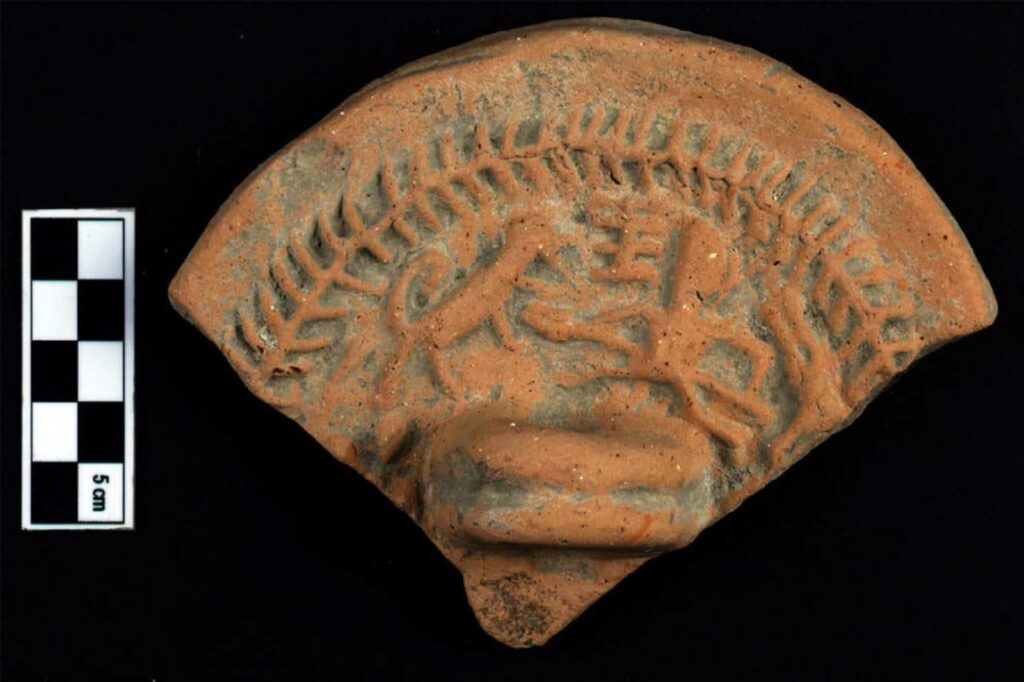
Supporting this theory are several lines of evidence: the discovery of animal bones within the arena, iconographic representations consistent with animal combat scenes, and the presence of infrastructure needed to manage such events. While direct written records from Perge are limited, the archaeological data strongly suggest that such spectacles were part of the city’s late antique life.
The “Gates of Death”: A Unique Discovery
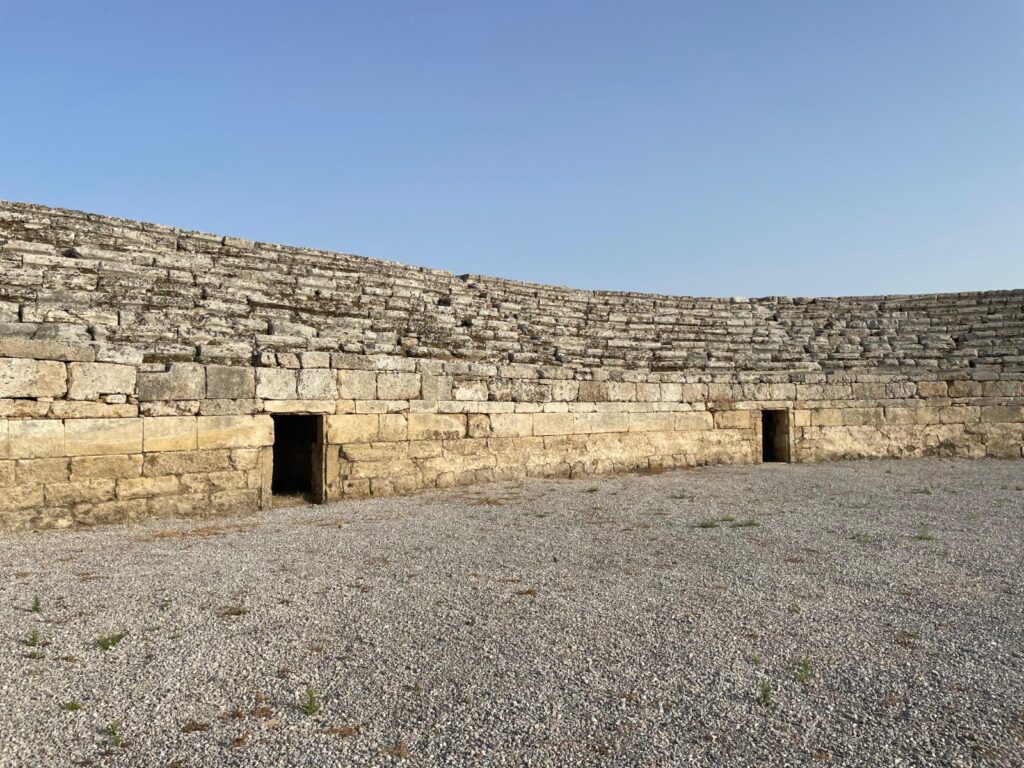
Perhaps the most striking feature uncovered during the excavations is a system of five adjacent entrances, now referred to by researchers as the “Gates of Death.” These gates appear to have been specifically designed to release animals into the arena in a controlled and sequential manner.
This configuration is particularly noteworthy because it has not been previously documented in Perge or widely paralleled in other Roman sites. The gates would have allowed organizers to choreograph events with precision—heightening drama, suspense, and danger for both participants and spectators.
The discovery of this system not only enhances our understanding of Roman entertainment engineering but also underscores the calculated nature of these brutal spectacles.
Gladiators, Pontarii, and Performance Culture
In addition to executions, the arena likely hosted various forms of gladiatorial combat. Among the possibilities discussed by researchers is the presence of pontarii performances—a lesser-known type of gladiator fight involving staged bridge-like structures (pons). These specialized combats required unique spatial arrangements, which may correspond to some of the architectural modifications observed in the stadium.
Such performances highlight the diversity and complexity of Roman entertainment culture, where violence was ritualized and embedded within a broader social and political framework.
Renewal Amid Darkness: The Kestros Fountain
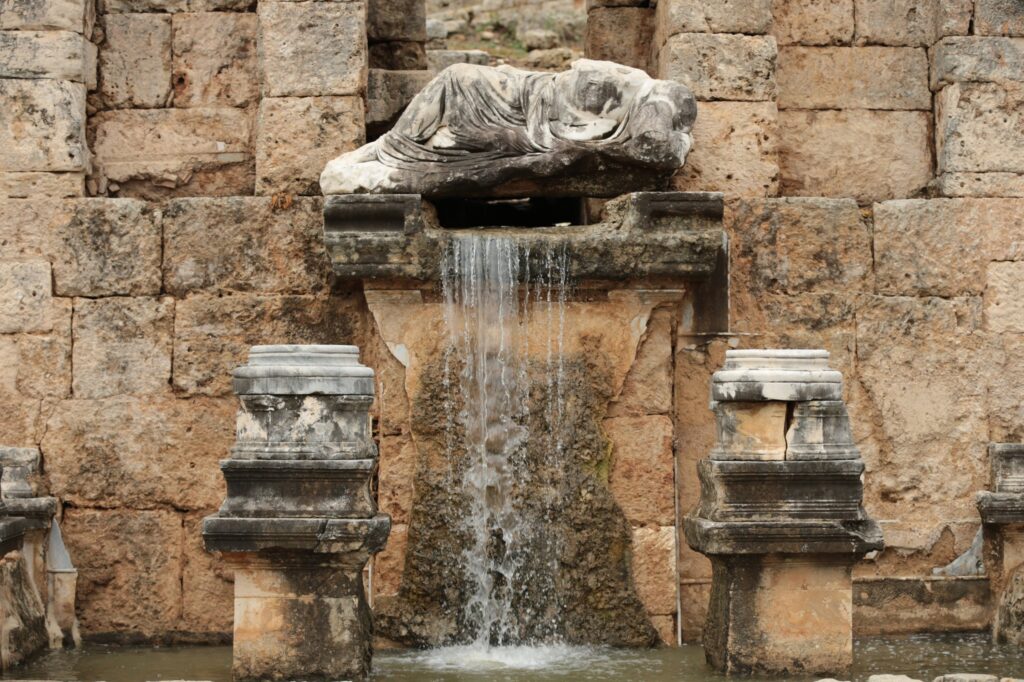
While the stadium’s transformation reveals a darker chapter of Perge’s history, recent efforts have also brought signs of renewal. The Kestros Fountain, dating to the reign of Hadrian in the 2nd century CE, has been successfully restored. Water now flows through the fountain for the first time in approximately 1,800 years, reconnecting the site with its ancient hydraulic systems.
This restoration enhances the visitor experience but also symbolizes the ongoing dialogue between past and present at archaeological sites like Perge.
Perge in Historical Context
Perge’s origins trace back to the Bronze Age, and the city continued to flourish through the Hellenistic, Roman, and Byzantine periods. As the capital of Pamphylia, it played a key role in regional trade, politics, and culture. Its strategic location near the Mediterranean coast and fertile plains contributed to its prosperity.
The city is also associated with early Christian history; according to tradition, the apostle Paul passed through Perge during his missionary journeys. Over centuries, layers of history accumulated, each leaving its mark on the urban landscape.
A Window into Roman Society
The conversion of Perge’s stadium into an execution arena offers a compelling glimpse into the complexities of Roman society. It illustrates how public architecture could be repurposed to reflect changing values, from civic competition to imperial spectacle and control.
More broadly, the findings challenge modern perceptions of ancient cities as static monuments. Instead, they reveal dynamic environments shaped by shifting political, cultural, and social forces.
As excavations continue, Perge is likely to yield further discoveries that deepen our understanding of life—and death—in the ancient world. For now, the “Gates of Death” stand as a powerful testament to the dual nature of Roman civilization: capable of both architectural brilliance and orchestrated brutality.
Dönmez, A. (2026). Doors to death: The final report of the stadium-amphitheatre excavations at Perge. Oxford Journal of Archaeology, 45(1), 93–114.
