
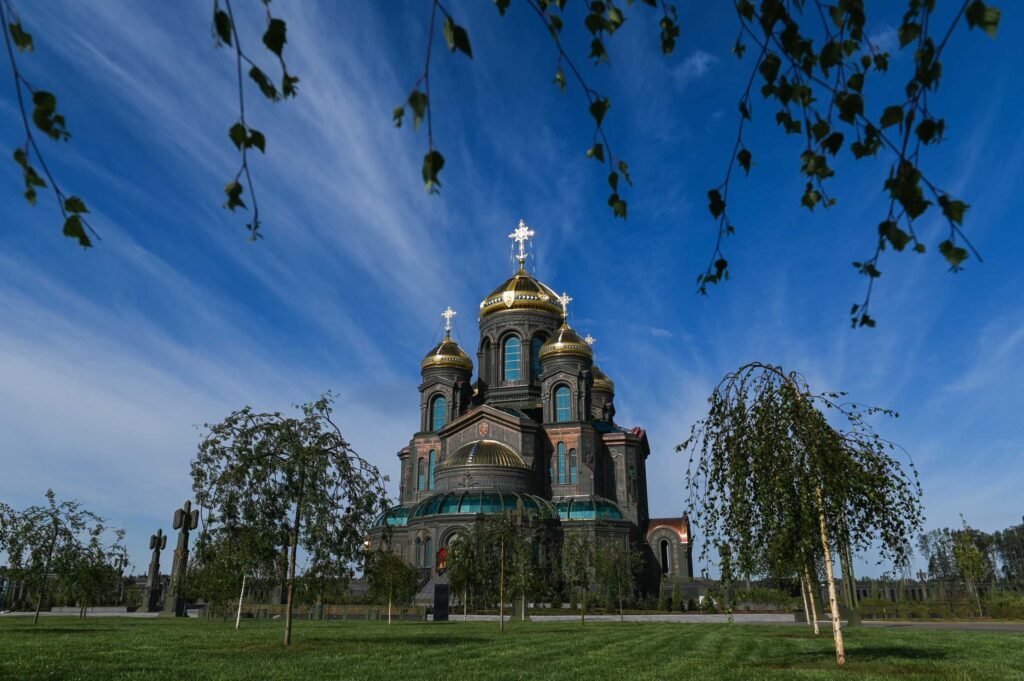
Beneath the feet of visitors entering a monumental cathedral near Moscow lies an unusual piece of World War II history: metal recovered from Nazi Germany’s defeated military. The Main Cathedral of the Russian Armed Forces incorporates melted-down German tank tracks into its entrance steps, turning captured weapons into a permanent part of a religious building.
The extraordinary detail is not a legend. It was confirmed by Russia’s then-defence minister, Sergei Shoigu, during the cathedral’s construction.
Walking on the Weapons of a Defeated Army
Located in Patriot Park in Kubinka, outside Moscow, the cathedral was built to commemorate the 75th anniversary of the Soviet victory over Nazi Germany.
In March 2020, Shoigu explained that tracks from German tanks had been incorporated into an alloy used to manufacture the cathedral’s steps. The symbolism was deliberate: visitors would enter the building by walking over the weapons of an army defeated in 1945.
The project involved more than tank components. Russian officials had announced plans to use captured Wehrmacht weapons, including military equipment preserved in Defence Ministry stockpiles. The resulting metal was incorporated into the entrance steps, while captured German armaments were also used in metal flooring inside the cathedral.
The idea of incorporating captured enemy weapons into religious architecture was not entirely new. In St. Petersburg, the Transfiguration Cathedral is surrounded by a fence made from 102 Ottoman cannon barrels captured during the Russo-Turkish War of 1828–1829. At Kubinka, the same symbolism took a different form: the weapons were melted down and became part of the building itself.
The use of wartime remnants in religious architecture has a parallel in Britain. After German bombs destroyed Coventry Cathedral in 1940, three nails recovered from its ruined roof were fashioned into a cross, becoming a symbol of reconciliation. At Kubinka, however, the message was different: weapons taken from a defeated enemy became part of a monument to military victory.
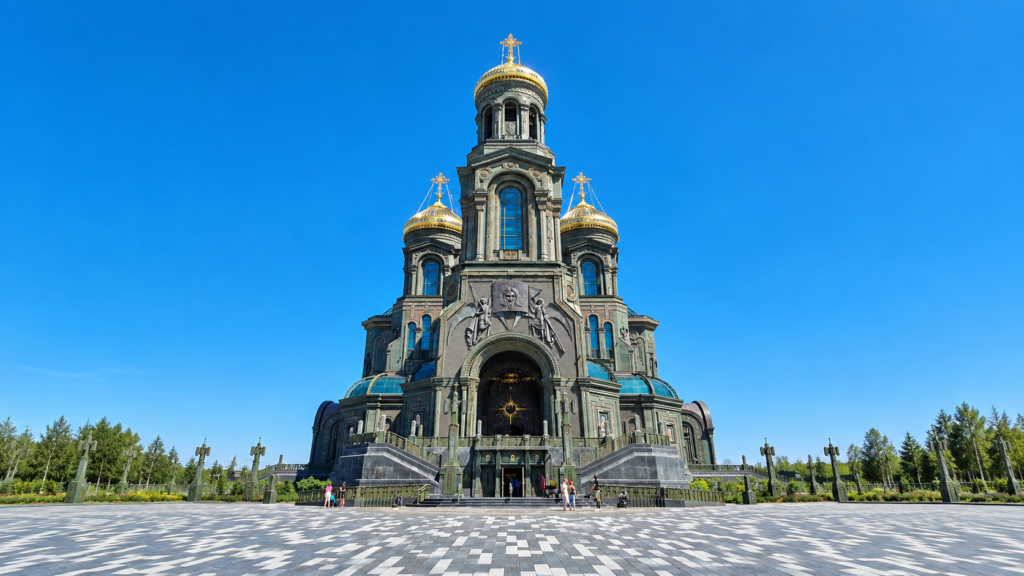
A Cathedral Designed Around the Year 1945
Its dark green exterior, monumental domes and elaborate mosaics reflect the cathedral’s dual identity as an Orthodox place of worship and a memorial to Russian military history. Even its dimensions contain references to the war.
The central dome’s drum measures 19.45 metres in diameter, representing the year 1945. The bell tower stands 75 metres high, marking the victory’s 75th anniversary, while a smaller dome reaches 14.18 metres, commemorating the 1,418 days of the Soviet-German
Dedicated to the Resurrection of Christ, the cathedral was consecrated by Patriarch Kirill on June 14, 2020. It forms part of a wider memorial complex that includes exhibitions documenting the Soviet war effort.
The German tank tracks embedded in its steps give that commemoration a physical dimension. More than eight decades after the war, material once used to propel Nazi armoured vehicles remains beneath the feet of people entering Russia’s principal military cathedral.
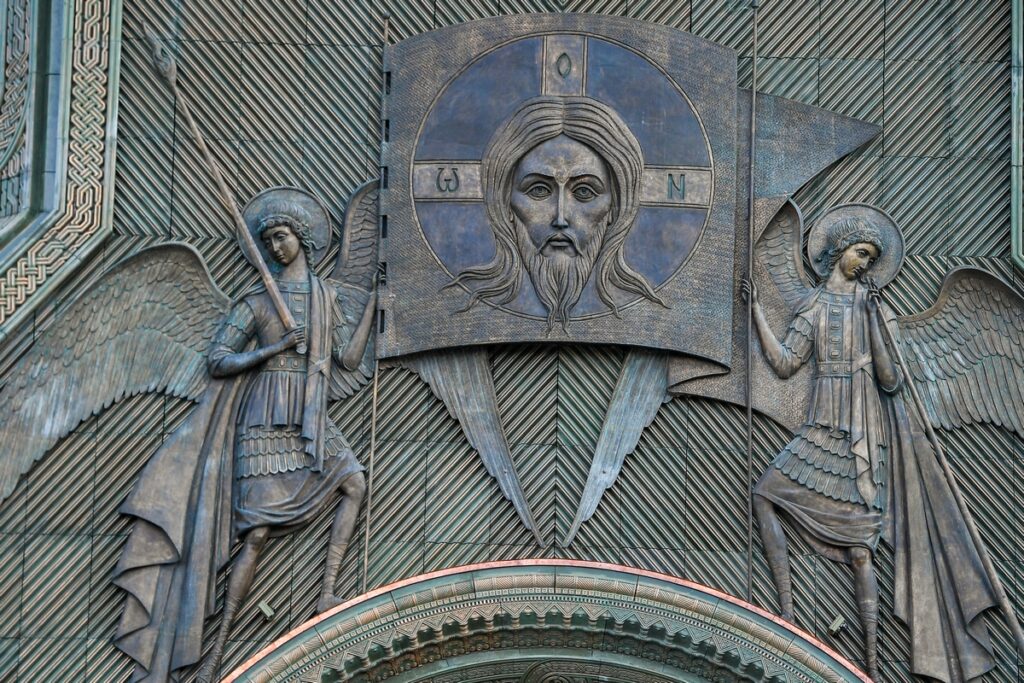
Russian Orthodox Church – Consecration of the Main Cathedral of the Russian Armed Forces (June 14, 2020)
