
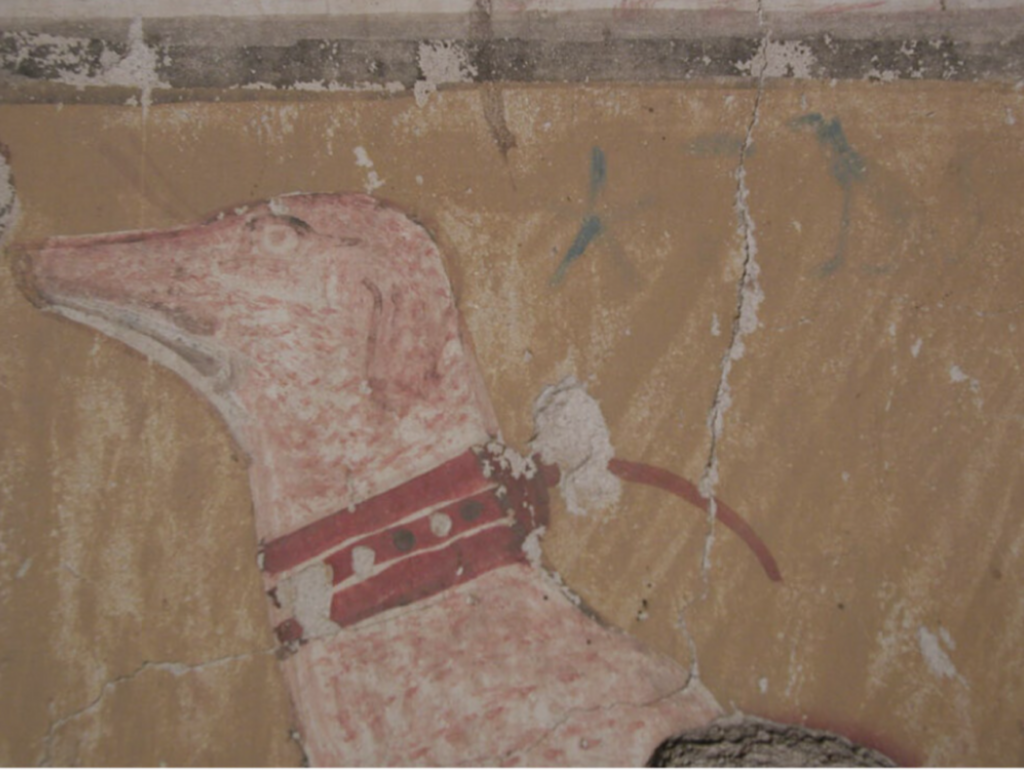
More than 3,500 years ago, an Egyptian official named User had one of his dogs painted beneath his chair inside his tomb at Thebes. The animal already stood out: it had an unusual rippled coat pattern, a name unlike any other known from ancient Egypt, and a rare hieroglyphic sign that mirrored the dog’s seated pose.
That name, only faintly visible on the tomb wall, has now been read as dwA.ty, meaning roughly “He-of-the-Underworld.” Egyptologist Chelsea Kaufman argues that the name likely alludes to Anubis, the canine-associated god closely linked with cemeteries, embalming and the protection of the dead.
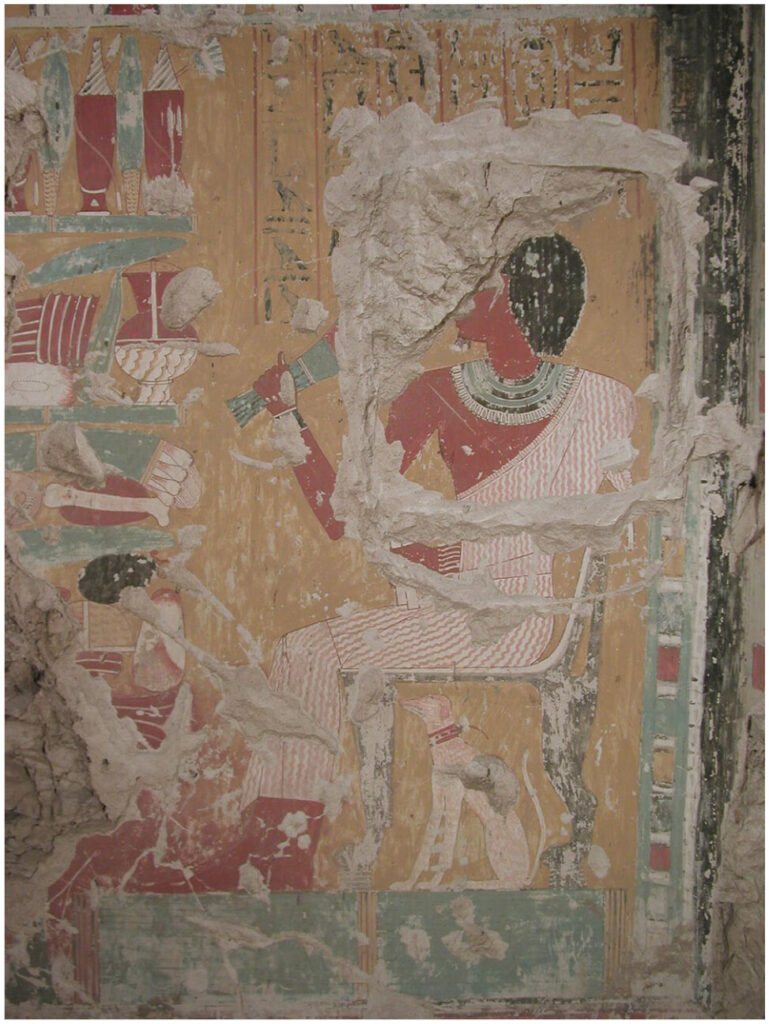
The dog is one of three named animals shown in the 18th Dynasty tomb of User, a scribe and steward associated with the reign of Thutmose I. Kaufman’s study adds this previously undocumented name as the 97th known dog name from ancient Egypt, while the animal’s unusual appearance and rare hieroglyphic treatment make it stand out even within that small corpus.
The find also offers a more personal glimpse into ancient Egyptian attitudes toward dogs. Their names, images, and placement in private tombs suggest that some owners wanted individual animals to remain part of their identity and memory beyond death.
A name hidden in a faded tomb scene
User served as a scribe and steward during the early 18th Dynasty. His tomb is generally associated with the reign of Thutmose I, around the beginning of the 15th century BCE, although some scholars have argued that its decoration may have continued into the reign of Hatshepsut.
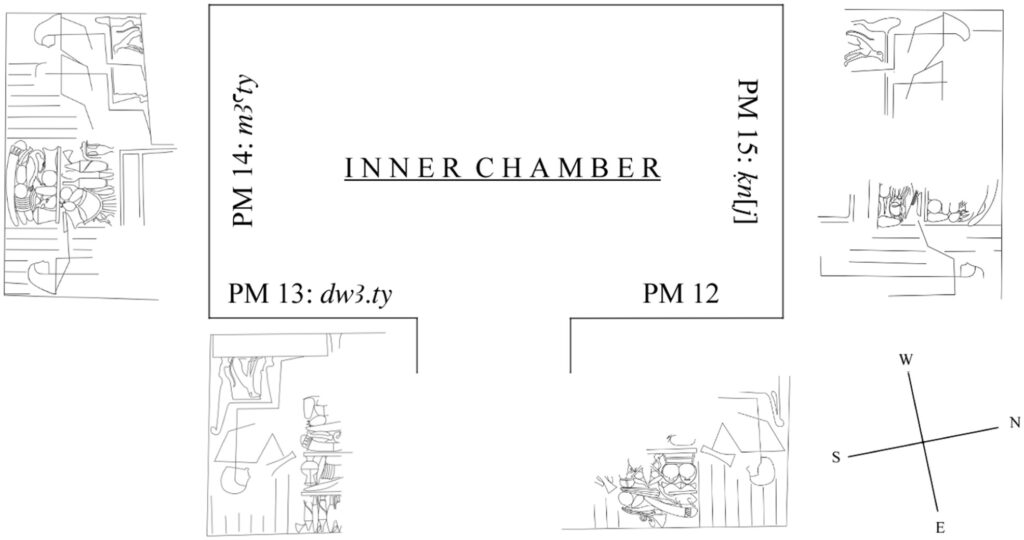
Inside the tomb’s inner chamber, three surviving offering scenes show collared dogs sitting upright beneath their owner. The animals belong to the slim, athletic type traditionally described as sloughi-like, with drooping ears and a curved tail. Earlier documentation recorded the names of two of them: qn[j]j, translated as “Strong one,” and mAaty, meaning “Trusty.”
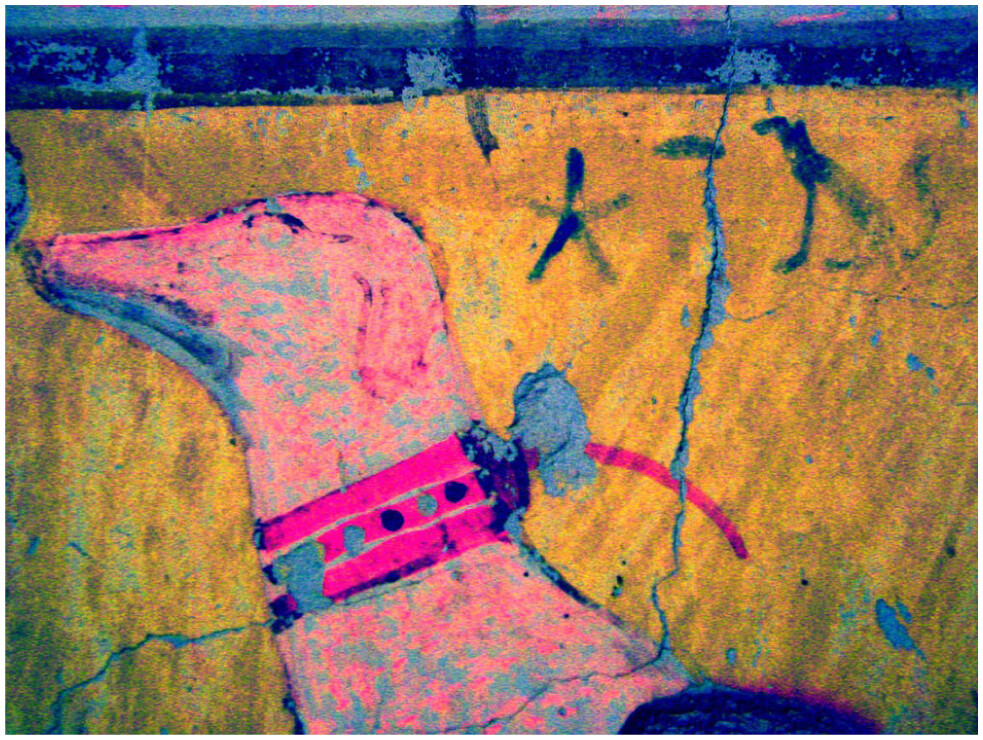
The third dog had apparently remained anonymous because the inscription above and behind its head had faded almost into the painted background. Kaufman re-examined the scene using the DStretch plug-in in ImageJ, which enhances differences in surviving pigment. Once processed, the hieroglyphs became much clearer.
The name was read as dwA.ty, meaning roughly “He-of-the-Underworld.”
Kaufman interprets the name as a derived adjective referring to origin: “He-of-the-Underworld.” The term is also known as an epithet of Anubis. She notes that another reading, sbA.ty, meaning “pupil,” is theoretically possible because one sign can carry both phonetic values, but she considers that interpretation less convincing in this funerary setting.
That caution matters. The inscription does not prove that User named his dog directly after Anubis. What it does provide is a name whose strongest linguistic and contextual interpretation points toward the realm of the dead and a deity whose imagery was intimately connected with canines.
Dogs were more than background figures in Egyptian life
Nearly 100 dog names are currently known from ancient Egypt, ranging from the Old Kingdom to the Ptolemaic Period. Many refer to physical characteristics or personality traits, while a smaller number carry religious associations. Some names also occur among humans, which suggests that Egyptians did not treat canine naming as an entirely separate category.
The archaeological context is equally revealing. More than half of the recorded dog names come from private tombs, places designed not simply to contain a body but to preserve a person’s identity, relationships and social world. Among the many animals represented in Egyptian art, dogs stand out because they were named with unusual frequency. Horses occasionally received names, and a few disputed examples exist for other animals, but dogs dominate the surviving evidence.
That pattern helps explain why the TT 21 scene carries more weight than a simple portrait of a pet. Egyptian tomb imagery had an active funerary function. A representation could help sustain the existence of the person or being depicted, while writing down a name preserved identity in a form that could continue to be spoken and remembered.
Kaufman argues that placing both a dog’s image and its name inside a tomb therefore suggests an investment in the animal’s continued existence in the afterlife. In that sense, User did not merely decorate his burial place with familiar animals. He may have been ensuring that his dogs remained part of the world he hoped to inhabit after death.
A dog deliberately made different
The newly identified dog also looks unusual.
It appears beneath User’s lion-footed chair with a white coat marked by red, rippling bands. Kaufman describes the pattern as simultaneously resembling brindling and echoing the rippled fabric worn by User himself. She notes that, to her knowledge, no comparable coat pattern appears among other known representations of dogs in Egyptian art.
Even the hieroglyph used to classify the dog’s name breaks with convention. Egyptian dog names that include a determinative usually employ a standing dog sign. In TT 21, however, the final sign depicts a seated dog whose posture closely mirrors the animal painted below it.
Only one other seated-dog determinative is currently known among Egyptian dog names, on a Middle Kingdom dog coffin. The artist who decorated User’s tomb therefore seems to have taken unusual care to connect the written name with the appearance of the individual animal.
Kaufman stops short of assigning a precise meaning to that choice, but the combination is striking: an unprecedented dog name, an unusual coat pattern and a rare hieroglyphic treatment all appear on the same animal.
For a dog whose name may have evoked the underworld, the tomb itself provided an unusually appropriate place to preserve it. More than three millennia later, a handful of faded signs has restored something remarkably intimate: not simply the image of an ancient Egyptian dog, but the name by which people once knew him.
Kaufman, C. (2026). An 18th Dynasty dog’s name from Thebes. The Journal of Egyptian Archaeology. Advance online publication. https://doi.org/10.1177/03075133261487455
