For over seventy years, one of the last undeciphered writing systems of the Dead Sea Scrolls—known as Cryptic B—has puzzled scholars and fueled speculation about whether it preserved forbidden doctrines or encoded secrets of an ancient sect. The breakthrough finally arrived with the work of Emmanuel Oliveiro of the University of Groningen, whose 2025 study in Dead Sea Discoveries reveals that the mysterious script hides not heretical knowledge but conventional biblical idioms, prophetic expressions, and familiar religious vocabulary. Rather than overturning previous understandings of the Qumran community, the decipherment confirms that their cryptic writings were rooted firmly in mainstream religious language. Yet the mystery surrounding Cryptic B endured for decades because of the formidable challenges posed by the manuscripts themselves.
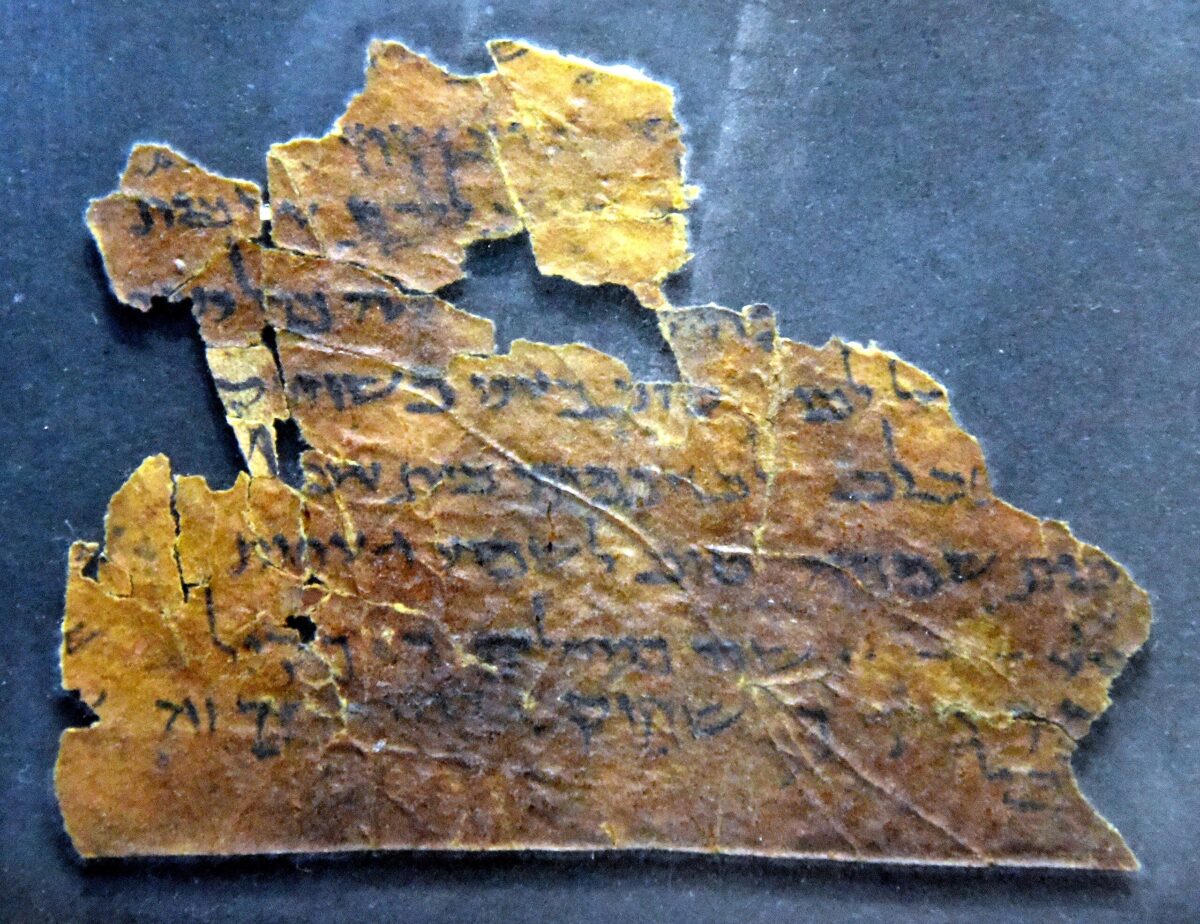
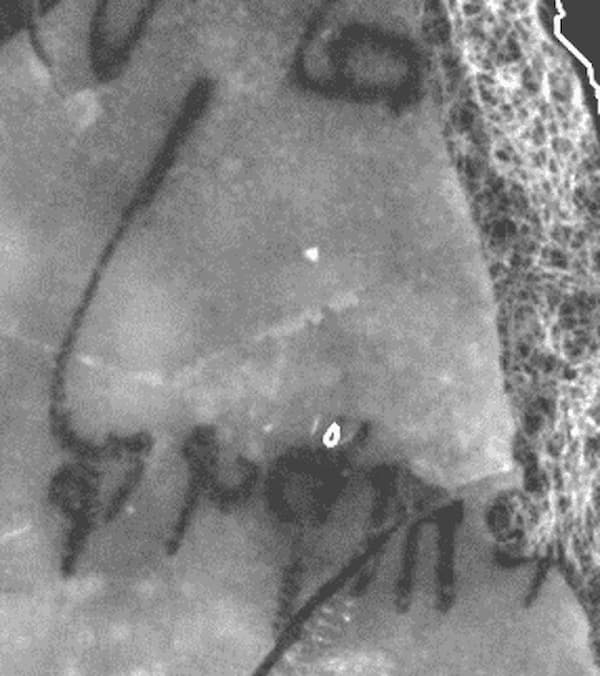
The two manuscripts written entirely in Cryptic B, 4Q362 and 4Q363, survive only in tiny, damaged fragments. Some pieces measure mere millimeters, and many show cracks, fading, and uneven ink flow that complicate paleographic analysis. Even under infrared imaging, the script appears inconsistent, with letter forms shifting from fragment to fragment and occasionally within the same line. In 4Q362, the letters are unexpectedly small—around two to three millimeters—while those in 4Q363 are roughly three times larger and executed with a heavier instrument. Several characters resemble Paleo-Hebrew or Greek shapes, while others mirror standard Jewish script with subtle alterations. This blending of visual cues created endless false leads, contributing to the long-held belief that Cryptic B might be undecipherable.
Solving the Code: Analysis Meets Intuition
Oliveiro approached the problem by building on the decipherment strategy used for Cryptic A in the 1950s. He hypothesized that Cryptic B also relied on monoalphabetic substitution, where every Hebrew letter corresponds to a single cryptic sign. Such a system technically has an astronomical number of possible combinations, too many even for sophisticated modern algorithms. To narrow the field, Oliveiro searched for repeating symbol patterns and cross-referenced them with the frequency of common words in both the Hebrew Bible and the greater Qumran corpus. He also examined the physical shapes of the letters, looking for hints that the scribe may have modified or embellished familiar characters rather than inventing entirely new ones. This combination of statistical reasoning, paleographic comparison, and gut instinct proved essential.
The decisive moment came when Oliveiro suspected that a five-character sequence in 4Q362 represented the Hebrew word “Israel.” The structure of the letters and the frequency of the pattern largely matched expectations, and when he tested the hypothesis across the fragments, the system began to unlock. With “Israel” serving as a key, he could identify additional letters, refining the substitution system until nearly the entire alphabet was readable. Only a few very rare characters remain uncertain, but the overall decipherment is strong enough to reconstruct the surviving text with confidence.
What the Texts Actually Say
Despite the drama surrounding its decipherment, the content of Cryptic B is surprisingly conventional. The newly deciphered passages contain language characteristic of prophetic and historical writings: references to Israel, Judah, Jacob’s tents, divine glory, and chronological markers such as “the second year, the fifth month.” The vocabulary aligns neatly with what scholars already know about Qumran’s scriptural worldview.
📣 Our WhatsApp channel is now LIVE! Stay up-to-date with the latest news and updates, just click here to follow us on WhatsApp and never miss a thing!!
One of the more intriguing elements, however, is the presence of repeated references to graves or tomb markers. In one fragment, the text states that someone “built cairns” near a tomb, using the Hebrew term that can refer either to signposts or to funerary markers. This dual meaning leaves the passage open to interpretation, and scholars cannot yet determine whether the context is literal, symbolic, or ritual. The fragments of 4Q363 offer even less clarity due to their extreme fragmentariness. A repeated phrase—possibly meaning “they rejected her villages” or “they rejected her daughters”—suggests a formulaic or narrative structure, but too little survives to reconstruct the meaning. The name Benayahu appears as well, common enough in ancient Hebrew that it gives no clue to the identity of the figure.
Why the Mystery Persisted for 70 Years
The longevity of the mystery surrounding Cryptic B lies not in the complexity of the content but in the material obstacles to decipherment. The irregular handwriting, inconsistent letter proportions, variations between the two hands, and heavy damage across both manuscripts created a fragmentary puzzle that defied earlier scholars. Even more challenging was the limited corpus: with only two manuscripts preserving the full script, there simply was not enough text to apply large-scale statistical methods that might resolve ambiguities. The Qumran scribes themselves added another layer of difficulty by modifying letter forms in unpredictable ways, blending familiar shapes with decorative strokes or mirrored angles. This allowed the script to appear deceptively familiar while still hiding the intended Hebrew beneath layers of visual distortion.
The decipherment of Cryptic B ultimately underscores a paradox common to ancient codes: sometimes the greatest mystery lies not in the message but in the deliberate act of encoding it. Why the Qumran community chose to encrypt otherwise ordinary religious language remains an open question. Some scholars argue that secrecy itself conveyed status, marking certain writings as reserved for an inner circle or priestly elite. Others suggest that cryptic scripts may have served as exercises in scribal training or as a symbolic gesture distinguishing sacred text from mundane writing. Whatever the reason, the breakthrough offers scholars a new doorway into the intellectual world of the community that produced the Dead Sea Scrolls—one where hiddenness, identity, and tradition were bound together in ways still awaiting full exploration.
Oliveiro, E. (2025). Cracking Another Code of the Dead Sea Scrolls: Deciphering Cryptic B (4Q362 and 4Q363) through Analysis and Intuition. Dead Sea Discoveries. doi.org/10.1163/15685179-bja10074
Cover ımage Credit: Dead Sea Scrolls 109, Qohelet or Ecclesiastes, from Qumran Cave 4, the Jordan Museum in Amman. Wikipedia