6 December 2025 The Future is the Product of the Past

An Urartian female executive grave was found at the Çavuştepe Mound

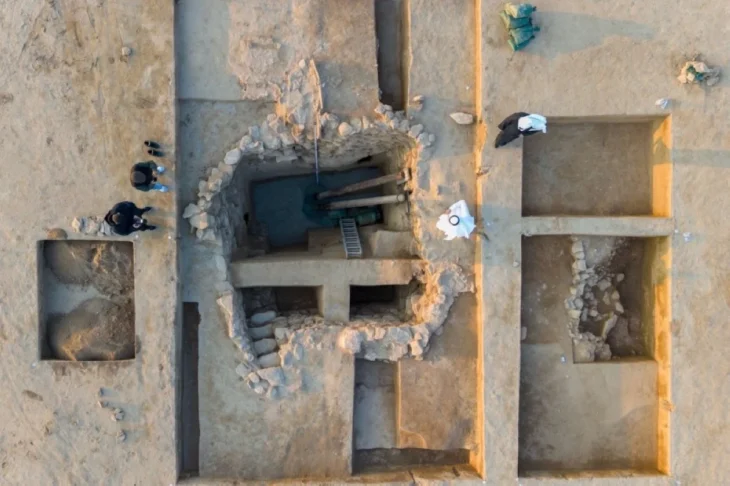
The grave of an Urartian, who was buried with his horse, cattle, and dog, had been found recently. Today, another interesting tomb was unearthed in the Çavuştepe Mound necropolis at the same place.

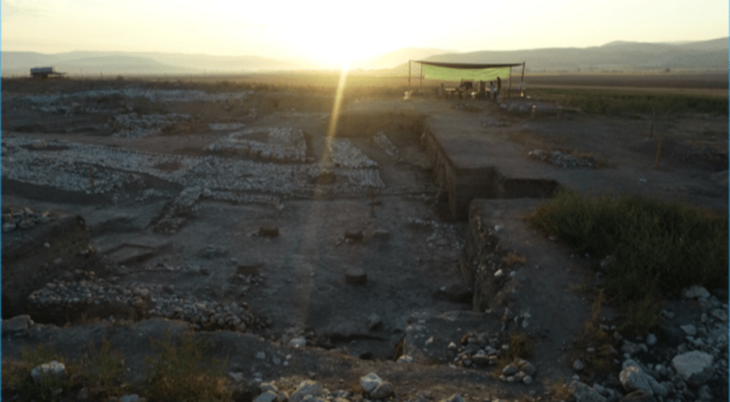
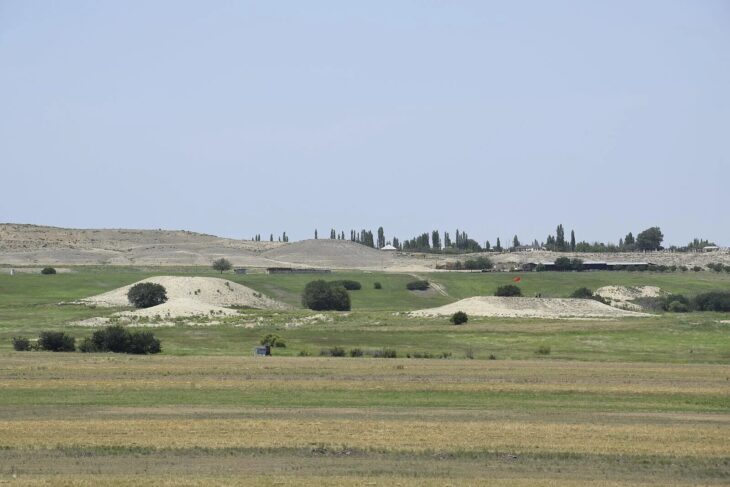
Excavations are being carried out in the area of Çavuştepe castle and the necropolis to its north, under the direction of Professor Rafet Çavuşoğlu, head of the Archeology Department of Van Yüzüncü Yıl University (YYÜ).

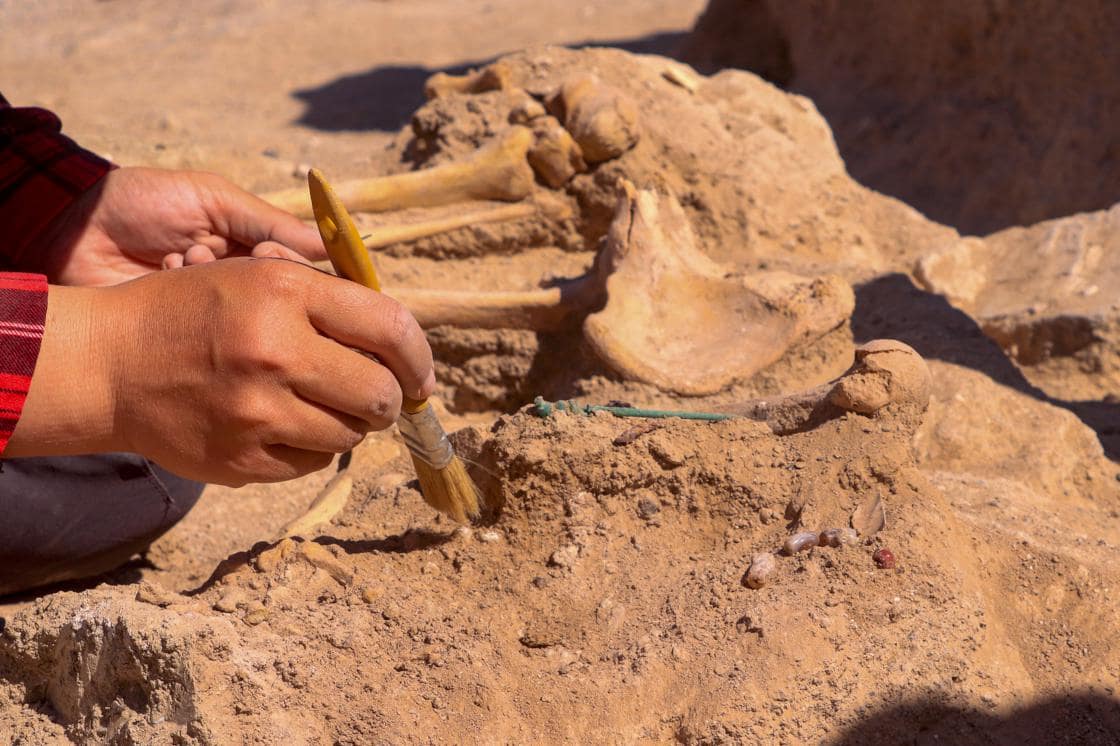
When the team led by Professor Rafet Çavuşoğlu removed the tomb of the manager, who was buried with his horse, cattle, and dog, they reached the tomb of an Urartian woman underneath.
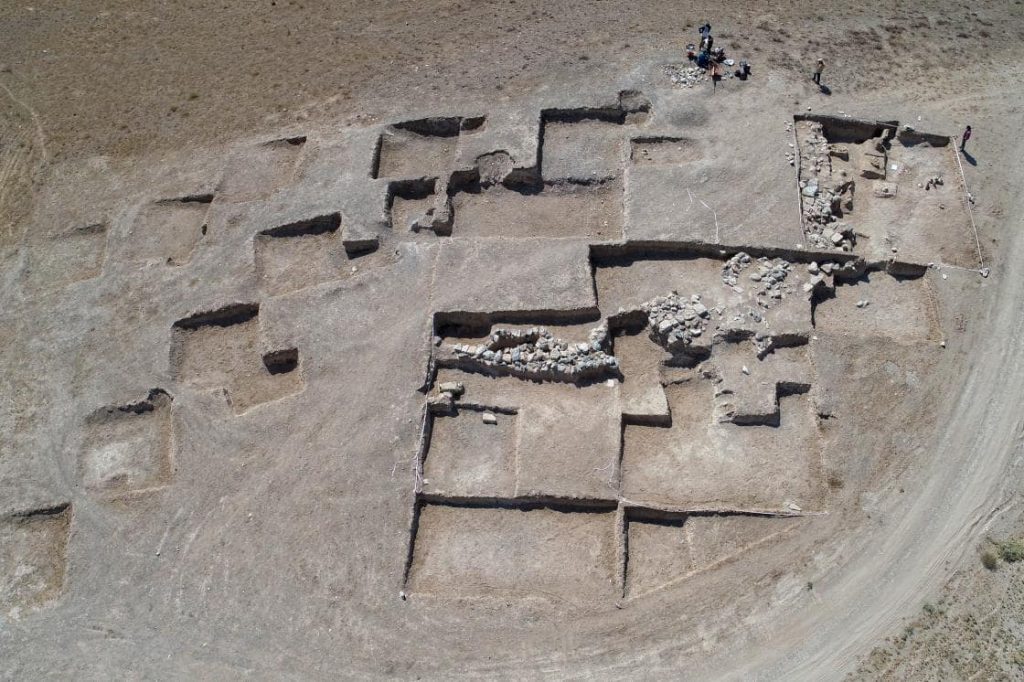
Çavuştepe castle
Çavuştepe Mound

The woman had no head

It was seen that the woman, who was buried with her jewelry, did not have a head. Noting that this situation is the result of his religious belief or a ritual, the excavation head Rafet Çavuşoğlu told Anadolu Agency (AA).

“We guess that the head of the woman who owns the tomb may have been placed in a more sacred place. We also found two official seals on the skeleton.”


📣 Our WhatsApp channel is now LIVE! Stay up-to-date with the latest news and updates, just click here to follow us on WhatsApp and never miss a thing!!
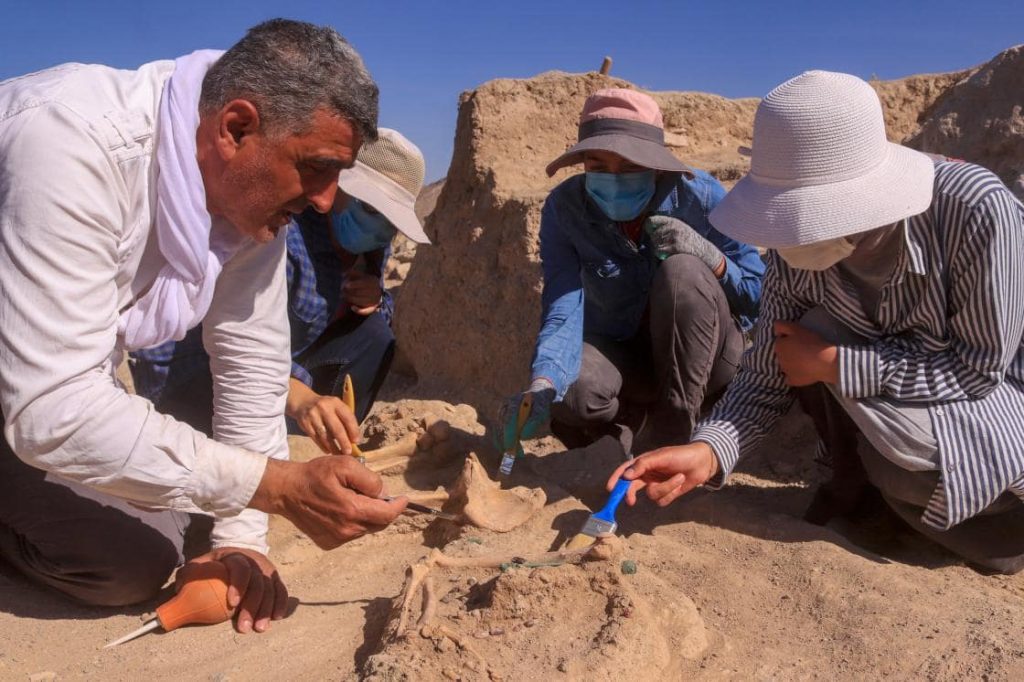


When the team led by Professor Rafet Çavuşoğlu removed the tomb of the manager, who was buried with his horse, cattle, and dog, they reached the tomb of an Urartian woman underneath.

“There were two seals in the jewelry that are very important to us. One of these seals is made of bronze and the other is made of alabaster. In ancient times, rulers and merchants could carry seals. It is very important that there are two seals on the woman here. The tree of life and various figures are engraved on one of them. The other one is arranged in the form of a lion and there is a stamp at the bottom.”
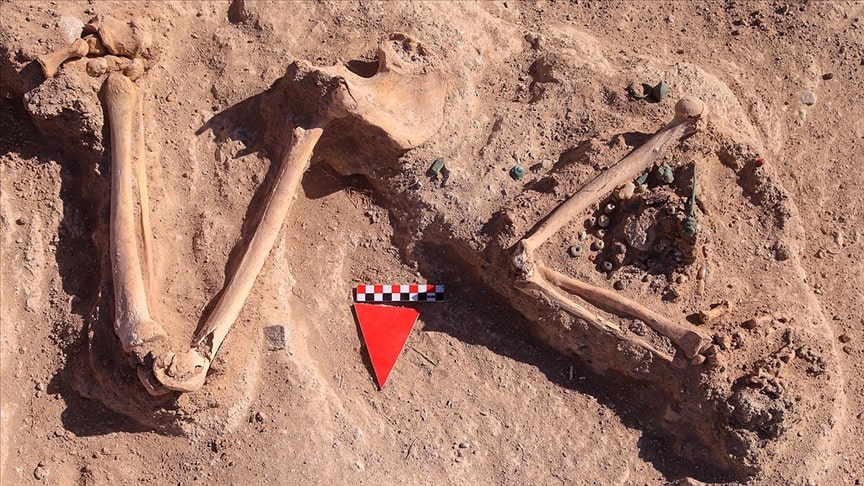
Urartian female manager
The tomb of the Urartian female executive attracts attention with its rich tomb gifts. Among the grave gifts are two seals.

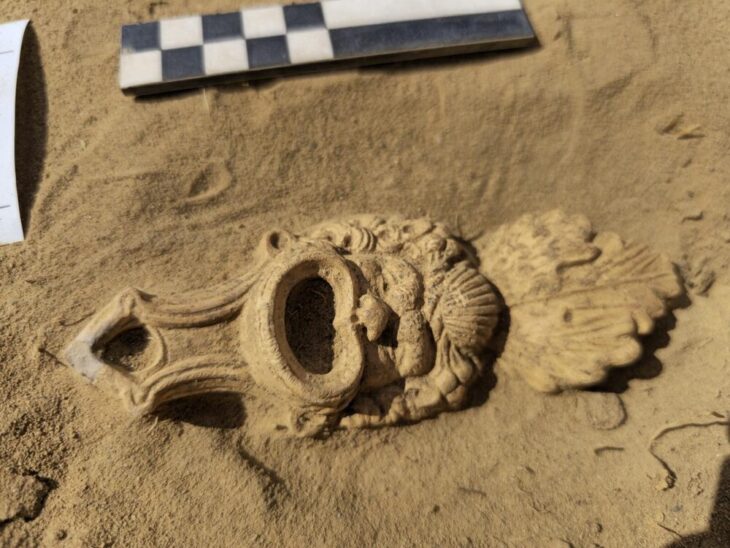
“We determined that the skeleton belonged to a woman between the ages of 40-50. The necklace has the classical features of the Urartians. In addition, we are faced with magnificent jewelry made of metal, bronze, and silver beads, agate, coralline, pyrite stones, seashell, and glass. The ornamental pins with three animal ornamental heads are quite well preserved. There is a pendulum earring that is beautifully crafted bronze. Very valuable jewelry for that period. It was found not in order but stacked on top of each other. Jewelry with seashells can only be found in the Mediterranean. It must have arrived by trade or by special order. This shows that this person is a very important person. Çavuştepe necropolis has always surprised and continues to surprise us,” he said.

Related Articles

Artifacts used for ancient magic rituals discovered on Darb al-Hajj route from Cairo to Mecca

11 September 2023

11 September 2023

The artifacts, found in the 1990s on the ancient Darb al-Hajj route from Cairo to Mecca, may have been in...

A 2,000-year-old Roman grave belonging to soldier Flaccus unearthed in Netherlands

9 December 2024

9 December 2024

Archaeologists have uncovered a 2,000-year-old grave from the Roman settlement in Heerlen, Netherlands. The latest analysis has shown that it...

Fragments of ‘unique’ 17th-century iconostasis discovered in Polish church

28 October 2023

28 October 2023

Researchers from the Institute of Art at the Polish Academy of Sciences (IS PAN) have discovered substantial fragments of a...

Assyrian seal found in the ancient Kef Fortress built by the Urartians

18 November 2024

18 November 2024

An alabaster seal, believed to be from the Assyrian Empire and belonging to a nobleman, was discovered in the ancient...

Metal Detectorist Finds on 4,000-year-old Dagger in Poland Forests

24 February 2024

24 February 2024

A copper dagger more than 4,000 years old was found in a forest near the town of Jarosław on the...

Archaeologists Unearth a Roman Woodworking Workshop with Inked Tablets and Children’s Shoes in Isarnodurum

6 October 2025

6 October 2025

Inrap archaeologists have uncovered a Roman woodworking workshop in Izernore, France, featuring inked writing tablets, children’s wooden shoes, and artifacts...

A rural necropolis from Late Antiquity discovered in northeastern France

5 November 2022

5 November 2022

Inrap archaeologists have unearthed a small rural necropolis from the late 5th century (Late Antiquity) at Sainte-Marie-aux-Chênes in northeastern France....

“Non-returning” Aboriginal boomerangs were discovered in Cooper Creek dried-up riverbed

22 November 2021

22 November 2021

The drying waters of the Cooper Creek river have revealed extremely rare 4 boomerangs that have been partially buried. The...

Neanderthals of the North

13 May 2022

13 May 2022

Were Neanderthals really as well adapted to life in the cold as previously assumed, or did they prefer more temperate...

Native American artifacts from 1100 AD found in North America’s First City

20 June 2024

20 June 2024

Cahokia is the largest and most significant urban settlement of the Mississippian culture, known for creating massive earthen platform mounds...

This summer, a 2,000-year-old “thermopolium” fast-food restaurant in Pompeii will reopen to the public

8 August 2021

8 August 2021

Archaeologists excavated a 2000-year-old fast food and drink counter “termopolium” on the streets of the ancient Roman city of Pompeii...

During roadwork in Oregon, a woolly mammoth tusk was discovered

21 June 2021

21 June 2021

A 12,000-year-old woolly mammoth tusk was discovered beneath the street by crews rerouting a gas line in Corvallis, Oregon. “Whenever...

New Study Disproves Roman Massacre at Maiden Castle, Revealing Complex Iron Age Conflicts

30 May 2025

30 May 2025

Bournemouth University Archaeologists Challenge 90-Year-Old Roman Conquest Narrative at Maiden Castle with Fresh Forensic and Radiocarbon Analysis A landmark study...

Ancient Well Dating Back to 7th Century AD Discovered on Failaka Island

18 March 2025

18 March 2025

An ancient well, dating back to the pre-Islamic and early Islamic periods, has been discovered on Failaka Island, providing valuable...

HS2 archaeologists discover Romanization of Iron Age village in Britain

12 January 2022

12 January 2022

Archaeologists have uncovered a vast Roman trading town on Britain’s HS2 high-speed rail route. Evidence found during a dig of...