
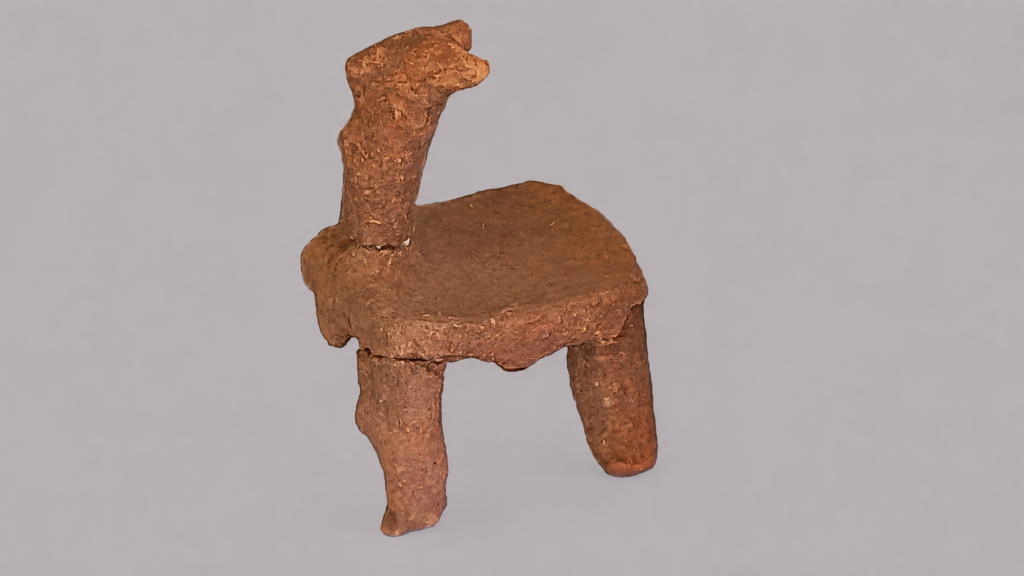
Archaeologists excavating an 8,000-year-old settlement near Lake Dojran in North Macedonia have uncovered two unusual ceramic objects that may have served as symbolic guardians of stored grain. One is decorated with geometric patterns, while the other resembles a small animal, possibly a goat.
The discoveries were made inside a Neolithic building containing clay installations associated with food storage and processing. Researchers believe the objects may have held symbolic meanings connected with fertility, abundance, and the protection of food supplies, offering a glimpse into the beliefs of the region’s earliest farming communities.
An 8,000-Year-Old Settlement Beside Lake Dojran
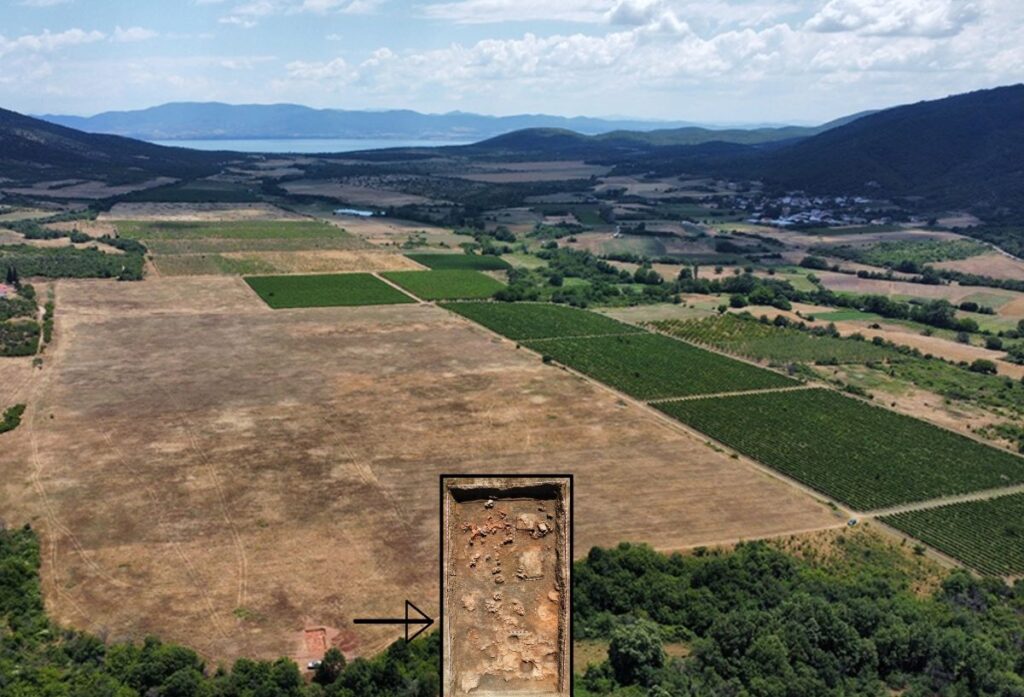
The discoveries come from Atici-Spomenik, a Neolithic settlement near the village of Crničani in southern North Macedonia. Situated in the Dojran basin, the site occupied a landscape along routes connecting the Aegean region with the Vardar and Struma valleys.
Archaeologists first identified Atici during surveys in 1974, followed by excavations in 1988 under Dragiša Zdravkovski. Those investigations revealed evidence of Neolithic occupation, including pottery and architectural remains, but explored only a small part of the settlement.
Research resumed decades later. In 2024, geomagnetic surveys identified buried structures on both sides of the Kavagdere stream, helping archaeologists determine where further excavations should take place.
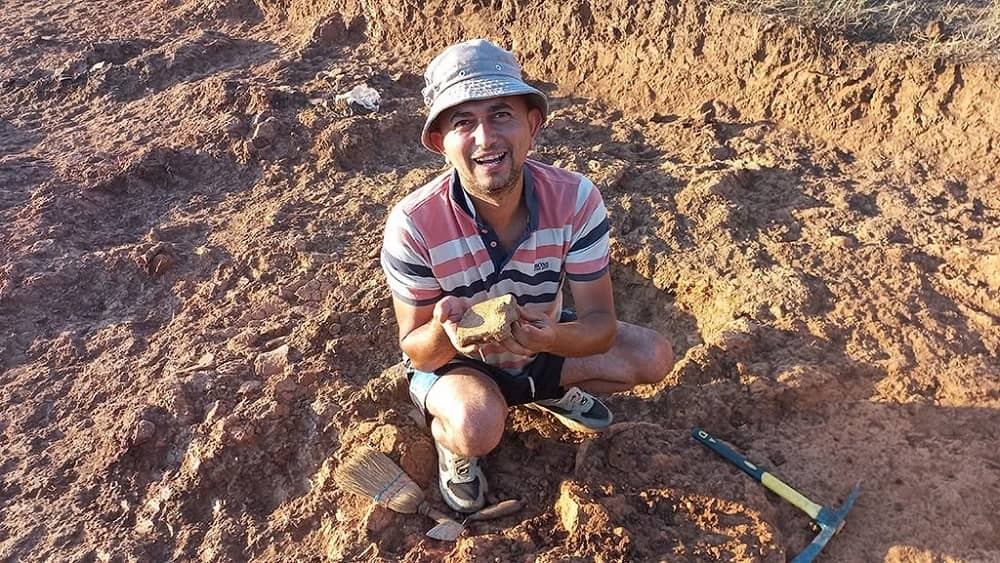
Speaking to the Macedonian news outlet UMNO, excavation director Elena Stojanova-Kanzurova explained that the research aimed to investigate the layout of a Neolithic house and its internal features.
The latest excavations revealed rectangular and circular clay installations within the building. According to information provided by the National Archaeological Museum in Skopje to the archaeology publication Sve o arheologiji, these structures were probably used for storing and processing food, particularly cereals.
Their arrangement has raised the possibility that the building served a broader communal purpose. Rather than functioning exclusively as a household, it may have been a shared facility for storing agricultural produce.
Why Grain Was So Important to Neolithic Communities
For the earliest farming communities, grain was more than a daily food source. The ability to preserve cereals after the harvest helped families survive periods when fresh food was scarce, while stored supplies also provided seed for future cultivation.
As agriculture became central to settled life, storing and processing food became essential household activities. Archaeological discoveries elsewhere in North Macedonia suggest that some of these practical spaces may also have carried symbolic meaning.
One particularly interesting comparison comes from Vrbjanska Čuka, a Neolithic settlement in the Pelagonia Valley near Prilep. Dating to the early sixth millennium BCE, the site has yielded houses, ovens, storage facilities, and evidence of grain processing.
Inside one building, archaeologists discovered an elaborate clay installation approximately four metres long. Originally interpreted as a sanctuary feature, it was subsequently reconsidered as a possible granary with compartments for storing and processing cereals.
Research published in Praehistorische Zeitschrift by Goce Naumov and colleagues examined similarities between the installation’s decoration and that of smaller ceramic altars. The researchers proposed that the structure may have combined practical agricultural activities with symbolic ideas associated with stored food.
The comparison provides a useful context for understanding Atici, where unusual ceramic objects were discovered in a building containing possible grain-storage installations. Although the two sites cannot be assumed to have shared identical practices, they illustrate how food production and symbolic expression may have intersected in Neolithic communities.
Strange Animal-Shaped Objects Found at Atici
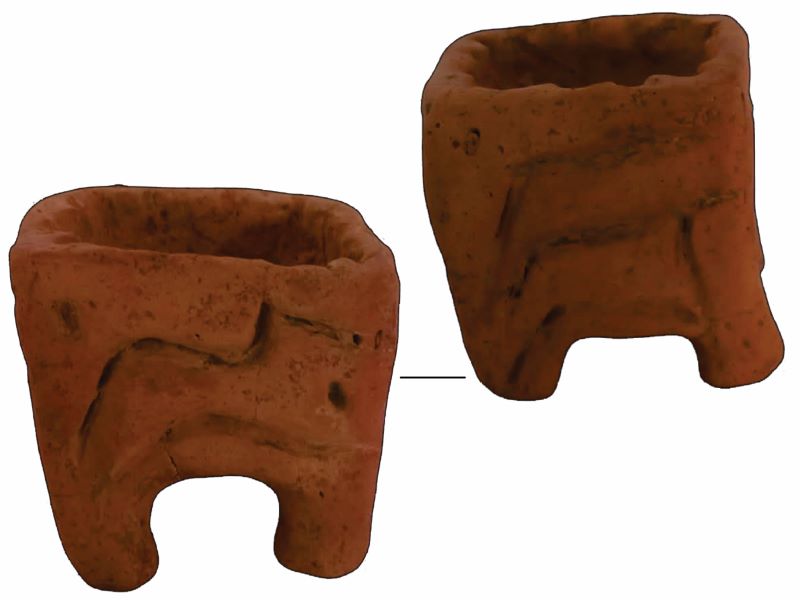
Two ceramic objects discovered within the building at Atici have attracted particular attention. One is decorated with snake-like, wavy, and triangular motifs, while the other has a distinctly animal-shaped form.
The second object features a projecting neck and a head that researchers believe may represent a goat. Its broad body rests on legs, giving it the appearance of a miniature ceramic table.
Similar objects are known from Neolithic settlements across the Balkans, where archaeologists often describe them as zoomorphic altars or cult tables. Their forms vary, but some feature animal heads, short legs, and small receptacles that may have been used for offerings.
This is not the first time an object of this kind has been documented at Atici. A 2019 academic study by archaeologist Pero Sinadinovski, citing Zdravkovski’s 2008 publication, records an earlier zoomorphic altar from the settlement.
The object was compared with a similar find from Stranata, another Neolithic site in southeastern North Macedonia. The Stranata example had an animal-shaped body, short legs, and an open receptacle on its back, while its surviving head was interpreted as possibly representing a ram or ibex.
The earlier Atici discovery provides an important archaeological parallel for the newly reported object. Together with the findings from Vrbjanska Čuka, it places the latest discoveries within a broader Neolithic tradition in which everyday activities and symbolic practices may have occupied the same spaces.
Were They Guardians of the Harvest?
The discovery of these unusual objects within a building associated with food storage has led researchers to consider whether they held symbolic meanings connected with fertility, abundance, and the protection of grain. The earlier altar from Atici and the findings at Vrbjanska Čuka provide valuable archaeological parallels, although they do not establish that the objects served identical purposes.
For the people who lived beside Lake Dojran nearly 8,000 years ago, a successful harvest meant food security for the months ahead. The ceramic objects may have been offerings, household ritual objects, or symbolic guardians of these precious supplies, although their exact purpose remains unknown.
Their discovery offers a glimpse into how early farming communities may have understood the relationship between agriculture, security, and the beliefs that shaped their everyday lives.
Naumov, G., Mitkoski, A., Talevski, H., Anvari, J., Przybyła, M., Stojanovski, D., Antolín, F., Sabanov, A., Živaljević, I., Dimitrijević, V., Gibaja, J. F., Mazzucco, N., Milevski, G., Dumurđanov, N., Pendić, J., Blažeska, Z., & Stefanović, S. (2021). The Early Neolithic tell of Vrbjanska Čuka in Pelagonia. Prähistorische Zeitschrift, 96(2), 345–381. https://doi.org/10.1515/pz-2021-0007
