
Archaeologists at Gradište in North Macedonia have uncovered new evidence of a rare Hellenistic ritual complex where offerings, libations, and ceremonial feasts may have taken place more than 2,300 years ago.
According to information shared with Arkeonews by project director Dejan Gjorgjievski, the newly exposed remains include a possible sacred enclosure wall, buildings containing votive and storage vessels, imported tableware, animal bones and exceptionally rare fragments of a richly decorated ceremonial couch.
The discoveries were made on the Lower Terrace of the ancient settlement near Mlado Nagoričane. Previous excavations in the same area had already revealed fourth-century BC rock-cut structures, tumulus-like stone constructions, small pits, votive vessels and a ritual purification basin. Together, these finds suggest that the terrace served as an organized sacred precinct rather than an ordinary residential quarter.
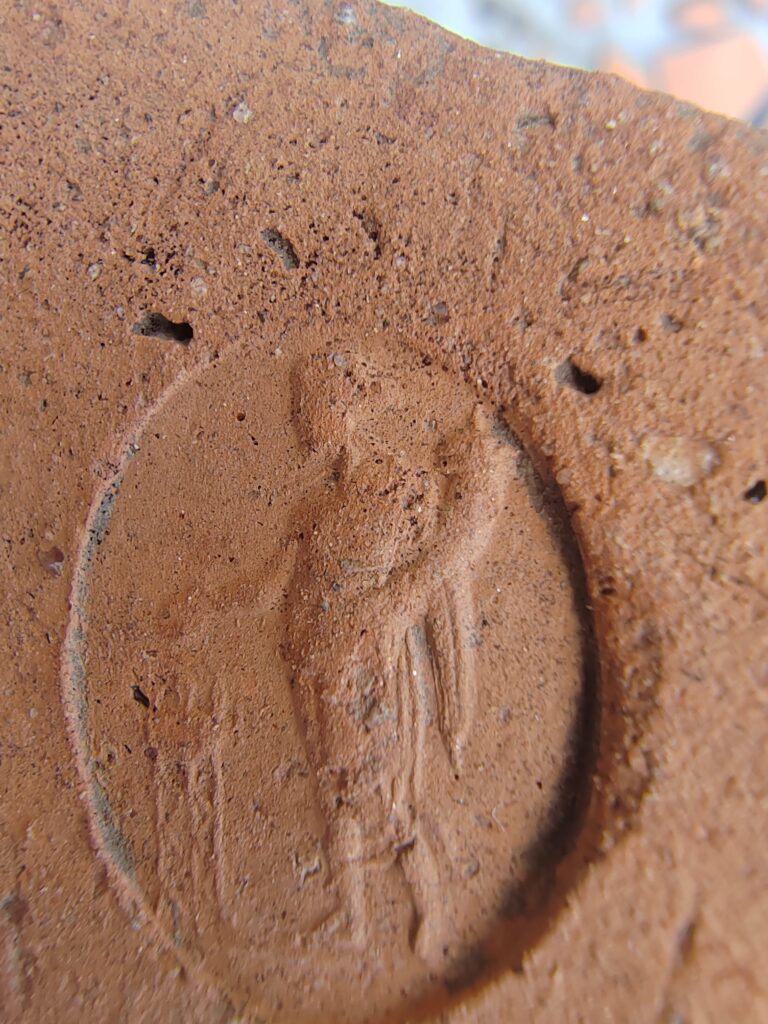
One of the most striking finds is a large storage vessel bearing a stamped image of a female deity, possibly Demeter, shown holding a cornucopia and pouring a libation over a tripod. Nearby, archaeologists uncovered a small room containing wild boar and goat bones, imported Hellenistic drinking vessels, and fragments of a decorated kline, indicating that ritual dining formed one element of a broader ceremonial complex.
A Sacred Precinct for Offerings and Libations
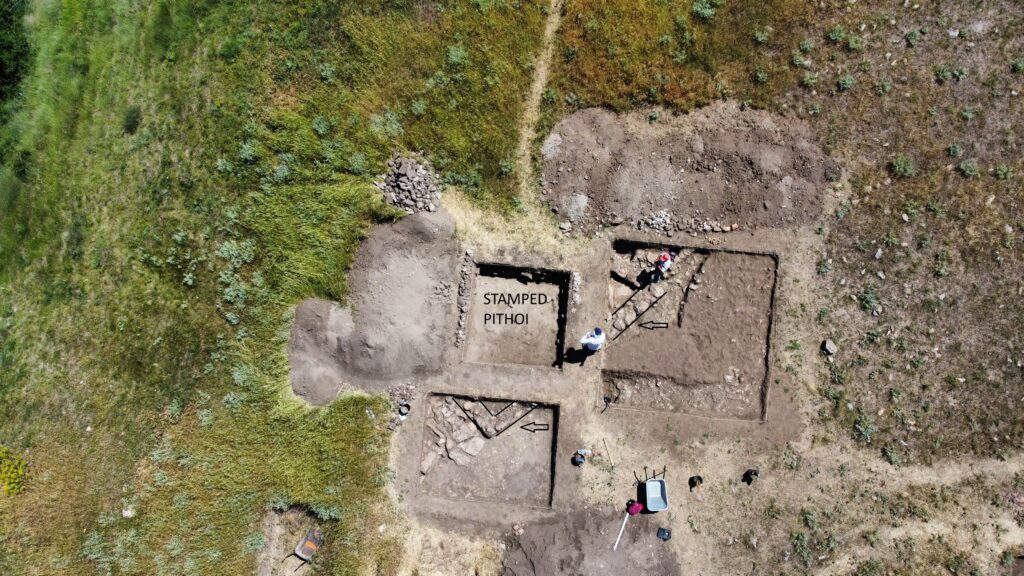
Immediately east of one of the previously identified stone structures, archaeologists uncovered the walls of a building containing numerous fragments of pithoi and other large storage vessels.
Among the finds was an unusual pithos with a rim decorated using impressions from a finger ring. The stamp depicts a female deity holding a cornucopia in one hand while pouring a libation from a kantharos over a tripod with the other.
The figure may represent Demeter, the Greek goddess closely associated with agriculture, fertility, and the seasonal cycle. Although the identification remains tentative, the imagery of abundance and ritual pouring reinforces the interpretation of the area as a place of worship.
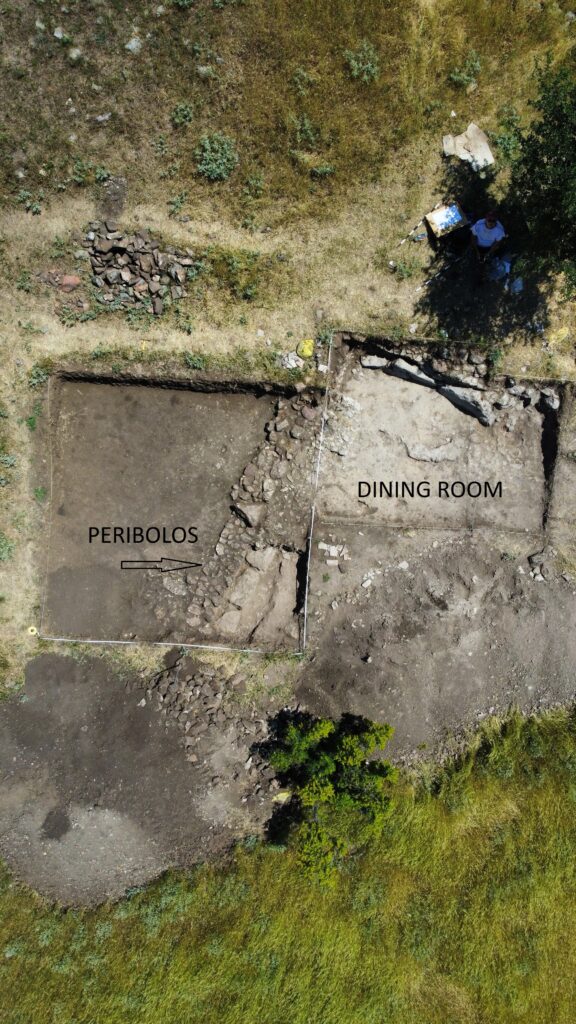
Farther south, the excavation team exposed part of a wall that may have functioned as a peribolos, separating the sacred area from the rest of the settlement.
The possible enclosure wall is particularly important because it suggests that ritual activity at Gradište was concentrated within a formally defined precinct, or temenos. Archaeologists have not yet identified a temple, but the arrangement of structures and ritual objects indicates that the Lower Terrace had a specialized ceremonial function.
Ritual Feasts Formed Part of the Complex
Beside the possible enclosure wall, archaeologists uncovered a small room containing large quantities of animal bones, including remains of wild boar, goats and other species.
The bones were found alongside an extensive assemblage of Hellenistic tableware. Much of the pottery appears to have been imported and includes West Slope kantharoi, a West Slope guttus and small black-glazed echinus bowls decorated with stamped palmettes.
Fragments of amphorae, hydriai and additional drinking vessels were also recovered, together with oil lamps and pieces of terracotta figurines. The combination of animal remains, wine vessels and luxury tableware suggests that communal meals or ceremonial banquets formed part of the rituals performed within the sacred complex.
Rather than representing an isolated dining room, the space appears to have been one component of a broader ritual landscape involving offerings, purification, libations and shared consumption of food and drink.
Researchers have compared its possible function with dining spaces at the Sanctuary of Demeter and Persephone in Corinth, where groups of worshippers gathered for ritual meals.
Rare Ceremonial Couch Decoration
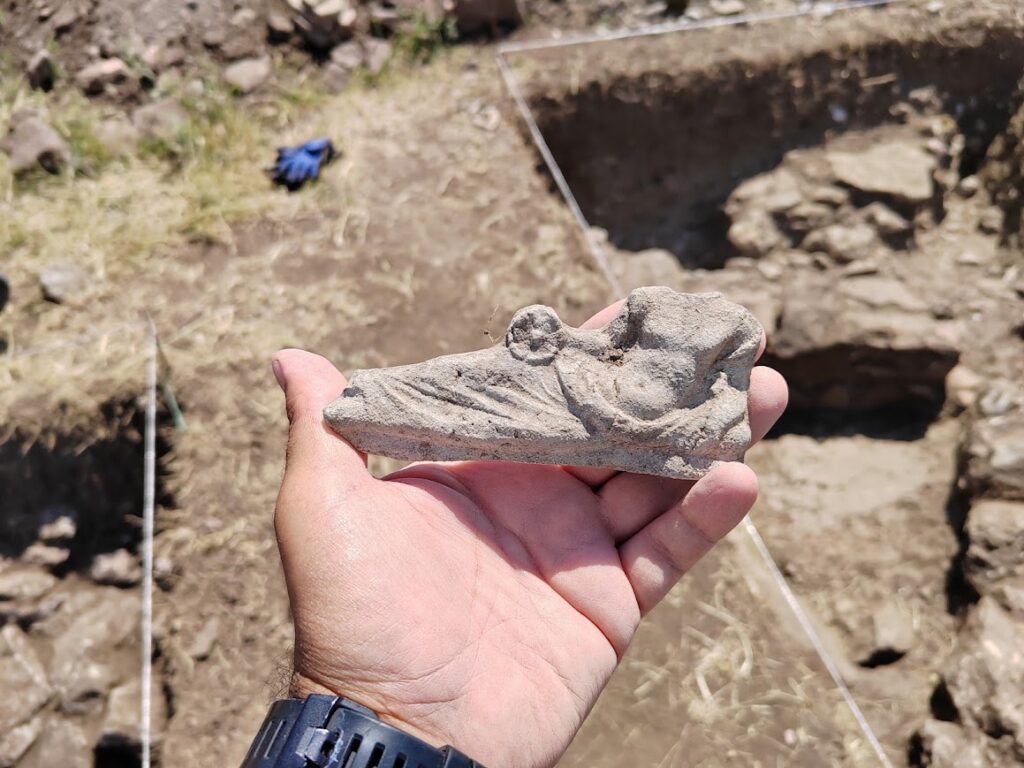
One of the most exceptional discoveries was a built table base and fragments from an elaborately decorated dining couch, known as a kline.
The finds include part of a moulded couch leg and an appliqué depicting a deity holding a shallow ritual vessel called a phiale. The figure appears to recline on a kline and may originally have belonged to a larger composition showing a procession or gathering of banqueting deities.
Few close parallels are currently known. Comparable decorative elements from couches have been recovered from wealthy Hellenistic tombs at Pella and from the royal tombs at Aigai, two major centres of the ancient Macedonian world.
At Gradište, however, the luxurious couch decoration was discovered inside a comparatively modest room. Its eastern side was bordered by two large triangular stones, behind which a wall had been built, while the possible sacred enclosure wall appears to have formed another boundary.
This contrast suggests that the importance of the room lay not in monumental architecture, but in the ceremonies and elite objects associated with it.
Earlier Excavations Revealed a Prosperous Macedonian Settlement
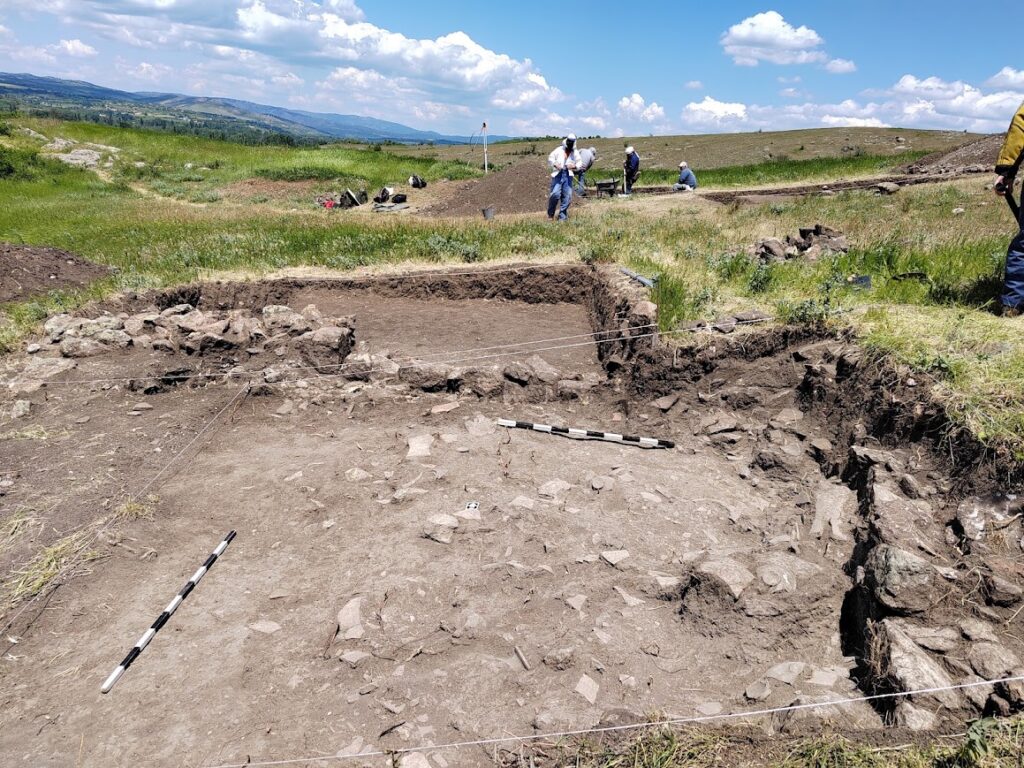
The discoveries on the Lower Terrace add a religious dimension to a settlement already known for its sophisticated architecture and imported goods.
During an earlier campaign, archaeologists investigated a substantial building organized around a peristyle courtyard. Its walls were decorated with painted plaster, while imported amphorae and elaborately decorated ceramic vessels were found within the complex.
These finds indicate that the inhabitants of Gradište participated in the wider commercial, cultural and social networks of the Macedonian kingdom during the fourth and third centuries BC. The settlement was not an isolated hilltop community, but a prosperous centre with access to imported products, elite architectural styles and ceremonial traditions.
The newly identified ritual complex now suggests that Gradište also possessed a developed religious or communal ceremonial life. The combination of votive vessels, libation imagery, imported banquet ware, animal remains, and luxurious couch fittings points to carefully organized rituals attended by members of the settlement’s community or elite.
Archaeologists Will Search for a Temple
Future investigations will focus on fully exposing the buildings discovered during the latest campaign and determining whether a temple once stood in this part of the site.
According to Gjorgjievski, establishing the relationship between the possible enclosure wall, the dining space and the surrounding structures will be essential for understanding how the sacred precinct developed and how ceremonies were organized at Gradište.
The excavations were conducted as part of the annual programme of the NI Museum Kumanovo, with funding from North Macedonia’s Ministry of Culture and Tourism and under the direction of project director and archaeologist Dejan Gjorgjievski.
Cover Image Credit: Photo courtesy of project director Dejan Gjorgjievski.
