
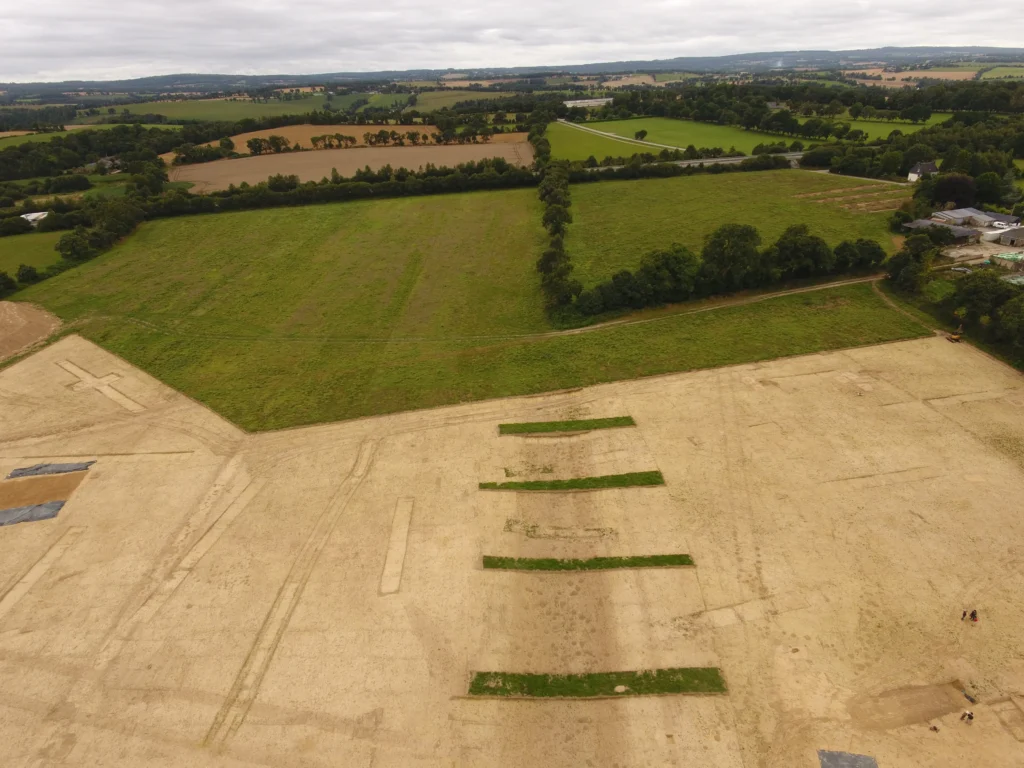
A large-scale archaeological excavation in the heart of Brittany has unveiled more than six thousand years of continuous human occupation, shedding new light on the region’s prehistoric and Roman past. Conducted by the French National Institute for Preventive Archaeological Research (Inrap) under the supervision of DRAC Bretagne, the operation covers an impressive 12 hectares in Carhaix-Plouguer, Finistère.
The excavation, divided into two main phases between the summer of 2024 and spring 2025, was initiated ahead of a major development project led by Poher Communauté — a new economic zone and a road interchange. What began as a routine preventive excavation has turned into one of the most significant archaeological discoveries in western France in recent years.
From the Stone Age to the Roman Empire
Findings from the first phase of excavation, carried out during the summer of 2024, revealed an extraordinary timeline of human presence on the site. The earliest traces date back to the Final Neolithic, including the remains of a large prehistoric house.
Archaeologists also uncovered a Bronze Age necropolis with around thirty burials spread over 200 meters, organized in small clusters. Some of these graves were covered by tumuli — earth mounds often associated with elite or ritual burials. The discovery offers a rare glimpse into Bronze Age funerary traditions in western Brittany.
Moving forward in time, the team unearthed extensive Roman-period remains, including a well-preserved Roman road and the remains of a large agricultural estate surrounded by enclosures. The site contained evidence of barns, grain dryers, mills, and workshops, suggesting that it played a key role in local agricultural production and trade networks. Given its close proximity to the ancient city of Vorgium (modern-day Carhaix), researchers believe the estate likely supported the capital of the Osismes tribe and served as part of a wider economic system during the early Roman Empire.
New Discoveries from the 2025 Campaign
The second phase of the excavation, conducted in spring 2025, extended the research area and brought further surprises. Archaeologists once again studied the Roman road, confirming its strategic importance. They also discovered evidence of Middle Neolithic II occupation, including a small but significant pottery deposit.
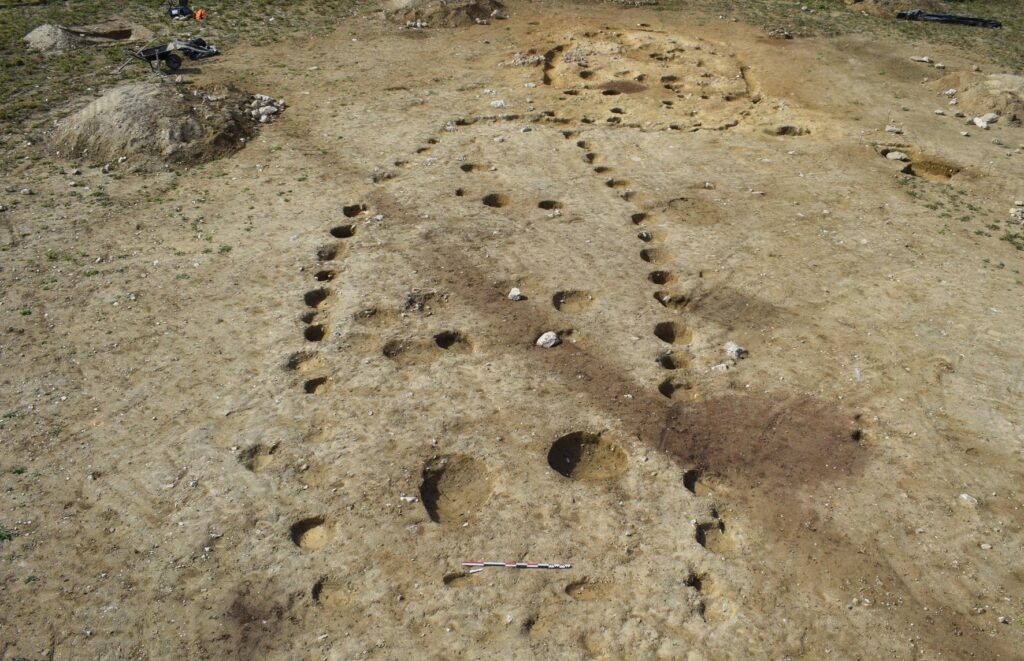
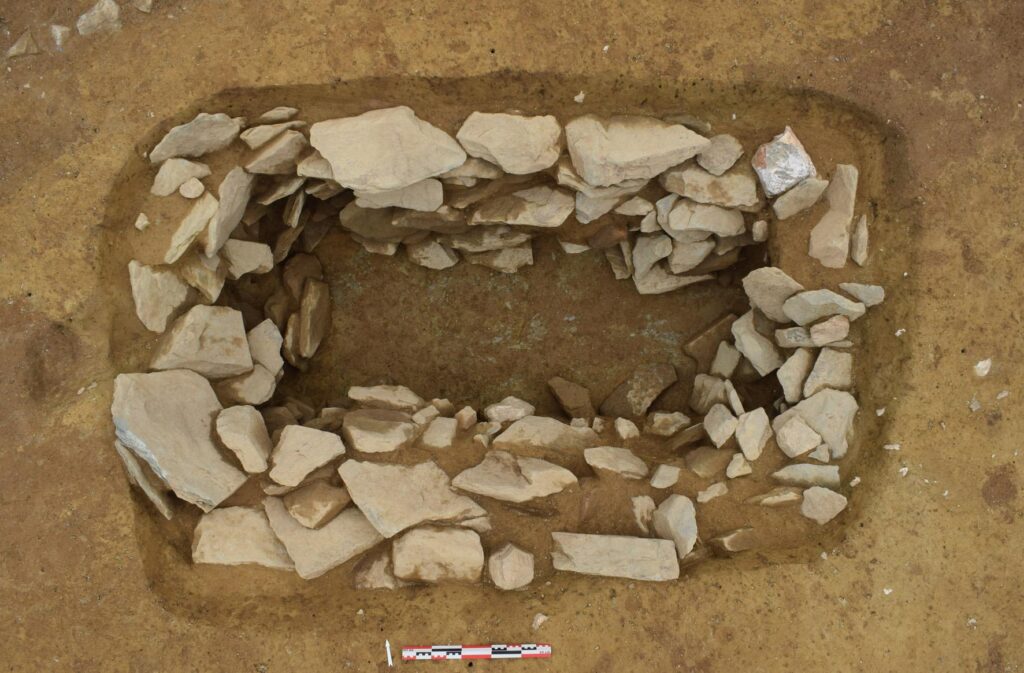
However, the most remarkable discoveries from this year belong to the Early Bronze Age. A new cluster of burials brought the total number of tombs to around forty, forming a complete necropolis. Many of the graves contained traces of wooden or stone coffins. Large hearths built with heated stones were also found near the tombs, suggesting communal rituals — perhaps even funerary feasts — similar to practices documented in earlier prehistoric periods.
Bronze Age Homes and Daily Life
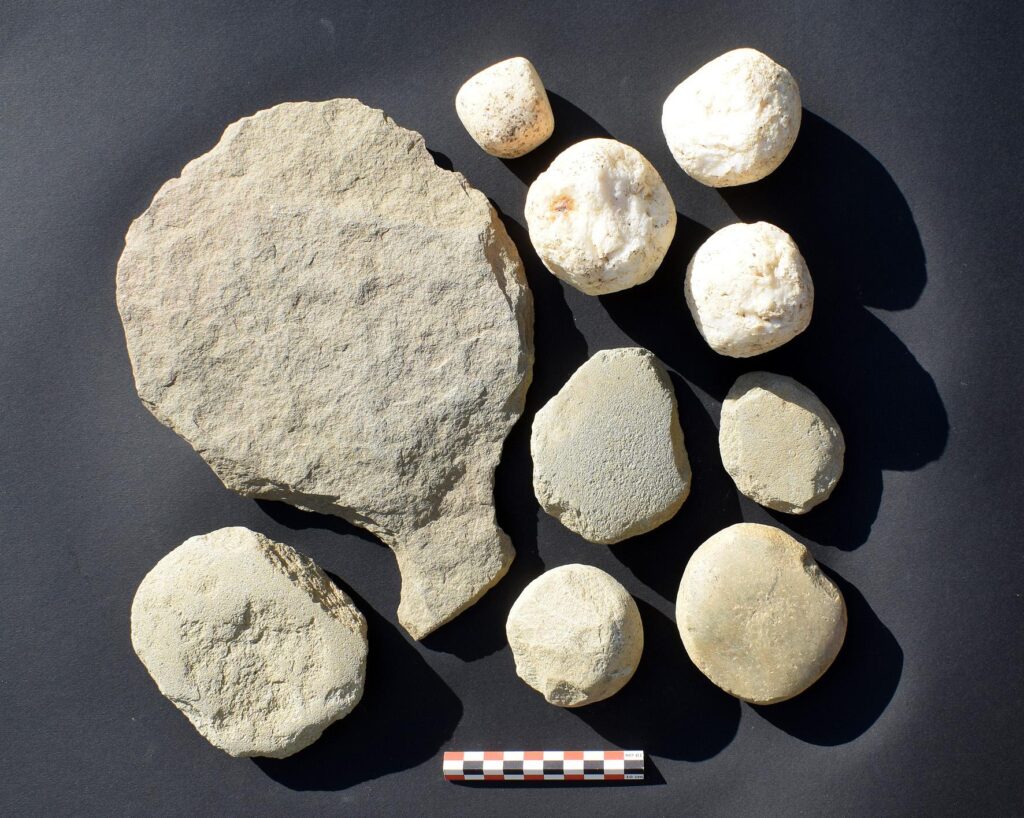
Beyond the necropolis, archaeologists uncovered the remains of a Bronze Age settlement with about ten houses, some measuring nearly twenty meters in length. These structures were identified by postholes and foundation trenches and contained an abundance of domestic artefacts, including storage jars, grinding stones, and stone tools.
Some of the larger stone implements appear to have been used in metalworking, hinting at small-scale metallurgical activity within the settlement — a discovery that could reshape understanding of early Bronze Age craftsmanship in Brittany. Researchers also found a series of cup-marked stones, whose precise function remains a mystery but which may have had ritual or symbolic significance.
A millennium later, during the Late Bronze Age, the area was reoccupied. Archaeologists identified at least three round houses typical of this period, though erosion likely destroyed other structures. As seen at nearby sites such as Lenn Sec’h (Morbihan) and Penn an Alé (Côtes-d’Armor), this pattern suggests a grouped or village-type settlement rather than isolated dwellings.
A Window into Brittany’s Ancient Past
For archaeologists, the Carhaix-Plouguer excavation offers an unparalleled opportunity to trace the long-term evolution of human life in Brittany — from the earliest farming communities to the organized economy of Roman Gaul. The site’s continuity of occupation, combined with the variety of structures and artefacts uncovered, provides a detailed picture of how societies adapted, evolved, and interacted over six millennia.
Further laboratory analyses, including radiocarbon dating, bioarchaeological studies, and material analysis, are expected to refine the chronology and deepen understanding of social and economic life in the region. The Inrap team has already announced that a full scientific report and public exhibition will follow once post-excavation work is complete.
As excavations close for the year, one thing is clear: beneath the quiet fields of Carhaix-Plouguer lies a story stretching back thousands of years — one that connects Brittany’s prehistoric ancestors to the heart of the Roman world, and continues to reshape our understanding of France’s ancient past.
Cover Image Credit: Aerial view of the Roman road connecting Vorgium to Quimperlé in the foreground. In the background, modern parcel boundaries still follow the trace of the ancient route. Florian Cousseau, Durham University
