
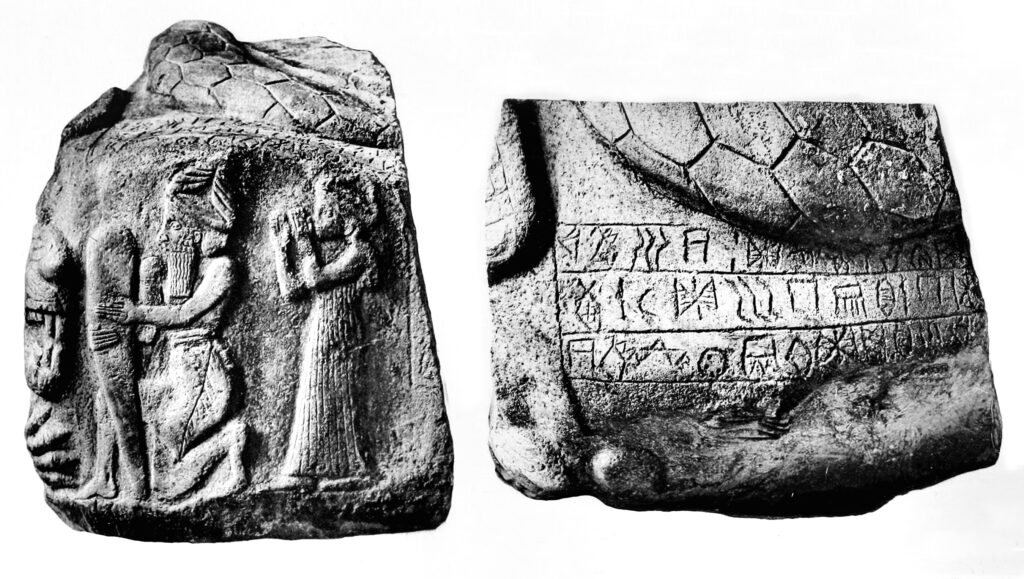
A writing system used in Bronze Age Iran, unread for more than a century, may now be closer than ever to being understood.
French archaeologist François Desset, working with an international team of scholars, has reported major progress in deciphering Linear Elamite, a script used around 4,000 years ago by the Elamite civilization of ancient Iran. The breakthrough came not from a single dramatic “Rosetta Stone,” but from a slower and more familiar tool of ancient-script research: repeated royal names.
Linear Elamite was first identified in 1903 during French excavations at Susa, one of the great ancient cities of southwestern Iran. For decades, the script remained one of the most difficult writing systems of the ancient Near East. The problem was simple but severe: too few texts survived, and many were short.
That changed when Desset gained access to inscriptions on silver vessels kept in the Mahboubian Collection in London. These texts, added to the known corpus, gave researchers enough repeated signs and names to test possible readings.
The key name was Shilhaha, an Elamite ruler who reigned around 1950 BC. Desset noticed a sequence of four signs in which the final two signs were repeated. That pattern matched the ending of Shilhaha’s name. From there, other names became readable, including Eparti II and the god Napiresha.
The method is not unusual in the history of decipherment. Jean-François Champollion used royal names such as Ptolemy and Cleopatra to unlock Egyptian hieroglyphs. In the case of Linear Elamite, Shilhaha played a similar role.
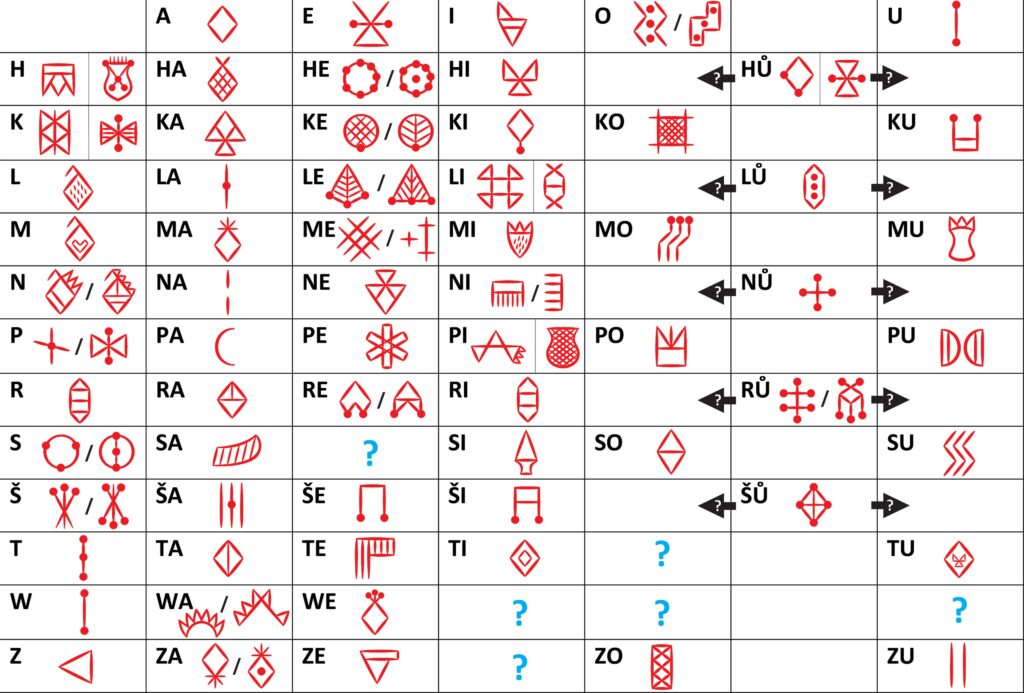
But the story is more cautious than the headlines suggest. The decipherment was not the work of one researcher alone. The academic study was published by François Desset, Kambiz Tabibzadeh, Matthieu Kervran, Gian Pietro Basello and Gianni Marchesi. Their work argues that Linear Elamite can now be read to a large extent, though translating every text remains more difficult.
That distinction matters. A script can be deciphered before the language behind it is fully understood. Researchers may know how signs sound, yet still struggle with grammar, rare words or damaged passages. Elamite itself is usually treated as a language isolate, meaning it has no securely proven relationship with any known language family.
What was Linear Elamite?
Linear Elamite was used in southern Iran in the late third and early second millennium BC, roughly between 2300 and 1880 BC. Its signs are geometric: diamonds, lines, curves, and other compact forms. Unlike Mesopotamian cuneiform, which was impressed into clay with a wedge-shaped stylus, Linear Elamite had a very different visual character.
The script belonged to the world of Elam, a civilization centered in what is now southwestern Iran, especially around Susa and Anshan. Elam stood between Mesopotamia and the Iranian plateau, and its rulers were deeply involved in the political, religious, and commercial networks of the ancient Near East.
Elam was not a marginal culture. Its language continued to be used for centuries, including in the administration of the Achaemenid Persian Empire. Thousands of later Elamite texts were written in cuneiform, especially in the Persepolis Fortification Tablets. Linear Elamite, however, belongs to a much earlier and more elusive phase.
Why the silver vessels mattered
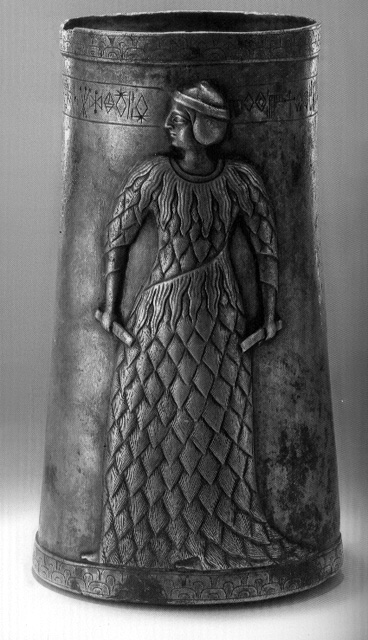
The new progress came from inscriptions on silver beakers and vessels, many associated with royal names and religious formulas. These objects were important because they offered repeated words and names across similar types of texts.
In ancient writing systems, repetition is often the first crack in the wall. Royal inscriptions tend to repeat titles, divine names, verbs of dedication, and standard phrases. Once a ruler’s name can be identified, nearby signs can begin to reveal their phonetic values.
The silver vessels also helped because some Linear Elamite material could be compared with better-known Elamite texts written in cuneiform. This kind of “biscriptural” evidence — the same or similar language recorded in different writing systems — is one of the strongest tools available to epigraphers.
Desset has said that the breakthrough allowed him to work on 45 Linear Elamite inscriptions. That is still a small number. By comparison, many other ancient scripts were deciphered with far larger bodies of material. This is why the claim remains important, but also why specialists continue to examine the details carefully.
An Iranian writing tradition
One reason Linear Elamite matters is that it appears to be a local writing system developed within ancient Iran. Desset has emphasized this point, noting that other writing systems used in Iran at different times — including cuneiform, Greek, and Arabic scripts — came from outside the region.
This does not mean Linear Elamite developed in isolation. Elam was in constant contact with Mesopotamia. But the script shows that early Iran was not simply receiving written culture from its western neighbors. It was also producing its own ways of recording language, authority, and ritual.
The story reaches even further back with Proto-Elamite, an older writing system used around 3050–2900 BC. Proto-Elamite remains largely undeciphered. Desset has said he now hopes to apply the experience gained from Linear Elamite to these still older texts.
A breakthrough, but not the final word
The decipherment of Linear Elamite could change how scholars read early Iranian history. It may offer direct access to royal ideology, religious formulas, and political geography from a period still poorly documented.
Yet it should not be presented as though every mystery has been solved. The corpus is limited. Some objects come from private collections, where provenance can be difficult to establish. The Elamite language remains only partly understood in its earliest phases.
What has changed is the level of access. A script that once appeared almost silent can now be approached sign by sign, name by name, text by text.
For the history of writing, that is enough to make the discovery significant. Linear Elamite is no longer only a set of beautiful geometric marks on ancient Iranian objects. It is becoming a readable witness to one of the oldest literate cultures of the ancient Near East.
Cover Image credit: Perforated stone, with Linear Elamite text. Louvre Museum Sb6 Sb177. Jean-Vincent Scheil – Public Domain
