A striking 3,000–4,000-year-old polychrome mural unearthed at Huaca Yolanda on Peru’s northern coast is offering an unusually vivid glimpse into the symbolic world of early Andean societies. With its rare three-dimensional design, double-sided composition, and marine-inspired imagery, the discovery is already being described by researchers as one of the most distinctive artistic finds of the Formative Period in Peru.
The mural was uncovered at the archaeological site of Huaca Yolanda, located in the Chao Valley in La Libertad, about 65 kilometers south of Trujillo. Archaeologists say the structure may transform current understanding of early ritual architecture along the Pacific coast.
A Rare Three-Dimensional Sacred Artwork
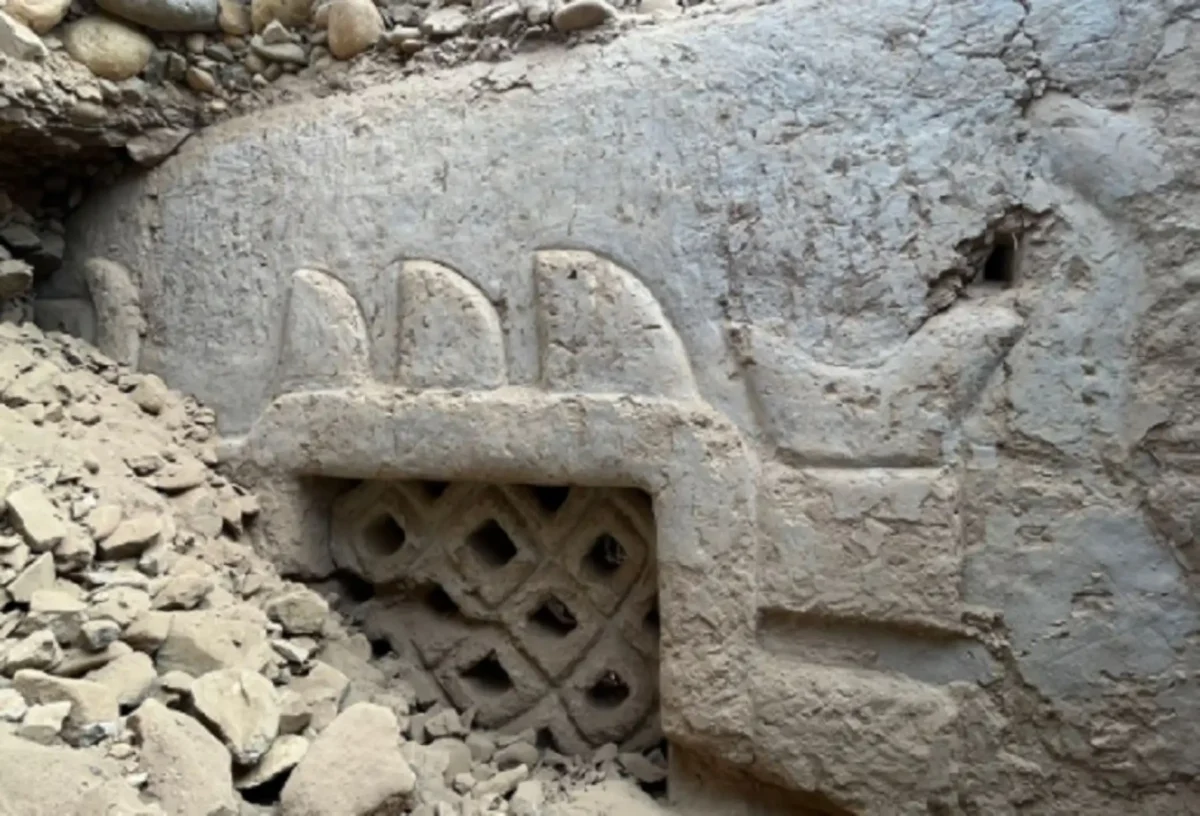
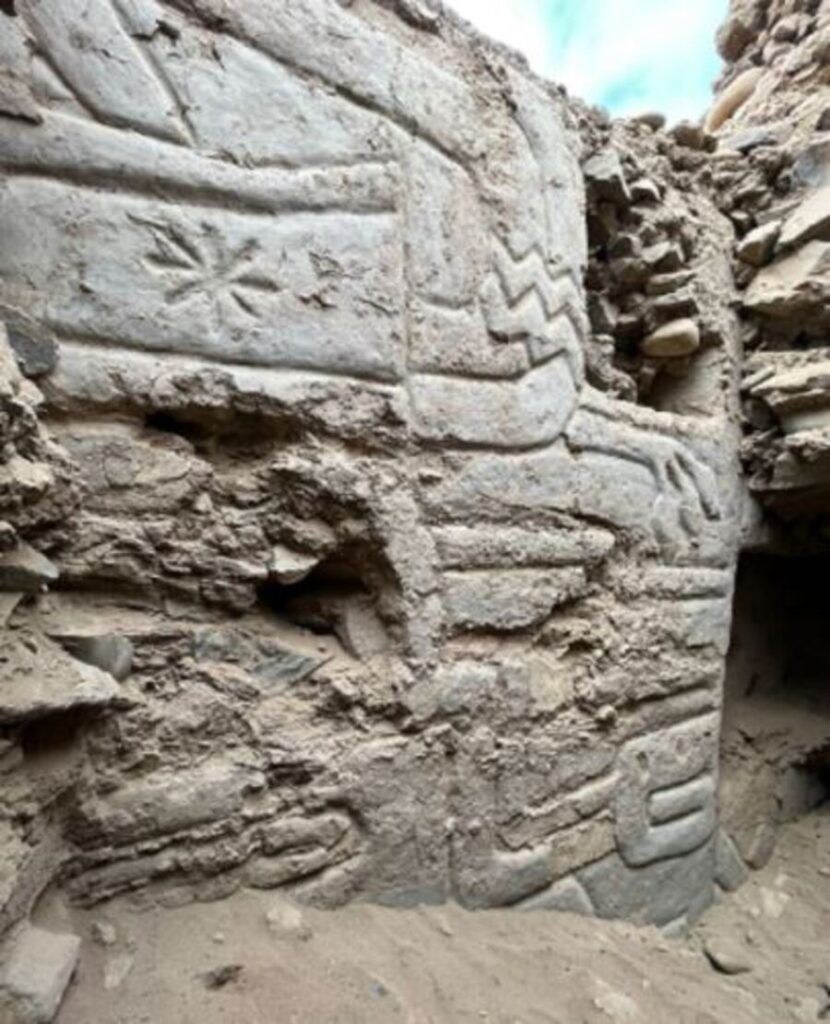
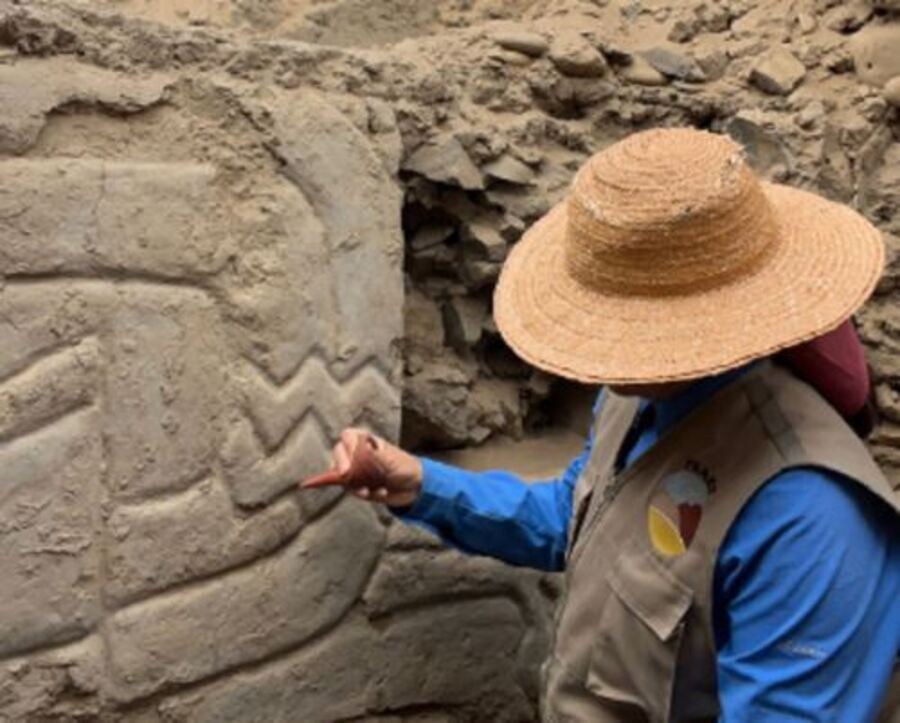
Unlike typical flat murals known from ancient Peru, the newly revealed wall is sculpted in both high and low relief, creating a dynamic, almost sculptural surface. Measuring approximately four meters in length and 1.5 meters in height, the mural forms part of an interior atrium within a U-shaped ceremonial temple—an architectural layout closely associated with early complex societies in the region.
What makes the mural exceptional is not only its form but also its double-sided decoration. Both faces display intricate motifs, including fish, stars, and plant-like elements, rendered in pigments of blue, yellow, and black. One of the most compelling images appears to depict a fish entangled in a net, a detail that suggests a symbolic link between marine resources and ritual life.
According to project director archaeologist Ana Cecilia Mauricio, the mural’s design reflects a sophisticated understanding of space, color, and symbolism. “The use of cool tones such as blue, combined with three-dimensional forms, suggests a deep ritual relationship with water, the sea, and natural cycles,” she noted in a statement to local media.
📣 Our WhatsApp channel is now LIVE! Stay up-to-date with the latest news and updates, just click here to follow us on WhatsApp and never miss a thing!!
Preserved by Burial—A Deliberate Act
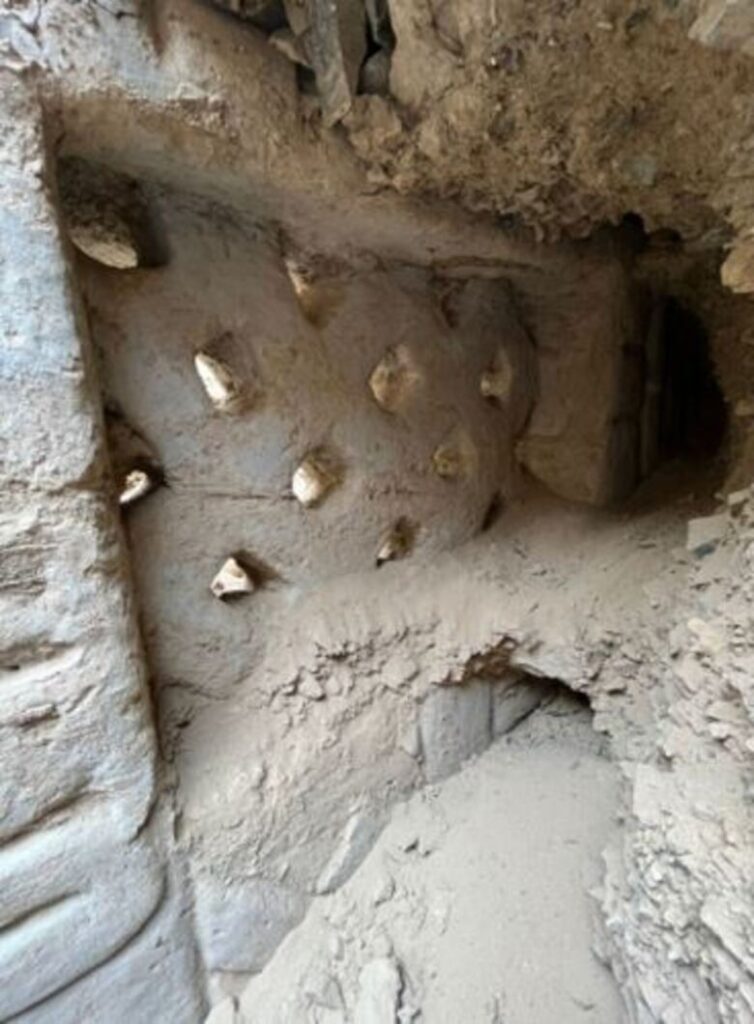
The mural’s remarkable state of preservation is no accident. Archaeologists believe it was intentionally buried by the very people who created it, a common practice in ancient Andean cultures when older structures were ritually sealed and new ones built above them.
This protective layer of soil shielded the mural from erosion, allowing delicate details—including organic materials embedded in the adobe—to survive for millennia. These plant remains are now expected to play a key role in radiocarbon dating, which will help refine the mural’s chronology.
Researchers also plan to conduct pigment analysis and digital 3D modeling to reconstruct the mural’s original appearance and better understand the techniques used in its creation.
Huaca Yolanda and Its Cultural Landscape
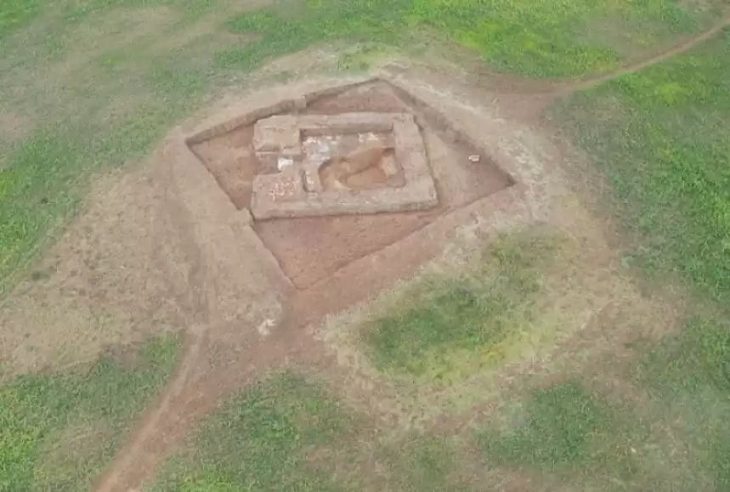
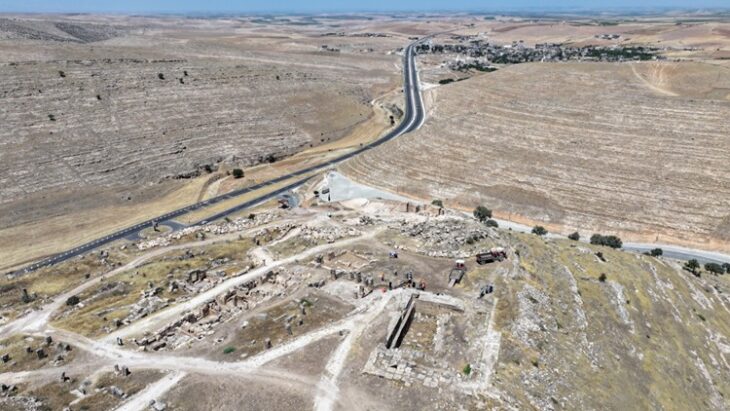
Huaca Yolanda itself is a monumental site covering more than 20 hectares. It features circular plazas reminiscent of those found in the Sacred City of Caral, along with rectangular courtyards and adobe structures that hint at a highly organized settlement.
This architectural similarity is more than coincidental. It situates Huaca Yolanda within a broader tradition of early Andean urbanism that stretches back to one of the oldest known civilizations in the Americas: the Caral civilization.
Caral: One of the World’s Oldest Civilizations
Dating back over 4,000 years, the Caral civilization flourished in Peru’s Supe Valley and is widely regarded as one of the earliest urban societies in the world, contemporary with ancient Egypt and Mesopotamia. Unlike many early civilizations, Caral developed in relative isolation, without evidence of warfare, and instead emphasized trade, agriculture, and ceremonial architecture.
Its cities were marked by pyramidal platforms, sunken circular plazas, and carefully planned urban layouts, features that echo in later sites such as Huaca Yolanda. These architectural parallels suggest a long continuity of cultural and religious traditions along the Peruvian coast.
However, Caral’s trajectory was not without crisis. Archaeological evidence indicates that around 4,200 years ago, a prolonged period of drought triggered severe social and environmental stress. Communities were forced to abandon major centers and relocate closer to coastal areas, where fishing and river-based agriculture offered more stable resources.
In sites such as Vichama, researchers have uncovered haunting friezes depicting emaciated human figures—interpreted as symbolic representations of famine. These images may have served as cautionary messages about climate instability, a theme that resonates strongly with the marine symbolism seen at Huaca Yolanda.
A Ritual Language of Survival and Memory
The newly discovered mural may be part of this broader symbolic tradition. Its imagery—particularly the fish and net motif—points to an economy and worldview deeply tied to the sea. At the same time, the presence of stars and plant forms suggests a cosmological dimension, linking marine life, agriculture, and celestial cycles into a unified ritual language.
The fact that the mural is visible from both sides further reinforces the idea that it functioned within a ceremonial space designed for movement, observation, and participation, rather than passive viewing.
Urgent Threats to a Fragile Heritage
Despite its significance, Huaca Yolanda faces immediate danger. Archaeologists report evidence of recent looting and illegal agricultural expansion, with heavy machinery encroaching on protected areas of the site. In some cases, looters had already exposed parts of the mural before researchers arrived.
Mauricio has called on authorities to take urgent action, including establishing clear site boundaries and providing permanent security. Without intervention, the site—and the invaluable information it holds—could be irreparably damaged.
A Discovery That Connects Past and Present
For local communities, the mural has quickly become a symbol of identity and pride. Residents of Tanguche have expressed enthusiasm for sharing the discovery and even plan to create a modern mural inspired by the ancient one to welcome visitors.
For archaeologists, however, its importance runs deeper. The Huaca Yolanda mural does not simply represent an isolated artistic achievement—it is part of a long continuum of Andean cultural memory, one that stretches from the earliest cities of Caral to the evolving societies of the Formative Period.
In its colors, textures, and symbols, the mural captures a moment when ancient people sought to understand—and perhaps influence—the forces that shaped their world. Thousands of years later, that message still resonates.
Agencia Peruana de Noticias Andina (Peru’s state news agency)
Cover Image Credit: Pontifical Catholic University of Peru (PUCP)