
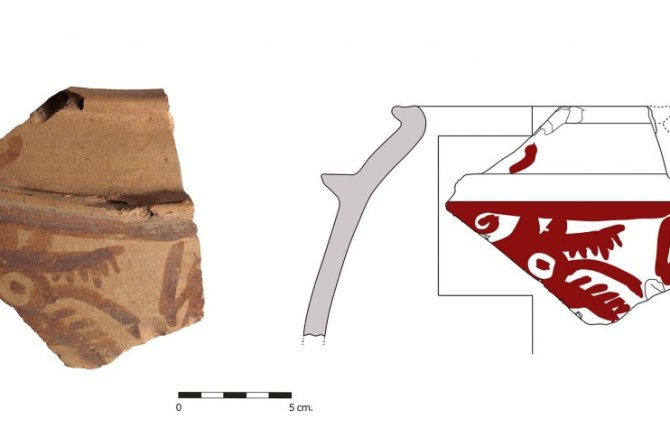
A remarkable archaeological focus has emerged from the coastal region of northeastern Spain, where recent attention on the Corral del Castell site in Cunit has reignited interest in a rare and symbolic artifact: a ceramic fragment depicting what is believed to be the head of a wolf. This extraordinary piece is not only visually striking but also culturally significant, offering a rare glimpse into the spiritual and social world of the Iberian people over 2,000 years ago.
The fragment, discovered among ceramic remains at the site, is part of a vessel rim crafted during the Iberian period. What makes it truly exceptional is the painted representation of a wolf—an animal deeply revered in Iberian culture. In fact, this is the only known depiction of a wolf on Iberian ceramics found in the region, making it a unique and invaluable discovery for archaeologists and historians alike.
The wolf held a sacred place in Iberian belief systems. It was both feared and admired, symbolizing strength, strategy, and the raw power of nature. Known for hunting in coordinated packs, the wolf embodied the qualities of an effective warrior—precision, unity, and resilience. These attributes made it a powerful emblem, often associated with both hunters and fighters in Iberian society.
Historical parallels to this ceramic fragment can be found in other archaeological sites across Spain, where wolf imagery appears in sculptures, armor, and decorative objects. From depictions of a she-wolf nursing her young to intricate engravings on warrior breastplates, the animal consistently emerges as a potent symbol of protection and dominance. Its presence in treasured items such as silver ceremonial dishes further underscores its importance in both daily life and ritual contexts.
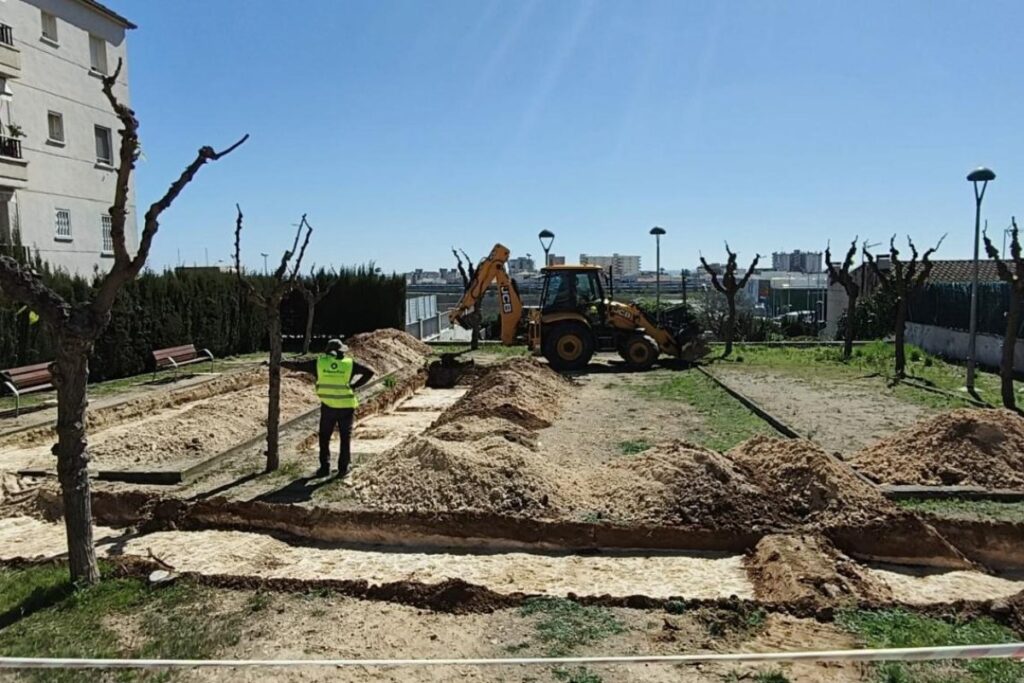
The renewed interest in this artifact comes as part of a mandatory archaeological inspection prompted by planned renovations to a public park built over the original Corral del Castell site. Located near the Mediterranean coast and once connected by ancient trade routes, the area was historically inhabited by the Iberian Cosetani people. However, much of the original settlement was lost during rapid urban development in past decades, when residential construction overtook significant portions of the site without proper excavation or preservation efforts.
Today, local authorities are taking a more cautious approach. Before any renovation work proceeds, archaeologists are conducting surveys to determine whether additional remnants of the ancient settlement remain beneath the surface. While expectations are modest due to prior disturbances, the presence of unique artifacts like the wolf-decorated ceramic fragment raises hopes that more discoveries could still be made.
Beyond its symbolic importance, the site also provides insight into the economic and social structure of the Iberian community that once thrived there. Excavations have revealed a variety of ceramic materials, including amphorae used for transporting and storing goods, as well as fine tableware intended for consumption. These findings suggest a settlement engaged in active trade and domestic life, likely connected to a broader network of coastal and inland communities.
The strategic location of Corral del Castell—just 500 meters from the sea and along a historical route linking coastal and pre-coastal regions—supports the idea that it functioned as part of a larger commercial system. Nearby rural establishments and agricultural sites appear to have formed an interdependent network, contributing to production, storage, and distribution of goods throughout the region.
Archaeological evidence indicates that the settlement experienced two main phases of occupation: an earlier period during the height of Iberian civilization around the 3rd or possibly 4th century BCE, and a later phase during the transition to Roman influence in the 2nd to 1st centuries BCE. The absence of materials from the Roman imperial period suggests that the site was abandoned around the turn of the era, as populations gradually shifted to Roman-style villas in nearby lowland areas.
Despite the loss of much of the original site, the rediscovery and renewed focus on artifacts like the sacred wolf ceramic fragment highlight the enduring importance of cultural heritage preservation. Local advocacy groups have emphasized the need to protect what remains, pointing to past mistakes as lessons for future development.
As excavation efforts continue, the story of the Iberian wolf—once painted onto a simple ceramic vessel—continues to captivate researchers and the public alike. It stands as a powerful reminder of a civilization that saw in the wolf not just a creature of the wild, but a sacred symbol of identity, strength, and survival.
Cover Image Credit: Diari de Tarragona
