
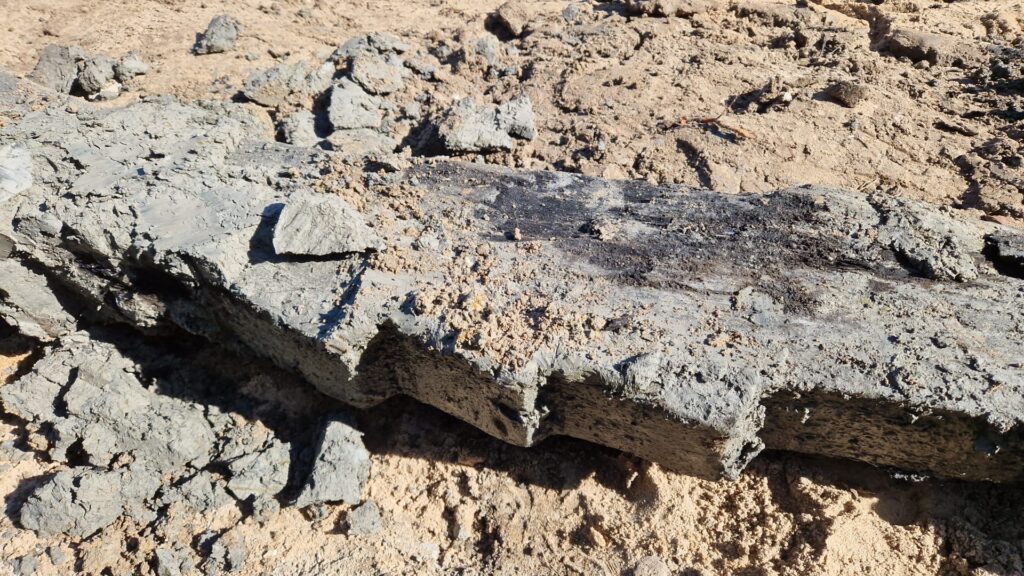
A routine infrastructure project in the Dutch town of Wijk bij Duurstede has led to an unexpected archaeological discovery: a large wooden beam that may once have formed part of a ship dating back to the Carolingian period—an era closely tied to early medieval trade networks and the expansion of northern European power.
The find emerged during sewer and drainage replacement works, when a protruding timber caught the attention of a vigilant volunteer. What initially appeared to be an ordinary piece of wood quickly drew closer scrutiny. Municipal authorities promptly involved professional archaeologists, recognizing the potential historical value of the object.
A Timber with Maritime Signatures
Early observations suggest that the beam is no ordinary construction material. Measuring approximately 3.2 meters in length and 30 centimeters in thickness, the timber displays clear shaping marks, cut notches, and worked surfaces consistent with shipbuilding techniques. Archaeologists believe these features indicate that the beam was once part of a vessel’s structural framework.
Fragments of pottery discovered nearby reinforce the idea that the timber belongs to a broader archaeological context rather than an isolated deposit. While definitive conclusions are still pending, specialists have tentatively linked the find to the Carolingian period (circa 700–800 AD)—a time when riverine and coastal transport played a crucial role in economic and political life.
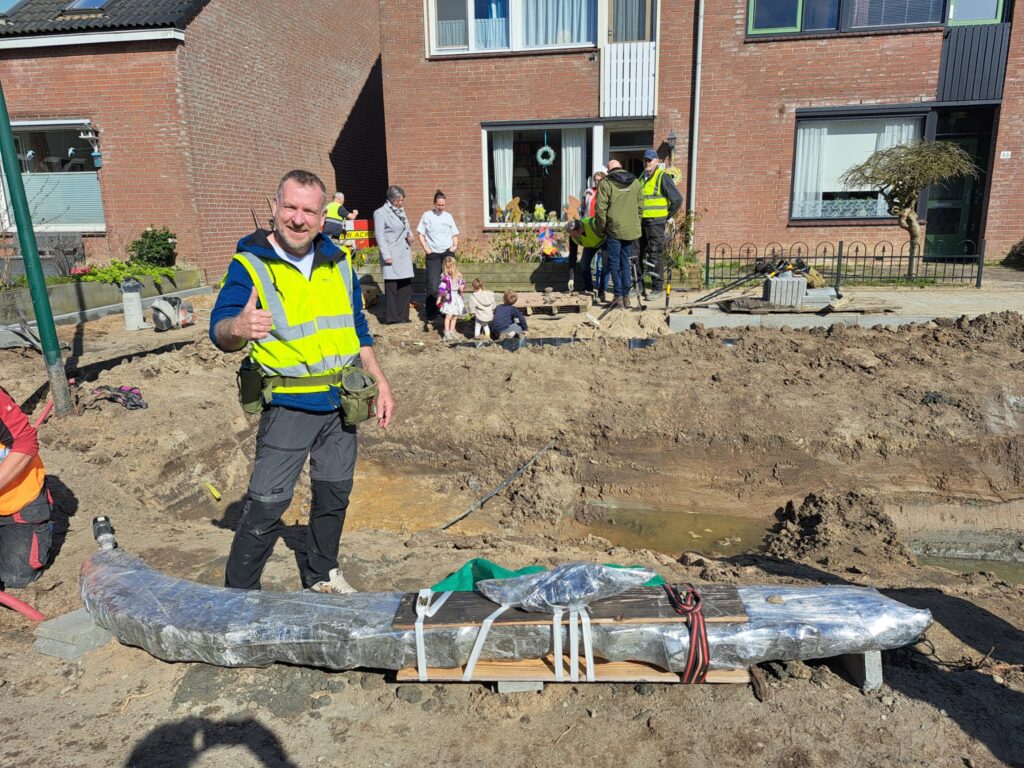
Archaeologist Anne de Hoop, involved in the investigation, noted that the beam may originally have been even larger. To preserve its integrity, the artifact was immediately wrapped and transferred to a controlled storage environment to prevent drying and structural damage.
Carolingian Context: Trade, Power, and Waterways
If confirmed, the discovery would place the timber within a transformative period in European history. The Carolingian era, associated with the rule of Charlemagne and his successors, marked the consolidation of territories across Western and Central Europe. During this time, rivers such as the Rhine and its tributaries became vital arteries of commerce and communication.
Wijk bij Duurstede itself stands on the site of ancient Dorestad, one of the most important trading centers of the early medieval Netherlands. Flourishing between the 7th and 9th centuries, Dorestad served as a hub connecting the Frankish world with Scandinavian and North Sea trade routes. Goods ranging from ceramics and textiles to metals and luxury items moved through its harbors.
The potential identification of a ship component from this period aligns well with the town’s historical role. It also raises the possibility that the timber may be linked not only to Carolingian trade but also to early Viking activity, as Scandinavian traders and raiders increasingly interacted with—and sometimes targeted—Carolingian territories during the 8th and 9th centuries.
Alternative Hypothesis: A Medieval Cog?
Despite the initial dating, researchers remain cautious. There is still a possibility that the timber belongs to a later vessel type, such as a cog, a medieval trading ship widely used in northern Europe around the 13th and 14th centuries. Cogs were characterized by their robust wooden construction and played a central role in the commercial networks of the Hanseatic League.
To resolve this uncertainty, specialists will conduct dendrochronological analysis, examining the tree rings within the wood to establish a precise date. This process, along with detailed cleaning and documentation, is expected to take several months.
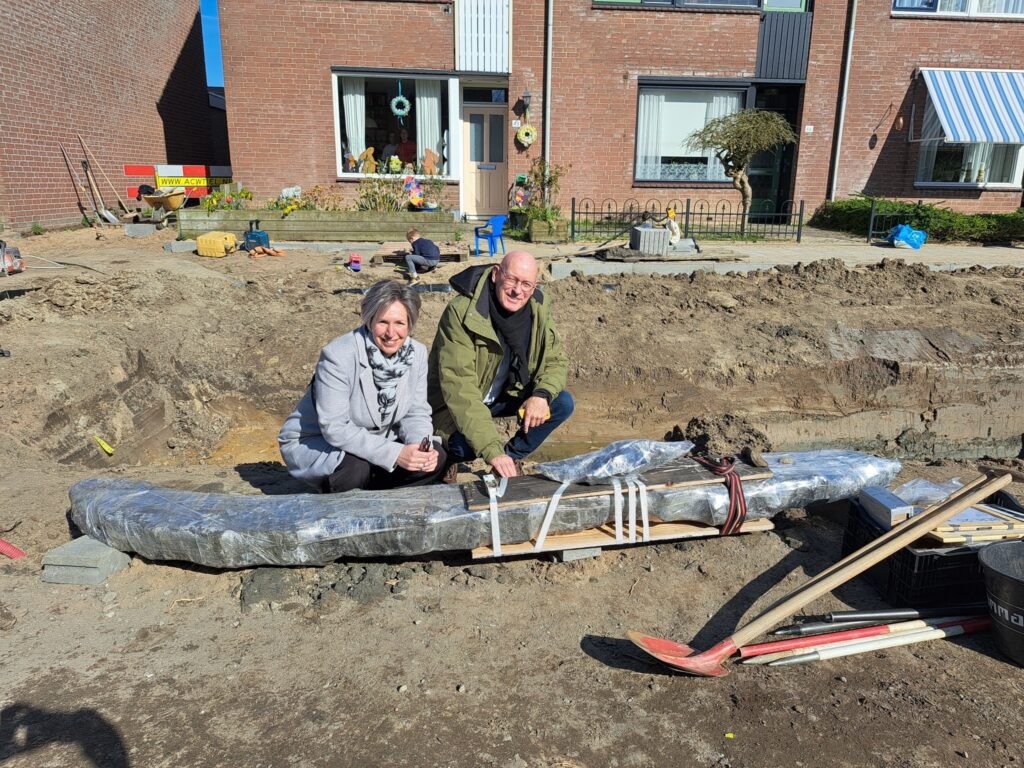
Mayor Petra Doornenbal and Alderman Bert Lubbinge visited the site to view the discovery while making their rounds of local polling stations. Credit: Danny van Basten- Gemeente Wijk bij Duurstede Via Facebook
A Rare Discovery with Museum Potential
According to local authorities, finds of this nature are exceptionally rare in Wijk bij Duurstede. No confirmed remains of Viking-era ships have previously been recorded in the area, making this discovery particularly significant.
The local Dorestad Museum has already expressed interest in displaying the timber once research is complete. If the beam is confirmed to originate from the Carolingian period—or even from a Viking-associated vessel—it could become a centerpiece illustrating the region’s deep connections to early medieval trade and maritime culture.
For now, the timber remains a carefully preserved fragment of the past—one that may soon offer new insight into the shipbuilding traditions, trade networks, and cultural exchanges that shaped early medieval Europe.
Gemeente Wijk bij Duurstede (Municipality of Wijk bij Duurstede)
Cover Image Credit: Danny van Basten- Gemeente Wijk bij Duurstede Via Facebook
